

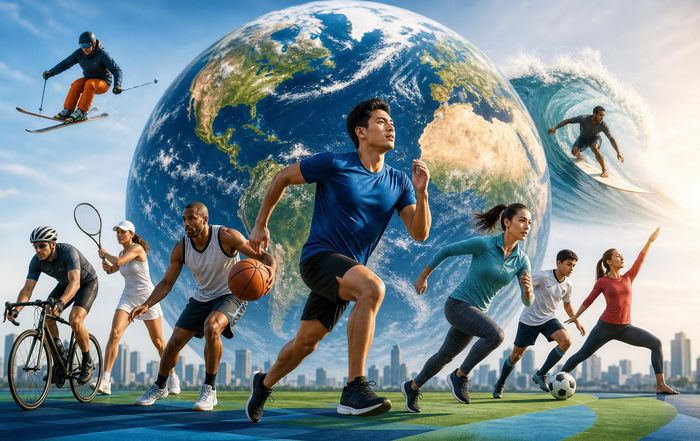
The Global Growth of Recreational Sports Participation in 2026
A New Era of Everyday Athletes
By 2026, recreational sports have moved from the margins of public life to the center of how millions of people around the world define health, identity, community and even career opportunity. What was once viewed as a leisure pastime has evolved into a complex, data-driven, culturally significant ecosystem that stretches from local parks in the United States and Europe to urban rooftops in Asia and informal fields across Africa and South America. For Sportsyncr and its global audience, this shift is not merely a trend to observe but a living landscape to participate in, shape and critically evaluate as it continues to expand.
The rise of recreational sports participation has been propelled by converging forces: the mainstreaming of fitness culture, the growing body of evidence on physical and mental health benefits, the digitization of training and competition, the transformation of brands into lifestyle platforms, and a generational rethinking of how work, social life and personal wellbeing should intersect. As organizations such as the World Health Organization highlight the global burden of inactivity and noncommunicable diseases, governments, businesses and communities are increasingly treating recreational sport as a strategic lever for public health and economic productivity. Learn more about global physical activity guidelines at the World Health Organization.
Within this context, Sportsyncr positions itself as a specialized hub where the worlds of sports, fitness, health, brands and business intersect, reflecting the reality that recreational participation is no longer a single-dimension activity but a multi-layered experience that touches technology, culture, employment, sustainability and social impact.
Health, Fitness and the Everyday Performance Mindset
The health rationale for recreational sports has never been stronger or more widely understood. Decades of epidemiological research, consolidated by institutions such as the Centers for Disease Control and Prevention, link regular physical activity to reduced risk of cardiovascular disease, diabetes, some cancers and depression, while also improving cognitive function and quality of life. Readers can explore the latest evidence on physical activity and chronic disease prevention at the CDC physical activity portal.
What has changed in the last decade is not only the data, but the narrative surrounding it. Recreational sports are no longer framed simply as a method of burning calories or "getting in shape." Instead, they are increasingly presented as a holistic performance strategy for life, encompassing physical conditioning, sleep hygiene, stress management, social connection and even digital wellbeing. This broader perspective has been popularized by organizations like Harvard T.H. Chan School of Public Health, which highlights the role of movement in mental health and resilience; interested readers can learn more about exercise and mental health through their work.
For the audience of Sportsyncr, this shift is visible in the way individuals adopt training methodologies once reserved for elite athletes-periodized training blocks, heart-rate and power-based programming, recovery protocols and nutrition strategies-into their own recreational routines. The rise of wearable technology, from smartwatches to connected fitness equipment, has normalized performance metrics such as VO2 max, heart rate variability and training load. Platforms like Strava, Garmin Connect and Apple Fitness+ have transformed running, cycling, swimming and multi-sport training into continuous feedback loops, where recreational participants benchmark themselves not only against personal history but also against global peers. For a broader view of how technology is reshaping health and exercise, readers can explore the World Economic Forum's analysis of digital health trends.
This performance mindset is not purely individualistic. Recreational sports communities increasingly emphasize shared progress, collective challenges and mutual accountability. On Sportsyncr, this convergence of data, community and motivation is reflected in coverage that spans personal training stories, fitness technology innovation and the cultural narratives that define what it means to be "fit" in 2026.
Urbanization, Infrastructure and the Changing Geography of Play
The global growth of recreational sports participation is tightly linked to how cities and communities are designed. As urbanization accelerates across regions such as Asia, Africa and South America, planners and policymakers are rethinking public spaces to accommodate active lifestyles. Organizations like UN-Habitat and the World Bank have documented how integrated urban planning that prioritizes walkability, safe cycling infrastructure and accessible green areas can significantly increase everyday activity levels. Learn more about the relationship between cities and active living through the World Bank's work on urban health and mobility.
In leading sports and fitness markets such as the United States, United Kingdom, Germany, Canada and Australia, there has been a notable expansion of multi-use recreational facilities, community sports hubs and public-private partnerships to refurbish aging infrastructure. In Europe, the European Commission has promoted initiatives to encourage grassroots sports and physical activity across member states, with particular attention to inclusivity, gender equity and youth participation; readers can explore these initiatives through the European Commission's sport policy pages.
Emerging markets in Asia, including China, South Korea, Japan, Thailand, Malaysia and Singapore, are witnessing rapid growth in urban recreational facilities, from rooftop football pitches and indoor climbing gyms to large-scale running and cycling events that transform city streets into temporary arenas. In Latin America and Africa, local initiatives are combining informal play spaces with organized community leagues, often supported by NGOs and development agencies that see sport as a tool for social cohesion and youth engagement; the United Nations Office on Sport for Development and Peace has long highlighted such projects, and more background can be found through the United Nations sport for development resources.
For Sportsyncr, which serves a worldwide audience with strong interest in the United States, Europe, Asia and beyond, the changing geography of recreational sports is a critical narrative. Coverage of global sports trends increasingly reflects how local context-whether in London, Berlin, Toronto, Sydney, Paris, Milan, Madrid, Amsterdam, Zurich, Singapore, Seoul, Tokyo, Bangkok, Helsinki, Johannesburg, São Paulo or Auckland-shapes which sports thrive, how facilities are used and how communities organize themselves around play.
Brands, Platforms and the Commercialization of Recreation
Recreational sports have become a major commercial arena, with global brands, digital platforms and local businesses all vying for the attention and loyalty of everyday athletes. Companies such as Nike, Adidas, Puma, Under Armour, Lululemon and Decathlon have shifted significant marketing resources from elite sponsorships to community-oriented initiatives, local running clubs, fitness challenges and digital ecosystems designed to capture both performance data and consumer preference. Analysts at McKinsey & Company and Deloitte regularly examine how the sportswear and athleisure markets are evolving; readers can explore broader consumer and sports business trends through McKinsey's sports and entertainment insights or Deloitte's sports business research.
What distinguishes the current era is the way recreational sports have blurred the boundaries between apparel, equipment, digital services and social platforms. Brands no longer simply sell shoes or clothing; they design training apps, host virtual races, create content studios and operate membership communities that provide coaching, nutrition advice and mental health resources. This "platformization" of recreational sport creates new opportunities for personalization and engagement, but it also raises important questions around data privacy, commercialization of community spaces and the long-term sustainability of business models that rely on constant engagement.
For Sportsyncr, which maintains a dedicated focus on brands and business, the challenge is to analyze this commercialization with both critical distance and practical insight. Recreational athletes increasingly act as micro-influencers, content creators and product testers, blurring the lines between consumer and partner. At the same time, local gyms, boutique studios and independent coaches must navigate an environment where global digital platforms can reach their clients directly, often at lower cost but with far less personal contact. Industry research from organizations such as IBISWorld and Statista offers quantitative perspectives on the fitness and sports club markets, and readers can explore global fitness industry statistics to contextualize these shifts.
The commercialization of recreation is not inherently negative; it can drive innovation, expand access and fund community programs. However, the long-term health of the ecosystem depends on trust, transparency and shared value, themes that are central to how Sportsyncr approaches coverage of sponsorships, brand activations and new business models across the recreational sports landscape.
Digital Communities, Culture and the Social Fabric of Sport
Recreational sports participation in 2026 is as much a cultural and social phenomenon as it is a physical one. Digital platforms, from global fitness trackers to localized community apps, have turned individual workouts into shared experiences, where participants exchange training data, photos, stories and encouragement. The social dimension of sport has expanded far beyond traditional clubs and leagues; informal groups organize via messaging apps, workplace channels and social media, while online challenges and virtual races allow participants in the United States, United Kingdom, Germany, Canada, Australia, France, Italy, Spain, the Netherlands, Switzerland, China, Sweden, Norway, Denmark, South Korea, Japan, Thailand, Finland, South Africa, Brazil, Malaysia and New Zealand to compete and collaborate in real time.
Cultural norms around who "belongs" in sports spaces are also changing. There is growing recognition of the need to create inclusive environments for women, older adults, people with disabilities, LGBTQ+ participants and newcomers who may not have grown up with organized sport. Organizations such as Women in Sport, Special Olympics and OutSports advocate for more equitable access and representation, while research from bodies like the Sport and Recreation Alliance in the UK examines systemic barriers to participation. Readers can learn more about inclusive sport strategies to understand how policy and practice are evolving.
These cultural shifts are particularly visible in the kinds of stories that resonate with the Sportsyncr community, where coverage of culture and social dynamics sits alongside performance analysis and business reporting. Narratives of personal transformation, community building and social impact-whether through a grassroots football league in Johannesburg, a women's cycling collective in Berlin, a mixed-ability running club in Toronto or an intergenerational walking group in Tokyo-demonstrate that recreational sport is increasingly understood as a vehicle for belonging and identity, not merely a physical activity.
At the same time, the digitalization of sports communities introduces new cultural challenges. The pressure to perform for an audience, to document and share every workout, can create unhealthy comparisons and distort motivations. Research from institutions such as Stanford University and University College London has begun to explore the psychological impact of fitness tracking and social media on body image, self-esteem and exercise addiction. Those interested in the broader implications of digital life on wellbeing can explore resources from the American Psychological Association. For Sportsyncr, reporting on recreational sports culture requires balancing celebration of community with critical examination of how digital norms shape behavior and expectations.
Technology, Data and the Quantified Recreation Economy
Technology is perhaps the most visible driver of growth in recreational sports participation. From GPS-enabled running shoes and smart bikes to AI-powered coaching apps and virtual reality training environments, the tools available to everyday participants in 2026 would have been unimaginable to most elite athletes a generation ago. The integration of sensors, cloud computing and machine learning has enabled personalized training plans, real-time feedback and predictive injury risk assessments that adapt to an individual's history, goals and constraints.
Major technology companies such as Apple, Google, Samsung, Garmin and Peloton have invested heavily in fitness ecosystems, while specialized startups in Europe, North America and Asia are developing niche solutions for sports as diverse as climbing, rowing, padel, esports and adaptive recreation. Industry observers can follow broader technology and innovation trends through platforms like MIT Technology Review or the IEEE Spectrum, which frequently highlight advances in wearable tech, human performance and digital health.
For Sportsyncr, with its dedicated coverage of technology, the key issue is not only what these tools can do, but how they are used and governed. The recreational sports ecosystem now generates vast quantities of personal data: biometric signals, location history, social interactions, purchasing behavior and content preferences. This data powers innovation and personalization, but it also raises serious questions around consent, security, monetization and algorithmic bias. Regulatory frameworks such as the European Union's General Data Protection Regulation (GDPR) and evolving privacy laws in the United States, Canada, Australia and across Asia are beginning to shape how sports technology companies operate. Those seeking a legal and policy perspective can explore resources from the European Data Protection Board and the Electronic Frontier Foundation.
The quantified recreation economy also intersects with science and research. Sports scientists, physiologists and behavioral researchers are increasingly able to draw on large, anonymized data sets to study training responses, injury patterns and adherence behaviors in real-world conditions, rather than only in controlled laboratory settings. This creates opportunities for more nuanced and inclusive evidence, but it also demands rigorous standards for data quality, interpretation and communication. Coverage within Sportsyncr's science vertical seeks to connect readers with these emerging insights while maintaining a clear distinction between marketing claims and validated findings.
Work, Careers and the Emerging Sports-Adjacent Job Market
The global growth of recreational sports participation has also created a dynamic job market that extends far beyond traditional roles such as coaching, personal training and facility management. As more individuals integrate sport and fitness into their daily routines, demand has increased for specialized professionals in sports psychology, nutrition, physiotherapy, digital product design, community management, content production, event operations and data analytics. This expansion is visible across major markets in North America, Europe and Asia-Pacific, as well as in emerging hubs in South Africa, Brazil and other parts of the Global South.
Organizations such as the International Labour Organization and national workforce agencies have begun to recognize sport and recreation as significant contributors to employment, entrepreneurship and skills development. For those exploring the intersection of work and wellness, the World Economic Forum has highlighted how health and wellbeing sectors are reshaping the future of jobs; readers can explore this perspective through the Future of Jobs reports. Within this landscape, Sportsyncr provides insight into evolving career paths through its jobs coverage, examining how roles in sports technology startups, global fitness brands, community organizations and media platforms are changing.
Hybrid careers are particularly notable in 2026. Many individuals now combine primary professions in fields such as finance, technology, education or healthcare with part-time roles as coaches, content creators, race organizers or community leaders in recreational sports. This diversification reflects both the passion-driven nature of sport and the flexible work arrangements that have become more common since the early 2020s. At the same time, it raises questions around professional standards, certification, liability and burnout, especially when individuals attempt to monetize their hobbies in highly competitive digital marketplaces.
For business leaders and HR professionals, the growth of recreational sports also intersects with corporate wellness strategies and employer branding. Companies across sectors are investing in sports-based wellbeing programs, team challenges and partnerships with local clubs or global platforms, viewing physical activity as a means to enhance engagement, reduce healthcare costs and support mental health. Research from organizations such as Gallup and PwC suggests that well-designed wellbeing initiatives can contribute to productivity and retention, and interested readers can learn more about workplace wellbeing. Sportsyncr increasingly covers how these corporate initiatives intersect with the broader recreational sports ecosystem, including the opportunities and risks of blurring boundaries between work and personal life.
Sustainability, Environment and the Future of Recreational Events
As recreational participation grows, so does the environmental footprint of sports events, facilities and consumer products. Mass participation races, international amateur tournaments and destination training camps contribute to travel emissions, resource consumption and waste generation, while the production of sportswear and equipment raises concerns around materials, manufacturing practices and end-of-life disposal. Organizations such as the UN Environment Programme, Carbon Trust and Green Sports Alliance have called for more sustainable approaches to sports infrastructure, operations and sponsorship, and readers can learn more about sustainable sports initiatives through their work.
Climate change is also directly affecting where and how recreational sports can take place. Heatwaves, air pollution, extreme weather events and changing seasonal patterns are forcing event organizers and community groups in regions such as North America, Europe, Asia and Africa to adapt schedules, routes and safety protocols. In some cases, sports that rely on predictable winter conditions, such as cross-country skiing and outdoor ice sports, are facing existential challenges in lower-altitude regions. Research from bodies like the Intergovernmental Panel on Climate Change (IPCC) and national meteorological agencies provides important context for understanding these shifts, and those interested can explore IPCC reports for a scientific overview.
For Sportsyncr, which maintains a focus on the environment alongside sport and business, sustainability is not a peripheral issue but a core dimension of the future recreational landscape. Brands, event organizers and facilities that fail to address environmental impact risk reputational damage and regulatory pressure, while those that proactively adopt sustainable materials, circular business models and low-carbon event practices can build long-term trust with increasingly climate-conscious participants. The challenge is to move beyond symbolic gestures toward measurable change, supported by transparent reporting and independent verification.
The Role of Media and Platforms like Sportsyncr
In this complex, fast-evolving environment, the need for credible, nuanced, globally informed coverage is clear. Recreational sports participation now intersects with health, technology, culture, business, employment, sustainability and geopolitics, and participants require more than marketing narratives or isolated data points to make informed decisions about their own engagement. Platforms like Sportsyncr serve as connective tissue, curating and contextualizing information across news, sports, fitness, health, culture, technology, business and world perspectives.
Experience, expertise, authoritativeness and trustworthiness are not abstract ideals in this context; they are practical requirements. Recreational athletes and industry stakeholders alike must navigate a crowded landscape of apps, products, events and advice, some of which are grounded in robust evidence and ethical practice, while others are driven primarily by short-term commercial incentives. By drawing on expert voices, highlighting high-quality external resources, interrogating claims and maintaining editorial independence, Sportsyncr aims to help its global readership distinguish signal from noise.
As recreational sports continue to grow across the United States, United Kingdom, Germany, Canada, Australia, France, Italy, Spain, Netherlands, Switzerland, China, Sweden, Norway, Singapore, Denmark, South Korea, Japan, Thailand, Finland, South Africa, Brazil, Malaysia, New Zealand and beyond, the questions facing participants, businesses and policymakers will only become more complex. How can access be broadened without deepening inequities? How can technology enhance rather than erode wellbeing? How can brands and events thrive commercially while respecting environmental limits and community needs? How can workplaces integrate sport in ways that genuinely support, rather than instrumentalize, employee health?
These are the kinds of questions that will shape the next phase of the global recreational sports movement. For the everyday athletes, industry leaders and curious observers who gather around Sportsyncr, the task is not simply to track participation numbers, but to understand and influence the values, systems and innovations that will define what recreational sport means in 2030 and beyond.