

The Future of Fan Engagement Through Immersive Media
Introduction: A New Arena for Global Fans!
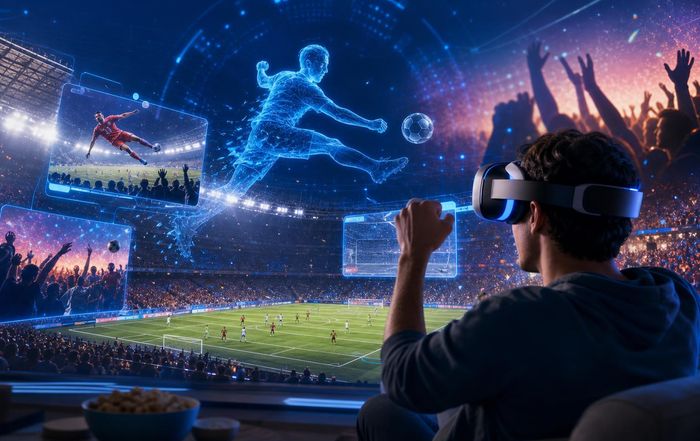
The global sports and entertainment ecosystem has entered a decisive new phase in which immersive media is no longer an experiment on the margins but a central pillar of how fans watch, feel and participate in live events. From interactive 8K broadcasts and volumetric replays to virtual fan zones and AI-personalized highlight streams, the boundaries between physical stadiums and digital experiences are dissolving. For a sports news site positioned at the intersection of sport, fitness, health, brands, culture, business and technology-this shift is not simply a technological evolution; it is a strategic inflection point that will define the next decade of fan relationships, revenue models and competitive differentiation.
Immersive media, encompassing virtual reality (VR), augmented reality (AR), mixed reality (MR), spatial computing and advanced second-screen experiences, is reshaping expectations across major markets in the United States, Europe, Asia-Pacific and beyond. Fans in London, New York, Berlin, Toronto, Sydney, Paris, Tokyo and São Paulo now expect not only to watch a match but to be inside it, to co-create narratives with athletes and creators, and to move seamlessly between physical training, digital fandom and social interaction. As Sportsyncr continues to build a connected ecosystem that spans sports, fitness, health, culture and business, understanding the future of fan engagement through immersive media is essential for delivering trustworthy, high-impact experiences to a global audience.
From Passive Spectators to Active Participants
For decades, fan engagement was largely defined by linear broadcasts, stadium attendance and traditional media coverage. Fans consumed content on fixed schedules, with limited interactivity and minimal personalization. The rise of broadband streaming and social media began to erode these constraints, but immersive media is accelerating a deeper structural change: fans are becoming participants, not just spectators.
Major rights holders such as FIFA, the International Olympic Committee, the National Football League (NFL) and the English Premier League are increasingly experimenting with immersive formats that allow viewers to select camera angles, access real-time performance data, and participate in synchronized watch parties across continents. Platforms like YouTube and Twitch have normalized interactive viewership, while social platforms such as X, Instagram and TikTok have made short-form, creator-led content a core part of the fan journey. Learn more about how interactive streaming is transforming media consumption through analyses from Deloitte Insights and research by McKinsey & Company.
In this environment, immersive media serves as the connective tissue between live events, training ecosystems and social communities. Fans in Germany, the United Kingdom, the United States or South Korea can join virtual fan zones, overlay live statistics on their screens via AR, or step into VR environments that replicate the atmosphere of iconic venues in Madrid, Manchester or Munich. For Sportsyncr, which curates coverage across sports, social trends and technology, the ability to interpret and contextualize these experiences is central to building trust with readers who are navigating an increasingly complex landscape of platforms, devices and formats.
The Technology Stack Behind Immersive Engagement
The future of fan engagement is being enabled by a rapidly maturing technology stack that spans network infrastructure, hardware, software and data analytics. The deployment of 5G and the early evolution toward 6G in markets such as the United States, South Korea, Japan and parts of Europe have dramatically reduced latency, making real-time multi-angle streaming, volumetric video and cloud-rendered VR viable at scale. Readers can explore the broader impact of advanced networks on media through resources from the GSMA and Ericsson.
On the hardware side, devices from companies such as Apple, Meta, Sony, Samsung and HTC are normalizing spatial computing and mixed reality for mainstream consumers. The evolution from early-generation headsets to lighter, higher-resolution devices with improved field of view and comfort has made longer, more engaging sessions possible, while advanced haptics and spatial audio are enhancing the sense of presence. Learn more about the state of XR hardware and standards at the XR Association and review technology roadmaps from IEEE.
Equally critical is the software layer, where real-time engines such as Unreal Engine and Unity power photorealistic environments, and cloud platforms from Microsoft Azure, Amazon Web Services and Google Cloud handle the computational demands of rendering, personalization and data processing. As AI-driven personalization becomes more sophisticated, organizations are leveraging machine learning to analyze fan behavior, predict content preferences and dynamically adapt experiences. Industry guidance on responsible AI and data governance from bodies like the World Economic Forum and regulatory frameworks such as the EU's Digital Services Act are becoming central references for any organization aiming to build trustworthy immersive ecosystems.
Reimagining the Stadium: Hybrid and Virtual Venues
Stadiums and arenas in 2026 are evolving into hybrid venues that integrate physical and virtual layers to serve both on-site spectators and global remote audiences. Clubs in the Premier League, the Bundesliga, the NBA and major esports leagues are deploying in-venue AR overlays that allow fans to point their smartphones or smart glasses at the pitch or court and instantly access live player statistics, heat maps, betting odds and contextual storytelling. Learn more about how smart venues are reshaping fan experiences through reports from PwC Sports Business and insights from KPMG Sports Advisory.
At the same time, fully virtual stadiums are emerging as persistent digital spaces where fans from Canada, Australia, Singapore, Brazil, South Africa and beyond can gather regardless of time zone or geography. These environments, often built on gaming engines and interoperable with broader metaverse platforms, enable fans to choose virtual seats, interact with branded activations, purchase digital merchandise and even train alongside avatars of their favorite athletes. Esports organizations and major publishers such as Riot Games and Valve have been early movers in this domain, but traditional sports rights holders are rapidly catching up.
For Sportsyncr, which connects coverage of sports, gaming, brands and sponsorship, this convergence between stadiums, games and social platforms is a critical storyline. The platform's audience is increasingly interested in how hybrid venues support not only entertainment but also fitness, wellness and social connection, and how these spaces can be designed to be accessible, inclusive and sustainable for fans across Europe, Asia, North America, South America and Africa.
Data, Personalization and the New Fan Journey
Data is the backbone of immersive fan engagement. Every interaction-whether a camera-angle choice, a virtual merchandise purchase, a training session logged through a wearable, or a social media comment during a live stream-generates signals that can be used to refine and personalize experiences. Organizations that manage this data responsibly can create fan journeys that feel intuitive, relevant and respectful of privacy.
In regions such as the European Union, where frameworks like the General Data Protection Regulation (GDPR) set strict standards, and in markets such as California with the California Consumer Privacy Act (CCPA), sports organizations and media platforms must balance innovation with compliance. Guidance from regulators and organizations such as the European Commission and the Information Commissioner's Office in the UK provides important reference points for data governance. At the same time, industry bodies such as FIFA, the UEFA, the NBA and Formula 1 are publishing best practices on data-driven fan engagement, while market research from Nielsen Sports and Statista offers benchmarks on fan expectations and behaviors.
For Sportsyncr, which covers the intersection of health, fitness, business and technology, the personalization of immersive experiences has direct implications for performance, wellbeing and commercial models. Fans increasingly expect training content that adapts to their personal goals, health status and performance metrics; they want highlight reels that reflect their favorite teams, athletes and play styles; and they value platforms that clearly explain how their data is used and protected. Building and maintaining trust in this environment requires clear communication, robust security measures and alignment with emerging global standards on AI ethics and data protection.
Health, Fitness and Human Performance in Immersive Environments
Immersive media is not only changing how fans watch sports; it is also transforming how they train, recover and maintain long-term health. In 2026, VR and AR-based fitness platforms are widely used in the United States, the United Kingdom, Germany, Canada, Australia, Japan and South Korea, offering gamified workouts, virtual coaching and real-time biomechanical feedback. Research from institutions such as the World Health Organization, the U.S. Centers for Disease Control and Prevention and the UK National Health Service continues to highlight the importance of regular physical activity for cardiovascular health, mental wellbeing and disease prevention, and immersive fitness solutions are increasingly positioned as tools to lower barriers to participation.
Elite sports organizations, including top European football clubs, NBA franchises and Olympic training centers, are using mixed reality and digital twins to simulate match scenarios, optimize tactics and reduce injury risk. Learn more about applied sports science and performance analytics through resources from the Aspetar Sports Medicine Journal and the Australian Institute of Sport. These same technologies are beginning to filter into consumer products, allowing fans to experience adapted versions of professional training programs, to track progress through connected wearables, and to share achievements within social communities.
For Sportsyncr, whose editorial lens spans health, fitness and science, the rise of immersive performance ecosystems is a natural focus area. The platform can explore not only the benefits of VR- and AR-enabled training but also the potential risks, including motion sickness, overuse injuries, digital fatigue and issues related to accessibility and inclusivity. As fans in markets such as Singapore, Denmark, Norway, Finland and New Zealand increasingly adopt immersive fitness tools, there is a growing need for evidence-based guidance, expert commentary and transparent evaluation of emerging products and platforms.
Brand Partnerships, Sponsorship and New Revenue Models
Immersive media is reshaping the economics of fan engagement by creating new inventory for sponsorship, advertising and commerce. Brands in sectors ranging from athletic apparel and footwear to automotive, financial services, technology and consumer goods are seeking deeper, more contextual connections with fans in the United States, Europe, Asia and beyond. Virtual billboards, interactive product placements, branded mini-games and digital collectibles are now part of the standard toolkit for global sponsors.
Organizations like Adidas, Nike, Puma, Red Bull, Coca-Cola, Mastercard and Emirates are experimenting with immersive activations that span physical events, virtual stadiums and gaming environments. Learn more about evolving sponsorship strategies through analysis from World Federation of Advertisers and insights from WARC. Meanwhile, the rapid growth of esports has provided a blueprint for native digital monetization, with publishers and teams leveraging battle passes, skins, in-game events and influencer collaborations to generate recurring revenue.
Within this landscape, Sportsyncr is uniquely positioned to analyze how immersive sponsorships intersect with brands, business, sponsorship and culture. The platform's audience is not only interested in which brands are visible on virtual jerseys or in AR overlays, but in how these partnerships align with broader values such as sustainability, social impact, diversity and inclusion. As organizations increasingly integrate environmental, social and governance (ESG) criteria into their sponsorship decisions, resources such as the UN Global Compact and the OECD Guidelines for Multinational Enterprises provide frameworks for responsible engagement.
Culture, Community and the Social Dimension of Immersive Fandom
Fan engagement has always been deeply cultural, reflecting local identities, rituals, languages and social dynamics. Immersive media amplifies this cultural dimension by enabling fans from different regions-whether in Italy, Spain, the Netherlands, Switzerland, China, Thailand, South Africa, Brazil, Malaysia or elsewhere-to gather in shared virtual spaces that blend global and local influences. Social VR platforms, interactive watch parties and creator-led communities allow fans to co-create chants, memes, choreography and narratives that extend well beyond the ninety minutes of a match or the duration of a race.
Cultural institutions and governing bodies, such as La Liga, Serie A, the Bundesliga, the NBA, the NHL and the ICC, are increasingly aware that their global fan bases expect cultural authenticity alongside technological innovation. Learn more about the globalization of sports culture through research from the Centre for International Sports Studies (CIES) and sociological analyses from The Conversation. In parallel, esports ecosystems anchored around titles such as League of Legends, Counter-Strike 2, Valorant and FIFA have demonstrated how digital-native communities can sustain year-round engagement through tournaments, creator content and fan-driven storytelling.
For Sportsyncr, which covers culture, social dynamics and news, the cultural and community aspects of immersive fandom are central to its editorial mission. The platform can highlight how immersive experiences are reshaping supporter identities in cities as diverse as Manchester, Munich, Toronto, Sydney, Tokyo, Bangkok, Cape Town and Rio de Janeiro, and how fans are using these tools to organize social causes, support mental health initiatives, and promote inclusivity across gender, race, sexuality and ability. By giving voice to these stories and anchoring them in rigorous analysis, Sportsyncr reinforces its role as a trustworthy guide to the evolving social fabric of global sport.
Jobs, Skills and the Emerging Immersive Sports Economy
The expansion of immersive fan engagement is creating a new layer of employment and entrepreneurship opportunities across design, engineering, content production, data science, marketing and operations. Organizations in the United States, the United Kingdom, Germany, France, the Netherlands, Singapore, South Korea and elsewhere are building teams that blend expertise in sports management, computer graphics, interaction design, game development, AI, behavioral science and performance analytics.
Industry observers can track the evolution of these roles through resources from the World Economic Forum and labor market insights from OECD. Universities and training providers in Europe, North America, Asia and Oceania are launching specialized programs in sports technology, immersive media and digital sports business, while federations and leagues are partnering with accelerators and venture capital firms to support startups in fan engagement, biometrics, analytics and content innovation.
As Sportsyncr extends its coverage of jobs, technology and business, it can help professionals and aspiring entrants understand the skills required to succeed in this emerging immersive sports economy. This includes not only technical capabilities but also competencies in ethics, data privacy, cross-cultural communication and sustainability. By highlighting best practices and case studies from leading organizations, Sportsyncr can position itself as an authoritative resource for talent, employers and investors navigating this rapidly evolving domain.
Sustainability, Ethics and Responsible Innovation
As immersive media becomes more pervasive, questions of sustainability, ethics and responsible innovation are moving to the forefront. Data centers powering real-time rendering, AI personalization and global streaming consume significant energy, and hardware manufacturing raises concerns about resource use, e-waste and supply chain transparency. Organizations across Europe, North America and Asia are under pressure to align their immersive strategies with climate goals and circular economy principles, guided by frameworks from the Intergovernmental Panel on Climate Change (IPCC) and initiatives such as Sports for Climate Action.
In parallel, ethical considerations related to biometric data, psychological impact, digital addiction, online harassment and algorithmic bias are gaining attention from regulators, civil society and fans. Learn more about digital rights and online safety through resources from Electronic Frontier Foundation and policy analyses from Brookings Institution. Sports organizations, technology companies and media platforms are increasingly expected to implement robust safeguards, transparent governance and inclusive design processes that reflect the diversity of their global audiences.
For Sportsyncr, with its commitment to covering environment, world developments and science, responsible innovation in immersive fan engagement is not a peripheral topic but a core editorial responsibility. By examining the environmental footprint of immersive infrastructures, highlighting inclusive design practices and scrutinizing data ethics in fan analytics, the platform can help shape a conversation that balances excitement about technological possibilities with a clear-eyed assessment of long-term societal impacts.
How About An Immersive Future?
As the immersive era of fan engagement unfolds, Sportsyncr occupies a distinctive position at the nexus of sport, fitness, health, culture, business and technology. The platform's global readership-from the United States and Canada to the United Kingdom, Germany, France, Italy, Spain and beyond-expects more than surface-level coverage of new devices or viral activations. They seek rigorous, trustworthy analysis that connects immersive media trends to real-world implications for performance, wellbeing, community, careers and sustainability.
By integrating insights across its curated verticals, including sports, fitness, health, business, technology, brands, culture, social, jobs and environment, Sportsyncr can present a holistic, evidence-based view of how immersive media is reshaping the entire sports and entertainment value chain. This includes analyzing how athletes and organizations leverage immersive tools for training and recovery, how fans integrate virtual experiences into their daily routines, how brands and sponsors build authentic partnerships in virtual spaces, and how policymakers and regulators respond to emerging challenges.
The future of fan engagement will be defined by those who can combine technical sophistication with human insight, who respect data while prioritizing dignity and agency, and who recognize that the ultimate goal of immersive media is not to replace the live experience but to extend and enrich it. By maintaining a clear focus on experience, expertise, authoritativeness and trustworthiness, Sportsyncr is well placed to guide its global audience through this transformative period, helping fans, professionals and organizations alike to navigate an immersive landscape that is as complex as it is full of possibility.