

Arsenal Football Club in 2026: A Global Institution at the Intersection of Sport, Business, and Culture
Few organizations in world sport embody such a distinctive blend of history, innovation, and global resonance as Arsenal Football Club. As of 2026, Arsenal stands not only as a leading football institution but also as a case study in how a sports brand can evolve into a cultural, commercial, and social force with influence stretching from London to Lagos, from New York to New Delhi. For the readership of sportsyncr.com, whose interests span sport, business, technology, culture, health, and the wider world, Arsenal's trajectory offers a compelling lens through which to understand how modern sport operates at the crossroads of performance, strategy, and societal impact.
Founded in 1886 and shaped by eras of visionary leadership, Arsenal's story has always been about more than results on a team sheet. The club's transformation from a factory team in Woolwich to a global powerhouse mirrors the professionalization and commercialization of football itself, while its ongoing reinvention in the 2020s illuminates how elite sports organizations respond to shifting fan expectations, digital disruption, and heightened scrutiny around governance, sustainability, and social responsibility. In this context, sportsyncr.com positions Arsenal not merely as a club to be followed, but as a living case of Experience, Expertise, Authoritativeness, and Trustworthiness in the global sports landscape.
From Dial Square to Global Stage: Foundations of Identity
Arsenal's origins in Dial Square, formed by workers from the Royal Arsenal munitions factory, established a working-class, industrial identity that would later evolve into a broader narrative of discipline, organization, and innovation. The club's early decision to join the Football League in 1893 as the first southern member was not just a sporting milestone; it was an early signal of ambition and a willingness to challenge entrenched geographic and cultural hierarchies in English football. This historical context remains central to understanding why Arsenal has long been associated with progressive thinking and structural change.
The move to Highbury Stadium in 1913, followed by the transformational era under Herbert Chapman in the 1920s and 1930s, embedded a culture of tactical and organizational innovation that still shapes the club's ethos. Chapman's pioneering of the WM formation, his role in popularizing shirt numbers, and his push for improved floodlighting and transport links around the stadium positioned Arsenal as a prototype of the modern football club. Archival perspectives from sources such as the National Football Museum and historical analysis from outlets like The Guardian's football history coverage underline how Chapman's Arsenal set benchmarks that would influence European football for decades.
For readers exploring how such early decisions influence contemporary culture, sportsyncr's sports hub provides additional context on how pioneering clubs shape the wider sporting ecosystem.
The Wenger Legacy in Retrospect
By 2026, the era of Arsène Wenger can be evaluated with a long-term clarity that was not always possible during his final seasons at the club. Arriving in 1996 from Nagoya Grampus Eight, Wenger brought with him an intellectual approach that fused European tactical sophistication with an almost scientific interest in nutrition, conditioning, and recovery. His influence aligned with the broader professionalization of athlete care documented by organizations such as the FIFA Medical Centre of Excellence network and research published through PubMed, which collectively illustrate how elite sport increasingly depends on evidence-based practice.
Wenger's Arsenal sides of the late 1990s and early 2000s, culminating in the unbeaten 2003-04 "Invincibles" season, did more than win trophies; they rebranded the club as a symbol of fluid, technically sophisticated football. His insistence on financial prudence, particularly during the transition from Highbury to the Emirates Stadium, placed Arsenal at the forefront of what would later be formalized as UEFA's Financial Fair Play framework, discussed extensively by UEFA itself on uefa.com. While critics at the time argued that an overemphasis on sustainability limited Arsenal's competitive edge in the transfer market, the club's relatively stable financial position through periods of volatility has since validated much of Wenger's long-term vision.
For those interested in how training, nutrition, and performance models pioneered in this era have influenced elite sport more broadly, sportsyncr's fitness analysis offers complementary insight into the science underpinning high-performance environments.
The Emirates Era and the Economics of Modern Football
The move to the Emirates Stadium in 2006 signaled Arsenal's determination to compete structurally with Europe's largest clubs. With a capacity of around 60,000 and designed as a multi-purpose, corporate-friendly venue, the stadium reflected the emerging reality that matchday revenue, hospitality, and naming rights would become central pillars of elite football finance. The naming rights partnership with Emirates Airline remains one of the most prominent examples of long-term stadium sponsorship in world sport and is frequently cited in analyses by business consultancies and financial observers such as Deloitte's Annual Football Money League.
The constraints imposed by stadium debt during the late 2000s and early 2010s forced Arsenal to adopt a model built around youth development, value signings, and consistent participation in the UEFA Champions League. This period, though often criticized by sections of the fanbase for a perceived lack of silverware, equipped the club with a governance model that aligned closely with best-practice principles promoted by organizations such as Sport England and academic centers like the Loughborough University Institute for Sport Business. For the business-focused audience of sportsyncr.com/business, Arsenal's Emirates-era strategy offers a blueprint in balancing capital investment, brand expansion, and risk management in a highly volatile industry.
Mikel Arteta and the 2020s Resurgence
By 2026, the tenure of Mikel Arteta can be seen as the bridge between Wenger's philosophical legacy and the demands of a hyper-competitive, data-driven football landscape. Appointed in December 2019, Arteta inherited a fractured squad and a fanbase uncertain about the club's direction. His methodical restructuring of Arsenal's playing style, culture, and recruitment strategy has since been central to the club's re-emergence as a genuine contender in the Premier League and in European competition.
Arteta's approach has fused tactical rigor-often inspired by his experience under Pep Guardiola at Manchester City-with an emphasis on leadership standards and accountability. The integration of academy graduates such as Bukayo Saka and Emile Smith Rowe, alongside targeted acquisitions like Declan Rice, reflects a recruitment model that blends long-term potential with immediate impact. This model mirrors broader trends in elite sport, where analytics, psychological profiling, and long-horizon squad planning, as discussed in outlets like The Athletic and research shared by the CIES Football Observatory, have become standard.
For readers tracking how managerial philosophies intersect with commercial and cultural strategy, the analysis at sportsyncr.com/business situates Arteta's Arsenal within a wider conversation about leadership and organizational design in sport.
Arsenal Women and the Professionalization of the Women's Game
Arsenal's authority in global football is reinforced by the sustained excellence of Arsenal Women Football Club, which continues in 2026 to be a standard-bearer for the women's game. With a record of domestic titles and a historic UEFA Women's Champions League triumph, Arsenal Women have been central to the growth of the Women's Super League (WSL), now one of the most competitive women's leagues worldwide. Coverage from organizations such as FIFA, UEFA, and the FA consistently highlights Arsenal's role in raising standards of professionalism, infrastructure, and global visibility.
Key figures such as Kelly Smith, Kim Little, Vivianne Miedema, and Leah Williamson have transcended club boundaries to become ambassadors for women's sport more broadly, frequently cited in discussions on gender equality and athlete representation by institutions like UN Women and Women in Sport UK. Arsenal's integration of the women's team into its training, medical, and marketing ecosystem at London Colney has become a benchmark for holistic club structures, demonstrating how equality can be operationalized rather than merely promoted rhetorically.
Readers interested in how women's football intersects with shifting cultural norms can explore broader coverage in sportsyncr's culture section, where Arsenal Women often feature as a reference point for best practice.
Hale End, Talent Pathways, and Sustainable Performance
Central to Arsenal's credibility as a long-term football project is the Hale End Academy, one of the most respected youth systems in Europe. The academy's track record-from Tony Adams and Ashley Cole to Bukayo Saka-demonstrates a consistent capacity to identify, develop, and integrate young talent into elite competition. This approach aligns closely with research on talent development from institutions such as the Aspire Academy and the International Centre for Sports Studies (CIES), which emphasize the importance of long-term technical, psychological, and educational support.
In an era of escalating transfer fees and intensifying competition for global talent, Arsenal's academy model serves both sporting and financial imperatives. Homegrown players reduce recruitment risk, embody club values, and strengthen the emotional connection between supporters and the team. This is particularly significant for younger fans in markets such as the United States, Germany, Nigeria, and India, where authentic narratives of player development can be more compelling than purely transactional signings. For those seeking a deeper understanding of youth development, conditioning, and performance, sportsyncr's fitness hub provides broader analysis of how clubs like Arsenal blend science and culture to produce durable success.
Technology, Data, and the Modern Arsenal Infrastructure
By 2026, Arsenal's operational model reflects the broader digital transformation of elite sport. The club's use of performance analytics, biometric monitoring, and injury-prevention science places it firmly within a global movement toward evidence-based decision-making, as tracked by organizations like Stats Perform and Opta. On the training ground, data is integrated into tactical preparation, load management, and individualized development plans, creating a feedback loop that extends from the first team down to academy levels.
Off the pitch, Arsenal's digital ecosystem-encompassing streaming content, social media, mobile applications, and membership platforms-enables the club to engage a worldwide fanbase in real time. This mirrors trends seen across elite leagues documented by the Premier League and technology-focused outlets such as SportTechie, where fan engagement is increasingly personalized, interactive, and data-informed. For readers interested in how these technologies reshape the fan experience, sportsyncr's technology section situates Arsenal within a broader innovation narrative that spans gaming, immersive media, and AI-driven personalization.
Global Brand, Sponsorship, and Market Expansion
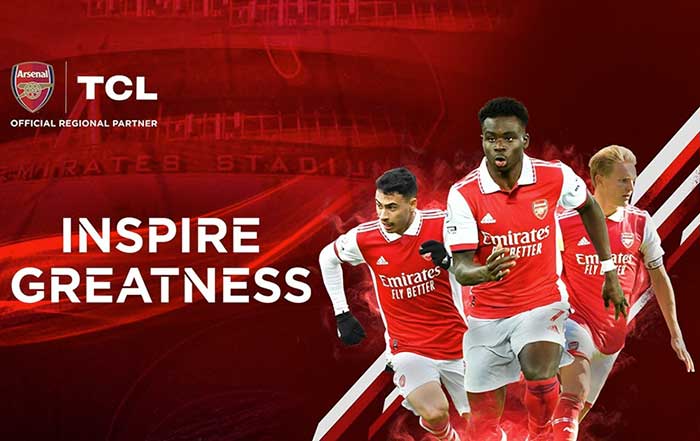
Arsenal's commercial strategy in 2026 is anchored in its identity as a global lifestyle brand as much as a football club. Long-term partnerships with Adidas, Emirates Airline, and Visit Rwanda exemplify how the club leverages its heritage, aesthetics, and worldwide reach to create high-value sponsorships. This approach is frequently referenced in market analyses by outlets such as Forbes and Bloomberg, which place Arsenal consistently among the world's most valuable sports franchises.
The club's expansion into key markets-including the United States, China, India, Australia, and across Africa-is supported by pre-season tours, regional academies, and localized digital content. These initiatives reflect a sophisticated understanding of cultural nuance and market segmentation, aligning with best practices in global brand management documented by institutions like the Harvard Business Review and the World Economic Forum. For readers of sportsyncr.com/world, Arsenal offers a powerful example of how a historically local institution can scale globally without entirely losing its roots.
Those specifically interested in the sponsorship dimension can find further comparative analysis in sportsyncr's sponsorship coverage, where Arsenal's partnerships are often cited as reference points for strategic alignment between clubs and brands.
Community, Social Impact, and Environmental Responsibility
Arsenal's authority as an institution is underpinned not only by trophies and commercial metrics but also by the work of the Arsenal Foundation and the club's broader community initiatives. Programs such as "Arsenal in the Community" focus on education, employability, mental health, and social inclusion, particularly in North London but also through international partnerships in regions across Africa, Asia, and South America. Collaborations with organizations like Save the Children and UNICEF are frequently highlighted in case studies on sport and development by bodies such as the UN Office on Sport for Development and Peace and the Laureus Sport for Good Foundation.
In parallel, Arsenal's environmental agenda-ranging from energy-efficient stadium operations and sustainable transport initiatives to reductions in single-use plastics-positions the club within a growing movement of climate-conscious sports organizations. Reports from groups like Sport Positive and the UN Sports for Climate Action Framework regularly cite Arsenal among clubs making structured commitments to sustainability. For readers of sportsyncr.com/environment, Arsenal's approach illustrates how environmental strategy can be integrated into core business operations rather than treated as peripheral CSR.
Rivalries, Culture, and Narrative Power
Arsenal's cultural resonance is amplified by its rivalries, which continue in 2026 to shape how the club is perceived domestically and globally. The North London Derby against Tottenham Hotspur remains one of the Premier League's most emotionally charged fixtures, encapsulating neighborhood identity, historical migration patterns, and contrasting football philosophies. Meanwhile, historic rivalries with Manchester United and Chelsea still frame many of the league's key narratives, especially for international audiences whose engagement with English football has been shaped by televised clashes from the late 1990s onward.
These rivalries function as cultural events as much as sporting contests, drawing in fans who may be as interested in the social and symbolic dimensions of competition as in the tactical specifics. Media analysis by outlets such as the BBC and Sky Sports often highlights how Arsenal's stylistic identity-traditionally associated with technical quality and attacking intent-interacts with the pragmatism or physicality of its rivals. For those exploring how rivalries influence fan identity, local economies, and global narratives, sportsyncr's sports culture coverage provides comparative perspectives across leagues and continents.
Governance, Global Football Politics, and Arsenal's Voice
Arsenal's role in global football politics has become more visible in the 2020s, particularly through debates around competition formats, financial regulation, and club ownership. As a founding member of the Premier League and a long-standing participant in the UEFA Champions League, Arsenal occupies a seat at the table in discussions that shape the future of the sport. The club's positioning during the failed European Super League project and its subsequent engagement with supporter groups, including the Arsenal Supporters' Trust, highlight the growing importance of fan consultation and governance transparency.
Organizations such as the Football Supporters' Association and think tanks like the European Club Association have used Arsenal's experiences to illustrate both the risks of top-down decision-making and the potential of more collaborative models. For readers following these developments, sportsyncr's news and governance coverage situates Arsenal within a broader global conversation about the future structure and regulation of elite sport.
Arsenal and the Wider Sportsyncr.com Landscape
For sportsyncr.com, Arsenal functions as a connective thread across multiple domains of interest. In the realm of health and performance, the club's integration of sports science, nutrition, and mental conditioning speaks directly to themes explored in sportsyncr's health section. From a cultural standpoint, the club's global fanbase, its role in shaping football aesthetics, and its influence on fashion and music intersect with narratives developed at sportsyncr.com/culture. In business terms, Arsenal's sponsorship strategy, media operations, and global brand development are closely aligned with the analytical focus of sportsyncr's business coverage.
Even beyond traditional sport, Arsenal's presence in gaming-through official partnerships with titles such as EA SPORTS FC and esports collaborations-connects to the evolving ecosystem covered at sportsyncr.com/gaming. The club's engagement with social platforms, community activism, and youth outreach resonates with the themes of identity, inclusion, and digital community explored in sportsyncr's social section. In effect, Arsenal serves as a living, evolving case study that allows sportsyncr.com to tie together sport, technology, culture, environment, and business into a coherent, real-world narrative.
Looking Ahead: Arsenal's Trajectory in a Changing World
As of 2026, Arsenal's position in global football is that of a club that has weathered structural, financial, and competitive upheaval while retaining a recognizable identity rooted in style, innovation, and community. The men's team, under Mikel Arteta, continues to challenge for major honors, blending academy talent with strategically acquired experience. Arsenal Women maintain their status as a flagship for the women's game, contributing to a rapidly professionalizing global ecosystem. The Hale End Academy remains a cornerstone of sustainable performance, while the Emirates Stadium and club-wide digital infrastructure anchor a sophisticated commercial and fan-engagement model.
In a world where sports organizations are increasingly judged not only on their results but also on their governance, social impact, and environmental footprint, Arsenal's evolution demonstrates how a historic club can adapt without surrendering its core values. For the global, cross-disciplinary audience of sportsyncr.com, Arsenal's continuing journey offers a rich source of insight into how sport, business, culture, and technology intersect-and how, when managed with expertise and a long-term vision, they can reinforce rather than undermine one another.
Ultimately, Arsenal's enduring motto, Victoria Concordia Crescit-"Victory Through Harmony"-captures more than a romantic ideal. In 2026 it stands as a strategic principle: success built not on a single dimension, but on the harmonious integration of performance, governance, community, and innovation. That is the standard by which Arsenal will continue to be assessed, and it is the lens through which sportsyncr.com will keep examining the club's next chapters in the evolving story of global sport.