

The Future of Virtual Fitness Experiences
A New Era for Digital Performance and Wellbeing
Virtual fitness has moved far beyond the novelty of streaming workouts on a laptop screen and has become a central pillar of the global sports, health and wellness economy. For the audience of Sportsyncr-who live at the intersection of sports, fitness, health, culture, technology and business-the evolution of virtual fitness experiences is not merely a question of what the next app will look like, but how an entire performance ecosystem is being re-engineered around data, immersion and community. As connected devices, mixed reality and AI-driven coaching mature simultaneously, the boundaries between traditional sport, at-home exercise and digital entertainment are dissolving, creating a new competitive landscape that is as relevant to elite athletes as it is to casual participants and corporate wellness leaders.
The transformation can be traced through the rapid growth of digital fitness platforms, the mainstream adoption of wearables, and the steady integration of sports science into consumer technology. Reports from organizations such as McKinsey & Company and Deloitte have highlighted how the global wellness market has expanded into a multi-trillion-dollar sector, with virtual fitness now embedded in broader lifestyle and performance habits across North America, Europe and Asia. Readers who follow the latest and greatest developments on Sportsyncr sports coverage will recognize that virtual experiences are no longer a side channel; they increasingly shape how fans train, compete, recover and connect with clubs, brands and one another.
From On-Demand Workouts to Immersive Performance Ecosystems
The first generation of virtual fitness was dominated by on-demand video libraries and basic live streams. Platforms such as Peloton, Apple Fitness+ and Les Mills+ demonstrated that high-quality content, charismatic trainers and integrated hardware could build strong subscription businesses, even before the pandemic accelerated adoption. Today, however, the most forward-looking providers are transitioning from content libraries to performance ecosystems that combine real-time biometrics, adaptive coaching algorithms and gamified environments.
This shift is driven by advances in cloud infrastructure, low-latency connectivity and sensor technology, which now allow platforms to ingest and process large volumes of physiological data in real time. Organizations like WHOOP and Oura popularized continuous recovery and strain tracking, while Garmin and Polar helped standardize training load metrics across endurance sports. As these data streams are integrated into virtual platforms, users no longer simply "follow along" with a workout; instead, they receive session-by-session adjustments based on heart rate variability, sleep quality and historical performance patterns. Those who track their training on Sportsyncr fitness insights increasingly expect this kind of responsive, evidence-based guidance as standard.
Learn more about how the broader digital health ecosystem is evolving through resources from organizations such as the World Health Organization and the U.S. Centers for Disease Control and Prevention, which are examining the role of digital tools in promoting population-level activity and reducing the burden of lifestyle-related disease. As public health agencies recognize the potential of virtual fitness to reach underserved populations, businesses are being encouraged to align product development with long-term health outcomes, not just engagement metrics.
The Convergence of Sports Science and Consumer Technology
One of the defining characteristics of the future virtual fitness landscape is the deepening integration of sports science into mainstream consumer products. Historically, advanced performance analytics were reserved for elite athletes working with professional clubs, federations and institutes such as the Australian Institute of Sport or UK Sport. Today, many of the same methodologies-ranging from lactate threshold estimation to neuromuscular fatigue assessment-are being approximated through consumer wearables and smartphone sensors, then delivered through user-friendly interfaces.
Organizations like the American College of Sports Medicine and the National Strength and Conditioning Association continue to publish evidence-based guidelines on exercise prescription, intensity distribution and recovery, which in turn inform algorithm design for virtual coaching platforms. When combined with machine learning, these guidelines enable highly individualized programming that adapts not only to a user's fitness level but also to their injury history, sport specificity and personal goals. For the performance-oriented audience of Sportsyncr, this means that the gap between elite and everyday practice is narrowing, as best-in-class methodologies are embedded directly into the digital tools they already use.
At the same time, the challenge of ensuring data accuracy and validity remains significant. Leading research institutions such as Stanford University, ETH Zurich and the University of Toronto are conducting validation studies on consumer wearables, examining how closely they track gold-standard laboratory equipment under different conditions. Learn more about these efforts through platforms like PubMed and the National Institutes of Health, where peer-reviewed findings are shaping the next generation of sensor design and algorithm calibration.
Mixed Reality, Spatial Computing and the Redefinition of "Place"
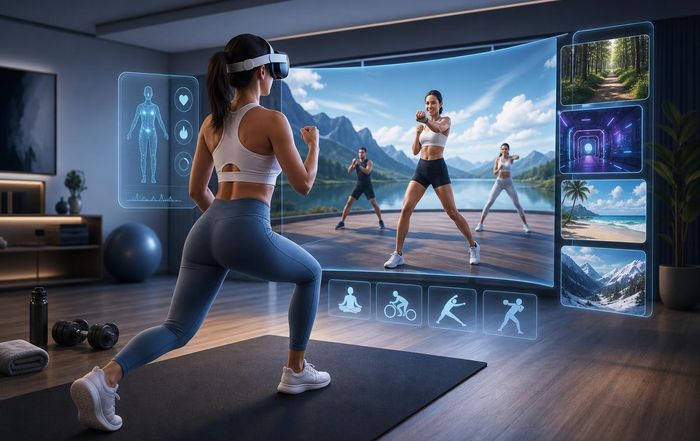
Perhaps the most visible frontier in virtual fitness is the emergence of mixed reality (MR) and spatial computing, which allow digital training environments to be superimposed onto the physical world. Devices such as Apple Vision Pro, Meta Quest 3 and an expanding range of MR headsets from Samsung, Sony and Pico are enabling experiences that blend real-world movement with virtual coaching, competition and storytelling. Instead of being confined to a flat screen, users can now navigate three-dimensional training spaces, interact with virtual teammates or opponents, and visualize performance metrics as holographic overlays in their living rooms, gyms or outdoor environments.
For sports and fitness brands, this redefinition of "place" has strategic implications. Traditional gyms and studios in markets like the United States, United Kingdom, Germany and Singapore are experimenting with hybrid models where physical spaces are instrumented with sensors and projection systems, turning group classes into semi-virtual events that can be attended both in person and remotely. Learn more about how spatial computing is reshaping industries through resources from organizations such as MIT Media Lab and the IEEE, which are exploring standards and best practices for immersive technologies.
From a cultural perspective, this transition aligns with broader shifts covered regularly on Sportsyncr culture features, where the blending of digital and physical identities in gaming, esports and social media has normalized the idea that meaningful experiences can occur in virtual or hybrid environments. Virtual fitness is tapping into the same sensibilities, leveraging narrative, visual design and social mechanics to create training environments that feel more like interactive worlds than conventional workout rooms.
Hyper-Personalization Through AI Coaching and Behavioral Insights
Artificial intelligence is at the core of the next wave of virtual fitness innovation, not only in terms of performance analytics but also in behavioral design and long-term engagement. AI-driven coaching systems are evolving from simple rule-based recommendation engines into sophisticated agents that can interpret multimodal data, including movement patterns captured via computer vision, biometric signals from wearables, and contextual information such as time of day, location and previous adherence patterns.
Companies like Google, Microsoft and Amazon Web Services are providing the underlying AI infrastructure, while specialized fitness technology firms build domain-specific models that understand training periodization, injury risk and motivational dynamics. Learn more about responsible AI development through organizations such as the Partnership on AI and the OECD AI Policy Observatory, which are shaping frameworks for transparency, fairness and accountability that will increasingly be applied to health and fitness applications.
For users, this means that virtual fitness experiences will become more conversational, adaptive and context-aware. Instead of selecting from a static library of programs, individuals will interact with AI coaches that remember their preferences, respond to their feedback in natural language and adjust training prescriptions when travel, stress or minor injuries disrupt planned routines. This level of personalization aligns with the broader health-first orientation highlighted on Sportsyncr health analysis, where sustainable progress and long-term wellbeing are prioritized over short-term performance spikes.
Community, Social Capital and the New Fitness Network Effect
While technology underpins the evolution of virtual fitness, the long-term success of these experiences will be determined by their ability to cultivate authentic communities that transcend geography. The network effects that transformed social media and gaming are now being applied to fitness, where leaderboards, group challenges and live events create social incentives for consistency and progression. Organizations such as Strava have demonstrated how powerful community-driven platforms can become when they successfully blend training logs, social sharing and competitive features into a single experience.
For brands and rights holders in the sports industry, this social dimension opens new pathways for engagement and monetization. Professional clubs, leagues and event organizers across Europe, North America and Asia are launching virtual training programs that allow fans to "train like the team," participate in remote pre-season camps or join synchronized workouts on match days. Learn more about evolving fan engagement models through resources from FIFA, the NBA, Premier League and the International Olympic Committee, all of which are experimenting with digital extensions of their core products.
On Sportsyncr social coverage at sportsyncr.com/social, the interplay between fitness, identity and online community is a recurring theme, particularly among younger demographics in markets such as Brazil, South Korea and the United States. For these users, virtual fitness is not just a means of staying active; it is a social language, a way to signal values, aspirations and affiliations through participation in specific programs, challenges or brand ecosystems.
Business Models, Brands and the Competitive Landscape
The commercial architecture of virtual fitness is undergoing a significant reconfiguration as well. Subscription models remain central, but they are increasingly complemented by tiered access, corporate wellness partnerships, performance-based incentives and brand collaborations. For the business-oriented readers of Sportsyncr business insights, understanding how these models evolve is critical to evaluating investment opportunities and partnership strategies.
Global brands such as Nike, Adidas, Lululemon and Under Armour are building or acquiring digital platforms that extend their reach beyond apparel and equipment into ongoing training relationships. Learn more about the broader sports business landscape through sources like SportBusiness, PwC's Sports Survey and the World Economic Forum, which analyze how digital transformation is reshaping value chains from media rights to sponsorship. At the same time, boutique software firms and startups from regions like Scandinavia, Singapore and Canada are creating specialized products for niche communities, from endurance athletes and combat sports practitioners to corporate executives seeking high-touch remote coaching.
A key area of growth is the integration of virtual fitness into employer-sponsored wellness programs and insurance incentives. Organizations like Vitality, Aetna and UnitedHealthcare are experimenting with reward structures that tie premium discounts or benefits to verified activity levels captured through digital platforms. This alignment of economic incentives with daily behavior has the potential to drive large-scale adoption, particularly in markets where healthcare costs are high and sedentary lifestyles are prevalent.
Technology, Data Governance and Trust
As virtual fitness experiences become more data-intensive and interconnected, trust emerges as a decisive factor in user adoption and retention. The volume and sensitivity of data involved-ranging from heart rhythms and sleep patterns to location histories and mental health indicators-require rigorous governance frameworks that comply with regulations such as the EU's General Data Protection Regulation (GDPR) and evolving privacy laws in the United States, Canada, Brazil and across Asia.
Organizations such as the Electronic Frontier Foundation and the Future of Privacy Forum are actively examining how consumer health data is collected, stored and shared, and their findings are increasingly relevant to fitness platforms that operate across borders. For the Sportsyncr audience, which includes professionals in technology, legal and policy roles, the ability of a platform to demonstrate robust security practices, transparent consent mechanisms and clear data portability options will be a key determinant of its long-term viability.
On Sportsyncr technology coverage, the conversation frequently extends beyond functionality to questions of digital rights, algorithmic bias and interoperability. As more users connect multiple devices and services-from smart watches and connected equipment to nutrition apps and telehealth providers-the need for open standards and secure APIs becomes paramount. Industry alliances and standards bodies will play a crucial role in ensuring that innovation does not come at the expense of user agency and privacy.
Global Reach, Local Contexts and Cultural Nuance
Although virtual fitness is inherently borderless, its adoption patterns and product-market fit vary significantly across regions. In North America and Western Europe, high broadband penetration and widespread wearable usage create favorable conditions for advanced, data-rich experiences. In markets such as India, Brazil, South Africa and parts of Southeast Asia, mobile-first solutions optimized for lower bandwidth and more affordable devices are gaining traction. Meanwhile, in countries like Japan, South Korea and Singapore, dense urban environments and strong gaming cultures are fostering hybrid experiences that blend fitness, esports and entertainment.
International organizations such as the OECD and the World Bank provide valuable macro-level insights into digital infrastructure, income distribution and health indicators, all of which influence how virtual fitness models should be localized. For example, in some European markets where cycling culture is deeply embedded, virtual platforms focused on indoor cycling and endurance training find strong resonance, while in parts of Asia, dance-based and martial arts-inspired formats align more closely with cultural preferences.
On Sportsyncr world analysis, these regional dynamics are tracked closely, highlighting how brands and platforms that respect local norms, languages and training traditions are better positioned to build durable communities. Localization extends beyond translation to include training methodologies, visual design, soundtrack choices and even the timing of live events, all of which contribute to a sense of cultural relevance and belonging.
Sustainability, Environment and the Future of Physical Infrastructure
The environmental dimension of virtual fitness is emerging as a significant consideration for both consumers and policymakers. On one hand, the ability to train from home or local spaces can reduce commuting to gyms and studios, potentially lowering emissions associated with transportation and large commercial facilities. On the other hand, the growing reliance on cloud computing, data centers and consumer electronics raises questions about energy consumption, e-waste and the lifecycle impact of hardware.
Organizations such as the United Nations Environment Programme and the International Energy Agency are publishing analyses on the environmental footprint of digital technologies, providing a framework for assessing the net impact of virtual fitness ecosystems. For environmentally conscious readers of Sportsyncr environment coverage, the future of virtual fitness will be judged not only by its capacity to improve health and performance but also by its contribution to broader sustainability goals, such as responsible sourcing of materials, device longevity and energy-efficient cloud infrastructure.
Forward-thinking companies are beginning to incorporate environmental metrics into their product roadmaps, exploring modular hardware designs, refurbishment programs and carbon-aware computing strategies. As regulatory pressure increases, particularly in the European Union and markets like Canada and Australia, environmental performance may become a competitive differentiator alongside user experience and content quality.
The Role of Sportsyncr in a Rapidly Evolving Landscape
As virtual fitness experiences become more sophisticated, interconnected and consequential, there is a growing need for trusted, independent analysis that helps athletes, enthusiasts, executives and policymakers navigate the complexity. Sportsyncr is positioning itself as a central hub where these conversations converge, connecting insights from sports, fitness, health, business, technology, culture, social trends and global developments into a coherent narrative.
By curating expert perspectives, highlighting rigorous science and critically evaluating emerging products and business models, Sportsyncr aims to support readers in making informed decisions about how they train, invest, partner and compete in an increasingly virtualized ecosystem. Whether the focus is on a new AI-driven coaching platform, a mixed reality training environment, a workplace wellness initiative or a sustainability-focused hardware innovation, the guiding lens remains consistent: experience, expertise, authoritativeness and trustworthiness.
Looking ahead, the future of virtual fitness will be defined not by any single technology or company but by the interplay of human ambition, scientific insight and responsible innovation. For those who follow Sportsyncr, the opportunity is to help shape that future-advocating for experiences that are not only engaging and effective but also ethical, inclusive and sustainable across regions, cultures and performance levels.