

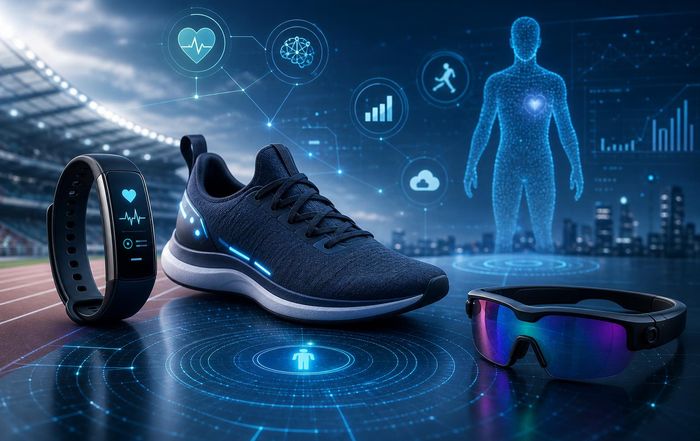
The Future of Connected Health and Sports Technology
Introduction: A New Operating System for Human Performance
As sports seasons change, the convergence of connected health and sports technology is rapidly transforming how athletes train, how fans engage, how brands invest, and how health systems operate. What began as simple step counters and heart-rate monitors has evolved into a sophisticated, data-rich ecosystem in which biometric sensors, artificial intelligence, immersive media, and global platforms interact in real time. In this emerging landscape, SPORTSYNCR positions itself not simply as an observer but as a connective tissue between sports, fitness, health, culture, business, and technology, curating and interpreting the forces reshaping performance and wellbeing across the world.
The global sports technology market, tracked by organizations such as Statista and industry observers at Deloitte, has grown from a niche segment into a strategic pillar for leagues, clubs, broadcasters, and healthcare providers. At the same time, connected health platforms monitored by bodies like the World Health Organization and the U.S. Food and Drug Administration are redefining how prevention, diagnosis, and treatment are delivered. The future of connected health and sports technology is not about gadgets in isolation; it is about building an integrated performance and health infrastructure that stretches from elite stadiums in the United States and Europe to community gyms in Asia, Africa, and South America, and into homes and workplaces worldwide.
For readers of SPORTSYNCR, who navigate the intersections each day of sports, fitness, health, brands, and business, understanding this convergence is no longer optional. It is a strategic necessity for athletes, executives, investors, policymakers, and innovators seeking to build sustainable, high-performance futures.
From Wearables to Integrated Human Performance Systems
The first wave of sports wearables, popularized in the early 2010s by companies like Fitbit, Garmin, and Apple, focused primarily on step counts, heart rate, and basic sleep tracking. Over the past decade, those capabilities have been eclipsed by multi-sensor platforms capable of monitoring heart rate variability, oxygen saturation, respiratory rate, skin temperature, and even stress proxies derived from physiological signals. Devices from Apple, Samsung, WHOOP, Oura, and performance brands such as Polar and Suunto now function as always-on health companions that feed data into increasingly sophisticated cloud-based analytics systems, many of which leverage machine learning models informed by research from institutions like Harvard Medical School and the Mayo Clinic.
In professional sport, integrated athlete management systems combine wearable data with GPS tracking, video analytics, and subjective wellness reports to create a 360-degree view of readiness and risk. Elite football clubs in the English Premier League, basketball organizations in the NBA, and rugby federations in Europe and South Africa have adopted platforms that integrate training loads, biomechanical data, and medical histories, enabling performance staff to make evidence-based decisions on training intensity, recovery protocols, and return-to-play timelines. Interested readers can explore how technology is changing the game by following coverage on sports technology trends and their impact on performance and fan engagement.
For the broader population, the same underlying technologies are being repurposed for preventive health. Remote patient monitoring tools, which initially focused on chronic conditions such as heart failure and diabetes, now incorporate consumer-grade wearables that transmit data to clinicians through secure platforms supported by organizations like the National Institutes of Health and the European Commission's digital health initiatives. This blurring of lines between sports performance tools and medical-grade monitoring is central to the future of connected health, and it is an area where SPORTSYNCR is increasingly curating stories that sit at the junction of health, science, and high-performance sport.
AI, Data, and the New Playbook for Performance and Prevention
Artificial intelligence has moved from experimental pilot projects to core infrastructure in both sports and health. In performance environments, AI-driven models ingest vast streams of data from wearables, computer vision systems, and historical performance databases to predict injury risk, optimize training loads, and tailor game strategies. Organizations like Catapult Sports, Hudl, and Second Spectrum have pioneered systems that translate complex movement and game data into actionable insights for coaches and analysts, while clubs and federations partner with analytics teams inspired by research shared through platforms such as MIT Sloan Sports Analytics Conference.
In healthcare, AI has become integral to imaging diagnostics, triage, and risk stratification. Companies such as Google DeepMind, Siemens Healthineers, and Philips Healthcare collaborate with hospitals and research institutions to build models that support clinicians in detecting disease earlier and managing care pathways more efficiently. The World Economic Forum and OECD have documented how AI, when governed responsibly, can improve outcomes and reduce costs, especially when combined with continuous data streams from connected devices.
The most profound shift, however, lies in the convergence of these systems. The same AI models that help a professional cyclist in France or Italy fine-tune training based on heart rate variability and sleep quality can be adapted to help a working professional in Canada manage stress, avoid burnout, and maintain cardiovascular health. When organizations integrate AI-driven insights into broader wellbeing programs, they create a bridge between elite performance and everyday health, a theme that resonates across SPORTSYNCR's coverage of fitness, social wellbeing, and workplace culture.
This convergence also raises important questions about data governance and ethics. Regulators in the United States, European Union, and Asia-Pacific are updating frameworks for data privacy, algorithmic transparency, and medical device regulation. Stakeholders who wish to learn more about responsible AI in health and sport can follow guidance from bodies such as the European Medicines Agency and the UK's National Health Service AI Lab, which are shaping standards for safe and effective deployment of AI in clinical and performance settings.
Hyper-Personalization: From Mass Markets to Markets of One
Connected health and sports technology are driving a shift from generalized recommendations to hyper-personalized interventions that adapt to the unique physiology, behaviors, and goals of each individual. Where traditional fitness programs might have prescribed a fixed set of workouts, modern platforms adjust training intensity, recovery windows, and nutritional guidance dynamically, based on continuous data streams and contextual information such as travel, sleep disruption, and environmental conditions.
In elite sports, personalization manifests in individualized training plans, tailored recovery protocols, and even customized equipment. Biomechanical analysis, powered by motion capture and computer vision systems, allows performance staff to adjust running mechanics, throwing actions, or swing paths to reduce injury risk and enhance efficiency. Athletes in leagues from the NFL to the Bundesliga are increasingly supported by multidisciplinary teams that combine sports science, data analytics, psychology, and nutrition, drawing on frameworks developed by organizations like the American College of Sports Medicine and the International Olympic Committee.
For consumers, hyper-personalization appears in the form of adaptive workout apps, digital coaching platforms, and connected equipment that learns from usage patterns. Smart bikes, treadmills, and rowing machines, produced by companies such as Peloton, Technogym, and NordicTrack, now integrate with wearables and health records to provide finely tuned recommendations. Those interested in how such technologies are influencing global fitness habits can explore coverage on fitness innovation and connected training, where SPORTSYNCR tracks the evolution of home and gym-based performance ecosystems.
Nutrition is experiencing a similar transformation, driven by advances in genomics, microbiome analysis, and continuous glucose monitoring. Platforms inspired by research from institutions like Stanford Medicine and the Cleveland Clinic promise to tailor dietary guidance to individual metabolic responses, offering athletes and health-conscious consumers a more precise approach than traditional one-size-fits-all guidelines. While the science is still evolving and regulatory scrutiny remains high, the direction of travel is clear: connected health and sports technology are moving toward personalized, adaptive systems that treat each user as a unique performance project.
The Connected Athlete: Wearables, Implants, and the Edge of Human Limits
As technology pushes deeper into the body, the future of the connected athlete extends beyond wristbands and chest straps into smart textiles, embedded sensors, and, in some cases, minimally invasive implants. Performance garments embedded with sensors can monitor muscle activation, posture, and impact forces, providing real-time feedback to athletes and coaches. Research initiatives supported by organizations such as Adidas, Nike, and Under Armour, in collaboration with engineering departments at universities like ETH Zurich and Imperial College London, are exploring how smart materials and nanotechnology can create clothing that senses, responds, and even adapts to physiological states and environmental conditions.
In contact sports such as American football, rugby, and ice hockey, head-impact sensors built into helmets or mouthguards monitor collision forces, providing critical data for concussion protocols and long-term brain health research. Governing bodies, including World Rugby, FIFA, and national federations in North America and Europe, are experimenting with these technologies to enhance player safety, supported by independent research published through organizations like the Centers for Disease Control and Prevention and the Brain Injury Association.
Looking ahead, minimally invasive implants and ingestible sensors are being tested for applications ranging from continuous core temperature monitoring to real-time hydration and electrolyte tracking. While ethical, regulatory, and competitive balance questions remain, these technologies hint at a future in which the distinction between human physiology and digital infrastructure becomes increasingly blurred. For SPORTSYNCR, this frontier represents a critical intersection of science, sports, and environmental conditions, particularly as climate change alters the heat, humidity, and air quality conditions under which athletes must perform.
Fans, Culture, and the Immersive Sports Health Ecosystem
The future of connected health and sports technology is not confined to athletes and patients; it is reshaping fan experiences and cultural narratives around sport, wellness, and identity. Streaming platforms, social media, and interactive technologies are enabling fans from Japan to Brazil and from Germany to South Africa to participate in live fitness events, virtual races, and community challenges that mirror the training regimens of their favorite athletes. Platforms such as Zwift and Strava have turned endurance sports into global social networks, where performance data doubles as social currency and storytelling medium, while esports and sports gaming communities documented on gaming and virtual sports are increasingly integrating physical performance metrics into digital competition.
Augmented reality and virtual reality are adding new layers to this ecosystem. Broadcasters and rights holders are experimenting with mixed-reality overlays that display real-time biometric data, speed, and tactical information during live games, deepening engagement while raising complex questions about privacy and competitive integrity. Technology firms like Meta, Microsoft, and Sony are exploring how immersive environments can host virtual training sessions, remote coaching, and fan experiences that blend physical activity with digital entertainment. Those seeking to understand how immersive technologies are transforming media and sport can explore analyses from organizations such as PwC and McKinsey & Company, which track investment flows and adoption patterns across global markets.
For SPORTSYNCR, this fusion of performance data, storytelling, and community sits at the heart of its coverage of culture and social trends. As fans increasingly expect transparency into training, recovery, and wellbeing, athletes and organizations must navigate the tension between openness and overexposure, between leveraging data for engagement and protecting the human behind the numbers.
Brands, Sponsorship, and the Economics of Connected Performance
The commercial implications of connected health and sports technology are profound. Brands across sportswear, technology, healthcare, nutrition, and consumer electronics are competing to position themselves as enablers of performance and wellbeing, leveraging data, content, and partnerships to build deeper, more durable relationships with consumers. Sponsorship has evolved from static logo placement to dynamic, data-enhanced storytelling, where brands can align themselves with measurable outcomes such as steps taken, workouts completed, or community challenges achieved.
Global sponsors like Nike, Adidas, Puma, Coca-Cola, and Red Bull are integrating connected experiences into campaigns around major events such as the Olympic Games, FIFA World Cup, and regional competitions in Asia, Europe, and the Americas. These initiatives often combine wearable integrations, app-based challenges, and live experiences to create a continuous engagement loop. Industry observers can learn more about sustainable and data-driven sponsorship models through resources from the International Sports Press Association and marketing analysis by WARC.
For rights holders and leagues, connected health and sports technology open new revenue streams in data licensing, performance content, and digital products. At the same time, they demand new capabilities in data governance, cybersecurity, and product development. As SPORTSYNCR expands its coverage of brands, business, and sponsorship, it highlights both the opportunities and the responsibilities that accompany this shift, particularly in emerging markets where infrastructure, regulation, and consumer expectations are evolving rapidly.
Global Health, Equity, and the Role of Policy
The promise of connected health and sports technology is global, but so are the risks of deepening inequality. While consumers in the United States, United Kingdom, Germany, Singapore, and South Korea increasingly enjoy access to advanced devices, high-speed connectivity, and integrated digital health services, many communities in Africa, parts of Asia, and South America still face barriers in infrastructure, affordability, and digital literacy. Organizations such as the World Bank and UNESCO emphasize that digital transformation in health and sport must be accompanied by investments in connectivity, education, and inclusive design.
Public policy will play a decisive role in shaping whether connected health and sports technology become tools for broad-based wellbeing or privileges confined to affluent segments. National strategies in Canada, Australia, France, and Nordic countries are experimenting with integrating wearables into public health initiatives, incentivizing physical activity, and supporting remote care in rural and underserved areas. Those interested in learning more about sustainable public health and activity promotion can review frameworks from the World Health Organization's Global Action Plan on Physical Activity and related policy papers.
For SPORTSYNCR, which reaches readers across world news, environment, and jobs, understanding the policy and workforce implications is critical. The growth of connected health and sports technology is creating new roles in data science, digital coaching, health informatics, and product development, while challenging existing professions to adapt. Universities and training providers in Europe, North America, and Asia-Pacific are launching interdisciplinary programs that combine sports science, computer science, and health policy, preparing a new generation of professionals to navigate this complex ecosystem.
Sustainability, Environment, and the Ethics of Innovation
As the sports and health sectors become more technology-intensive, questions of sustainability and environmental impact come to the forefront. The proliferation of devices, data centers, and connected infrastructure carries a carbon footprint and resource demand that must be addressed if the industry is to align with global climate targets outlined by bodies such as the Intergovernmental Panel on Climate Change. Forward-looking organizations are beginning to incorporate lifecycle assessments, circular economy principles, and renewable energy commitments into their technology strategies, seeking to balance innovation with responsibility.
Sport itself is on the front lines of climate impact, with heatwaves, air pollution, and extreme weather affecting events from marathons in Asia to winter sports in Europe and North America. Connected health technologies can help monitor and mitigate risks for athletes and spectators, but they must be deployed within broader sustainability frameworks. Readers can learn more about sustainable business practices and climate-conscious innovation through resources from UN Global Compact and CDP, which offer guidance on measuring and managing environmental impact.
For SPORTSYNCR, integrating environmental considerations into coverage of sports, technology, and environment is not optional. The future of connected health and sports technology must be evaluated not only in terms of performance and profit but also in terms of planetary boundaries and intergenerational equity.
The Road to 2030: Strategic Priorities for Stakeholders
Looking toward 2030, the trajectory of connected health and sports technology will be shaped by strategic choices made today by athletes, teams, brands, healthcare providers, regulators, and media platforms. Several priorities are emerging as particularly critical.
First, interoperability and open standards will determine whether data flows seamlessly across devices, platforms, and jurisdictions, or whether siloed ecosystems limit value and fragment user experiences. Standards bodies and industry consortia, supported by regulators and large technology firms, will need to align on frameworks that protect privacy while enabling innovation.
Second, trust will be a decisive competitive advantage. Organizations that demonstrate rigorous data governance, transparent AI practices, and clear value propositions will earn the right to handle sensitive health and performance data. Those that treat data as a short-term asset rather than a long-term relationship may find themselves marginalized by regulators and consumers alike.
Third, human-centered design will distinguish technologies that genuinely enhance wellbeing from those that merely add complexity or encourage unhealthy behaviors. As research from institutions like the London School of Economics and Karolinska Institutet suggests, technology must be integrated into broader systems of social support, education, and culture to drive sustainable behavior change.
Finally, cross-sector collaboration will be essential. The most significant innovations at the intersection of connected health and sports technology will emerge where sports organizations, healthcare systems, technology companies, academic institutions, and media platforms work together. SPORTSYNCR, by curating insights across news, business, science, and culture, aims to serve as a bridge in this ecosystem, helping stakeholders understand both the opportunities and the responsibilities that lie ahead.
Conclusion: SPORTSYNCR's Lens on a Connected Performance Future!
The future of connected health and sports technology is not a distant horizon; it is unfolding in real time across stadiums, clinics, workplaces, and homes from New York to London, Berlin to Singapore, Sydney to Cape Town, and beyond. The integration of wearables, AI, immersive experiences, and global platforms is rewriting the rules of performance, prevention, fan engagement, and commercial strategy. At the same time, it is raising profound questions about privacy, equity, sustainability, and the meaning of human limits in a data-saturated world.
In this dynamic context, SPORTSYNCR is committed to providing a clear, happy, and educational lens on the changes reshaping sport, fitness, health, and culture. By drawing connections between elite performance and everyday wellbeing, between business models and social impact, and between technological innovation and environmental responsibility, the platform seeks to equip its audience with the insight needed to navigate and shape the connected future.
As 2026 progresses and new breakthroughs emerge in biosensing, AI, immersive media, and sustainable infrastructure, the central challenge will not be the pace of technological change but the wisdom with which it is applied. The organizations, athletes, policymakers, and fans who approach connected health and sports technology with a long-term, values-driven perspective will be best positioned to harness its power-not only to win more games or close more deals, but to build healthier, more resilient communities around the world.