

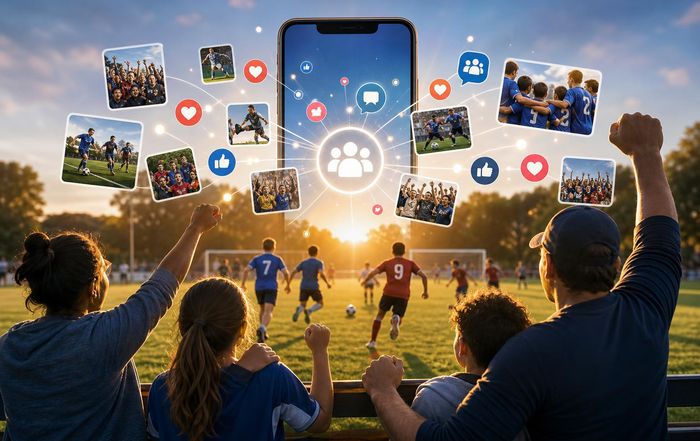
How Social Media Is Rewiring Community Around Local Sports
Local sport has always been about more than scorelines. It is weekend routines, sideline conversations, and the shared language of jerseys, nicknames, and post-game debriefs. Over the past decade, social media has quietly rewired how those communities form, grow, and sustain themselves, from grassroots football clubs in small towns to amateur basketball leagues in major cities. Instead of relying on noticeboards, word of mouth, and local newspapers, teams now organize, fundraise, recruit, and tell their stories through smartphones.
This shift matters because local sport sits at the intersection of many of the themes people care about today: health, youth development, civic identity, small-business sponsorship, and even technology. Understanding how platforms like Instagram, TikTok, Facebook, X, and WhatsApp are reshaping that ecosystem helps explain why some clubs are thriving while others struggle to be heard.
In this piece, we look at the main ways social media is helping local sports build stronger communities, the risks and downsides that come with it, and what practical steps teams can take to use these tools without losing what makes community sport special.
From noticeboard to newsfeed: how social media changes visibility
For decades, community clubs depended on local media coverage, posters, and word of mouth to reach people. That model privileged established organizations and tended to exclude new or minority-led teams. Social media has flattened that hierarchy. A small futsal team can now reach more people with a single well-timed clip than a regional newspaper might with a match report, and a school athletics program can showcase its season directly to families without waiting for a reporter to show up.
Platforms such as Facebook and Instagram let clubs create free pages where they can post fixtures, results, photos, and short videos. TikTok and YouTube have become powerful tools for highlight reels, training tips, and behind-the-scenes content that humanize players and coaches. Even messaging-first tools like WhatsApp and Telegram are now central to team coordination and parent communication. Because these channels are always-on and mobile-first, they match how people already consume information, especially younger athletes who may never read a local print sports section.
The effect is especially visible in regions where traditional local media has shrunk. In many cities and towns, social feeds are now the primary source of hyperlocal sports coverage. Organizations such as community foundations, municipal sport departments, and national governing bodies like FIFA or World Rugby increasingly encourage clubs to maintain active social profiles, because it makes participation pathways more discoverable. For readers interested in broader sports news and trends, curated pages like the sports section on SportSyncr complement this grassroots stream by tying local stories to wider narratives.
Building identity and belonging beyond game day
What makes a club feel like a community rather than a loose collection of people is shared identity: colors, rituals, inside jokes, and the sense that others care about the same thing. Social media extends that identity into the rest of the week. When a club posts training snapshots on Monday, a throwback photo on Wednesday, and a lineup graphic on Friday, it keeps members emotionally connected even when they are not physically together.
Visual platforms encourage that sense of belonging. A youth basketball team that consistently shares photos of every age group and ability level sends a clear message that everyone matters, not just the star players. A wheelchair rugby club that posts short interviews with athletes about their journeys helps normalize disability sport and attracts supporters who might otherwise never attend in person. These narratives can be especially powerful in communities that are under-represented in mainstream sports coverage, including women's teams, LGBTQ+ inclusive leagues, and immigrant-led clubs.
Cultural context also matters. In many countries, local football, cricket, or basketball teams double as social hubs where families connect across generations. Social media adds a digital layer to those relationships. Grandparents can follow their grandchildren's progress from another city; alumni can stay engaged long after they stop playing. When clubs link their social storytelling to broader topics like health and fitness, readers can explore related coverage on dedicated hubs such as health and fitness, reinforcing the idea that participation is about lifestyle as much as competition.
Recruiting players, volunteers, and fans in a crowded attention market
Most local clubs depend on a fragile mix of players, parents, volunteers, and small sponsors. Recruiting and retaining those people is a constant challenge, especially as young people's time is pulled toward gaming, streaming, and social platforms themselves. Ironically, those same platforms are now one of the most effective ways to cut through the noise.
Targeted posts in local Facebook groups or neighborhood forums can quickly fill open roster spots or find volunteer coaches. Short, authentic TikTok or Instagram Reels clips showing fun training drills, team camaraderie, or post-match celebrations often perform better than polished promotional videos, because they feel real. Clubs that share clear, practical information-how to join, costs, age groups, and contact details-alongside this content make it easier for curious viewers to move from passive interest to action.
For adult recreational leagues, social media also functions as a reputation layer. Photos of full sidelines, competitive games, and diverse participants reassure potential newcomers that a league is well-run and welcoming. In many cities, people now search Instagram or TikTok before they join a local club, much as they might check restaurant reviews. Independent sports coverage and directories, including platforms like sportsyncr.com, can amplify that effect by highlighting clubs that are active both on the field and online.
Recruitment is not just about players. Many teams use LinkedIn, X, or Facebook to find physiotherapists, social media volunteers, or board members with business or legal expertise. This intersects with the broader sports employment and volunteering landscape that readers can explore through resources such as jobs and business, where the operational side of sport often gets as much attention as performance.
Fundraising, sponsorship, and the local sports economy
Money is a constant pressure point for grassroots sport: pitch fees, travel costs, equipment, insurance, and referee payments all add up. Social media has opened new pathways for local clubs to stabilize their finances, whether through crowdfunding, merchandise sales, or more sophisticated sponsorship packages.
Crowdfunding platforms promoted through Facebook, Instagram, or X allow teams to raise money for specific needs-tournament travel, facility upgrades, or scholarship funds. Campaigns that include compelling video explainers, clear goals, and regular progress updates tend to perform better. Research from organizations like Sport England and Sport New Zealand suggests that transparent, story-driven fundraising that emphasizes community impact is more successful than generic donation appeals, especially when backers see the tangible benefits of their contributions.
For small businesses, sponsoring a local team is both a marketing decision and a civic gesture. Social media enhances the value of that sponsorship by giving brands recurring visibility: logos in photos and graphics, shout-outs in match reports, and tagged posts that reach not just players but their extended networks. National and regional sports business outlets such as Sports Business Journal or Front Office Sports have documented how even modest digital reach can make grassroots sponsorships more measurable and appealing, particularly when clubs provide basic analytics like post impressions and engagement.
At the same time, clubs must be careful not to let commercial pressures distort their community mission. Over-commercialized feeds that feel more like ad channels than team accounts can alienate members. Many successful organizations strike a balance by integrating sponsor mentions into authentic content-highlighting a local café that hosts team breakfasts, for example-rather than posting standalone promotions. Readers interested in the broader intersection of brands and sport can find deeper coverage through hubs focused on brands and sponsorship.
Youth development, safety, and digital wellbeing
When young athletes are involved, social media brings unique responsibilities. On the positive side, platforms can boost confidence, create role models, and reinforce healthy habits. Seeing their achievements recognized publicly-player-of-the-match posts, academic shout-outs, or progress milestones-can be deeply motivating. Organizations such as the International Olympic Committee and national federations increasingly encourage storytelling that emphasizes effort, teamwork, and resilience rather than just winning.
However, there are well-documented risks. Research from bodies like UNICEF and the World Health Organization highlights concerns around online bullying, body image pressure, and excessive screen time. In sport specifically, young players may feel judged by how "good" they look in clips rather than how much they enjoy playing, and negative comments can be amplified quickly. There are also serious privacy considerations when posting identifiable images of minors, especially in jurisdictions with strict data-protection laws.
Responsible clubs now adopt explicit social media policies. Common elements include obtaining written consent from parents or guardians before posting youth images, avoiding sharing detailed location information in real time, moderating comments, and giving young athletes a voice in how they are portrayed. Many organizations draw on guidance from national sport agencies, child-protection charities, or data-protection regulators such as the Information Commissioner's Office in the UK or the Federal Trade Commission in the United States, which provide high-level rules on children's privacy and online safety.
For families trying to balance sport, school, and screens, broader health and wellbeing resources-like those collected under health and social-can help frame social media as one part of a larger lifestyle, not the center of it.
Tactics that help local clubs use social media effectively
Because many community teams are run by volunteers, sophisticated digital strategies are often unrealistic. Still, a few simple practices can dramatically improve how social media supports community building without consuming excessive time.
First, consistency matters more than volume. A clear posting rhythm-such as one pre-match post, one result update, and one behind-the-scenes feature each week-keeps followers engaged without overwhelming volunteers. Free scheduling tools built into platforms like Meta's Business Suite can help small clubs plan posts in batches rather than scrambling on match day.
Second, authenticity tends to outperform polish. Smartphone photos, short coach interviews, or player-recorded clips often feel more relatable than heavily edited highlight reels. Many successful local clubs actively encourage user-generated content by asking parents and players to tag the team account or use a simple hashtag. Moderation is important, but this approach reduces the burden on a single social media volunteer and reflects the community's diversity more accurately.
Third, accessibility and inclusion should be built in from the start. Adding basic captions to videos, using alt-text for key images, and avoiding jargon or inside jokes without context helps more people feel welcome, including those who are new to the sport or who may not speak the dominant language fluently. Organizations like W3C and disability sport bodies provide general accessibility guidance that clubs can adapt informally without needing specialist expertise.
Finally, clubs benefit from linking their social presence to other digital and physical touchpoints. A simple website or landing page that consolidates fixtures, registration information, and contact details can anchor the social activity. Independent sports news and technology outlets, such as ESPN, BBC Sport, or The Athletic, often cover tools and trends that filter down from professional sport to the grassroots level, giving volunteers ideas they can adapt on a smaller scale. On the local side, community sports coverage on platforms like news and world can highlight examples worth copying in other regions.
Inequality, algorithms, and the risk of leaving people behind
While social media can level the playing field in some ways, it can also create new inequalities. Clubs with tech-savvy volunteers, good equipment, and appealing facilities are more likely to produce eye-catching content that algorithms reward. Teams from lower-income areas, rural communities, or marginalized groups may struggle to compete for attention, even if they deliver just as much value on the ground.
Algorithmic feeds also tend to favor moments of spectacle-spectacular goals, dramatic celebrations, viral dances-over quieter forms of participation like walking football, community yoga, or inclusive programs for older adults. That can skew perceptions of what "counts" as sport and make it harder for low-intensity or recreational programs to attract participants, despite their significant health benefits. Public-health bodies such as the World Health Organization and national agencies like the Centers for Disease Control and Prevention consistently emphasize the importance of everyday physical activity, not just competitive sport, but that message is harder to package for social media.
Language and connectivity barriers add another layer. In many parts of the world, mobile data is expensive or unreliable, and not everyone uses the same platforms. Clubs that rely exclusively on Instagram or TikTok risk excluding older supporters, people without smartphones, or newcomers who are not yet plugged into local digital networks. Maintaining some offline communication-posters at community centers, school partnerships, or local radio-remains important, even as social media becomes central.
These tensions mirror broader debates about technology, equity, and civic life, which readers can explore through technology, world, and environment coverage. Grassroots sport often sits at the frontline of those debates, because it is where digital tools meet everyday realities.
When online energy translates into offline impact
Despite the challenges, some of the most encouraging developments in local sport over the past few years have been driven by social media-enabled mobilization. Community campaigns to save playing fields from development, rebuild storm-damaged facilities, or launch new women's or youth programs have gained momentum precisely because they could spread quickly through local networks online.
Examples range from neighborhood clubs organizing equipment drives for under-resourced teams, to city-wide efforts to create inclusive leagues for refugees and newcomers. In many cases, a single viral post-an emotional video, a powerful photograph, or a clear call to action-has triggered donations, volunteer sign-ups, or political support that would have been hard to generate through traditional channels alone. Civil-society organizations and NGOs, including Amnesty International and Human Rights Watch, have highlighted how sport can support social inclusion and community cohesion; social media often acts as the connective tissue that turns that potential into real initiatives.
At the same time, the most sustainable projects tend to be those that keep the focus on in-person relationships. Online petitions and hashtag campaigns may spark awareness, but it is training sessions, meetings, and shared work days that cement long-term commitment. Clubs that treat social media as a tool to get people to the pitch, court, or pool-rather than an end in itself-are usually the ones that build the strongest communities.
Bringing it together
Social media has not replaced the essence of local sport: people turning up in person, in all weather, to play, coach, cheer, and volunteer. What it has done is expand the ways those people can find each other, stay connected, and tell their stories. It has given small clubs a louder voice, made it easier to recruit and fundraise, and allowed new forms of identity and belonging to grow across neighborhoods, cities, and even borders.
The same tools also bring new risks: privacy concerns for young athletes, online abuse, algorithm-driven inequality, and the temptation to chase clicks at the expense of participation. Navigating that landscape requires intention. Clear policies, modest but consistent content, and a focus on authenticity over spectacle can help clubs harness the benefits while limiting the downsides.
For visitors involved in local sport-as players, parents, coaches, or supporters-the most important question is not which platform to use, but what kind of community they want to build. Social media can amplify whatever is already there. If the core is inclusive, player-centered, and rooted in shared values, the digital layer will tend to reflect that. If it is not, no amount of clever content will fix the underlying issues.
In that sense, the story of social media and local sports is really a story about community itself: who gets seen, who feels welcome, and how a simple game can still bring people together in an increasingly digital world.