

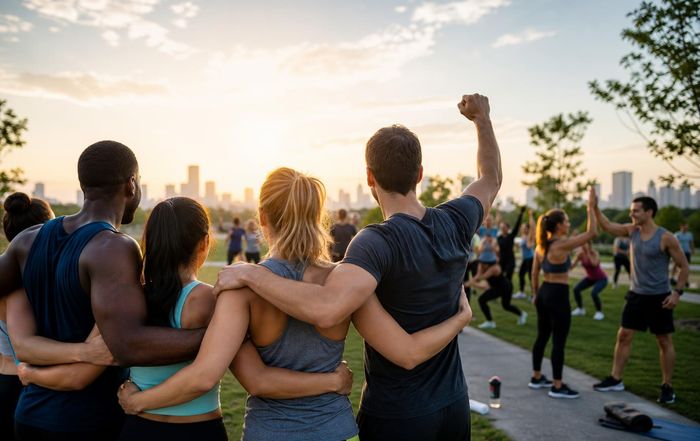
How Fitness Challenges Build Stronger Communities
The New Social Infrastructure: Why Fitness Challenges Matter Now
Fitness challenges have evolved from niche wellness trends into a powerful form of social infrastructure, quietly reshaping how people connect, collaborate and build trust across borders. As hybrid work, digital communities and on-demand lifestyles redefine daily routines from the United States to Singapore and from Germany to Brazil, structured fitness challenges now operate as one of the few consistent, shared experiences that bring people together with a clear purpose, measurable progress and a compelling narrative of collective achievement. For Sportsyncr, whose editorial lens is rooted in the intersection of sports, fitness, health, brands and culture, this evolution is not simply a story about workouts and step counts; it is a story about how modern communities are being built, sustained and monetized through movement.
What distinguishes the fitness challenge ecosystem from earlier waves of wellness initiatives is the convergence of three forces. First, there is the maturation of digital health and wearables, with platforms such as Apple, Garmin and Whoop turning personal data into social currency that can be shared, compared and celebrated within groups; those interested in the broader digital health landscape can explore the work of the World Health Organization on digital health and innovation. Second, there is the corporate and institutional embrace of fitness challenges as a strategic tool for engagement, retention and employer branding, particularly in competitive markets across North America, Europe and Asia, where organizations increasingly benchmark their initiatives against resources from bodies like the World Economic Forum, which highlights well-being as a core business priority. Third, there is a cultural shift in how communities define belonging, with younger generations in the United Kingdom, Canada, Australia and beyond seeking experiences that blend physical activity, social impact and digital storytelling in ways that feel authentic, inclusive and measurable.
Within this context, fitness challenges-whether they involve 10,000 daily steps, virtual marathons, workplace movement streaks or community-based transformation programs-have become a uniquely effective mechanism for building stronger communities that cut across age, geography, profession and background. On Sportsyncr, this narrative aligns directly with ongoing independent and original coverage across sports, fitness and health, where the platform consistently examines how structured physical activity shapes performance, identity and social cohesion in a rapidly changing world.
From Individual Motivation to Collective Identity
The earliest wave of fitness challenges was largely individualistic, focused on self-improvement and personal transformation, often inspired by programs popularized by organizations like CrossFit, Nike and Peloton. Over time, however, the emphasis shifted from isolated goals to shared journeys, as participants discovered that the most powerful motivator was not the promise of a better body, but the experience of being part of a group moving in the same direction. Research from institutions such as Harvard T.H. Chan School of Public Health, which explores the impact of social connections on health, reinforces the idea that belonging can be as critical to long-term well-being as exercise itself.
In cities such as London, New York, Berlin and Tokyo, running crews, cycling collectives and outdoor fitness communities have transformed from informal meetups into structured ecosystems that blend performance goals with social rituals, shared symbols and digital storytelling. Many of these communities use challenge formats-monthly mileage targets, hill repeat streaks, cross-city relay events-to create a sense of identity and continuity, often documented through platforms like Strava, whose public data projects with organizations such as Strava Metro have been referenced by urban planners and mobility experts; those interested in understanding how movement data informs community planning can review resources from UN-Habitat on public space and active mobility.
The key insight for community builders and business leaders is that fitness challenges work best when they are not framed solely as performance contests, but as shared narratives with room for multiple levels of participation. On Sportsyncr, actively awesome coverage of community-led initiatives in global hubs from Amsterdam to Seoul has highlighted how inclusive challenge design-offering walking, running, cycling and low-impact alternatives-allows people with different abilities, ages and schedules to contribute to the same overarching story. In this way, a 30-day movement challenge does not simply produce fitter individuals; it creates a cohort with a shared experience, a common language and a sense of mutual accountability that extends beyond the challenge window itself.
The Psychology of Shared Effort and Trust
At the core of any strong community lies trust, and fitness challenges have proven to be a surprisingly efficient mechanism for building it. Trust is often formed when people see each other follow through on commitments, display vulnerability, and support one another through difficulty-conditions that are inherently present in any demanding physical endeavor. When a group in Toronto or Madrid commits to a multi-week challenge, members must consistently show up, share their struggles and celebrate small wins, creating a pattern of reliable behavior that strengthens interpersonal bonds.
Psychologists and behavioral scientists, including those featured by the American Psychological Association, have long documented how shared goals and cooperative effort enhance group cohesion and reduce social distance. Fitness challenges, particularly those that emphasize team-based formats, harness this phenomenon by transforming abstract commitments into daily actions that are visible to others through leaderboards, group chats and live check-ins. The transparency of progress-whether measured in steps, minutes, heart rate zones or completed sessions-creates a form of social proof that reinforces both individual discipline and collective identity.
On Sportsyncr, editorial analysis frequently explores how this psychological dynamic plays out in diverse environments, from corporate wellness programs in Zurich and Singapore to university challenge weeks in Cape Town and São Paulo. When participants publicly commit to a challenge, they implicitly invite their peers to witness their journey, which in turn encourages more honest conversations about stress, burnout, resilience and mental health. Readers and member subscribers who track the platform's social and culture often daily updated coverage will recognize a consistent pattern: communities that move together tend to talk more openly, support more consistently and collaborate more effectively in domains far beyond fitness.
Corporate and Brand-Led Challenges as Community Catalysts
In the business landscape of 2026, fitness challenges have become a central feature of employee engagement strategies and brand storytelling, especially in sectors where competition for talent and customer loyalty is intense. Organizations across North America, Europe and Asia-Pacific have increasingly turned to structured movement initiatives not only to improve health outcomes, but also to strengthen organizational culture, align global teams and demonstrate corporate values in action. The Chartered Institute of Personnel and Development (CIPD) has highlighted the role of well-being programs in employee engagement and retention, and fitness challenges are now one of the most visible and measurable components of such efforts.
Global brands such as Adidas, Under Armour and Lululemon have expanded their community-building strategies by launching multi-country fitness challenges that connect consumers in the United Kingdom, France, Japan, South Africa and beyond through shared digital platforms. These initiatives often incorporate charitable dimensions-donations tied to kilometers logged or hours moved-aligning brand purpose with community impact. Business leaders who monitor sustainable business practices through frameworks like the United Nations Sustainable Development Goals have begun to recognize that well-designed fitness challenges can contribute simultaneously to health, social cohesion and responsible brand positioning.
For Sportsyncr, this intersection of fitness, brands and community is central to its impartial business and brands verticals. The platform's analysis frequently examines how brands in markets such as Italy, Spain, Netherlands and South Korea use challenge-based campaigns to localize global narratives, partner with grassroots sports organizations and collaborate with city authorities to promote active lifestyles. In many cases, the most successful initiatives are those that empower local communities to adapt challenge formats to their own cultural norms, rather than imposing a standardized global template.
Digital Platforms, Data and the Architecture of Modern Fitness Challenges
The technological backbone of contemporary fitness challenges is more sophisticated than ever, with integrations across wearables, mobile apps, workplace platforms and social networks enabling seamless participation from New York to Bangkok and from Stockholm to Johannesburg. Companies like Fitbit, Oura and Samsung have continued to refine sensor accuracy, while software platforms increasingly use AI-driven personalization to tailor challenge difficulty, recovery recommendations and motivational messaging. Those interested in the broader evolution of sports technology can explore industry insights from MIT Sloan Management Review on data and analytics in sports, which often highlight how performance data is repurposed for engagement and fan experiences.
However, the architecture of a successful fitness challenge platform is not only technical; it is also social and ethical. As communities across Canada, Denmark, Norway and New Zealand become more aware of data privacy and algorithmic bias, organizers must ensure that their systems handle personal health information responsibly, transparently and inclusively. Institutions such as the European Commission provide guidance on data protection and privacy, which increasingly influences how global companies design their wellness technologies and cross-border data flows.
On Sportsyncr, passionately written content within the technology and science sections often emphasizes that the most resilient fitness communities are those that understand technology as an enabler rather than a substitute for human connection. Features such as live video check-ins, localized leaderboards, multilingual interfaces and built-in accessibility options for people with disabilities help ensure that participants in India, China, Finland or Mexico can engage meaningfully regardless of their starting point. At the same time, transparent communication about what data is collected, how it is used and how long it is stored is becoming a non-negotiable component of trust-building within digital fitness communities.
Health, Inclusion and the Broader Social Impact
Fitness challenges are often marketed through the lens of performance, but their most enduring impact may lie in their contributions to public health and social inclusion. As non-communicable diseases such as cardiovascular illness, diabetes and obesity continue to strain health systems across North America, Europe, Asia and Africa, public health organizations see structured movement initiatives as a practical tool for prevention. The Centers for Disease Control and Prevention (CDC) provides extensive guidance on physical activity and health, emphasizing that even moderate increases in daily movement can significantly reduce long-term health risks.
In communities where access to traditional sports infrastructure is limited-rural areas in South Africa, informal settlements in Brazil, dense urban districts in China-digital fitness challenges can offer an alternative pathway to regular activity, particularly when combined with simple, equipment-free exercise formats. Nonprofits and NGOs, often collaborating with local governments and international partners, have begun to use challenge structures to encourage walking groups, workplace stair campaigns and school-based activity streaks. Organizations such as UNICEF have highlighted the importance of sport and play for child development, and fitness challenges tailored for youth can help embed healthy habits while strengthening peer networks.
For Sportsyncr, whose fans and followers cover diverse regions and socioeconomic contexts, the social implications of fitness challenges are central to its world and news coverage. Features on inclusive community challenges in Kenya, Malaysia or Poland often emphasize the importance of low-barrier entry points, culturally relevant communication and partnerships with trusted local institutions such as schools, religious organizations and neighborhood associations. When designed thoughtfully, challenges can help bridge generational gaps, bring together migrant and local populations, and provide safe, structured spaces for women and marginalized groups to participate in public life.
The Economics of Community Fitness: Jobs, Sponsorship and Local Ecosystems
Beyond health and social cohesion, fitness challenges are increasingly recognized as economic engines that create jobs, attract sponsorship and stimulate local ecosystems in cities across France, Italy, Japan and South Africa. Event organizers, digital platform providers, coaches, physiotherapists, content creators and community managers all play roles in designing, delivering and sustaining challenge-based initiatives. As hybrid and remote work continue to reshape labor markets, many professionals in the sports and wellness sectors are building portfolio careers that combine in-person coaching, online programming and consultancy for organizations seeking to implement large-scale challenges.
Sponsorship dynamics have also evolved. Brands that once focused primarily on one-off event sponsorships now see year-round challenge ecosystems as opportunities for sustained engagement and data-driven insight. Industry bodies such as the International Olympic Committee (IOC) and World Athletics have long demonstrated how global sports properties can anchor commercial partnerships, and similar principles are now being applied at the community level. Those seeking to understand broader sponsorship trends in sport can review resources from World Athletics on commercial partnerships and community programs.
On Sportsyncr, the jobs and sponsorship verticals frequently profile professionals and organizations that have built sustainable models around challenge-based communities. Local gyms in Melbourne, digital coaching startups in Vancouver, city-run initiatives in Copenhagen and corporate wellness providers in Dubai are all part of a growing ecosystem where expertise in program design, behavioral science and digital engagement is increasingly valued. For municipalities and tourism boards, fitness challenges-particularly those that incorporate local routes, cultural landmarks or seasonal themes-can also support destination branding and off-peak visitor flows, reinforcing the connection between active lifestyles and economic development.
Culture, Identity and the Storytelling Power of Challenges
Fitness challenges do not exist in a cultural vacuum; they are shaped by and, in turn, shape the stories communities tell about themselves. In Los Angeles, a 30-day surf and strength challenge might anchor narratives of outdoor lifestyle and creativity; in Munich, a winter endurance series could reflect traditions of resilience and alpine culture; in Seoul, K-pop-inspired dance fitness challenges might blend entertainment, fandom and movement in ways that resonate deeply with local youth. Cultural institutions and media organizations, including global outlets such as the BBC, whose coverage of sport and society often highlights these intersections, play a role in amplifying and legitimizing such narratives.
For Sportsyncr, which positions itself at the crossroads of sports, culture and social dynamics, the storytelling dimension of fitness challenges is particularly significant. The platform's editorial strategy emphasizes not only the metrics of success-participation rates, distance covered, calories burned-but also the human stories of transformation, resilience and connection that emerge when communities commit to moving together. Articles and features often trace how a local challenge in Cape Town evolves into a regional movement, or how a digital community spanning Germany, Sweden and Norway uses shared playlists, visual branding and multilingual communication to create a sense of identity that transcends geography.
In an era where social media algorithms can fragment attention and polarize discourse, fitness challenges offer a rare counter-narrative: an invitation to focus on shared goals, incremental progress and mutual support. The rituals associated with challenges-kickoff events, mid-point check-ins, closing celebrations-become cultural touchpoints that participants look forward to each year, reinforcing a sense of continuity and belonging that is increasingly valuable in a volatile global environment.
Environmental and Urban Dimensions of Active Communities
As cities and regions worldwide grapple with climate change, air quality concerns and sustainable urban planning, fitness challenges are gradually being integrated into broader strategies for greener, more livable environments. Municipalities in Netherlands, Denmark, Finland and Switzerland have long invested in cycling infrastructure and pedestrian-friendly design, and challenge-based initiatives that encourage cycling to work, walking school buses or car-free weekend runs can amplify the utilization of such infrastructure. Organizations such as C40 Cities provide case studies on climate action in urban environments, many of which intersect with active mobility and public health.
From an environmental perspective, well-designed fitness challenges can reduce car dependency, promote the use of public transport and normalize active commuting, particularly in dense urban centers in Asia, Europe and North America. On Sportsyncr, the environment section increasingly highlights how sports and fitness communities engage with sustainability, whether through plogging challenges that combine running with litter collection, bike-to-work campaigns or initiatives that encourage the use of local parks and trails instead of energy-intensive indoor facilities. These efforts demonstrate that community fitness is not only compatible with environmental goals but can actively accelerate them.
For businesses and brands, aligning fitness challenges with environmental objectives can reinforce ESG commitments and appeal to consumers who expect tangible action rather than abstract pledges. When a company in France or Japan sponsors a citywide active commuting challenge, it signals not only support for employee health but also a broader commitment to urban sustainability and reduced emissions. As regulatory frameworks and investor expectations continue to evolve, such integrated approaches will likely become an increasingly important dimension of corporate strategy and community relations.
The Small Place in the Evolving Fitness Challenge Ecosystem?
As fitness challenges continue to shape communities, economies and cultures across Global markets, Sportsyncr occupies a distinctive position as a platform dedicated to connecting these threads and providing business audiences with nuanced, data-informed analysis. Through its lovingly written articles on fitness, health, business, technology and world trends, the premium website has become a reference point for executives, policymakers, entrepreneurs and community leaders who recognize that the future of strong communities will be shaped not only in boardrooms and city halls, but also on running paths, in digital leaderboards and through shared commitments to move more.
By spotlighting best practices from United States corporations, European municipalities, Asian tech innovators and African community organizers, Sportsyncr helps fit fans understand how fitness challenges can be tailored to diverse contexts while maintaining core principles of inclusivity, transparency and long-term impact. The platform's global perspective, combined with its focus on unique positivity, positions it as a credible guide for organizations seeking to design challenge programs that are both human-centered and strategically aligned with broader business and societal goals.
Looking ahead, the communities that thrive will likely be those that treat fitness challenges not as one-off campaigns or superficial engagement tools, but as ongoing frameworks for building relationships, reinforcing values and navigating uncertainty together. In that sense, the story of fitness challenges is ultimately a story about how people choose to show up for one another-across time zones, cultures and industries-through the simple yet profound act of moving in the same direction, one step, one session and one shared challenge at a time.