

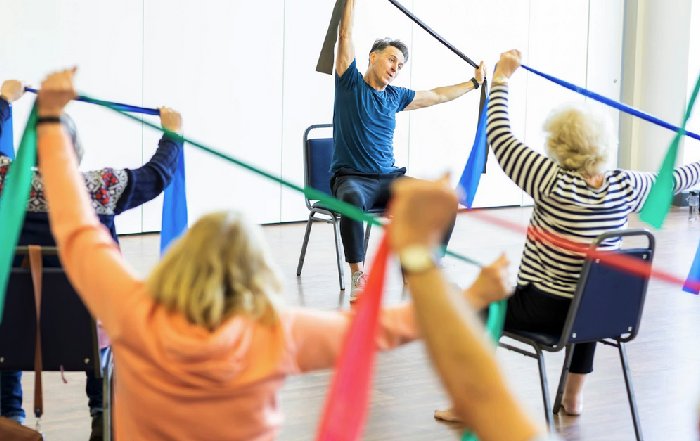
Functional Training in 2026: The Cross-Generational Engine of Real-World Performance
Functional Training as the New Baseline of Modern Fitness
By 2026, functional training has firmly established itself as a global standard rather than a niche methodology, shaping how individuals, teams, and organizations think about performance, health, and resilience. In an era marked by hybrid and remote work, accelerated digitalization, aging populations, rising healthcare expenditure, and a renewed focus on mental wellbeing, training the body for real-world capability instead of purely aesthetic outcomes has become a strategic priority for households, employers, and policymakers alike. On Sportsyncr, functional training is treated not as a passing fitness fad but as a robust, evidence-based framework that underpins how readers engage with sports, health, fitness, business, technology, and broader societal change.
Functional training can be broadly understood as a movement-centric approach that emphasizes integrated, multi-joint, multi-planar exercises which mirror or support everyday actions such as lifting, carrying, pushing, pulling, rotating, accelerating, and decelerating. Rather than isolating muscles on machines, it prioritizes coordinated patterns involving the kinetic chain, core stability, balance, mobility, and neuromuscular control, often blending strength, power, and endurance in the same session. This approach resonates across generations because it speaks directly to real-life demands: carrying children or luggage, performing manual tasks at work, competing in sport, preventing falls in older age, or simply navigating long days spent between screens and travel. As health systems, employers, and global brands increasingly frame wellbeing in terms of capability and resilience, functional training has become a unifying language across performance domains, perfectly aligned with the multi-dimensional curiosity of the Sportsyncr community.
Why Functional Training Fits the 2026 Health and Economic Landscape
The rise of functional training coincides with powerful macro trends in public health, labor markets, and global economics. Public health authorities, including the World Health Organization, continue to warn that physical inactivity remains a leading risk factor for noncommunicable diseases such as cardiovascular disease, diabetes, and certain cancers, while also contributing to mental health challenges and reduced quality of life. Their global recommendations emphasize not only aerobic activity but also strength, balance, and flexibility across the lifespan, which dovetail directly with functional training principles; leaders and practitioners who want to understand this evolution can learn more about global physical activity guidelines.
At the same time, major consultancies and economic think tanks, such as McKinsey & Company and Deloitte, have continued to quantify the economic burden of poor health, burnout, and musculoskeletal issues on productivity, innovation, and healthcare spending across North America, Europe, and Asia-Pacific. Organizations exploring how to build healthier, more resilient workforces increasingly recognize that traditional gym subsidies do little if employees lack the knowledge, structure, or motivation to move in ways that protect their joints, spine, and long-term function. Functional training, with its focus on posture, joint integrity, and efficient movement, has therefore become a cornerstone of corporate wellbeing strategies, hybrid-work ergonomics, and digital wellness platforms. Within Sportsyncr coverage of jobs and workplace performance, functional training repeatedly emerges as a practical answer to the question of how to keep people both productive and healthy in a world where knowledge work and screen time dominate.
Across regions as diverse as the United States, Germany, Singapore, and Brazil, governments and insurers are also recognizing that prevention is more cost-effective than treatment, and that movement quality is as important as movement quantity. This shift has created fertile ground for functional training to move from high-performance sport into mainstream healthcare, occupational health, and community programs, giving it a durable role in the 2026 wellbeing landscape.
The Scientific Foundation: Why Functional Training Works
Functional training's authority rests on a substantial body of sports science, biomechanics, and rehabilitation research that has matured over the past two decades. Institutions such as the American College of Sports Medicine emphasize multi-joint, multi-planar movements as essential for athletic performance, metabolic health, and injury prevention, particularly when they are progressed systematically and integrated into coherent training plans; professionals can explore evidence-based training guidelines to understand how these principles translate into day-to-day programming. By training the body as an interconnected kinetic chain, functional methods improve force transfer from the ground through the hips and trunk to the upper body, which is critical not only for sprinting, jumping, and throwing, but also for everyday tasks like lifting boxes, climbing stairs, or maintaining balance on uneven surfaces.
Rehabilitation and sports medicine specialists have further legitimized functional training by embedding it in clinical protocols for recovery from surgery, back pain, and musculoskeletal injuries. Organizations such as the Mayo Clinic highlight patterns like squats, hinges, lunges, pushes, pulls, and rotational movements as central to restoring mobility, strength, and confidence; clinicians and patients can review clinical perspectives on functional exercise to see how these patterns are adapted for different conditions and ages. Functional training aligns with neuromuscular training approaches that target proprioception, reaction time, and coordination, which are crucial for reducing non-contact injuries in sports and minimizing fall risk in older adults.
In performance-focused environments across Europe, Asia, and North America, organizations like UK Sport and high-performance centers in Germany, the Netherlands, and Scandinavia use motion capture, force plates, and wearable sensors to assess how athletes move under load and fatigue. These diagnostic systems increasingly prioritize functional metrics such as movement symmetry, landing mechanics, and trunk control alongside traditional measures like maximum strength or VO2 max, reflecting a more holistic understanding of performance. Stakeholders who wish to understand performance diagnostics and movement testing will find that functional outcomes now sit at the heart of elite performance models, strengthening the credibility of functional training for broader populations.
Youth and Young Adults: Building Athletic and Cognitive Foundations
For teenagers and young adults across the United States, United Kingdom, Germany, Canada, Australia, and fast-growing Asian markets such as Singapore and South Korea, functional training has become an appealing gateway into structured physical activity. Influenced by professional athletes, content creators, and performance-focused brands, younger generations increasingly value speed, agility, coordination, and injury resilience over purely aesthetic goals. Global sportswear leaders such as Nike and Adidas have embedded functional concepts into youth academies, grassroots programs, and digital training apps, where warm-ups often include dynamic mobility drills, bodyweight strength work, and multi-directional movement patterns; those interested can explore modern youth athletic development approaches to see how this philosophy is presented to aspiring athletes.
Educational systems in North America, Europe, and parts of Asia are also slowly evolving. Physical education curricula and school sports programs are incorporating more strength, mobility, and movement-skill content, reflecting guidance from institutions like the U.S. Centers for Disease Control and Prevention, which recommend regular muscle- and bone-strengthening activities for children and adolescents. Many of the recommended movements-such as squats, push-ups, jumping, and balance tasks-are inherently functional and help lay the neuromuscular foundation for later sport specialization or lifelong activity; educators and parents can learn more about youth physical activity recommendations. For Sportsyncr readers following sports development and performance pathways, functional training is increasingly seen as the baseline literacy of movement that every child and teenager should acquire, regardless of whether they aspire to elite sport or simply want to remain active and injury-free.
Working-Age Professionals: Performance in Life, Not Just in the Gym
Among working-age adults in their 20s to 50s across North America, Europe, and Asia-Pacific, functional training addresses a very specific set of challenges: long hours of sedentary work, chronic stress, time pressure, and the need to maintain high cognitive performance throughout the day. In cities such as New York, London, Berlin, Singapore, and Sydney, many professionals now operate in hybrid models that blur the boundaries between home and office, often resulting in suboptimal ergonomics and reduced incidental movement. Functional training programs that emphasize hip mobility, thoracic rotation, scapular stability, and trunk control help mitigate the physical consequences of prolonged sitting, while also improving energy levels, sleep quality, and mental clarity.
Corporate wellness strategies have evolved accordingly. Large employers in technology, finance, consulting, and creative industries increasingly integrate functional training into their health offerings, either through in-house coaches, partnerships with boutique studios, or digital platforms that deliver short, equipment-light sessions. The World Economic Forum has highlighted how employee health directly influences productivity, innovation, and national competitiveness, and organizations that wish to learn more about wellbeing as a strategic business priority are viewing functional training as a cost-effective, scalable solution that can be deployed across geographically dispersed workforces. In Sportsyncr coverage of business and workplace trends, case studies increasingly show that companies that embed functional movement into their culture-through micro-break routines, stand-up meetings with mobility, or on-site coaching-report lower absenteeism and stronger engagement.
For individual professionals, the appeal lies in efficiency and relevance. Functional sessions that combine compound lifts, unilateral work, loaded carries, and rotational patterns can deliver strength, mobility, and cardiovascular benefits in 30-40 minutes, two or three times per week, aligning with recommendations from public health bodies such as the National Health Service in the United Kingdom; time-pressed adults can review practical activity guidance for busy adults to see how functional elements fit within broader activity goals. In a world where work, family, and digital obligations compete for attention, the notion of training for life-rather than for the mirror-has become a compelling narrative that resonates with Sportsyncr readers across continents.
Healthy Aging, Longevity, and the Silver Economy
Demographic change is one of the most powerful drivers of functional training's cross-generational appeal. Aging populations in Europe, North America, Japan, South Korea, and China are reshaping healthcare systems, labor markets, and consumer behavior, as societies grapple with how to extend not only lifespan but also healthspan. Functional training directly addresses the key physiological challenges of aging, including sarcopenia, reduced bone density, impaired balance, and declining mobility, which together increase the risk of falls, fractures, and loss of independence.
Organizations such as the National Institute on Aging and national public health agencies in the United Kingdom, Scandinavia, and Australia emphasize strength and balance work as central to maintaining autonomy in later life; older adults, caregivers, and health professionals can explore guidance on exercise for healthy aging to understand how functional movements such as sit-to-stand, step-ups, and controlled carries are integrated into age-appropriate programs. These exercises mimic everyday tasks like getting out of a chair, climbing stairs, or carrying shopping, and they build not only strength but also confidence, which is often a decisive factor in whether older adults remain active in their communities.
From a business perspective, the "silver economy" has become a major growth segment for gyms, digital fitness platforms, and insurers, particularly in countries like Germany, Sweden, the Netherlands, Japan, and Canada, where older adults often have both time and disposable income to invest in health. Insurers in some European markets incentivize participation in preventive exercise programs that include functional components, recognizing that relatively modest investments can reduce long-term claims related to falls, fractures, and chronic disease. For Sportsyncr, whose audience spans health, world affairs, and social change, the intersection of functional training, longevity, and social participation illustrates how movement can preserve dignity, reduce healthcare burdens, and keep older citizens engaged in work, volunteering, and family life.
From Elite Sport to Esports: Functional Training Across the Performance Spectrum
Functional training's credibility was forged in elite sport, and it continues to evolve there as performance directors, coaches, and sports scientists search for marginal gains while minimizing injury risk. The International Olympic Committee and national high-performance institutes in the United States, United Kingdom, Australia, China, and Brazil integrate functional assessments into their athlete development pipelines, focusing on movement quality, force absorption, and sport-specific transfer rather than isolated strength metrics; those interested in the elite perspective can explore resources on athlete health and performance. In sports such as football, rugby, basketball, tennis, athletics, and mixed martial arts, strength and conditioning programs increasingly revolve around patterns that reflect the demands of competition: deceleration and change of direction, rotational power, overhead stability, and trunk control under fatigue.
Women's sport, which has grown rapidly in markets like the United States, United Kingdom, Spain, and Australia, has also benefited from functional approaches that specifically target areas of elevated injury risk, such as anterior cruciate ligament (ACL) injuries in football and basketball. By emphasizing landing mechanics, hip control, and neuromuscular coordination, functional training supports both performance and career longevity in professional women's leagues, reinforcing its reputation as a science-based, equitable tool for athlete care.
Interestingly, functional training has also made significant inroads into esports and competitive gaming, where professional players face high cognitive demands, repetitive strain injuries, and long sedentary hours. Leading organizations in titles like League of Legends and Counter-Strike, including teams such as NAVI and Fnatic, increasingly employ performance coaches, physiotherapists, and psychologists who integrate posture work, mobility drills, and basic strength training into daily routines. This reflects a growing recognition that reaction time, decision-making, and visual processing are supported by physical health. Health authorities and researchers examining screen-based behaviors and gaming can learn more about the intersection of gaming and health. For Sportsyncr, which covers both traditional sports and gaming, this convergence underscores that functional training is not confined to stadiums and gyms, but is relevant wherever human performance and resilience are at stake.
Technology, Data, and the Connected Functional Ecosystem
The maturation of functional training in 2026 is inseparable from advances in technology and data. Wearable devices from companies such as Apple, Garmin, and Whoop now provide granular insights into heart rate variability, sleep quality, training load, and recovery, enabling more precise planning of functional sessions and better management of fatigue. Users and coaches can explore how advanced wearables support training decisions to see how these tools inform choices about intensity, volume, and exercise selection.
Meanwhile, computer vision, machine learning, and sensor technologies have made high-quality movement analysis accessible to a much wider audience. Smartphone apps can now evaluate squat depth, knee tracking, and spinal alignment using the device camera, while smart gym equipment adjusts resistance based on bar speed or power output, allowing for auto-regulated functional training that responds to daily readiness. For a global audience interested in technology and innovation in sport and health, these tools represent a democratization of expertise: insights that were once confined to Olympic training centers are now available in living rooms and community gyms from Toronto and Amsterdam to Bangkok and Cape Town.
Data also play a crucial role in establishing trust and accountability. Organizations adopting functional training within corporate wellness, healthcare, or community programs are increasingly expected to demonstrate measurable outcomes, such as reduced injury rates, improved movement screens, lower absenteeism, or enhanced productivity. This aligns with the evidence-driven ethos that Sportsyncr promotes across its science and business content, where readers seek not only inspirational narratives but also hard data on what works, for whom, and under what conditions.
Culture, Identity, Brands, and Sustainable Spaces
Beyond science and technology, functional training has become part of the cultural narrative of modern living across continents. In cities like Los Angeles, London, Berlin, Toronto, Melbourne, Singapore, and Copenhagen, functional-focused studios and community gyms have cultivated identities built around capability, resilience, and community rather than body image alone. Open training spaces, kettlebells, sleds, suspension systems, and pull-up rigs reinforce an aesthetic of utility and adaptability, which resonates strongly with individuals who see fitness as preparation for life's varied demands-mountain hikes, urban commuting, recreational sport, parenting, or travel.
Digital communities on platforms such as Strava and Instagram amplify this culture, showcasing functional circuits, hybrid endurance-strength events, and outdoor training that blends running, calisthenics, and environmental interaction. Athletes and enthusiasts from Europe, Asia, Africa, and the Americas can discover global fitness communities and events that encourage movement in parks, beaches, and urban spaces, reinforcing the idea that functional training is not confined to four walls. For Sportsyncr, which analyzes culture, brands, and social dynamics, functional training offers a lens into how people express identity through capability, community, and shared challenge.
Brands and sponsors have responded to this shift by repositioning products and partnerships around functional performance, durability, and increasingly, sustainability. Consumers in markets such as the United States, United Kingdom, Germany, France, and the Nordic countries are asking harder questions about how training environments and equipment are produced, transported, and disposed of. Organizations interested in the environmental dimension of sport and fitness can learn more about sustainable business practices, which increasingly influence how gyms are built, how apparel is manufactured, and how events are staged. Functional spaces that favor versatile, long-lasting equipment, outdoor settings, and minimalist design often align naturally with reduced environmental impact, making them attractive to Sportsyncr readers who care about environment, brands, and sponsorship strategies that reflect modern values.
Functional Training as a Trustworthy, Cross-Generational Strategy
By 2026, functional training has emerged as one of the rare concepts that resonates equally with teenagers, elite athletes, busy executives, older adults, and even esports professionals. Its foundations in sports science, rehabilitation, public health, and performance analytics provide the expertise and authority needed to gain the trust of medical practitioners, coaches, employers, and policymakers. Its adaptability allows it to be scaled up or down, modified for different cultures and facilities, and integrated into diverse environments-from high-tech performance labs and corporate offices to community centers and home living rooms.
For the global audience of Sportsyncr, spanning interests in sports, health, business, technology, culture, and world affairs, functional training represents more than a training style; it is a framework for thinking about human capability in an increasingly complex world. It promises real-world value: not merely looking stronger, but moving with ease; not just adding years to life, but adding life to years; not just optimizing a single performance event, but sustaining performance across careers, family responsibilities, and societal roles.
As societies in North America, Europe, Asia, Africa, and South America confront the intertwined challenges of aging populations, digital overload, climate pressure, and economic uncertainty, functional training offers a practical, evidence-based means of enhancing resilience at both individual and organizational levels. On Sportsyncr, this narrative will continue to evolve through coverage that connects readers to innovations, case studies, and expert perspectives, demonstrating how functional training can be woven into everyday routines, sporting pathways, workplace cultures, and community initiatives. In doing so, it reinforces the platform's commitment to Experience, Expertise, Authoritativeness, and Trustworthiness, ensuring that functional training remains not just a topic of interest, but a strategic tool for shaping healthier, more capable societies worldwide.