

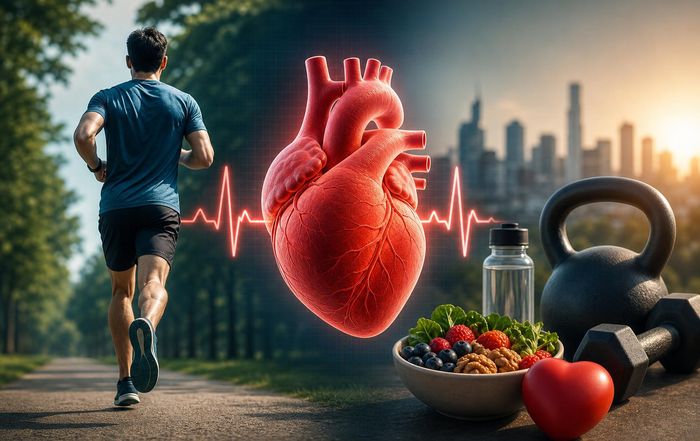
How Exercise Supports Long-Term Heart Health
Regular movement is one of the most powerful tools for protecting the heart over a lifetime, yet many people still see exercise mainly as a way to lose weight or build muscle. Cardiologists, public-health agencies, and sports scientists increasingly describe physical activity as a "polypill" because it acts on multiple cardiovascular risk factors at once: blood pressure, cholesterol, blood sugar, inflammation, weight, and even stress and sleep. Understanding how this works makes it easier to choose the right types and amounts of exercise and to stay motivated when life gets busy.
So let's look at what actually happens inside the body when we exercise, how much activity is needed for long-term heart health, what types of training help most, and how people at different fitness levels or with existing conditions can move safely. It also explores how sports, technology, and culture are reshaping the way the world exercises.
What happens to the heart when you exercise?
When someone starts to move-whether that is brisk walking, cycling, or playing five-a-side football-the heart responds immediately. Heart rate rises to pump more blood, and blood vessels in the working muscles widen to deliver extra oxygen. Over time, this repeated stress triggers adaptations that make the cardiovascular system more efficient.
Endurance-type exercise strengthens the heart muscle itself, especially the left ventricle, which pumps blood to the rest of the body. In many active people, the heart becomes slightly larger and more elastic, able to eject more blood with each beat. Resting heart rate often falls because each contraction becomes more powerful. Studies summarized by the American Heart Association show that this improved "stroke volume" means the heart can do the same work with fewer beats, reducing mechanical strain on its tissues over decades of life (heart.org).
At the same time, the network of tiny blood vessels-capillaries-within muscles expands, improving oxygen delivery and waste removal. The lining of arteries, called the endothelium, becomes more responsive, helping blood vessels relax and constrict appropriately. This endothelial health is crucial because dysfunction there is one of the earliest steps in atherosclerosis, the process that leads to clogged arteries and heart attacks. Regular activity also improves the way arteries handle blood flow surges, which can reduce long-term wear and tear on vessel walls.
Exercise also influences the autonomic nervous system, which controls involuntary functions such as heart rate and blood pressure. Active people tend to have greater "heart rate variability," a sign that the nervous system can flexibly respond to stress. This adaptability is linked with lower risk of sudden cardiac events. Together, these changes explain why even relatively modest amounts of movement can translate into meaningful reductions in heart-disease risk over time.
How exercise lowers cardiovascular risk factors
Most people do not feel plaque forming in their arteries or blood pressure creeping up, but these silent shifts are where exercise exerts some of its strongest effects. Large epidemiological studies from organizations such as the World Health Organization and U.S. Centers for Disease Control and Prevention consistently find that physically active adults have a substantially lower risk of coronary heart disease, stroke, and cardiovascular death than inactive peers, even after adjusting for factors like smoking and diet (who.int, cdc.gov).
One major pathway is blood pressure. Aerobic activity improves the elasticity of blood vessels and reduces peripheral resistance, which can lower both systolic and diastolic pressure. For many people with mild hypertension, consistent moderate exercise can produce reductions similar to a single blood-pressure medication. This is why medical guidelines in Europe and North America now recommend physical activity as first-line therapy for elevated blood pressure alongside diet and stress management.
Cholesterol and other blood lipids also respond to movement. Regular training can raise levels of high-density lipoprotein (HDL), often called "good" cholesterol, while reducing triglycerides and, in some cases, lowering low-density lipoprotein (LDL) or making LDL particles less harmful. The net effect is a more favorable lipid profile that slows plaque buildup. Exercise also improves insulin sensitivity, helping muscles use glucose more efficiently and reducing the risk of type 2 diabetes-a major driver of heart disease worldwide.
Chronic low-grade inflammation is increasingly recognized as a contributor to atherosclerosis. Physical activity appears to dampen inflammatory signals and improve immune function, though the exact mechanisms are still being studied by institutions such as Harvard T.H. Chan School of Public Health and other research centers (hsph.harvard.edu). Combined with its impact on body weight, waist circumference, and visceral fat, exercise acts on many of the same risk factors targeted by modern cardiology-but through the body's own systems rather than a prescription bottle.
For readers who want to explore how heart-health science intersects with broader health and performance topics, SportSyncr's coverage of health and science regularly dives into these mechanisms in more detail.
How much exercise do you really need for heart health?
International guidelines are remarkably consistent. The World Health Organization, American College of Sports Medicine, and many national health agencies recommend that adults aim for at least 150-300 minutes per week of moderate-intensity aerobic activity, or 75-150 minutes of vigorous-intensity activity, or an equivalent combination. They also advise muscle-strengthening activities on two or more days per week (who.int, acsm.org).
Moderate intensity includes activities like brisk walking, casual cycling, or doubles tennis-effortful enough that talking is possible but singing is difficult. Vigorous intensity covers running, fast cycling, or high-paced sports where conversation is limited to short phrases. Importantly, the benefits follow a dose-response curve: moving from no activity to even 60-90 minutes of moderate exercise per week yields large reductions in cardiovascular risk. Additional activity adds more benefit, but with gradually smaller returns.
For long-term heart health, consistency matters more than perfection. Many cardiologists emphasize that people should view exercise like brushing their teeth: a routine daily habit rather than an occasional project. Short 10-15 minute bouts spread through the week still count toward the total and may be more realistic for those with busy schedules or limited fitness. Wearable devices from companies such as Garmin, Apple, or Fitbit can help track time in different intensity zones, though they are not essential for success (garmin.com, apple.com, fitbit.com).
For sports fans and recreational athletes, it is worth noting that game-based activities-like small-sided football, basketball, or hockey-often provide vigorous-intensity bursts that accumulate quickly. Our sports and fitness sections regularly highlight formats such as walking football, padel, and community running events that lower the barrier to this kind of high-value movement.
Aerobic, strength, and interval training: which is best for the heart?
Different types of exercise stress the cardiovascular system in distinct ways, and combining them appears to produce the strongest long-term protection.
Aerobic or endurance training-walking, running, swimming, cycling, rowing-is the backbone of most heart-health programs. It directly trains the heart and lungs, improves circulation, and has the clearest evidence for reducing heart attacks and strokes. Activities that can be sustained for at least 10 minutes while maintaining a steady rhythm are particularly effective. Many people find that mixing modalities, such as alternating cycling with swimming, helps avoid overuse injuries and boredom.
Strength or resistance training was once considered less important for cardiovascular health, but that view has shifted. Lifting weights, using resistance bands, or performing body-weight exercises such as squats and push-ups builds muscle mass, which improves glucose uptake and metabolic health. Research summarized by groups like the National Institutes of Health suggests that people who do both strength and aerobic training have lower all-cause and cardiovascular mortality than those who only focus on one type (nih.gov). Stronger muscles also make everyday activities easier, which can help older adults stay active and independent, indirectly supporting heart health.
High-intensity interval training (HIIT) and its more moderate cousin, interval walking, alternate short bursts of harder effort with easier recovery periods. For some individuals-especially those who are already moderately fit-intervals can improve cardiorespiratory fitness more quickly than continuous moderate exercise. There is also evidence that interval protocols can significantly improve blood sugar control and endothelial function. However, because HIIT places greater acute strain on the heart, it is not appropriate for everyone, particularly those with unstable cardiovascular disease or very low fitness. Medical clearance is essential before starting intense protocols.
For many people, the most sustainable approach is a blended week: several days of moderate aerobic activity, one or two short interval sessions tailored to current ability, and two days of resistance training. This mix aligns well with how athletes in many sports train and can be adapted for any age or baseline fitness.
Weight, body composition, and the "fit versus fat" question
Body weight often dominates public conversation about health, but long-term data suggest that fitness itself is a powerful independent predictor of cardiovascular outcomes. Large cohort studies, including those cited by the European Society of Cardiology, show that individuals with higher cardiorespiratory fitness have lower rates of heart disease and premature death, even when they carry more body fat than average (escardio.org).
This does not mean weight is irrelevant. Excess visceral fat around the abdomen, in particular, is closely tied to insulin resistance, inflammation, and high blood pressure. Exercise helps reduce this deep fat even when the scale does not change dramatically, and it helps preserve or build lean muscle mass during weight-loss efforts. That shift in body composition improves metabolic health and makes it easier to maintain active habits.
From a practical standpoint, the most heart-protective strategy is usually to prioritize movement and fitness first, while also paying attention to nutrition, sleep, and stress. Extreme crash diets without activity can reduce muscle mass and slow metabolism, potentially undermining long-term cardiovascular resilience. A more balanced approach-moderate calorie control, plenty of whole foods, and regular exercise-supports both weight management and heart function. Our health coverage frequently explores how diet, sleep, and training intersect in this way.
Exercise, stress, and the heart-mind connection
Cardiovascular disease is not driven solely by numbers on a lab report. Chronic psychological stress, anxiety, and depression all correlate with higher rates of heart attacks and strokes. Mechanisms include increased blood pressure, elevated stress hormones such as cortisol, changes in blood clotting, and lifestyle shifts like smoking or overeating. Recognizing this, organizations such as the British Heart Foundation and Mayo Clinic increasingly emphasize mental health as a core component of cardiac care (bhf.org.uk, mayoclinic.org).
Exercise plays a dual role here. Physiologically, it helps lower baseline stress hormones and improves sleep quality, which in turn benefits blood pressure and heart rhythm. Psychologically, movement can reduce symptoms of mild to moderate depression and anxiety, partly through the release of endorphins and other neurotransmitters. Group activities-recreational leagues, walking clubs, dance classes-add a social dimension that is linked with better adherence and emotional wellbeing.
For people recovering from a cardiac event, structured cardiac rehabilitation programs blend supervised exercise with education and psychological support. These programs, endorsed by bodies like the American Heart Association, have been shown to reduce the risk of future events and improve quality of life, yet they remain underused in many countries. Technology is starting to fill some of this gap: tele-rehab, wearables, and app-based coaching can extend support beyond hospital walls, an area where sports and health-tech coverage on technology and world pages is evolving rapidly.
Lifelong heart health: from youth sport to active ageing
The foundation for long-term cardiovascular health is often laid early in life. Children who are active tend to develop stronger hearts, healthier blood pressure profiles, and more favorable cholesterol levels. Habits formed in school sports, playground games, or family activities can track into adulthood. Yet globally, many young people fall short of movement guidelines, with screen time, academic pressures, and urban design limiting opportunities for free play.
At the other end of the lifespan, staying active into older age is one of the most effective ways to preserve heart function, independence, and cognitive health. Even people who begin exercising in their 50s, 60s, or beyond can see meaningful reductions in cardiovascular risk compared with peers who remain inactive. Research from institutions like Johns Hopkins Medicine suggests that increasing activity in midlife can partially reverse some markers of heart stiffness and improve fitness to levels comparable with people a decade younger (hopkinsmedicine.org).
For older adults, safety and enjoyment are paramount. Low-impact options such as walking, swimming, cycling, tai chi, and light resistance work can all support the heart while reducing joint stress. Balance and coordination exercises help prevent falls, which are a major barrier to continued activity. Community programs, senior-friendly gym classes, and age-adapted sports formats-like walking football or masters-level competitions-provide structure and social connection that encourage regular participation.
From a societal perspective, supporting active ageing has economic and cultural implications. Health systems in many countries are grappling with the costs of chronic disease, and employers are increasingly aware of how cardiovascular health affects productivity and longevity. Coverage on business and social issues often highlights how workplaces, cities, and sports organizations are responding with wellness programs, active-transport policies, and inclusive community sport initiatives.
Exercising safely with heart disease or risk factors
Many people with high blood pressure, high cholesterol, or a family history of heart disease worry about whether exercise might be dangerous. For the vast majority, the risks of remaining inactive are far greater than the risks of moving. However, some precautions are sensible, particularly for those with known cardiovascular disease, diabetes, or multiple risk factors.
Medical organizations such as the American College of Cardiology advise that anyone with symptoms like chest pain, unexplained breathlessness, palpitations, or fainting should seek medical evaluation before starting a new program (acc.org). Individuals with diagnosed coronary artery disease, heart failure, or arrhythmias should follow a plan developed with their cardiologist, often beginning with supervised sessions in a cardiac rehabilitation setting. Medications such as beta-blockers can alter heart-rate responses, so perceived exertion (how hard the activity feels) may be more reliable than heart-rate targets alone.
For those cleared to exercise, gradual progression is key. Starting with short, low-intensity bouts-such as 5-10 minutes of walking-allows the heart and muscles to adapt. Over weeks and months, duration and intensity can be increased carefully. Warming up and cooling down help reduce sudden stress on the cardiovascular system. Hydration, weather conditions, and awareness of warning signs (chest discomfort, severe shortness of breath, dizziness) also matter, especially for outdoor sports.
Importantly, having heart disease does not mean abandoning enjoyable activities. Many people with stable conditions continue to participate in golf, cycling, recreational running, or racket sports, often with some modifications. Elite sport is a separate case, with its own screening and return-to-play protocols, but at the recreational level, the goal is usually to find a sustainable balance between challenge and safety. Articles across our sports and fitness sections frequently profile athletes and everyday participants navigating this balance.
Building an environment where heart-healthy movement is the default
While individual choices matter, long-term heart health is also shaped by the environments in which people live and work. Urban planning that supports walking and cycling, investment in safe parks and sports facilities, and policies that encourage active commuting all influence how easy it is to accumulate daily movement. Public-health bodies like the World Health Organization and major NGOs argue that tackling physical inactivity is a shared responsibility between governments, employers, schools, and communities, not just individuals (who.int).
Technology is a double-edged sword. On one hand, streaming, gaming, and remote work can promote sedentary time. On the other, fitness apps, smartwatches, connected home equipment, and exergaming platforms are helping many people integrate short bouts of activity into busy days. Our gaming and technology coverage tracks how virtual races, online coaching, and motion-based games are being used to nudge more people toward heart-healthy habits.
Corporate wellness programs, health-insurance incentives, and sponsorships linking major brands with mass-participation events-marathons, charity rides, community fun runs-also play a role. When done thoughtfully, these initiatives can make physical activity more accessible and affordable, especially in underserved communities. When done poorly, they risk becoming superficial marketing. Evaluating which models genuinely improve participation and cardiovascular outcomes is an area where independent reporting and careful data analysis are increasingly important.
Putting it together: a practical view of exercise for lifelong heart health
Decades of research and real-world experience point toward a clear message: the heart thrives on regular, varied movement. Aerobic exercise strengthens the cardiac muscle and blood vessels, resistance training supports metabolism and functional capacity, and both together help control blood pressure, cholesterol, blood sugar, and weight. Beyond these measurable factors, activity reduces stress, supports mental health, and fosters social connections-all of which influence cardiovascular risk in subtle but powerful ways.
For most adults, a realistic starting point is to weave more walking or cycling into daily routines, add two short strength sessions per week, and gradually build toward guideline-level activity. People with existing heart conditions should work closely with healthcare teams to shape a safe, progressive plan, taking advantage of cardiac rehabilitation and modern monitoring tools where available. Across ages, cultures, and countries, the specific sports or activities may differ, but the underlying principle remains the same: a heart that is regularly challenged within safe limits is more resilient in the long run.
As sports, technology, and public policy continue to evolve, the opportunities to move are likely to expand rather than shrink. The central challenge-for individuals, communities, and health systems-is to turn those opportunities into lasting habits that keep hearts beating strongly well into older age.