

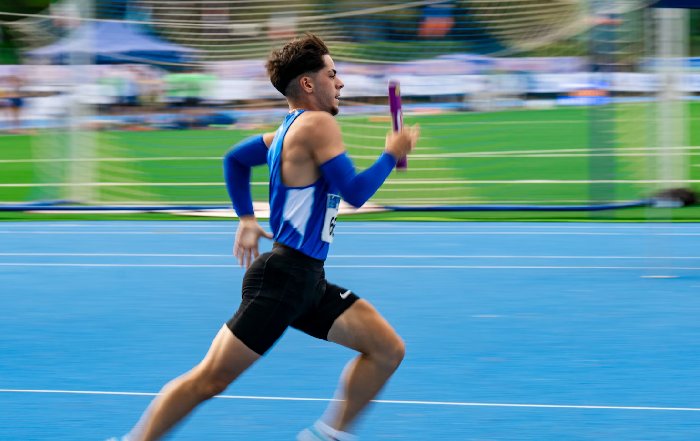
The Science of Peak Athletic Performance
Redefining Peak Performance in a Data-Driven Era
The pursuit of peak athletic performance has evolved from a largely intuitive craft into a deeply data-driven and scientifically orchestrated discipline, where elite athletes, teams, and brands operate at the intersection of physiology, neuroscience, technology, and business strategy. What was once the domain of legendary coaches and gifted outliers is now a global, evidence-based ecosystem in which performance is measured, modeled, and optimized in real time across sports and markets, from the United States and United Kingdom to Germany, Australia, Japan, and beyond. Within this landscape, Sportsyncr positions itself as a bridge between cutting-edge science and practical application, translating complex research into actionable insights for athletes, executives, and organizations who understand that competitive advantage increasingly depends on understanding the science behind performance rather than relying solely on tradition or instinct.
The emerging consensus across performance science is that peak output is no longer viewed as a singular moment of brilliance but as a sustainable state that can be strategically cultivated, protected, and extended over the course of a season or an entire career. From advances in sports physiology and biomechanics to innovations in mental skills training, sleep science, and environmental adaptation, the framework for performance has become more holistic, integrating health, fitness, culture, technology, and business in a way that mirrors the multi-dimensional interests of the global audience that turns to Sportsyncr's sports coverage for context and clarity.
Physiology, Energy Systems, and the Limits of the Human Body
At the core of peak performance lies human physiology, particularly the way the body produces, manages, and recovers energy under extreme physical demands. Modern sports science has refined its understanding of how the aerobic and anaerobic energy systems interact, how lactate is not merely a waste product but a valuable fuel, and how mitochondrial efficiency in muscles can be enhanced through precise training protocols. Organizations such as the American College of Sports Medicine and resources like the National Institutes of Health have helped to establish evidence-based frameworks that underpin training methodologies used by leading clubs and national teams around the world.
In endurance sports, the concept of "critical power" and "maximum lactate steady state" has become central to performance modeling, while in power and speed disciplines, neuromuscular efficiency and rate of force development are now meticulously tracked through force plates, sprint profiling, and high-speed video. Advanced physiological testing in laboratories and high-performance centers, often guided by guidelines from bodies like the World Health Organization and the International Olympic Committee, has made it possible to individualize training loads in a way that respects both the biological ceiling and the unique adaptation curve of each athlete. Readers interested in the broader health implications of these physiological insights can explore Sportsyncr's health analysis, where the same principles used for Olympians are increasingly being translated for the general population.
Biomechanics and Movement Intelligence
Biomechanics has moved from slow-motion replays and observational coaching to a sophisticated science that leverages motion capture, inertial sensors, and machine learning to decode the mechanics of elite movement. Researchers at leading institutions such as Stanford University and Loughborough University have contributed to a deeper understanding of how joint angles, ground reaction forces, and movement sequencing influence output and injury risk. Through this lens, peak performance is seen not just as the capacity to generate force but to direct that force with maximal efficiency and minimal wasted motion.
Clubs in top leagues in Europe, North America, and Asia now routinely deploy multi-camera tracking systems and wearable technology to build individual "movement fingerprints" for their athletes, enabling coaches to detect subtle deviations that may signal fatigue, compensation, or early-stage injury. Public resources such as the National Library of Medicine have become invaluable for practitioners seeking peer-reviewed evidence on biomechanical interventions, while organizations like FIFA and World Rugby publish position papers that influence movement standards and technique coaching across continents. For businesses and brands navigating this space, Sportsyncr's business insights provide a lens on how biomechanical data is increasingly driving decisions in sponsorship, product design, and talent development.
Neuroscience, Cognition, and the Mental Game
While physiology and biomechanics describe what the body can do, neuroscience and psychology explain how athletes perceive, decide, and execute under pressure, a dimension that has gained unprecedented attention in global sport ecosystems from South Korea to Brazil. Advances in cognitive neuroscience have shown that elite performers exhibit distinctive patterns of brain activation, attentional control, and emotional regulation, particularly in high-stakes environments such as penalty shootouts, tie-breaks, or championship-deciding possessions. Research disseminated by organizations such as the American Psychological Association and platforms like Harvard Health Publishing has highlighted the measurable impact of chronic stress, anxiety, and sleep deprivation on reaction time, decision-making, and motor coordination.
In 2026, mental skills training is no longer a peripheral service but a central pillar of high-performance programs, with clubs and national teams employing full-time sports psychologists, mindfulness coaches, and cognitive performance specialists. Techniques such as visualization, breathwork, biofeedback, and structured pre-performance routines are grounded in empirical evidence rather than motivational folklore. The integration of cognitive training platforms, often inspired by developments in gaming and interactive technologies, has blurred the line between mental rehearsal and competitive simulation, enabling athletes to experience high-pressure scenarios in controlled environments. In parallel, the stigma around mental health in sport has been steadily challenged by high-profile athletes and organizations, further reinforcing the idea that peak performance is inseparable from psychological well-being.
Recovery, Sleep, and the Biology of Adaptation
The science of recovery has perhaps undergone the most visible transformation in the past decade, with the realization that training does not produce adaptation unless it is paired with adequate rest, nutrition, and sleep. Sleep science, in particular, has become a cornerstone of performance planning, with research from institutions like University College London and University of Sydney underscoring the role of deep sleep in memory consolidation, hormonal regulation, and tissue repair. Resources such as the Centers for Disease Control and Prevention have raised global awareness of sleep deficits, prompting professional leagues in the United States, Canada, and Europe to reconsider travel schedules and late-night fixtures.
Recovery protocols now extend far beyond static stretching and ice baths; they include individualized nutrition strategies, periodized deload weeks, heart rate variability monitoring, and strategic use of modalities such as contrast therapy, compression, and neuromuscular stimulation. The integration of recovery data into centralized athlete management systems allows medical and performance staff to identify early signs of overtraining, burnout, or immune compromise. For those interested in how these principles intersect with broader wellness trends, Sportsyncr's fitness coverage explores how recovery science is influencing consumer behavior, from sleep tracking devices to recovery-focused fitness studios in cities like London, Berlin, Singapore, and New York.
Technology, Data, and the Rise of Performance Intelligence
The most visible driver of change in peak performance science has been the rapid evolution of technology and data analytics, transforming how teams in football, basketball, cricket, rugby, tennis, and esports evaluate and enhance their talent. Wearable devices, GPS trackers, and optical tracking systems now capture millions of data points per training session or match, from acceleration profiles and workload metrics to positional heat maps and tactical patterns. Organizations such as Catapult Sports, Hawk-Eye Innovations, and Second Spectrum have become integral to high-performance infrastructures across Europe, Asia, and North America.
At the macro level, governing bodies and analytics firms utilize advanced statistical models and machine learning algorithms to predict injury risk, optimize substitution patterns, and forecast performance trajectories. Resources like MIT Sloan Sports Analytics Conference and the Harvard Business School sports management ecosystem have helped popularize and legitimize data-driven decision-making in sport, influencing everything from scouting and drafting strategies to media rights valuations. For readers seeking to understand how these technological shifts shape the broader sports industry, Sportsyncr's technology section provides ongoing coverage of innovations that are redefining competitive balance and business models alike.
Environmental and Contextual Factors in Performance
Peak performance does not occur in a vacuum; it is profoundly shaped by environmental conditions such as altitude, temperature, humidity, air quality, and even crowd noise, all of which vary significantly across regions from South Africa and Kenya to Norway, Thailand, and Chile. Advances in environmental physiology have clarified how heat stress, for example, impairs neuromuscular function and cognitive performance, prompting global sports organizations and public health bodies to update guidelines around hydration, cooling breaks, and scheduling. The World Meteorological Organization and United Nations Environment Programme have highlighted how climate change is altering the context of outdoor sport, from air pollution episodes in major cities to extreme heat waves affecting tournaments in Europe, Asia, and North America.
Teams now use environmental chambers and simulation technologies to acclimate athletes to conditions they will face at international competitions, whether that involves altitude training for events in Mexico City or heat adaptation for tournaments in Qatar or Singapore. Meanwhile, advances in sustainable venue design, guided by resources such as the International Olympic Committee's sustainability framework, are reshaping how stadiums and training centers are built and operated, balancing performance needs with environmental responsibility. Readers can learn more about sustainable business practices that are increasingly influencing sponsorship, infrastructure, and event planning in sport, and can explore how these themes intersect with performance at Sportsyncr's environment hub.
Culture, Identity, and the Human Side of High Performance
Beyond biology and technology, culture plays a decisive role in shaping what peak performance looks like and who has access to it. The values, expectations, and social structures surrounding athletes in France, Italy, Spain, China, Nigeria, or New Zealand can differ markedly, influencing everything from talent identification and coaching styles to attitudes toward risk, failure, and long-term development. Sociocultural research, often published through platforms like The Lancet or BMJ Open Sport & Exercise Medicine, has emphasized that high performance environments must be psychologically safe, inclusive, and aligned with broader social norms if athletes are to sustain excellence without compromising their well-being.
The global conversation around athlete activism, gender equity, and inclusion has further underscored that performance cannot be divorced from identity and representation. Organizations such as UN Women and Human Rights Watch have drawn attention to systemic barriers that limit participation and advancement for women, marginalized communities, and athletes from under-resourced regions, prompting federations and leagues to reexamine their structures. On Sportsyncr's culture coverage, these cultural dynamics are explored alongside performance science, acknowledging that the mindsets, narratives, and social contracts surrounding athletes are as critical as training plans and recovery protocols in determining who reaches and sustains their peak.
Business, Brands, and the Economics of Human Performance
The commercialization of elite sport has turned peak performance into a core asset class, influencing media rights, sponsorship portfolios, athlete contracts, and even national branding strategies for countries such as Qatar, Saudi Arabia, Japan, and Singapore. As performance has become more measurable, the business community has increasingly treated it as a form of intellectual property, investing in high-performance centers, data platforms, and proprietary methodologies. Global consulting firms, sports marketing agencies, and technology companies now compete to provide "performance solutions" that promise measurable returns on investment for clubs, leagues, and sponsors.
Brands such as Nike, Adidas, Puma, and Under Armour leverage performance science not only to design products but to craft narratives of innovation and authenticity, often partnering with research institutions and high-profile athletes to validate their claims. Business schools and think tanks, including INSEAD and London Business School, increasingly use sports performance case studies to teach leadership, resilience, and decision-making under pressure, underscoring the crossover between elite sport and corporate performance cultures. For readers who follow the financial and strategic implications of these trends, Sportsyncr's brands and sponsorship sections and sponsorship insights provide ongoing analysis of how performance metrics are reshaping negotiations, valuations, and storytelling in the global sports economy.
Science, Ethics, and the Boundaries of Enhancement
As scientific tools for enhancing performance become more powerful, ethical questions around fairness, safety, and integrity have become more urgent, particularly in high-profile competitions that attract global audiences from Europe, Asia, Africa, and South America. The line between legitimate performance optimization and illicit enhancement can be difficult to draw, especially as legal interventions such as altitude tents, nutritional supplements, and genetic screening converge with more controversial practices. Organizations such as the World Anti-Doping Agency and the Court of Arbitration for Sport play a central role in setting and enforcing standards, but rapid advances in biotechnology and gene editing raise new challenges that existing frameworks struggle to address.
Ethicists and scientists, including those writing in outlets like Nature and Science, have warned that the pressure to push human limits could lead to unequal access to enhancement technologies, exacerbating existing disparities between resource-rich and resource-poor federations. At the same time, there is a growing recognition that some forms of intervention, such as personalized medicine, advanced diagnostics, and mental health support, are essential to protect athletes from harm. On Sportsyncr's science channel, these debates are examined through the dual lens of innovation and responsibility, reflecting the platform's commitment to Experience, Expertise, Authoritativeness, and Trustworthiness in navigating complex performance-related topics.
The Globalization of High Performance and the Future Workforce
The globalization of high-performance sport has created a transnational labor market in which athletes, coaches, analysts, and medical staff move fluidly between leagues and continents, from Major League Soccer and the NBA in the United States to top football clubs in England, Germany, Spain, and Italy, as well as emerging leagues in China, India, and Middle East markets. This mobility has accelerated the diffusion of best practices in performance science, while also intensifying competition for talent and driving up the demand for specialized roles in data analytics, sports medicine, nutrition, and performance psychology. For professionals and students considering careers in this evolving ecosystem, Sportsyncr's jobs and careers coverage provides visibility into roles that did not exist a decade ago but are now central to the success of elite programs.
Educational pathways are adapting to this demand, with universities in Canada, Australia, Netherlands, Sweden, and Singapore offering interdisciplinary degrees that blend sports science, data analytics, business, and technology. Remote collaboration tools and digital platforms, accelerated by global events in the early 2020s, have made it possible for performance consultants to work across borders, advising clubs in Africa, South America, and Oceania without relocating. This global talent network reinforces the notion that peak performance is no longer a localized phenomenon but a shared, evolving discipline that draws on diverse perspectives and contexts, aligned with the worldwide readership that turns to Sportsyncr's world news for a holistic view of sport's role in society.
From Elite Arenas to Everyday Life
The most profound shift in the science of peak athletic performance may be its migration from exclusive high-performance centers into everyday life, where principles once reserved for Olympians and world champions are now applied to recreational athletes, corporate leaders, and individuals seeking to improve their health, fitness, and productivity. Wearable technology, evidence-based training plans, and accessible educational resources from organizations like the World Health Organization and Mayo Clinic have democratized access to performance knowledge, allowing people in Finland, Norway, Malaysia, South Africa, and New Zealand to train smarter, recover better, and live more active lives.
For Sportsyncr, this democratization represents both a responsibility and an opportunity: a responsibility to present performance science in a way that is accurate, nuanced, and ethically grounded, and an opportunity to connect elite insights with the aspirations of a global audience that spans athletes, fans, professionals, and decision-makers. Across its coverage of sports, health, fitness, technology, business, and more, the platform aims to show that peak performance is not a mysterious gift but a complex, measurable, and ultimately human process shaped by science, culture, and choice.
As 2026 unfolds, the science of peak athletic performance continues to evolve, driven by new discoveries in physiology, neuroscience, data analytics, and environmental science, as well as by shifting cultural norms and ethical frameworks. The athletes who dominate this era will be those who can integrate these dimensions into coherent, sustainable practices, supported by organizations and ecosystems that value long-term development over short-term exploitation. In documenting and interpreting this evolution, Sportsyncr positions itself as a trusted guide for those who recognize that understanding the science behind performance is now indispensable to competing, investing, and thriving in the global world of sport.