

Touring the World's Most Iconic Sporting Venues in 2026: Architecture, Identity, and the Business of Emotion
Sport has always been more than a contest of scores and statistics; it has functioned as a cultural language, a geopolitical signal, and a commercial engine that shapes cities and identities. By 2026, the world's most iconic sporting venues stand at the confluence of these forces more clearly than ever, operating simultaneously as temples of performance, architectural landmarks, media stages, and sophisticated businesses. For the global audience of sportsyncr.com, which spans interests from sports and fitness to business, technology, and world affairs, these venues provide a uniquely tangible way to understand how sport projects power, pride, and shared experience across continents.
From London to Rio, New York to Tokyo, Munich to Johannesburg, the stadium has become a strategic asset as much as a sporting one. It is where national narratives are choreographed for global broadcast, where brands and broadcasters compete for attention, and where governments and investors test new ideas in sustainability, crowd technology, and urban development. At the same time, these venues preserve and amplify memory; they are the places where generations recall where they were when a title was clinched, an underdog triumphed, or a record fell. In this evolving landscape, sportsyncr.com positions itself as a guide not only to the spectacles on the field but to the deeper structures of experience, expertise, authority, and trust that underpin the world's great arenas.
Old Trafford and the Premier League's Global Stage
In 2026, Old Trafford continues to embody the gravitational pull of English football and the enduring commercial strength of the Premier League, which has consolidated its position as the world's most watched domestic competition. Home of Manchester United since 1910, Old Trafford is a venue where history is not merely commemorated but constantly refreshed, from title-winning eras to periods of rebuilding that nonetheless fill the stadium and global broadcast schedules. Its wartime destruction and post-war reconstruction still resonate as a story of resilience that mirrors Manchester's industrial and cultural evolution.
The stadium's ongoing modernization, including enhanced hospitality tiers, integrated digital ticketing, and improved accessibility, reflects the broader transformation of elite European football venues into 365-day entertainment platforms. The Manchester United Museum and Tour has matured into a sophisticated experiential product, drawing visitors from the United States, Asia, the Middle East, and Africa who are as interested in the club's brand narrative as in the match itself. The Premier League's international reach, amplified by broadcasters such as Sky Sports and NBC Sports, underscores how a single venue can function as a global media asset as much as a local landmark. Learn more about how sports heritage and modern culture intersect.
Maracanã and Brazil's Footballing Soul
In Rio de Janeiro, the Maracanã Stadium remains one of the most emotionally charged sporting spaces on earth. Built for the 1950 FIFA World Cup and later reimagined for the 2014 World Cup and 2016 Olympic Games, the Maracanã has shifted from a monumental bowl designed to hold nearly 200,000 people to a more modern, safety-focused arena, yet its aura is undiminished. It remains the site where Brazilians confront both triumph and trauma: from the "Maracanazo" of 1950 to more recent Copa América victories, the stadium is a stage on which national identity is continuously negotiated.
The Maracanã's role in Rio's tourism economy is critical, alongside landmarks such as Christ the Redeemer and Copacabana Beach. Stadium tours, matchday experiences, and hospitality packages contribute to a services ecosystem that extends from hotels and restaurants to local transport and merchandising. At the same time, the venue illustrates the tension between world-class infrastructure and structural inequality, a theme that has been widely discussed by organizations such as UN-Habitat and UNDP as they examine the social impacts of mega-events. Readers can explore how global sporting events shape societies and economies.
Madison Square Garden and the Power of the Multipurpose Arena
Few venues capture the idea of sport as entertainment property better than Madison Square Garden in New York City. Home to the New York Knicks and New York Rangers, MSG also stands at the crossroads of music, politics, and culture, having hosted everything from legendary boxing nights to presidential conventions. Owned by Madison Square Garden Sports Corp and Madison Square Garden Entertainment, it exemplifies how an arena can be structured as a diversified asset, with live events, media rights, naming rights, and premium experiences forming a tightly integrated business model.
In 2026, MSG continues to invest in audiovisual innovation, spatial design, and data-driven fan engagement, aligning with broader trends documented by organizations like Deloitte and PwC in their annual sports industry outlooks. Its central Manhattan location makes it a magnet for corporate hospitality and brand activations, with global sponsors and agencies using the arena as a live laboratory for experiential marketing. For the business-focused readership of sportsyncr.com, MSG represents a benchmark in how to transform venue real estate into a multi-vertical entertainment ecosystem. Learn more about the commercial impact of elite sports venues.
Wimbledon's Centre Court and the Economics of Tradition
While many modern venues chase scale and spectacle, Centre Court at the All England Lawn Tennis and Croquet Club demonstrates the enduring value of scarcity, ritual, and heritage. The Wimbledon Championships remain one of the most prestigious events in global sport, and Centre Court's carefully maintained grass, strict dress codes, and long-standing customs create a sense of continuity that is itself a premium asset. Brands such as Rolex, Slazenger, and IBM leverage Wimbledon's aura to associate themselves with precision, longevity, and understated luxury.
The addition of the retractable roof and sophisticated drainage systems has reduced weather-related disruption, illustrating how tradition can coexist with engineering innovation. At the same time, the club's investment in digital infrastructure, from data analytics to streaming partnerships, ensures that the experience extends well beyond the physical seats. For performance-focused readers, Wimbledon highlights how surfaces, scheduling, and micro-environmental control influence elite athletic output, reinforcing the connection between venue design and player health. Explore more about fitness, performance, and high-level sport.
Melbourne Cricket Ground and Australia's Civic Identity
The Melbourne Cricket Ground (MCG), often described as Australia's sporting cathedral, offers a clear example of how a venue can be woven into national identity. Built in 1853 and continuously updated, the MCG hosts Test cricket, AFL Grand Finals, international football, and major concerts, while anchoring Melbourne's reputation as a global sports city alongside events like the Australian Open and the Formula 1 Australian Grand Prix. Its capacity of over 100,000 positions it among the world's largest stadiums, but its significance lies equally in its role as a civic meeting place.
The MCG has also become a reference point in the evolution of sustainable stadium design. Through initiatives in energy efficiency, waste reduction, and water management, the venue aligns with broader environmental objectives championed by bodies such as the UN Environment Programme and Green Sports Alliance. Its operators have recognized that long-term viability depends on aligning fan expectations with climate responsibilities, an issue that resonates strongly with sportsyncr.com readers interested in sport and the environment.
Santiago Bernabéu and the Always-On Stadium
In Madrid, the transformed Santiago Bernabéu Stadium, home of Real Madrid, has become a flagship example of the "always-on" venue model. The extensive redevelopment completed in the early 2020s introduced a retractable roof, a fully enclosed facade, a retractable hybrid pitch system, and immersive digital installations, allowing the stadium to host football, concerts, esports, and corporate events with minimal downtime. This approach reflects a strategic shift in which clubs seek to decouple revenue from matchday calendars, creating year-round content and experiences.
Real Madrid's global brand strength, documented by rankings from organizations such as Brand Finance and Forbes, is amplified by the Bernabéu's upgraded hospitality tiers, museum spaces, and integrated retail. The stadium functions as a physical manifestation of the club's ambition to lead in both sporting success and commercial sophistication. For those tracking the intersection of fan experience and technology, the Bernabéu illustrates how 5G connectivity, large-scale LED systems, and centralized data platforms can redefine what it means to "attend" a game. Discover more about technology's role in the future of sport.
FNB Stadium and South Africa's Narrative of Unity
The FNB Stadium in Johannesburg, popularly known as Soccer City, stands at the symbolic heart of post-apartheid South Africa. Its calabash-inspired design made it an architectural icon of the 2010 FIFA World Cup, the first hosted on African soil, and its significance deepened through its association with Nelson Mandela, who addressed massive crowds there after his release and whose memorial service was held in the same arena. In 2026, the stadium continues to host major football matches, rugby fixtures, and concerts, serving as a pan-African stage for cultural expression.
The FNB Stadium's story illustrates how venues can function as tools of reconciliation and soft power, a theme frequently explored by institutions such as the International Olympic Committee and UNESCO when analyzing sport's role in peace-building. At the same time, the stadium is a test case in long-term event legacy: South Africa's efforts to maintain usage and financial sustainability after 2010 highlight both the opportunities and challenges of mega-event infrastructure. Readers can explore the wider world impact of major sporting events.
Camp Nou, Espai Barça, and the Reinvention of a Football Cathedral
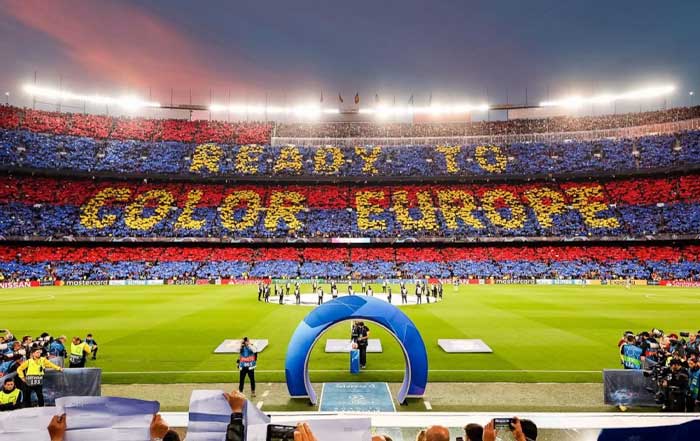
In Barcelona, Camp Nou has long been synonymous with FC Barcelona's philosophy of "Més que un club," serving as both a fortress of football and a symbol of Catalan identity. As of 2026, the stadium is deep into its transformation under the Espai Barça project, which is reshaping the facility into a modern entertainment and business district with expanded capacity, enhanced premium seating, advanced digital signage, and integrated commercial spaces. The redevelopment reflects the financial realities of elite European football, where clubs must balance competitive spending with sustainable revenue growth.
Camp Nou's evolution is closely watched by analysts at firms such as KPMG Football Benchmark and UEFA, who see it as a bellwether for how legacy clubs can modernize without diluting their cultural DNA. The project also highlights the increasing role of private financing, naming rights, and global sponsorship portfolios in stadium funding. For a business-oriented audience, Camp Nou offers a detailed case study in capital investment, brand leverage, and fan engagement in a highly scrutinized environment. Learn more about global sports business strategies and venue economics.
Lusail Stadium and the Middle East's Sporting Ambitions
The Lusail Iconic Stadium in Qatar, centerpiece of the 2022 FIFA World Cup, remains in 2026 one of the most debated venues in global sport. Architecturally, it showcases advanced cooling technologies and a design language inspired by traditional Arab craftsmanship, and it played host to the World Cup final that cemented Qatar's place in the global sports conversation. Strategically, Lusail is part of a broader regional push, alongside projects in Saudi Arabia and the United Arab Emirates, to use sport as a vehicle for diversification, tourism, and geopolitical influence.
The stadium's legacy is intertwined with discussions around migrant labor, human rights, and environmental impact, topics examined by organizations such as Amnesty International, Human Rights Watch, and FIFA itself. Lusail's post-tournament usage plan, involving a combination of sports events, entertainment, and community facilities, is intended to avoid the "white elephant" effect that has plagued some past hosts. For sportsyncr.com readers, Lusail encapsulates the complexity of modern sports infrastructure, where cutting-edge engineering coexists with ethical scrutiny. Explore more perspectives on sport, culture, and global politics.
Allianz Arena and the Green, Connected Stadium
Munich's Allianz Arena, home to FC Bayern Munich, continues to be a benchmark for contemporary stadium design in 2026. Its illuminated exterior, capable of changing color to reflect team or event branding, has become one of European football's most recognizable visuals, while its bowl design delivers excellent sightlines and acoustics. Over the past decade, the stadium has invested heavily in sustainability and connectivity, integrating solar power, advanced waste management, and 5G-enabled services that support real-time data, cashless payments, and personalized content.
These efforts align with the broader European agenda on climate and digitalization articulated by institutions such as the European Commission and the UEFA Sustainability Strategy. Allianz Arena's approach demonstrates that environmental responsibility and commercial performance can be mutually reinforcing, with efficiency gains and reputational benefits contributing to long-term value. For technology-focused readers, the venue illustrates how edge computing, IoT sensors, and digital twins are beginning to influence crowd management and facility operations. Dive deeper into sports and technology integration.
Tokyo's National Stadium and the Architecture of Resilience
The Japan National Stadium in Tokyo, designed by Kengo Kuma for the postponed Tokyo 2020 Olympic Games, has matured into a central node of Asian athletics and football by 2026. Its use of timber, greenery, and natural ventilation reflects a design philosophy rooted in harmony with the environment, while its structural systems meet the stringent seismic standards required in Japan. The stadium became a symbol of perseverance through the pandemic-era Games, showcasing how a host nation could adapt in the face of unprecedented disruption.
Tokyo's approach resonates with the broader Japanese emphasis on blending tradition and innovation, visible in sectors from robotics to urban planning and reflected in the work of organizations like Japan Sport Council. The stadium's programming strategy, which mixes elite sport with community access and cultural events, aims to ensure that the Olympic legacy is lived daily rather than remembered episodically. For readers interested in sustainability and urban design, Tokyo offers a compelling model of how venues can be integrated into the social fabric rather than sitting apart as isolated monuments. Learn more about sport, sustainability, and environmental leadership.
Economic Engines and Urban Transformation
Across continents, iconic sporting venues have become central to urban regeneration strategies. Cities in North America, Europe, Asia, and the Global South increasingly treat stadiums as anchor tenants in mixed-use districts that combine housing, offices, retail, hospitality, and public space. Developments around Tottenham's stadium in London, the LA Live district around Crypto.com Arena in Los Angeles, and the MetLife Stadium complex in New Jersey illustrate how venues can catalyze broader real estate and infrastructure projects, a dynamic frequently analyzed by consultancies such as McKinsey & Company.
For local economies, major events at venues like Wembley, Yankee Stadium, or the MCG stimulate employment across security, catering, transportation, and media production. At the same time, public debate continues around the use of taxpayer funding, displacement risks, and the opportunity cost of mega-projects, issues that are increasingly scrutinized by city auditors and civil society organizations. For professionals tracking the sports labor market, venues also shape career paths in event operations, sports medicine, data analytics, marketing, and community outreach. Readers can explore the evolving landscape of sports jobs and careers.
Sustainability, Governance, and Trust
In 2026, the credibility of any major sports venue is inseparable from its approach to environmental, social, and governance (ESG) issues. Stakeholders from fans to institutional investors expect clear strategies on emissions reduction, resource efficiency, inclusivity, and community benefit. Stadiums like Levi's Stadium in California and Tottenham Hotspur Stadium in London have adopted solar installations, rainwater harvesting, and zero-waste initiatives that align with global frameworks championed by The Climate Pledge, CDP, and the Sports for Climate Action Framework under the UNFCCC.
For sportsyncr.com, which emphasizes trustworthiness and long-term thinking, this ESG lens is central. Venues are increasingly required to publish sustainability reports, track their carbon footprints, and engage in transparent dialogue with local communities. The shift from one-off "green" features to integrated sustainability strategies indicates a maturation of the sector, with stadium operators recognizing that environmental performance is now a core component of brand equity and regulatory compliance. Readers interested in this dimension can follow ongoing coverage of sport and environmental responsibility.
Technology, Data, and the Next Generation Fan Journey
The fan experience in 2026 is shaped as much by digital infrastructure as by physical architecture. From New York to Seoul and Singapore, venues are deploying high-density Wi-Fi, augmented reality layers, and app-based services that turn a matchday into a fully connected journey. Advanced access control, dynamic wayfinding, and personalized content delivery create a seamless environment that reduces friction while opening new commercial opportunities through targeted offers and in-seat ordering. Industry bodies such as Sports Innovation Lab and MIT Sloan Sports Analytics Conference have documented how data from these systems is being used to refine operations and marketing.
For younger demographics, particularly in technology-forward markets like South Korea, Japan, the United States, and Scandinavia, the boundary between attending a game and participating in a digital experience is increasingly blurred. Venues host esports tournaments, integrate gaming zones, and experiment with extended reality broadcasts, reflecting the convergence of traditional sport and interactive entertainment. Readers can explore this evolving frontier in sportsyncr.com's dedicated coverage of gaming and digital fan engagement.
Culture, Community, and the Emotional Core of Venues
Despite the sophistication of business models and technology, the enduring power of iconic sporting venues in 2026 remains fundamentally emotional. Whether it is the roar at the Maracanã, the reverent hush of Centre Court, the deafening noise of a Milan derby at San Siro, or the frozen drama of a playoff game at Lambeau Field, these environments create shared memories that extend far beyond the final score. They are spaces where local cultures are performed and global audiences are invited to witness, from the singing of anthems to the display of tifos and choreographies.
This emotional dimension is what makes stadium tours and behind-the-scenes experiences so compelling for global travelers, and why venues feature prominently in the cultural reporting of sportsyncr.com. They serve as touchpoints where discussions about health, identity, performance, and belonging converge, reflecting broader social dynamics in countries from the United States, United Kingdom, and Germany to Brazil, South Africa, Japan, and beyond. Readers can delve further into these narratives in our coverage of sport, society, and global culture.
A Global Itinerary for the Sports-Centric World
Today, touring the world's most iconic sporting venues is no longer simply a niche pursuit for hardcore fans; it has become part of a broader travel, business, and cultural agenda for professionals and enthusiasts across continents. Executives attend matches at Allianz Arena or Wembley as much for networking as for the spectacle, families build holidays around visits to Fenway Park or the MCG, and students of architecture and urbanism study the forms of the Bird's Nest, Lusail, or Tokyo's National Stadium. For the global community that turns to sportsyncr.com for insight, these venues are living classrooms in which sport, economics, technology, culture, and the environment intersect.
As new arenas rise in Asia, Africa, and South America, and as established cathedrals of sport continue to modernize, one constant remains: stepping into a stadium is stepping into a shared human story. It is an experience that connects a fan in London to one in Lagos, a supporter in New York to another in New Delhi, and a visitor in Munich to someone watching from Melbourne. In that sense, the world's great sporting venues are more than buildings; they are the physical infrastructure of a truly global conversation-one that sportsyncr.com will continue to follow across news, business, science, and every dimension of the sporting world.