

How Smart Stadiums Improve Visitor Experiences
The Smart Stadium Era and the Sportsyncr Perspective
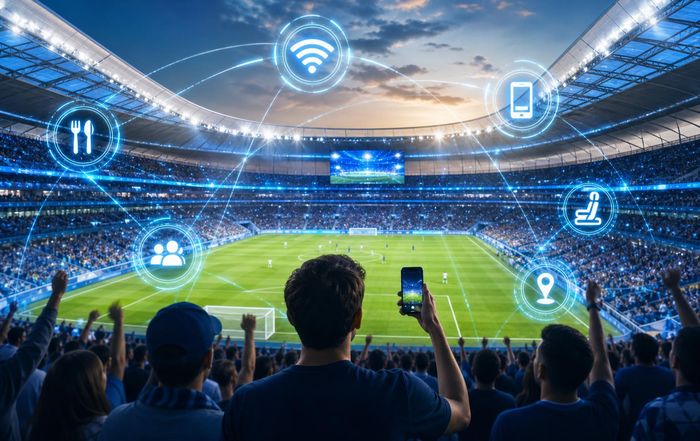
The idea of a "smart stadium" has shifted from futuristic concept to competitive necessity, transforming how fans, athletes, brands and rights holders think about live sport and entertainment. Around the world, from the United States and United Kingdom to Germany, Singapore and Australia, leading venues are now complex digital ecosystems that blend connectivity, data, sustainability and immersive content to create experiences that cannot be replicated at home. For Sportsyncr, which focuses on the intersection of sports, fitness, health and business innovation, this evolution is not just a technology story; it is a story about experience, expertise, authoritativeness and trustworthiness in a rapidly changing global fan economy.
The smart stadium is emerging at the nexus of several powerful trends: the widespread deployment of 5G networks, advances in edge computing, the maturation of the Internet of Things, the rise of data-driven decision-making and the growing expectation that every consumer touchpoint must feel personalized, seamless and safe. As organizations such as FIFA, UEFA, the NFL, the NBA, the Premier League and Formula 1 push for deeper fan engagement and new revenue streams, stadium operators are rethinking the stadium not as a static venue but as a live, adaptive platform. Learn more about how advanced connectivity standards are enabling this shift through resources from GSMA and the latest 5G deployment reports from Ericsson.
In this environment, Sportsyncr positions itself as a guide for decision-makers across clubs, leagues, sponsors and technology providers, curating insights that connect cutting-edge innovation with the practical realities of operating venues across North America, Europe, Asia and beyond. The smart stadium is where sports, culture, technology and business converge, and understanding how it improves visitor experiences is central to shaping the next decade of the sports industry.
Connectivity as the Foundation of the Modern Fan Journey
At the heart of every credible smart stadium strategy lies robust, resilient connectivity. Fans now arrive at stadiums expecting the same level of digital access they enjoy at home or in the office, whether they are uploading content to social platforms, streaming multiple camera angles, checking real-time statistics or managing mobile tickets and payments. The shift to all-digital ticketing, accelerated during the pandemic years and now standard across most major leagues, depends on reliable in-stadium networks that can handle tens of thousands of concurrent connections without latency or failure.
Telecommunications leaders such as Verizon, AT&T, Deutsche Telekom and BT Group have invested heavily in 5G deployments in venues across the United States, Germany and the United Kingdom, often in partnership with top-tier clubs and leagues. These installations leverage small cells, distributed antenna systems and edge computing to deliver low-latency connectivity that supports not only fan devices but also venue operations, including security, broadcast production and building management systems. For a deeper understanding of how low-latency networks enable new fan-facing applications, stakeholders often refer to technical overviews from the IEEE and case studies from Cisco on connected venues.
From a visitor's point of view, this connectivity translates into smoother entry, faster transactions, richer content and the ability to remain connected to friends, communities and work throughout the event. For stadium operators, it generates a continuous stream of anonymized data on movement patterns, dwell times, app usage and purchasing behavior, which can be leveraged-within clear privacy frameworks-to refine operations and deliver more relevant offers. On Sportsyncr, the implications of this data-driven environment are explored across technology, business and news coverage, reflecting how connectivity underpins the entire smart stadium value chain.
Seamless Entry, Wayfinding and Crowd Management
One of the most tangible ways smart stadiums improve visitor experiences is by reducing friction at the points that traditionally generate frustration: entry gates, concourses, restrooms and exits. Smart access control systems now combine digital ticketing, identity management and, increasingly, biometric solutions to streamline arrival and enhance security. Some venues, working with providers such as CLEAR and NEC, have tested facial recognition or palm-based entry systems that allow pre-registered fans to enter without presenting a physical ticket, significantly cutting down on queues and bottlenecks, while still complying with regulatory and data protection requirements. The broader privacy and ethical implications of these technologies are being closely monitored by organizations like the Electronic Frontier Foundation and regulators across Europe, Asia and North America.
Inside the venue, smart wayfinding solutions use digital signage, mobile apps and, in some cases, augmented reality overlays to guide fans to their seats, concessions, restrooms and merchandise stands with minimal confusion. These systems are often powered by a combination of Wi-Fi triangulation, Bluetooth beacons and sensor networks that map crowd density in real time, allowing operators to redirect flows when certain areas become congested. Research on crowd science and safe movement from institutions such as University College London and best-practice guidance from FIFA and the International Olympic Committee inform many of these designs, ensuring that improvements in convenience do not compromise safety.
For Sportsyncr, which tracks global developments across world sport and urban infrastructure, these advances demonstrate how smart stadiums are borrowing from smart city thinking, blending physical and digital layers to orchestrate movement. The result for visitors is a calmer, more intuitive experience in which signage, staff and digital tools work together to reduce anxiety and help fans focus on the event itself rather than on logistics.
Transforming Concessions and Commerce into Frictionless Experiences
The days of missing critical moments in a match because of long concession lines are being steadily eroded by a wave of innovation in stadium food, beverage and retail operations. Smart stadiums are increasingly adopting mobile ordering, self-service kiosks, autonomous checkout and dynamic pricing to make purchasing faster and more personalized. Companies like Amazon with its Just Walk Out technology and Square with its integrated payment systems have partnered with clubs and venues to enable fans to scan in, pick up items and walk out without stopping at a traditional checkout, with charges automatically applied to their accounts. To understand the underlying technologies, industry leaders often reference case studies from Amazon and retail automation research from MIT Sloan Management Review.
Mobile apps now allow fans to order food and merchandise directly to their seats, track delivery status and receive recommendations based on past purchases and time of day. These systems are tightly integrated with point-of-sale platforms, inventory management and loyalty programs, enabling venues to adjust menus, pricing and promotions in real time. In markets such as Japan, South Korea and Germany, where stadium catering is already a refined experience, smart systems are being used to further localize offerings, highlight healthier options and reduce food waste by aligning production with predicted demand.
For brands and sponsors, this new commerce environment creates more touchpoints to engage fans in contextually relevant ways, from limited-edition merchandise drops to exclusive offers that activate when a home team scores. On Sportsyncr, the commercial side of smart stadiums is a core theme within brands and sponsorship coverage, emphasizing how frictionless commerce is reshaping both fan expectations and revenue models. The overarching effect on visitors is a sense that the stadium is responsive, efficient and aligned with their preferences, reducing stress and increasing satisfaction throughout the event.
Immersive Content, Second Screens and Personalized Storytelling
The smart stadium also represents a profound shift in how live events are experienced, moving beyond a single shared view of the action to a layered, personalized content environment. High-density Wi-Fi and 5G networks enable fans to access multiple camera angles, real-time statistics, player tracking data and instant replays directly on their devices, often synchronized with the stadium's big screens and LED ribbons. Organizations such as LaLiga, the NBA and Formula 1 have been pioneers in offering rich data and video feeds that complement the in-person experience, and their innovations are frequently highlighted in reports from Deloitte's Sports Business Group and PwC's Sports Survey.
Augmented reality experiences, accessible through smartphones or dedicated wearables, allow fans to overlay player stats, heat maps or historical information onto the live field of play, adding depth for both casual spectators and data-obsessed followers. Some venues in North America, Europe and Asia have experimented with gamified AR experiences that reward fans for exploring different parts of the stadium or engaging with sponsor activations, blending elements of gaming with live sport. The evolution of these immersive experiences is closely tied to advances in graphics processing and edge computing, documented by technology leaders such as NVIDIA and Intel.
From a storytelling perspective, smart stadiums give clubs and leagues unprecedented control over the narrative around each event. Personalized push notifications, location-aware content and segmented messaging allow organizations to tailor information and offers to different fan cohorts, whether they are families attending their first match, ultra-fans with season tickets or international visitors experiencing a stadium tour. For Sportsyncr, which covers the cultural and social dimensions of sport on its culture and social channels, this personalization raises important questions about inclusivity, authenticity and the balance between commercial messaging and genuine community-building, all of which directly influence how visitors perceive the trustworthiness of the smart stadium environment.
Health, Safety and Wellbeing in a Post-Pandemic Stadium
The global pandemic fundamentally reshaped expectations around health, safety and hygiene in public spaces, and stadiums were at the center of this transformation. Smart stadiums have integrated health-focused technologies and protocols into their core design, not as temporary measures but as long-term features that reassure visitors and staff. Enhanced air filtration systems, real-time occupancy monitoring, contactless entry and payment, and digital health communication platforms are now standard in many newly built or renovated venues, aligned with guidance from organizations such as the World Health Organization and the U.S. Centers for Disease Control and Prevention.
For visitors, these systems translate into practical benefits: more transparent information about crowd levels, cleaner facilities, reduced physical contact in transactions and the ability to receive timely updates if conditions change. Some venues in Canada, France and Singapore have implemented environmental sensors that monitor air quality, temperature and humidity, feeding into building management systems that automatically adjust ventilation and climate controls. Research on the links between indoor environments, respiratory health and performance from institutions like Harvard T.H. Chan School of Public Health underscores the importance of these measures, particularly for fans with underlying health conditions.
On Sportsyncr, the intersection of health, fitness and live sport is a recurring theme, emphasizing that smart stadiums are not only entertainment hubs but also complex health environments. For athletes and staff, wearables and monitoring systems support injury prevention and workload management, while for fans, accessible seating, sensory-friendly zones and quiet spaces reflect a growing commitment to mental wellbeing and inclusivity. Collectively, these measures contribute to a perception that the smart stadium is a trustworthy, professionally managed space where visitor wellbeing is a core design principle rather than an afterthought.
Sustainability, Environment and the Responsible Stadium
Environmental sustainability has moved from corporate social responsibility rhetoric to operational imperative, particularly in regions where regulatory frameworks and fan expectations demand measurable action. Smart stadiums are at the forefront of this shift, integrating energy-efficient systems, renewable power, water management and circular economy principles into their design and operation. Venues such as Tottenham Hotspur Stadium, Allianz Arena and Mercedes-Benz Stadium have become case studies in sustainable design, often cited in analyses by the U.S. Green Building Council and sustainability-focused organizations like CDP.
Smart energy management systems use sensors, analytics and automation to optimize lighting, heating, cooling and power distribution based on occupancy and event schedules, significantly reducing carbon footprints and operating costs. Water-saving technologies, waste separation and recycling programs, and partnerships with local suppliers further enhance environmental performance. Fans increasingly notice and value these efforts, especially younger demographics in Scandinavia, Germany, Canada and New Zealand, where environmental awareness is particularly high. Learn more about sustainable business practices from resources curated by UN Global Compact.
For Sportsyncr, which dedicates coverage to the intersection of sport and sustainability on its environment pages, the smart stadium is a powerful symbol of how the sports industry can align commercial success with environmental responsibility. Visitors benefit not only from improved comfort and air quality but also from the knowledge that their matchday experience is part of a broader commitment to climate action and resource stewardship, enhancing the emotional connection between fans, venues and communities.
Data, Privacy and the Trust Equation
Smart stadiums rely on data to function effectively, from sensor readings and video analytics to app usage and transaction histories. This data enables personalization, operational efficiency and enhanced security, but it also raises fundamental questions about privacy, consent and governance. In 2026, with regulatory frameworks such as the EU's GDPR, California's CCPA and emerging data protection laws across Asia, Africa and South America, stadium operators must demonstrate not only technical expertise but also ethical leadership in how they collect, store and use visitor data.
Leading venues and rights holders are adopting transparent data policies, granular consent mechanisms and privacy-by-design principles, often guided by frameworks from organizations like the International Association of Privacy Professionals and best-practice recommendations from the OECD. Biometric systems, video analytics and location tracking are subject to particular scrutiny, requiring robust governance, clear opt-in processes and independent oversight to maintain fan trust. Failures in this area can quickly erode reputations, especially in an era where social media can amplify concerns in real time.
For Sportsyncr, which aims to provide authoritative, trustworthy analysis for a global audience, the data dimension of smart stadiums is central to evaluating their long-term viability. Visitor experience is not only about convenience and excitement; it is also about confidence that personal information is handled responsibly. The most successful smart stadiums in the United States, Europe, Asia-Pacific and Latin America will be those that treat data ethics as a strategic pillar, integrating legal, technical and cultural perspectives to build durable trust with fans, partners and regulators.
Smart Stadiums as Platforms for Brands, Jobs and Innovation
Beyond improving matchday experiences, smart stadiums are reshaping the broader sports business ecosystem, creating new opportunities for brands, careers and innovation. For sponsors, the combination of rich data, digital signage, augmented reality and mobile engagement offers unprecedented granularity in targeting and measurement, enabling campaigns that are both more relevant to fans and more accountable to marketing budgets. Brands such as Coca-Cola, Adidas, Nike and Heineken are experimenting with location-aware activations, interactive content and real-time offers that respond to in-game events, drawing on analytics and insights documented by McKinsey & Company and Boston Consulting Group.
For the labor market, the smart stadium revolution is generating demand for new skill sets in areas such as data science, cybersecurity, IoT engineering, fan experience design and sustainability management. Universities and training providers in the United States, United Kingdom, Germany, Singapore and South Korea are launching specialized programs to prepare graduates for these roles, reflecting the convergence of sports, technology and business. On Sportsyncr, the jobs and business sections increasingly highlight these emerging career paths, emphasizing that stadiums are becoming innovation hubs where cross-disciplinary teams collaborate on complex challenges.
From an innovation standpoint, smart stadiums function as living laboratories for technologies that may later be deployed in cities, transportation systems and other large-scale venues. Pilots in areas such as autonomous mobility, digital identity, robotics, advanced materials and AI-driven operations often begin in stadium settings, where the combination of high footfall, clear perimeters and event-based cycles provides ideal conditions for testing. This feedback loop between stadiums and broader urban innovation is a recurring theme in reports from the World Economic Forum and research centers focusing on smart cities and digital infrastructure.
The Global Outlook: Regional Nuances and Future Directions
While the principles underlying smart stadiums are broadly consistent worldwide, their implementation varies significantly by region, influenced by regulatory environments, cultural preferences, economic conditions and existing infrastructure. In North America, emphasis has often been placed on premium hospitality, large-scale sponsorship activations and integrated entertainment districts, with venues such as SoFi Stadium and Allegiant Stadium setting benchmarks for immersive fan experiences. In Europe, where many stadiums are embedded within dense urban fabrics and deep-rooted club cultures, smart upgrades must balance modernization with heritage, community identity and financial fair play considerations.
In Asia, rapid urbanization, strong governmental support for digital infrastructure and a tech-savvy population have created fertile ground for highly connected, multi-purpose venues in cities such as Tokyo, Seoul, Singapore and Bangkok. Meanwhile, in regions such as Africa and parts of South America, smart stadium initiatives often intersect with broader development goals, including transport upgrades, tourism promotion and digital inclusion. Global governing bodies, development agencies and private investors are increasingly collaborating to ensure that new stadium projects contribute to sustainable, long-term growth rather than short-lived spectacles, with guidance from organizations like the World Bank and UNESCO.
For Sportsyncr, which serves a readership spanning the United States, Canada, Europe, Asia-Pacific, Africa and Latin America, acknowledging these regional nuances is essential to providing credible, actionable insight. Coverage across world, science and news verticals emphasizes that there is no single blueprint for a smart stadium; instead, there is a set of guiding principles-connectivity, data, sustainability, inclusivity and trust-that must be adapted to local contexts.
Conclusion: Experience, Expertise and Trust in the Smart Stadium Age
As of 2026, the smart stadium has evolved from a technological aspiration into a defining feature of leading sports and entertainment venues worldwide. For visitors, the benefits are increasingly clear: faster, more secure entry; intuitive navigation; frictionless food, beverage and retail experiences; richer, more personalized content; enhanced health and safety measures; and a growing sense that the stadium is a responsible environmental citizen. For rights holders, brands and operators, smart stadiums offer powerful tools to deepen engagement, diversify revenue and operationalize data-driven decision-making.
However, the long-term success of smart stadiums will depend not only on the sophistication of their technologies but also on the depth of their experience design, the credibility of their expertise and the strength of the trust they cultivate with fans, communities and regulators. This is where the editorial mission of Sportsyncr-connecting sports, fitness, health, culture, business and technology-becomes particularly relevant. By highlighting best practices, interrogating ethical dilemmas and showcasing innovations from the United States to Germany, from Japan to Brazil, Sportsyncr aims to support stakeholders who are shaping the next generation of live experiences.
In the years ahead, as artificial intelligence, mixed reality, biometrics and sustainable materials continue to advance, smart stadiums will become even more adaptive, personalized and integrated into their surrounding ecosystems. The venues that thrive will be those that treat technology as a means rather than an end, focusing relentlessly on the holistic wellbeing, enjoyment and trust of every visitor. In doing so, they will not only elevate the standard for live sport and entertainment but also demonstrate how data, design and responsibility can come together to create spaces that are truly worthy of the passion fans bring through their gates.