

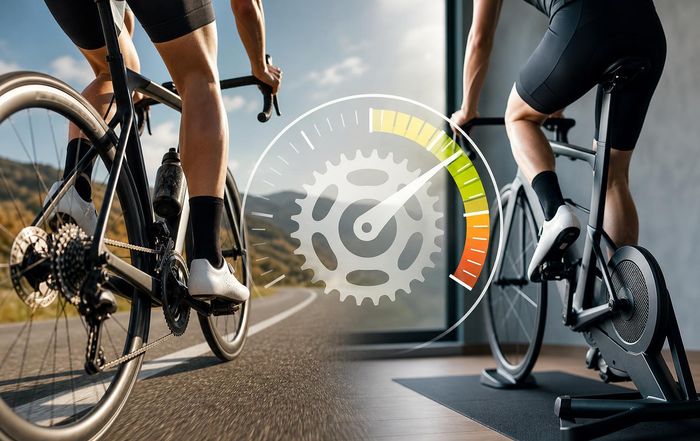
Cycling Cadence Explained for Road and Indoor Training
Cycling cadence is one of those concepts that riders hear about constantly but often only partially understand. Some are told to "spin faster," others to "push a bigger gear," and many indoor training platforms throw cadence numbers onto the screen without explaining what to do with them. For road cyclists, triathletes, and indoor riders alike, cadence is a key variable that influences performance, fatigue, and even injury risk. Understanding what cadence actually is, how it interacts with power and heart rate, and how to train it differently indoors and outdoors can help riders of all levels get more from every session.
In simple terms, cadence is the number of pedal revolutions per minute (rpm). But beneath that basic definition lies a web of physiology and biomechanics. Different riders naturally gravitate to different cadences, and the most efficient cadence for a short sprint is not the same as for a long endurance ride or a steep climb. Research from organizations such as the Union Cycliste Internationale (UCI) and sports science departments at universities worldwide has examined how cadence affects oxygen consumption, muscle recruitment, and fatigue. Meanwhile, indoor platforms like Zwift (https://www.zwift.com/) and Wahoo (https://www.wahoofitness.com/) have made cadence data ubiquitous, but not always intuitive to use. This article breaks down cadence from the ground up and then applies it specifically to both road and indoor training so riders can turn numbers into practical gains.
What cadence really measures - and why it matters
Cadence is simply how fast the cranks are turning, measured in revolutions per minute. If one crank arm completes 90 full rotations in a minute, the cadence is 90 rpm. On a road bike, cadence is determined by your chosen gear and speed: for a given speed, a lower gear means higher cadence and a higher gear means lower cadence. Indoors, cadence is independent of speed but linked to the resistance level on a smart trainer, spin bike, or turbo setup. Devices from brands like Garmin (https://www.garmin.com/) or Polar (https://www.polar.com/) typically measure cadence via crank- or shoe-mounted sensors, while many smart trainers estimate it from flywheel data.
Cadence matters because it changes how your body produces power. Power is the product of torque (how hard you push on the pedals) and angular velocity (cadence). At the same power output, a lower cadence requires more torque per pedal stroke and a higher cadence requires less torque. Low-cadence riding tends to load the muscles more heavily, especially the quadriceps and glutes, while high-cadence riding shifts a bit more strain toward the cardiovascular system. For riders interested in performance, this trade-off is central: choosing the right cadence for a given situation can delay fatigue, protect joints, and sometimes unlock extra speed. For those focused on general fitness and health, understanding cadence can keep indoor workouts safer and more sustainable.
Optimal cadence: myth, averages, and individual variation
Many riders have heard that "90 rpm is ideal," often attributed to observations of professional road racers. While it is true that elite cyclists frequently pedal between about 85 and 100 rpm on flat terrain, the idea of a single "best" cadence is misleading. Studies reported in outlets such as PubMed via the U.S. National Library of Medicine (https://www.ncbi.nlm.nih.gov/) show that the cadence at which oxygen consumption is lowest (the energetically most efficient cadence) is often lower than what riders naturally choose at race intensity. In other words, what feels best in a race is not always the most economical, and "optimal" depends on context.
For most trained road cyclists, typical self-selected cadences cluster around 80-95 rpm on the flat, somewhat lower when climbing, and significantly higher in sprints. Recreational riders may be more comfortable between 70 and 85 rpm, and many beginners instinctively grind at 60-70 rpm because they are used to pushing harder rather than spinning faster. However, individual factors such as muscle fiber composition, strength, joint health, and even bike fit influence what is comfortable and sustainable. Riders with a history of knee pain, for example, often benefit from avoiding very low cadences in big gears, since high torque at slow rpm can increase joint stress.
Rather than chasing a universal number, it is more useful to think in cadence "zones" that align with different types of efforts. Easy endurance riding might sit around 80-90 rpm for many, tempo and threshold efforts around 85-95 rpm, and high-intensity intervals or race surges often push above 95-100 rpm. Indoor riders using structured workouts on platforms such as TrainerRoad (https://www.trainerroad.com/) or Rouvy (https://www.rouvy.com/) will often see target cadence ranges embedded in session descriptions for this reason. The goal is not to force everyone to the same number but to build comfort across a useful spectrum.
How cadence interacts with power, heart rate, and fatigue
Cadence cannot be separated from power, heart rate, and perceived effort. At a given power, increasing cadence generally raises heart rate slightly while reducing muscular strain per pedal stroke. That is why many time trialists and triathletes, whose events require sustained high power for long durations, often choose moderately high cadences: they trade some cardiovascular cost for reduced muscular fatigue, which can help maintain output deep into an event. Research summarized by organizations like British Cycling (https://www.britishcycling.org.uk/) and USA Cycling (https://usacycling.org/) has highlighted that experienced riders often adopt higher cadences at race intensities than would be predicted by pure metabolic efficiency alone, likely to better manage fatigue and neuromuscular demands.
At lower intensities, however, the picture changes. Recreational riders cruising at an easy pace may find that artificially high cadences feel "choppy" and raise heart rate without offering real benefits. Here, a slightly lower cadence that feels smooth and relaxed may be more appropriate. On the other hand, very low cadences (e.g., below 60 rpm) at moderate or high power can rapidly increase muscular fatigue and place extra load on knees and hips. For strength-focused sessions, this may be intentional, but for general endurance or indoor health workouts, it is often counterproductive.
Fatigue itself also alters cadence. As riders tire, they often drift toward lower cadences because it becomes harder to coordinate smooth high-rpm pedaling. This is particularly obvious in long indoor sessions where there are no natural coasting opportunities. Monitoring cadence alongside power and heart rate can therefore be a useful early-warning sign: a gradual drop in cadence at constant power and rising heart rate may signal that neuromuscular fatigue is setting in. For riders training with power meters or smart trainers, combining these data streams can make sessions more productive and reduce the risk of overreaching.
Road cycling cadence: flats, climbs, and sprints
On the road, cadence choices are shaped by terrain, wind, group dynamics, and gear ratios. On flat or rolling terrain, experienced riders tend to settle into their "all-day" cadence-often somewhere around 80-95 rpm for endurance rides. This range balances comfort, aerobic demand, and muscular loading, with small adjustments depending on whether the rider is on the front of a group, sitting in the draft, or riding solo into a headwind. Having a wide spread of gears on the cassette makes it easier to fine-tune cadence rather than being forced to choose between grinding or spinning excessively.
Climbing changes the equation. At lower speeds, especially on steep gradients, air resistance falls and gravity dominates. Many riders naturally shift to a slightly lower cadence on climbs, perhaps 70-85 rpm, because maintaining very high rpm at low speed can feel unstable and technically awkward, particularly when standing out of the saddle. However, professional climbers often still aim to keep cadence relatively high compared to recreational riders, in part to avoid excessive torque that could accelerate muscular fatigue. For non-elite riders, using compact chainsets and wide-range cassettes can help keep climb cadence within a comfortable range. If a rider frequently finds themselves grinding at 55-60 rpm on hills, it is often a gearing issue rather than a "weakness."
Sprinting introduces yet another cadence environment. Peak sprint power often occurs at cadences well above 100 rpm, sometimes exceeding 120-130 rpm for elite sprinters. Here, the focus is on rapidly accelerating the pedals and bike, and riders need both strength and neuromuscular coordination. Practicing short high-cadence efforts in a controlled way-both seated and standing-can help improve sprinting and late-race acceleration. For those interested mainly in general sports performance rather than competition, occasional high-cadence drills still have value, improving pedal smoothness and expanding the range of cadences that feel natural.
Indoor training cadence: differences from the road
Indoor training changes the feel and context of cadence significantly. Without wind, traffic, or terrain variations, riders can hold very steady cadences for long periods, which is ideal for structured interval work but can also lead to monotony and overuse if not managed carefully. Smart trainers in ERG mode automatically adjust resistance to maintain a target power at whatever cadence the rider chooses, which can create a false sense of freedom: in reality, some cadences are more sustainable and joint-friendly than others, even when power is fixed.
Many indoor training plans recommend keeping most endurance and sweet-spot intervals in the 85-95 rpm range, with occasional excursions above or below for specific drills. This slightly higher average cadence than some riders use outdoors reflects the constant nature of indoor pedaling-there is no coasting down hills or soft-pedaling into corners. As a result, cardiovascular load and core temperature can climb faster indoors, so riders should pay close attention to ventilation and hydration. Organizations like the American College of Sports Medicine (https://www.acsm.org/) and World Health Organization (https://www.who.int/) emphasize the importance of environment and cooling for safe indoor exercise at higher intensities.
Spin classes and studio bikes add another layer. Some commercial classes encourage very high cadences at low resistance, sometimes above 110-120 rpm, which can become biomechanically unstable, especially for less experienced riders or those on poorly adjusted bikes. While short bursts of high cadence have their place, sustained "free-spinning" at extremely high rpm without adequate resistance offers limited strength or endurance benefit and can increase the risk of bouncing in the saddle and losing pedal control. Indoor riders using platforms like Zwift or structured programs can benefit from setting sensible cadence targets that prioritize smoothness and control over showy numbers.
Using cadence targets in structured workouts
Whether training outdoors or indoors, cadence can be used as a deliberate training variable rather than just a readout on the head unit. For endurance-focused riders, a common approach is to anchor easy and moderate sessions around a comfortable, sustainable cadence-say 80-95 rpm-while sprinkling in short blocks at higher or lower cadences to build versatility. For example, an endurance ride might include several 3-5 minute segments at 95-100 rpm to develop neuromuscular coordination, followed by equal-length segments at 70-75 rpm to build muscular endurance, all at the same moderate power level.
For performance-oriented cyclists, cadence prescriptions become more specific. Threshold intervals might be done at the cadence the rider expects to use in competition, tempo climbing intervals at slightly lower cadences that simulate real hills, and sprint workouts at very high cadences to mimic race accelerations. Indoor platforms and training apps often bake these targets directly into their workouts, displaying suggested cadence ranges alongside power and heart rate. Riders following such programs should treat cadence targets as guidelines rather than rigid rules, adjusting slightly based on comfort, bike fit, and any joint issues, but still using them to push beyond their habitual patterns.
Cadence can also be used to manage fatigue within a session. During long interval sets, if the legs start to feel heavy at a given cadence, slightly increasing rpm while maintaining power can shift some load from muscles to the cardiovascular system, allowing the rider to complete the set more comfortably. Conversely, in strength-focused sessions, intentionally lowering cadence while holding power can create a "low-cadence torque" workout that mimics hill climbing. For riders tracking their progress over time, combining cadence data with power and heart rate can reveal improvements in efficiency, such as being able to hold a given power at a slightly higher cadence and lower perceived exertion.
High-cadence vs low-cadence training: benefits and risks
Both high- and low-cadence work have roles in a balanced training plan, but each carries specific considerations. High-cadence training-typically above 100 rpm-targets neuromuscular coordination and can improve pedal smoothness and responsiveness. Short, controlled high-cadence drills at low to moderate power are often used in warm-ups or as technique sessions. These can be particularly valuable for newer riders who find their pedaling "bouncy" or for experienced riders looking to sharpen leg speed ahead of races. However, pushing very high cadences for long durations without adequate resistance can stress hips and lower back and may cause riders to lose stability on the saddle.
Low-cadence training-say 50-70 rpm at moderate to high power-is often used to build muscular endurance and climbing strength. On indoor trainers, this might mean riding at sweet-spot or threshold power while deliberately keeping cadence low, simulating the torque demands of a steep hill. Such sessions can be effective, but they also place higher forces on the knees and hips. Riders with a history of joint issues should approach low-cadence work cautiously, perhaps under the guidance of a coach or physiotherapist, and ensure that bike fit is optimized. Including adequate warm-up, cool-down, and flexibility work, topics often covered in fitness and health sections, can help mitigate these risks.
Research from sports science institutions such as Australian Institute of Sport (https://www.ais.gov.au/) and Gatorade Sports Science Institute (https://www.gssiweb.org/) suggests that a mix of cadences across a training cycle is beneficial. High-cadence drills refine coordination, low-cadence intervals build specific strength, and most general endurance work sits in a comfortable middle range. The exact balance depends on a rider's goals: a time trialist might emphasize race-cadence threshold work, while a mountain rider might prioritize low-cadence climbing strength. Indoor riders focused on general fitness can adopt a simpler mix: mostly moderate cadences, with occasional short high- and low-cadence blocks to keep the neuromuscular system adaptable.
Cadence, bike fit, and injury considerations
Cadence does not exist in isolation from bike fit, technique, and overall health. A poorly fitted bike-whether on the road or on an indoor trainer-can make certain cadences uncomfortable or even unsafe. For example, a saddle that is too high may cause overextension at the bottom of the pedal stroke, making high-cadence pedaling feel unstable and contributing to hamstring or calf issues. A saddle that is too low can overload the knees, especially at low cadences with high torque. Handlebar reach and drop can also affect hip angle and the ability to spin smoothly.
Riders who experience recurring pain when changing cadence habits should consider a professional bike fit or consult a sports medicine specialist. Organizations like PhysioBikeFit or national sports medicine associations often provide directories of qualified practitioners, and many national cycling federations host guidance on injury prevention on their websites. From a technique standpoint, focusing on a smooth circular pedal stroke rather than mashing down on the pedals can make a wide range of cadences feel more natural. Single-leg drills, both indoors and on safe quiet roads, can help identify dead spots in the stroke and improve overall coordination.
For indoor riders, equipment setup is particularly important. Trainer height, front wheel support, and the match between indoor and outdoor positions all influence comfort at different cadences. If an indoor setup differs significantly from the outdoor bike in saddle height or reach, the rider may find that their usual road cadence feels awkward indoors, or vice versa. Aligning these positions as closely as possible helps transfer cadence skills between environments and reduces the risk of overuse injuries, a topic that overlaps with science and technology coverage of training tools.
Practical ways to improve your cadence control
Developing effective cadence habits does not require complex technology, though power meters and smart trainers can certainly help. A simple starting point is to observe current patterns: during several typical rides, note the cadences at which you naturally settle in different situations-easy cruising, moderate efforts, climbs, and harder intervals. Many head units and indoor platforms provide average and distribution data that reveal tendencies, such as always dropping below 75 rpm on hills or rarely exceeding 90 rpm in any situation. This baseline makes it easier to design targeted changes.
From there, riders can introduce small, progressive challenges. Outdoors, this might mean choosing slightly easier gears on familiar routes to nudge average cadence up by 5-10 rpm, or occasionally tackling a known climb while deliberately maintaining a higher cadence than usual, within a comfortable power range. Indoors, structured workouts with explicit cadence blocks can be especially effective: for example, a 45-minute session alternating 5 minutes at 85-90 rpm with 5 minutes at 95-100 rpm at the same moderate power. Over weeks, these sessions expand the range of cadences that feel smooth and sustainable.
It is also helpful to integrate cadence awareness into broader training goals. Riders training for hilly sportives or gran fondos may schedule dedicated low-cadence climbing simulations on the trainer, while those eyeing flat time trials might focus on holding race-like cadences during threshold intervals. For indoor-only riders focused on general fitness, mixing cadences within interval sessions can make workouts more engaging and reduce monotony, a point that connects with culture and social aspects of group rides and virtual events. In all cases, gradual progression and listening to the body are key: large, sudden changes in cadence habits can cause more harm than good.
Bringing it together: cadence as a tool, not a rule
Cadence is one of the most accessible metrics in cycling, yet it is often misunderstood. There is no single magic number that suits every rider and every situation. Instead, cadence should be viewed as a flexible tool that interacts with power, heart rate, terrain, and individual physiology. On the road, it helps riders adapt to flats, climbs, and sprints; indoors, it shapes how workouts feel and how sustainable they are over time. For some, the priority will be performance gains; for others, it will be comfort, joint health, and long-term enjoyment of the sport.
By paying attention to cadence patterns, experimenting with a range of rpm in structured ways, and respecting the limits of joints and muscles, riders can make more informed decisions every time they clip in. Combining cadence data with power and heart rate, and drawing on guidance from reputable bodies such as the UCI (https://www.uci.org/), British Cycling (https://www.britishcycling.org.uk/), USA Cycling (https://usacycling.org/), and sports science organizations like the ACSM (https://www.acsm.org/) provides a solid framework. For readers interested in how cadence fits into the wider landscape of training technology, health, and performance, further original daily reporting in our sports, fitness, health, technology, and science pages can deepen that understanding.
Ultimately, the most useful cadence is the one that lets a rider meet their goals-whether that is finishing a long sportive, winning a sprint, or completing a demanding indoor workout-while staying healthy and enjoying the ride.