

How Ticket Pricing Is Reshaping Live Sports Attendance in the U.S.
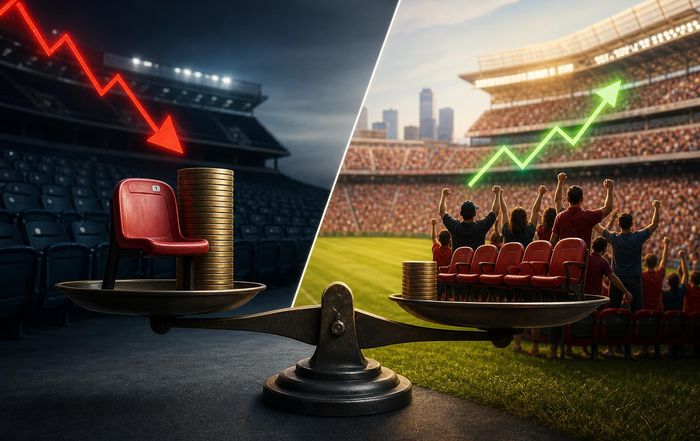
Live sports in the United States are in a strange moment. Stadiums and arenas are fuller than ever for some events, while other games struggle to draw fans despite wall-to-wall media coverage and sophisticated marketing. At the center of this divide is a deceptively simple question: how much does it cost to get in the door? Ticket pricing has become one of the most powerful forces shaping who attends live games, how often they go, and even how they experience the event once they're there.
From the NFL's sold-out Sundays to midweek Major League Baseball crowds and fluctuating NBA and NHL attendance, pricing strategy now sits alongside on-field performance and star power as a core driver of demand. Teams and leagues have embraced dynamic pricing algorithms, variable pricing by opponent, and extensive use of the secondary market. At the same time, fans are grappling with rising costs not only for tickets but also for travel, food, and merchandise, raising questions about accessibility and the long-term health of in-person fandom.
This article examines how ticket pricing models work, why they have changed so dramatically over the past decade, and what that means for live sports attendance in the U.S.-from hardcore season-ticket holders to families trying to afford a single game each year.
The economics behind ticket prices and attendance
Understanding the link between pricing and attendance starts with basic supply and demand, but the real picture is more complex. Teams in the major U.S. leagues operate in a constrained supply environment: there are a fixed number of home games and a fixed number of seats in each venue. For the NFL, with only eight or nine regular-season home games, scarcity supports very high prices and strong sell-through. For MLB, with 81 home games, teams must balance price with the need to attract fans on weeknights, in bad weather, and for less compelling opponents.
Economists often talk about "price elasticity of demand" - how sensitive consumers are to price changes. For marquee events such as the Super Bowl, NBA Finals, or college football playoff games, demand is relatively inelastic: many fans will pay far more than face value, and price increases have limited impact on whether the event sells out. In contrast, a Tuesday night baseball game against a non-rival or an early-season NBA matchup without star players on the court is far more price sensitive; even modest increases can reduce attendance significantly. Research shared by organizations such as the Sports Business Journal and academic departments at universities like Ohio State and Michigan has consistently highlighted this gap between premium and everyday games.
Another key factor is how teams earn money beyond tickets. National media rights deals through partners like ESPN and Fox Sports-both accessible via their main portals at https://www.espn.com/ and https://www.foxsports.com/-provide billions in guaranteed revenue to leagues such as the NFL, NBA, MLB, and NHL. This can reduce the pressure to keep tickets affordable for marginal fans, because gate receipts are no longer the dominant revenue source they once were. At the same time, local ticket revenue still matters for team profitability, stadium financing, and game-day atmosphere, so clubs cannot ignore attendance entirely, especially in more competitive sports markets.
From fixed prices to algorithms: how ticketing changed
Historically, most teams used relatively simple ticketing structures: a fixed price by seating section for the entire season, with modest differences for weekend versus weekday games. That model has largely disappeared in the major leagues. Today, dynamic pricing-adjusting prices in real time based on demand, opponent, injuries, weather, and even day-of-week patterns-has become standard practice in MLB and increasingly common in the NBA, NHL, and MLS. Technology firms such as SeatGeek, Ticketmaster, and StubHub (all accessible via their primary domains at https://seatgeek.com/, https://www.ticketmaster.com/, and https://www.stubhub.com/) provide the infrastructure and data analytics to support these models.
Dynamic pricing allows teams to raise prices for high-demand games-think rivalry matchups, star-driven visits from players like LeBron James or Shohei Ohtani, or late-season playoff races-while discounting low-demand fixtures where large swaths of the stadium might otherwise sit empty. Variable pricing, a related but simpler approach, sets different base prices for each game well before the season begins, based on projected demand. Both systems are intended to help teams capture more of the value that once flowed to the secondary market, where tickets for big games could sell at many multiples of face value.
For attendance, these tools cut both ways. On the positive side, fans who are flexible and price-sensitive can sometimes find very cheap tickets for less popular games, especially in leagues with long seasons. On the negative side, the very events that casual fans most want to attend-star-studded matchups, weekends, playoffs-are often the ones where dynamic pricing pushes tickets far beyond comfortable budgets. This can create a stratified experience in which live attendance for big moments becomes the preserve of higher-income fans, corporate clients, and hospitality buyers, while others turn to television, streaming, or highlights on platforms like https://www.youtube.com/.
The role of the secondary market and resellers
The rise of digital ticketing has also transformed the secondary market, which now operates at massive scale and is often tightly integrated with primary sellers. Platforms such as StubHub, SeatGeek, and Vivid Seats (https://www.vividseats.com/) aggregate tickets from season-ticket holders, brokers, and casual sellers, presenting fans with a wide range of price points for the same event. Teams themselves sometimes list tickets directly on these platforms or run official exchanges, blurring the line between primary and secondary sales.
From an attendance perspective, a liquid secondary market can help fill more seats, especially when sellers are willing to drop prices close to game time. For fans who are flexible and tech-savvy, this can be an opportunity to attend games that would otherwise be unaffordable. However, the same system can also push prices higher when demand surges, because algorithms and brokers respond rapidly to search activity and sales velocity. That's particularly visible in the NFL and major college football, where high-profile games in markets like Dallas, Los Angeles, or Atlanta regularly see secondary prices well above face value.
Teams and leagues have mixed incentives here. On one hand, they benefit from visibility and reach when tickets are widely distributed through major marketplaces. On the other, aggressive resale at high markups can fuel fan frustration and perceptions of gouging, even when teams themselves are not directly setting those secondary prices. Some leagues, such as the NFL and NBA, have experimented with price floors, caps, or verified resale programs in an attempt to balance liquidity with fairness, but there is no single industry standard.
Price, experience, and the "total cost" of going to a game
When fans talk about the cost of attending live sports, they rarely mean just the ticket. Parking, transportation, concessions, merchandise, and in some cases accommodation all contribute to the real price of a day out. Surveys by organizations like Statista (https://www.statista.com/) and coverage by outlets such as The Athletic (https://theathletic.com/) and Sports Illustrated (https://www.si.com/) have repeatedly found that many fans perceive food and drink prices as a major barrier, especially for families.
This is where ticket pricing interacts with the broader in-stadium experience. Some franchises have responded by experimenting with "fan-friendly" pricing on concessions, as seen in Atlanta's Mercedes-Benz Stadium, where the NFL's Falcons and MLS's Atlanta United introduced relatively low-cost food and beverage options. The strategy aims to offset the psychological impact of high ticket prices by making the rest of the day feel more affordable. Other clubs offer bundled packages that include tickets, food vouchers, and merchandise discounts, using pricing to shape not just attendance numbers but also how fans behave once inside-how early they arrive, what they buy, and whether they return.
At the same time, premium seating, VIP clubs, and hospitality suites have become central revenue drivers. High-end experiences often carry four-figure or even five-figure per-game price tags in major markets, with amenities that include private entrances, all-inclusive dining, and exclusive access to players or team personnel. These offerings can coexist with relatively affordable upper-deck tickets, but they also reinforce a tiered stadium economy in which the same event feels radically different depending on how much a fan can pay. For some, this stratification undermines the sense of communal experience that traditionally defined live sports; for others, it represents a necessary evolution in a competitive entertainment market.
How pricing strategies differ by league
Each major U.S. league faces distinct challenges when it comes to pricing and attendance. In the NFL, scarcity and intense local loyalty mean most teams sell out or come close for regular-season games, and dynamic pricing is often about extracting maximum revenue rather than boosting attendance. Even so, smaller-market or struggling teams can see noticeable attendance drops when prices rise too quickly, particularly in stadiums that rely heavily on local rather than corporate buyers.
In MLB, the long season and large stadium capacities make pricing a constant balancing act. Many clubs use aggressive variable pricing, with significant discounts for weekday games, early-season matchups, or opponents with smaller national followings. Promotions such as family nights, student discounts, or value-tiered sections are common tools to keep attendance steady. Because baseball has traditionally been positioned as an affordable, frequent outing, especially in smaller cities, sustained price increases can erode that identity and push casual fans toward watching highlights or following box scores instead of attending in person. Readers interested in broader sports business context can explore more on our sports and business sections.
The NBA and NHL occupy a middle ground. With 41 home games each, they must manage both scarcity for high-demand matchups and surplus for less compelling dates. Star power plays a huge role: when top players rest due to load management or injury, fans who paid premium prices can feel short-changed, which has led to league-level policy interventions in the NBA. Teams in these leagues often rely heavily on dynamic pricing and targeted offers to specific segments-students, young professionals, or families-using digital marketing and personalized discounts to shape attendance patterns. For cultural angles on how this affects fan identity and city life, our culture and social coverage provide additional context.
MLS and women's professional leagues such as the WNBA and NWSL present a different picture. Many of these clubs deliberately keep base prices lower to build long-term fan habits and cultivate community. However, as interest in women's sports and soccer has surged-especially around World Cup cycles and star signings-some teams have begun to experiment with more sophisticated pricing models. The challenge for these leagues is to grow revenue without alienating early-adopter fans who valued accessibility and community as part of the product.
Income inequality, demographics, and access to live sports
Ticket pricing does not exist in a vacuum; it is deeply intertwined with broader economic trends. In the U.S., wage growth has been uneven across income groups, and the cost of living has risen sharply in many major sports markets. Data from organizations such as the U.S. Bureau of Labor Statistics (https://www.bls.gov/) and Federal Reserve (https://www.federalreserve.gov/) highlight how discretionary spending power varies widely by region and demographic group. For lower- and middle-income households, a single trip to a major league game can represent a significant budget decision.
This dynamic raises questions about who gets to experience live sports regularly. Season-ticket bases have become more corporate in some markets, with businesses purchasing packages for clients or employees while individual fans rely on occasional single-game tickets. Younger fans, including students and early-career workers, often face a choice between streaming subscriptions and sporadic live attendance, especially in cities where rent and transportation costs are high. For families, the total cost of attending can be prohibitive once multiple tickets, food, and travel are factored in.
Teams and leagues are not blind to these concerns. Many run community programs that provide discounted or free tickets to schools, youth organizations, and local charities. Some offer "last-row" or standing-room sections at lower prices to maintain a sense of accessibility. However, critics argue that these initiatives can be overshadowed by headline-grabbing premium packages and escalating prices for high-demand games. For readers interested in the broader social and economic implications, our world and news pages regularly cover how sports intersect with inequality and public policy.
Technology, data, and personalized pricing
Modern ticketing strategies are increasingly data-driven. Teams collect detailed information on purchasing behavior: when fans buy, how much they spend on concessions and merchandise, whether they resell their tickets, and even how often they scan into the stadium. This data allows clubs to segment their audience and tailor offers, from early-bird discounts to loyalty rewards and personalized dynamic pricing. Technology companies in the sports space, including major analytics providers and CRM platforms, promote these tools as a way to maximize both revenue and fan satisfaction.
There is, however, a tension between personalization and transparency. While some fans appreciate targeted deals, others worry about opaque algorithms and the possibility that two people in adjacent seats might pay vastly different prices without understanding why. Regulators and consumer advocates, including agencies like the Federal Trade Commission (https://www.ftc.gov/), have shown increasing interest in ticketing practices, especially around fees, disclosure, and the use of dynamic pricing. Public debates over "junk fees" and all-in pricing have pushed some platforms to show the full cost of a ticket earlier in the purchase process, which can affect how fans perceive value and decide whether to attend.
Technology also affects how fans compare attending in person versus watching at home. High-definition broadcasts, multiple camera angles, advanced statistics, and interactive experiences through apps and social media have significantly improved the at-home product. For some, this raises the bar for what justifies the price of a ticket. If the in-stadium experience does not feel meaningfully better-or if it is undermined by long lines, poor connectivity, or limited replays-fans may decide that rising ticket prices are not worth it. Our technology and gaming sections often explore how digital innovation is changing the way people consume sports.
Strategies to keep stadiums full without shutting fans out
Against this backdrop, teams across U.S. sports are experimenting with ways to balance revenue goals with robust attendance and a diverse fan base. Some of the more notable strategies include flexible membership models that sit between traditional season tickets and single-game purchases, offering fans a bank of credits they can apply to different games at varying price levels. This can be particularly attractive to younger fans or those with unpredictable schedules, allowing them to attend more games without committing to a fixed seat for the entire season.
Another approach is targeted discounting that focuses on specific communities or demographics: student nights, military appreciation games, family packages, or local-resident promotions. These offers can help broaden access while still preserving higher price points for premium inventory. However, they require careful communication to avoid alienating full-price buyers who may feel they are subsidizing discounted attendance. Some teams pair these initiatives with enhanced in-stadium experiences-live music, themed nights, or interactive fan zones-to ensure that lower-priced games still feel special and worth the trip.
Partnerships with sponsors also play a role. Brands in sectors like food and beverage, automotive, and technology often underwrite ticket promotions, allowing teams to offer reduced prices without sacrificing as much direct revenue. These collaborations can be mutually beneficial, giving sponsors visibility and engagement while helping fans access games they might otherwise skip. Reporting of such sponsorship dynamics frequently appears on our brands and sponsorship pages, where the business side of sports meets fan experience.
What it means for the future of live sports in the U.S.
Taken together, these trends suggest that ticket pricing will remain one of the central battlegrounds for the future of live sports attendance in the United States. As leagues negotiate ever-larger media rights deals and streaming platforms compete for viewers, the relative importance of gate revenue may continue to evolve. Yet the atmosphere created by live crowds remains a core part of the product that broadcasters are paying for; empty or half-full arenas undermine both the spectacle and the television experience.
Teams that manage to align pricing with fan expectations-offering clear value, transparent fees, and a compelling in-stadium experience-are more likely to maintain strong attendance across a range of games, not just the biggest events. Those that rely too heavily on extracting short-term revenue from high-demand matchups risk eroding long-term loyalty, especially among younger and less affluent fans who may never develop the habit of attending regularly. Policymakers and regulators will likely continue to scrutinize the ticketing ecosystem, particularly around dynamic pricing, resale practices, and fee transparency, adding another layer of complexity.
For fans, the landscape is both challenging and full of opportunity. Prices for the most coveted events may continue to rise, but flexible scheduling, dynamic discounts, and a vibrant secondary market can still make live sports accessible for those willing to be strategic about when and where they go. As U.S. sports culture evolves-shaped by technology, economics, and shifting expectations-the relationship between ticket pricing and attendance will remain a key lens through which to understand who gets to be part of the live spectacle and how inclusive that experience really is.