

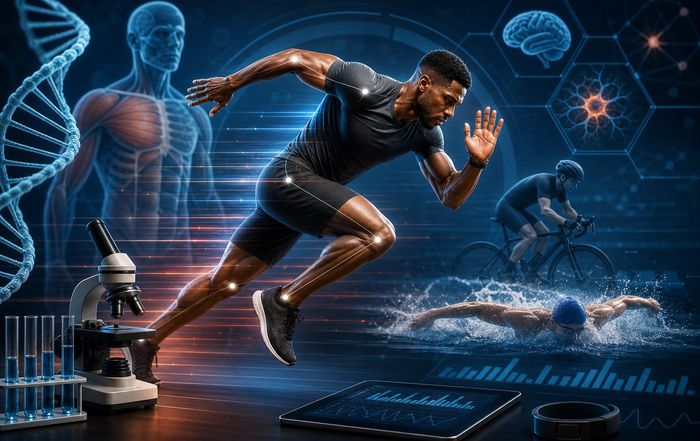
New Sports Science Discoveries Redefining Human Performance!
The New Performance Frontier: Why Sports Science Matters Now
Hey did you know, sports science has moved from the margins of elite training facilities into the mainstream of global performance culture, shaping not only how Olympic champions train and recover but also how everyday athletes, fitness enthusiasts and corporate leaders think about health, productivity and sustainable success. What was once a niche academic field has become a strategic pillar for performance-driven organizations across North America, Europe, Asia and beyond, as advances in physiology, data analytics, neuroscience and biotechnology converge to create a new, evidence-based blueprint for human optimization.
For SPORTSYNCR and its global audience, this transformation is not an abstract academic trend but a deeply practical evolution that touches every aspect of sport, fitness and health. Readers who follow the daily updated premium Sports News website coverage of sports performance and competition, fitness innovation and health optimization increasingly expect analysis that integrates scientific rigor with real-world application, whether that involves understanding how a Premier League club in the United Kingdom uses advanced GPS tracking, how a marathoner in Kenya applies lactate threshold testing, or how a corporate wellness program in Germany leverages recovery science to reduce burnout and improve productivity. The central story of 2026 is that sports science is no longer just about winning medals; it is about building a more resilient, healthier and higher-performing global population.
From Intuition to Evidence: How Performance is Now Engineered
For decades, coaching in the United States, Europe and other leading sports markets relied heavily on tradition, intuition and anecdotal experience. While legendary figures such as Sir Alex Ferguson or Phil Jackson built dynasties on instinct and leadership, the underlying training methods were often based on trial and error rather than rigorous experimentation. In the last fifteen years, however, a quiet revolution has unfolded as sports organizations embraced a more scientific, data-driven approach inspired by institutions such as MIT, Stanford University and the Australian Institute of Sport, as well as the broader evidence-based medicine movement that reshaped clinical practice through platforms such as PubMed.
Contemporary performance programs in clubs like Liverpool FC, Bayern Munich and Golden State Warriors are now built around integrated performance departments where sports scientists, strength and conditioning coaches, physicians, nutritionists, psychologists and data analysts collaborate within a unified framework. This model, which has been widely documented by outlets such as Harvard Business Review, replaces siloed decision-making with cross-functional performance ecosystems in which training loads, wellness scores, sleep data and psychological markers are continuously monitored, interpreted and translated into individualized interventions. For readers of SPORTSYNCR's business coverage, this shift mirrors a broader corporate trend toward analytics-driven decision-making and highlights how elite sport often acts as a laboratory for management innovation that later diffuses into mainstream workplaces.
The Physiology Revolution: Training Loads, Thresholds and Individualization
One of the most significant sports science discoveries reshaping human performance is the refined understanding of training load and individual physiological thresholds. Traditional models often prescribed uniform training plans, assuming that athletes of similar age and position would respond similarly to the same workload. Contemporary research from institutions such as Aspetar Orthopaedic and Sports Medicine Hospital in Qatar and UCLA Health Sports Performance has demonstrated that individual responses to identical training stimuli can vary dramatically, influenced by genetics, prior training history, hormonal status and lifestyle factors.
This insight has driven the widespread adoption of tools such as heart rate variability monitoring, lactate testing and power-based training in both endurance and team sports. Cyclists and triathletes worldwide now routinely use power meters and structured training platforms, while runners from the United Kingdom to South Africa increasingly rely on threshold-based programs informed by testing protocols similar to those documented by World Athletics. In professional environments, individualized load management strategies are deployed to balance stimulus and recovery, reducing the risk of overtraining and soft-tissue injuries while maximizing adaptation.
For SPORTSYNCR, which covers both elite sport and everyday fitness, this shift underscores a key message: the era of generic programs is ending. Whether a reader is a recreational runner in Canada, a CrossFit enthusiast in Brazil or a corporate executive in Singapore trying to manage stress through exercise, the principles of individualized load, progressive overload and recovery optimization are now accessible and applicable. The platform's fitness content increasingly reflects this reality, emphasizing evidence-based frameworks over one-size-fits-all advice.
Recovery as a Competitive Advantage: Sleep, Regeneration and Longevity
Another defining discovery of the past decade is the centrality of recovery as a performance variable rather than a passive afterthought. Research summarized by organizations such as the National Institutes of Health and the World Health Organization has linked sleep quality not only to athletic performance but also to injury risk, immune function and long-term cognitive health. Elite teams across Europe, Asia and North America now treat sleep as a strategic asset, investing in sleep coaching, circadian-friendly travel schedules and controlled light environments in training facilities and hotels.
In parallel, modalities such as cold-water immersion, compression therapy, neuromuscular electrical stimulation and active recovery protocols have moved from experimental to mainstream, guided by systematic reviews available through platforms like Cochrane. While some popular trends have not always held up under rigorous scrutiny, the broader message is clear: the ability to recover quickly and consistently is a decisive factor in both short-term performance and long-term career longevity.
For athletes and professionals alike, this recognition has profound implications. A basketball player in the United States competing in an 82-game season, a footballer in Italy managing congested fixtures and travel, or a technology executive in Japan navigating high cognitive demands all face the same biological reality: performance cannot be sustainably maximized without structured, high-quality recovery. On SPORTSYNCR, this is reflected in coverage that connects health and performance, emphasizing sleep hygiene, stress management and load modulation as foundational pillars rather than optional extras.
The Data and Wearables Era: From Descriptive Metrics to Predictive Insight
Wearable technology has matured from simple step counters to sophisticated multi-sensor systems capable of measuring heart rate, variability, movement patterns, impact forces and even proxies for neuromuscular fatigue. In 2026, athletes from high school programs in the United States to professional clubs in Germany and Australia routinely train and compete with GPS units, inertial sensors and smart textiles that stream data to cloud platforms for real-time analysis. Companies such as Catapult Sports, WHOOP and Polar have helped normalize continuous physiological monitoring, while consumer platforms like Apple's health ecosystem and Garmin's sports science tools have brought advanced analytics to everyday users.
The most important discovery is not simply that more data is available, but that data can be transformed into predictive models that anticipate injury risk, fatigue and performance readiness. Using machine learning techniques similar to those described by MIT Sloan Sports Analytics, performance departments now build individualized baselines for each athlete and flag deviations that may signal elevated risk. While these models are not infallible, they provide an additional layer of decision support that complements clinical judgment and athlete self-reporting.
For SPORTSYNCR, which covers sports technology and innovation, the critical narrative is not technological novelty for its own sake but the responsible integration of data into coaching and organizational culture. The most successful organizations in the United Kingdom, Spain or South Korea are not those with the most sensors, but those that cultivate trust, transparency and constructive dialogue around data, ensuring that athletes remain active participants in the interpretation and application of insights rather than passive subjects of surveillance.
Nutrition, Gut Health and Metabolic Flexibility
Sports nutrition has undergone a parallel transformation as researchers deepen their understanding of how macronutrient timing, micronutrients, hydration and gut microbiota influence performance and recovery. Institutions such as Gatorade Sports Science Institute, University of Copenhagen and INSEP in France have contributed to a more nuanced picture of how carbohydrate availability, protein distribution and individualized hydration strategies affect endurance, power output and cognitive function during competition. Resources such as The American College of Sports Medicine and The International Olympic Committee have helped disseminate consensus statements that guide practitioners worldwide.
A particularly important discovery is the role of gut health and the microbiome in modulating inflammation, immunity and even mood, with implications for athletes facing travel, stress and high training loads. While this field is still emerging, early evidence suggests that dietary diversity, fiber intake and targeted probiotics may support resilience in ways that go beyond traditional macronutrient-focused strategies. For a global audience from Singapore to South Africa, where dietary patterns and cultural norms vary widely, this opens the door to performance nutrition models that respect local cuisines while still aligning with evidence-based principles.
On SPORTSYNCR, nutrition is increasingly positioned not as a set of rigid rules but as a dynamic system that interacts with training, sleep and psychological state. Readers exploring sports culture and lifestyle see how culinary traditions in Italy, Japan or Brazil can be integrated into high-performance diets, demonstrating that science-based nutrition does not require abandoning cultural identity but rather understanding how to align it with physiological demands.
Mental Performance, Neuroscience and the Psychology of Winning
Perhaps the most transformative discovery in sports science over the last decade is the recognition that mental performance is not merely a matter of willpower or motivation but a trainable, measurable and strategically manageable dimension of human functioning. Organizations such as APA Division 47 (Society for Sport, Exercise & Performance Psychology) and research centers at University College London, University of Queensland and Duke University have advanced understanding of how attention, emotional regulation, confidence and resilience interact with physiological states to influence performance outcomes.
Elite athletes from Simone Biles to Novak Djokovic have openly discussed the role of mental health and psychological support in sustaining high performance, helping destigmatize the use of sports psychologists, mindfulness training and cognitive-behavioral strategies. Platforms like Mind and Headspace have made mental skills training more accessible to the general public, while professional teams in the United States, Europe and Asia now routinely embed performance psychologists within their staff.
For a performance-focused audience, the key discovery is that mental skills are not separate from physical preparation but deeply interwoven. Techniques such as visualization, self-talk, breath control and pre-performance routines directly influence heart rate, muscle tension and decision-making under pressure. SPORTSYNCR increasingly highlights this integration across social and performance narratives, recognizing that the same mental frameworks that help a footballer handle a penalty shootout can help an entrepreneur in Canada manage investor presentations or a surgeon in Switzerland perform under acute stress.
Globalization of Sports Science: From Elite Labs to Everyday Life
One of the most encouraging developments by 2026 is the democratization and globalization of sports science. What began in specialized institutes in Australia, the United States and parts of Europe has spread to high-performance centers in countries such as China, Brazil, South Africa and Thailand, supported by knowledge-sharing initiatives from organizations like FIFA, World Rugby and IOC Olympic Solidarity. Online education platforms, open-access journals and digital coaching tools have made it possible for coaches in Malaysia or Kenya to access the same research as their counterparts in Germany or the Netherlands.
This diffusion has important implications for competitive balance and talent development. As more nations implement evidence-based training, injury prevention and youth development frameworks, the talent pool deepens and global competitions become more unpredictable and compelling. For readers following world sports developments and breaking news on SPORTSYNCR, this translates into more diverse storylines, emerging stars from non-traditional markets and a richer cultural tapestry around major events such as the FIFA World Cup, the Olympic Games and regional championships across Asia, Africa and South America.
At the same time, sports science has begun to influence corporate wellness, urban planning and public health strategies. Governments and organizations inspired by evidence from bodies like the Centers for Disease Control and Prevention and NHS England increasingly design programs that borrow from athletic periodization, behavioral coaching and load management to encourage sustainable physical activity and reduce the burden of non-communicable diseases. This convergence of sport, health and policy aligns closely with SPORTSYNCR's mission to cover the intersection of performance, society and business.
Brands, Technology and the Commercialization of Performance
The rapid growth of sports science has attracted substantial investment from global brands eager to align with performance, innovation and well-being. Companies such as Nike, Adidas, Under Armour and Lululemon have established research labs and partnerships with universities to develop materials, footwear and apparel that optimize biomechanics, thermoregulation and comfort, often communicating their findings through white papers and collaborations documented on sites like Nike's research and innovation pages or Adidas' sustainability and innovation hub. Technology giants including Google, Microsoft and Amazon Web Services have entered the space by providing cloud infrastructure, AI tools and analytics platforms for teams and leagues.
For SPORTSYNCR, which features dedicated coverage of sports brands and sponsorship and sponsorship strategy, the key question is how these commercial actors influence the direction and ethics of sports science. When a technology partner provides both the hardware and the analytics platform, questions arise about data ownership, privacy and competitive advantage. When a performance claim is tied to a commercial product, rigorous independent validation becomes essential to maintain trust. Business leaders and marketers in the United Kingdom, France or Singapore who follow the platform's analysis increasingly recognize that credibility in this space depends on transparent collaboration with independent researchers and adherence to ethical guidelines similar to those promoted by WADA and other regulatory bodies.
Ethics, Equity and the Future of Fair Play
As performance-enhancing technologies and interventions proliferate, the line between legitimate optimization and unfair advantage becomes more complex. Debates around super shoes in marathon running, altitude simulation, gene editing and advanced recovery modalities have forced regulators, scientists and ethicists to reconsider what constitutes a level playing field. Organizations such as World Anti-Doping Agency (WADA), Court of Arbitration for Sport (CAS) and national governing bodies in countries from Norway to Japan are under pressure to update frameworks that were designed for a simpler era of performance enhancement.
A critical discovery here is not a single scientific breakthrough but a growing recognition that fairness is a moving target influenced by socio-economic disparities, technological access and cultural norms. Athletes in wealthier nations or well-funded programs may have access to cutting-edge labs, data scientists and recovery technologies that are unavailable to their competitors in less resourced environments, raising questions about structural inequality even when all parties comply with anti-doping rules. For SPORTSYNCR, which covers environmental and social dimensions of sport as well as competitive outcomes, this is an essential part of the performance story: who gets access to science, under what conditions, and with what safeguards for integrity and inclusion.
Careers in Sports Science: A Growing Global Ecosystem
The professionalization of sports science has created a new ecosystem of careers that extend far beyond traditional coaching roles. Sports scientists, performance analysts, biomechanists, sport technologists, nutritionists, psychologists and data engineers now work in clubs, federations, startups, research institutes and corporate wellness programs across North America, Europe, Asia and Oceania. Universities in the United Kingdom, Australia, Canada and the United States have expanded their sports science and performance analytics programs, while online platforms provide continuing education for practitioners already in the field.
For readers of SPORTSYNCR exploring career opportunities in sport, health and performance, this represents a significant opportunity. The demand for professionals who can translate complex data into actionable insights, communicate effectively with coaches and athletes, and navigate ethical and cultural considerations is growing in markets from Germany and the Netherlands to South Korea and New Zealand. As sports organizations increasingly resemble high-performance businesses, the skills required mirror those valued in technology and consulting sectors, including systems thinking, interdisciplinary collaboration and strategic communication.
What This Means for us and the Global Sporty Audience
So now the story of sports science is ultimately a story about how societies choose to use knowledge about the human body and mind. For SPORTSYNCR, which positions itself at the prime intersection of sport, health, fitness, business, culture and technology, the responsibility is twofold. First, to track and interpret the latest discoveries in physiology, data analytics, neuroscience and nutrition with a commitment to accuracy, nuance and global relevance, ensuring that readers from the United States to Thailand and from the United Kingdom to South Africa can see how these developments apply in their specific contexts. Second, to critically examine the commercial, ethical and social implications of these discoveries, asking not only what is possible, but what is desirable and fair.
The most important insight for a performance-driven audience is that sports science is no longer reserved for Olympians and professional teams. The same principles that guide training in top clubs in Spain or Germany can help a recreational runner in Brazil avoid injury, a startup founder in Singapore manage stress, or a school in Canada design healthier physical education programs. As research continues to evolve, the challenge will be to maintain a balance between innovation and integrity, between ambition and sustainability, and between individual optimization and collective well-being.
SPORTSYNCR will continue to serve as a original educational content hub where these stories converge, connecting breakthroughs in laboratories and training centers with the lived experiences of athletes, coaches, professionals and fans worldwide. In doing so, it reinforces a central message of the sports science revolution: human performance is not a fixed ceiling but a dynamic frontier, and the most powerful competitive advantage in the coming decade will belong to those who combine evidence-based practice with ethical leadership, cultural awareness and long-term vision.