

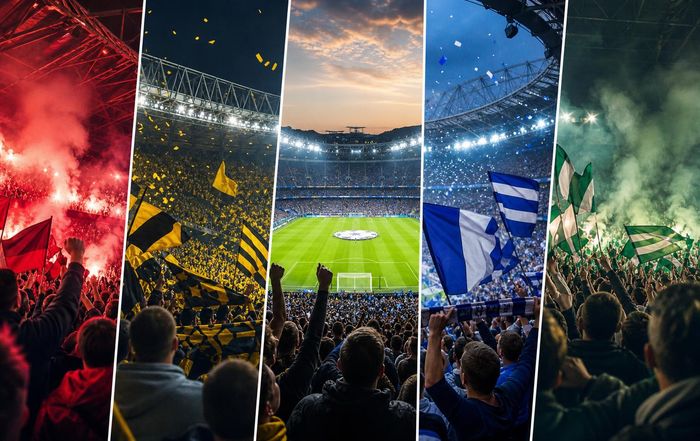
What Makes Stadium Atmospheres Unique Across Europe?
Few places capture the soul of European sport quite like its stadiums. From the steep banks of noise in Dortmund to the choreographed colour of Istanbul and the whistling cauldrons of Lisbon and Seville, matchday in Europe is as much about culture, history and identity as it is about tactics and scorelines. While television and global broadcasting have made these venues familiar to fans worldwide, the experience inside remains intensely local, shaped by language, politics, class, architecture and even climate. Understanding why a night at Anfield feels different to one at San Siro, or why a derby in Belgrade is unlike one in London, means looking beyond clichés and into the social fabric that wraps around each ground.
This article focuses mainly on football, the dominant stadium sport in Europe, but many of the dynamics-supporter rituals, urban context, and commercial pressure-also influence rugby, athletics and multi-use arenas. For fans considering a stadium tour, clubs thinking about how to grow atmospheres without losing control, or brands weighing how to activate authentically in live environments, the diversity of European matchdays is central to how sport is experienced and monetised across the continent.
To explore what makes these environments unique, it helps to look at five overlapping forces: supporter culture, stadium design, national identity, commercialization and regulation, and the spread of technology and global fandom.
Supporter culture: from ultras to family stands
The single biggest factor shaping a stadium's feel is who occupies the seats-or terraces-and how they see themselves. In much of continental Europe, particularly in Italy, Germany, Spain, Greece and parts of Eastern Europe, organized "ultra" groups are central to the sound and sight of a match. These groups, often occupying one end behind a goal, coordinate songs, banners, flags and large-scale choreographies (tifos) that can cover entire stands. Clubs such as Borussia Dortmund, Olympique de Marseille, Napoli, Red Star Belgrade and Galatasaray are regularly cited by governing bodies like UEFA as examples of intense supporter culture, even when that intensity occasionally crosses lines into pyrotechnics or political messaging that authorities try to restrict.
Ultras emerged differently country by country. In Italy, groups like the Curva Sud at AS Roma or AC Milan trace their roots to the 1960s and 1970s, mixing local identity with left- or right-leaning politics and a deep sense of territoriality. In France, clubs such as Paris Saint-Germain and Saint-Étienne have seen ultras play tug-of-war with club owners and police over acceptable behaviour, leading at times to partial or full stand closures ordered by the Ligue de Football Professionnel. In Germany, where fan ownership rules are relatively strong, ultra groups at clubs like St. Pauli and Union Berlin often link their choreography to social or political messages, while still working within safety frameworks negotiated with the Deutscher Fußball-Bund and local authorities.
By contrast, in much of England and Scotland, supporter culture was reshaped by the all-seater revolution that followed the 1989 Hillsborough disaster and the subsequent Taylor Report. The Premier League, launched in 1992, grew into a global entertainment product, and stadiums like Old Trafford, Emirates Stadium and Etihad Stadium developed reputations for being comparatively quieter, with more corporate seating and higher ticket prices. That does not mean atmospheres vanished-grounds like Anfield, St James' Park and Celtic Park remain renowned-but the sound is generally less orchestrated by ultras and more driven by tradition, humour and the ebb and flow of the game. Chants are often shorter and more spontaneous, reflecting a culture that historically resisted megaphones, drums and choreographed displays.
In Northern Europe, especially Scandinavia and the Netherlands, there is a hybrid model. Clubs like FC Copenhagen, AIK, Feyenoord and Ajax have ultra-style groups with tifos and drums, but often within a safety culture shaped by strong public institutions and relatively strict policing. The result can be a high-energy but comparatively less volatile environment than some of the more combustible derbies in Southern or Eastern Europe. For international fans following these dynamics through sports news and social media, the contrast in supporter culture is one of the clearest markers of regional difference.
Architecture and acoustics: why some grounds roar and others murmur
The physical design of a stadium has an enormous impact on how it feels. Compact, steep stands tend to trap noise and create the "wall of sound" that visiting players and managers regularly reference in interviews with broadcasters such as BBC Sport and Sky Sports. Open bowls with large gaps between pitch and spectators, or with shallow rake angles, often feel less intimidating regardless of crowd size. This is one reason why some older grounds remain revered while newer, more comfortable arenas are criticised as sterile.
Germany provides a clear example. Signal Iduna Park, home of Borussia Dortmund, is consistently near the top of rankings produced by outlets such as ESPN and The Guardian for stadium atmosphere. Its "Yellow Wall" south stand, Europe's largest standing terrace, can host more than 24,000 fans in domestic matches, creating a vertical bank of bodies and sound. The combination of safe standing, a tight pitch perimeter and relatively affordable tickets produces a density of passionate supporters that amplifies every attack and tackle. By contrast, some newer multi-purpose arenas built with athletics tracks or large hospitality zones, especially those designed to host both football and other events, can feel acoustically flatter even when close to capacity.
In Southern Europe, classic stadiums such as San Siro in Milan, Stadio Olimpico in Rome and Camp Nou in Barcelona have their own architectural signatures: towering concrete rings, vast single-tier stands and open corners that expose the match to city skylines and weather. These grounds can generate extraordinary noise on big European nights, but they also reflect another reality: many were built or renovated decades ago, and clubs and municipalities now face difficult decisions about whether to modernise, rebuild or move. FC Barcelona's redevelopment of Camp Nou and Real Madrid's transformation of the Bernabéu into a retractable-roof, multi-event venue show how elite clubs are trying to balance atmosphere with revenue generation and comfort.
In the UK, the move from terracing to all-seater stadiums dramatically changed acoustics. Clubs like Tottenham Hotspur and Arsenal built modern, bowl-style arenas with extensive corporate facilities, while others such as Liverpool expanded existing stands to preserve elements of their historic feel. The introduction of licensed "safe standing" areas in leagues governed by the Premier League and the English Football League is part of an ongoing experiment to re-introduce some of the verticality and spontaneity of older grounds within a tightly regulated safety framework overseen by bodies like the Sports Grounds Safety Authority. For fans interested in how these architectural shifts intersect with health and safety, resources on stadium design and crowd science provide useful background.
National identity, language and local rituals
Beyond structure and sound, what often makes a stadium experience in Europe distinctive is how it reflects national and city identity. In Spain, crowd behaviour is shaped by both local club culture and broader political tensions. Matches at Camp Nou or San Mamés often feature Catalan or Basque flags and songs, with fans using the stadium as a space to express identity that goes beyond football. Chants and banners may reference regional autonomy, language rights or historical grievances, something that has periodically drawn scrutiny from UEFA and Spanish authorities.
In Turkey and Greece, stadiums are deeply entwined with urban and class rivalries. Istanbul derbies involving Galatasaray, Fenerbahçe and Beşiktaş are known for ear-splitting volume, elaborate tifos and, at times, contentious relations with police and the Turkish Football Federation. Fans in these venues often see themselves as guardians of club honour and city pride, with songs and banners drawing on nationalist imagery, local slang and even references to recent political events. Athens derbies between Olympiacos, Panathinaikos and AEK have similar layers, with stadiums serving as stages for social tension as much as sport.
Language also shapes atmosphere. In Central and Eastern Europe, where languages may be less familiar to international visitors, the cadence of chanting can feel different-longer, more melodic, sometimes closer to folk songs than to the short, repetitive chants common in English grounds. In countries like Poland, Serbia and Croatia, clubs such as Legia Warsaw, Red Star Belgrade and Dinamo Zagreb have fan groups whose songs reference historical struggles, wartime experiences and local heroes, embedding the matchday in a wider narrative of national resilience or defiance. International fans who follow these scenes via global sports coverage often notice how political and historical content appears in tifos and choreographies.
In Northern Europe, rituals may be more understated but no less meaningful. In Iceland, the "Viking clap" popularised during Euro 2016 has become a symbol of collective identity, now echoed in some club stadiums across Scandinavia and beyond. In the UK, singing traditional anthems such as "You'll Never Walk Alone" at Anfield or "Sunshine on Leith" at Hibernian connects generations of fans, turning pre-kickoff moments into shared emotional peaks that broadcasters like ITV and Channel 4 regularly highlight in coverage.
Commercialization, ticketing and the battle for authenticity
The economic model of European sport has changed rapidly in the last three decades. The explosion of broadcast rights, sponsorship and global merchandising-led by competitions such as the UEFA Champions League-has transformed stadiums into key assets in a global entertainment industry. This shift has had a profound impact on who attends matches and how they behave, with many fans and scholars debating whether commercialization has diluted or, in some cases, professionalised atmosphere.
In England and parts of Western Europe, rising ticket prices and the growth of hospitality and VIP zones have changed crowd composition. Clubs in the Premier League, La Liga and Bundesliga rely heavily on matchday revenue, but also on global brand value measured through international TV audiences and social media metrics. As a result, matchdays are often designed to be friendly to families, tourists and corporate guests, with pre-game light shows, half-time entertainment and extensive retail options. Critics argue that this can create a more passive, consumer-oriented crowd, especially in areas of the stadium dominated by season-ticket holders who may not stand or sing continuously.
Germany's 50+1 rule, which generally requires clubs to retain majority member control, is often cited by analysts at outlets like DW and The Athletic as a reason why Bundesliga atmospheres remain comparatively vibrant and affordable. Standing terraces and lower ticket prices allow a broader cross-section of society to attend, from students to local workers. At the same time, big clubs like Bayern Munich and Borussia Dortmund still operate as major commercial entities with global sponsorship portfolios and international tours, showing that intense local culture and global branding can coexist, albeit not without tensions.
In Southern and Eastern Europe, economic realities are different. Clubs in Greece, Turkey, the Balkans and parts of Eastern Europe often rely heavily on passionate local support but face financial instability, governance issues and, in some cases, sanctions from bodies like FIFA and UEFA for crowd trouble or unpaid debts. Ticket prices may be lower, but inconsistent infrastructure, policing challenges and political interference can affect both safety and the overall experience. For brands and sponsors looking to activate in these markets, understanding the local balance between passion, politics and regulation is essential, something often explored in sports business analysis.
Regulation, safety and the legacy of tragedy
European stadium culture cannot be separated from the history of disaster and reform. Incidents such as the 1985 Heysel disaster in Brussels, the 1989 Hillsborough tragedy in Sheffield, and later crowd problems in countries including Turkey, Russia and Greece led to major changes in how matches are policed and how stadiums are built and certified. Organizations like UEFA, FIFA, national football associations and national governments have all developed safety standards, with additional guidance from bodies such as the Council of Europe and research institutions linked from platforms like EU publications.
In the UK, the Taylor Report mandated all-seater stadiums in the top divisions, reshaping architecture and crowd composition. In Italy, the Osservatorio Nazionale sulle Manifestazioni Sportive and local prefectures have imposed restrictions on away travel and introduced "tessera del tifoso" supporter cards in an effort to combat hooliganism, measures that have been controversial among ultras who see them as criminalising fandom. In Germany, fan groups have negotiated with local authorities over the use of pyrotechnics, safe standing and away allocations, reflecting a more dialogic model between supporters, clubs and police.
UEFA's disciplinary regulations also influence atmosphere. Clubs can be fined or forced to play behind closed doors or with partial stadium closures for offences such as racist chanting, political banners or the use of flares. While many fans accept the need to combat discrimination and ensure safety, others argue that overly broad sanctions can punish entire fan bases for the actions of a minority. NGOs like Football Supporters Europe advocate for proportional responses and supporter involvement in decision-making, highlighting how regulation itself becomes part of the culture that shapes what is and is not possible inside stadiums.
The COVID-19 pandemic added another layer. From 2020 onward, matches across Europe were played behind closed doors or with heavily reduced capacity, under public health guidance from bodies such as the World Health Organization and national governments. The eerie sound of empty stadiums broadcast worldwide underlined just how central crowds are to the spectacle. When fans returned, many clubs reported a renewed appreciation for live atmosphere, but also new operational challenges around health protocols, digital ticketing and crowd management, topics that intersect with broader debates about health and fitness in public spaces.
Technology, social media and the globalisation of atmosphere
Modern stadium atmospheres are no longer confined to those physically present. High-definition broadcasting, social media and fan-generated content have turned the roar of a crowd or the choreography of a tifo into shareable global moments. Clips of Liverpool's Kop singing, Dortmund's Yellow Wall bouncing or Marseille's Velodrome in full voice circulate on platforms like YouTube, Instagram and TikTok, shaping how fans in Asia, North America and Africa imagine European matchdays. This global visibility influences how clubs design pre-match shows, lighting, music and even goal celebrations, knowing that a striking visual or audio moment can travel far beyond the stadium.
Technology also reshapes the in-stadium experience itself. Many new or renovated arenas incorporate giant LED screens, synchronised lighting systems and advanced sound setups. Clubs like Bayern Munich, Tottenham Hotspur and Paris Saint-Germain use these tools to build pre-kickoff narratives, from historical montages to coordinated light shows. Some fans embrace this as part of a modern entertainment package; others worry that over-produced elements can drown out organic supporter culture. The balance between club-driven spectacle and fan-driven spontaneity is an ongoing negotiation, one that mirrors broader debates about authenticity in sports and social culture.
Digital ticketing, apps and connectivity also play a role. Stadiums increasingly offer high-speed Wi-Fi, mobile ordering and real-time statistics, blurring the line between live attendance and second-screen consumption. For younger fans, capturing and sharing the atmosphere-through photos, live streams or short videos-becomes part of the experience. At the same time, some ultra groups explicitly discourage phone filming during key songs or tifos, arguing that constant recording turns participants into spectators. This tension between being present and being online is not unique to sport but is particularly visible in highly choreographed European stands.
Weather, timing and seasonal rhythms
While less discussed than culture or architecture, climate and scheduling significantly influence European stadium atmospheres. Winter fixtures in Northern and Central Europe can be played in freezing temperatures, driving fans into thicker clothing and sometimes reducing the willingness to stand or sing for 90 minutes. Conversely, warm late-spring evenings in Southern Europe often coincide with the business end of domestic and European competitions, creating an almost festival-like feeling around stadium districts in cities like Madrid, Seville, Lisbon and Rome.
Kickoff times, largely dictated by broadcast contracts negotiated by leagues and partners such as DAZN and Amazon Prime Video, also matter. Traditionalists often argue that Saturday afternoon or early evening kickoffs produce better atmospheres, allowing fans time to gather in pubs, fan zones or neighbourhood squares before heading to the ground. Late-night midweek games, especially in winter, can be logistically difficult for travelling supporters but also generate some of the most intense atmospheres, particularly under floodlights with the added stakes of European knockout ties.
Seasonal rhythms affect crowd composition too. Summer friendlies and pre-season tournaments often attract more tourists and casual fans, while high-stakes league and European fixtures draw core local support. For clubs and sponsors, this makes match-by-match planning around fan engagement and sponsorship activation increasingly sophisticated, as they try to tailor in-stadium experiences to different audience mixes without undermining the core identity of the venue.
Beyond football: rugby, multi-use arenas and emerging trends
While football dominates, other sports contribute their own distinctive atmospheres to Europe's stadium landscape. Rugby union venues such as Twickenham in England, the Stade de France in Paris and the Aviva Stadium in Dublin combine national anthems, travelling support and often more mixed-gender, family-oriented crowds with traditions like communal singing and post-match socialising. The culture around rugby in many countries emphasises respect for officials and opponents, which in turn shapes the tone of chanting and in-stadium behaviour, even when noise levels are high during events like the Six Nations.
Multi-use arenas hosting athletics, concerts and American football are also reshaping expectations. The Olympiastadion in Berlin, for example, hosts both Hertha BSC matches and major events like the European Athletics Championships, requiring flexible configurations that can affect intimacy and noise. Newer venues such as the Allianz Arena in Munich and the Tottenham Hotspur Stadium are designed from the outset for multiple sports and entertainment formats, integrating retractable pitches, advanced sound and lighting, and extensive hospitality. This multi-functionality can support financial sustainability but also raises questions about whether a stadium can maintain a strong, singular identity when it is constantly reconfigured.
Thinking ahead, environmental and urban-planning concerns are likely to shape future stadium design and operation. Clubs and cities are increasingly pressured by regulators, activists and fans to address sustainability, from energy use and transport links to waste management, a topic covered regularly in environmental sport reporting and by organisations such as UEFA and the European Commission. How these green initiatives intersect with traditional matchday rituals-such as large-scale tifos made from single-use plastics or heavy car usage to reach out-of-town arenas-will be part of the evolving story of European stadium culture.
Why Europe's stadium diversity matters
For many supporters, the point of all this is simple: being there. The smell of street food outside San Siro, the tight crush of a German terrace, the pre-match songs echoing through a British pub, the thunder of drums in Istanbul, the flare-lit skies over Belgrade or Athens-these experiences are central to how people connect with sport, cities and each other. But for clubs, leagues, brands and policymakers, understanding what makes each atmosphere unique is not just romanticism; it has practical implications for safety, business models, tourism and even diplomacy.
As European sport becomes ever more global, with international tours, cross-border ownership and worldwide streaming, there is a risk that stadium experiences could converge into a single, polished template. Yet the evidence on the ground suggests the opposite: local cultures, languages, histories and regulations continue to produce a patchwork of distinct atmospheres, from the choreographed passion of ultra stands to the more understated but no less committed support in smaller community grounds. For fans planning trips, for sponsors designing authentic activations, and for anyone trying to understand why sport still matters in an age of digital entertainment, Europe's stadiums remain some of the most revealing places to watch how identity, business and emotion collide.
For those wanting to go deeper into how live sport intersects with fitness, fan health and performance, our top reporting of fitness and training and bigger news and trends in sport provides additional context on the people and policies shaping what happens before, during and after the roar inside the ground.