

How Active Travel Supports Health and Wellness in a High-Performance World
Active Travel at the Intersection of Sport, Business and Daily Life
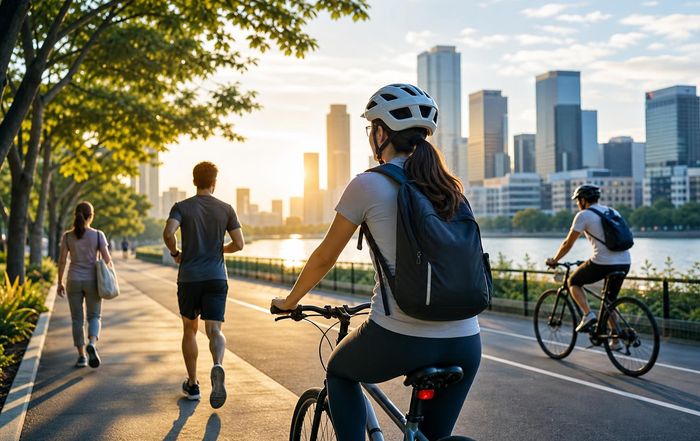
Woo finally, active travel has evolved from a niche lifestyle choice into a central pillar of how high-performing individuals, teams and organizations think about health, performance and culture. For the superactive, sports, loving community coming, here, which spans elite athletes, fitness professionals, brand leaders and decision-makers across continents, active travel is no longer just about cycling holidays or walking tours; it is about embedding purposeful movement into commutes, business trips, fan experiences and everyday routines in ways that directly support physical health, mental resilience and long-term productivity.
As urban planners, sports scientists and corporate strategists converge around similar data sets, a clear picture is emerging: walking, cycling and other forms of human-powered mobility are among the most cost-effective, scalable and inclusive health interventions available to modern societies. From the bike lanes of Copenhagen and Amsterdam to the urban trails of New York City and Singapore, active travel is shaping the future of sport, fitness and health in ways that align closely with the multi-dimensional daily edited coverage that Sportsyncr offers across sports, fitness, health, business and culture.
For leaders in sport, brands and business, understanding how active travel supports health and wellness is no longer optional. It is a strategic imperative that touches talent retention, fan engagement, sponsorship, environmental impact and social responsibility, while also reshaping expectations in key markets from the United States and United Kingdom to Germany, Australia, Japan and Brazil.
The Science of Movement: Why Active Travel Matters for Health
The health case for active travel is anchored in a deep and expanding body of evidence from sports science, public health and epidemiology. Organizations such as the World Health Organization highlight that physical inactivity is a major risk factor for noncommunicable diseases, including cardiovascular disease, diabetes and certain cancers, and that adults should aim for at least 150-300 minutes of moderate-intensity aerobic physical activity per week. Readers can explore the evolving global guidelines on movement and sedentary behavior through resources such as the WHO physical activity recommendations.
Active travel provides a powerful mechanism to meet these guidelines not by adding more workouts to an already crowded schedule, but by transforming existing journeys into opportunities for movement. A 20-30 minute walk or cycle commute, especially when performed twice a day, can deliver a significant proportion of the weekly activity target, while also improving cardiorespiratory fitness, muscular endurance and metabolic health. Research summarized by institutions such as Harvard T.H. Chan School of Public Health shows that regular walking and cycling are associated with reduced all-cause mortality, improved blood pressure and better weight management, and interested readers can learn more about the health impact of walking in a broader public health context.
For the sports-focused audience of Sportsyncr, it is important to recognize that active travel contributes not only to baseline health but also to athletic performance. Athletes and recreational competitors who incorporate low-intensity, active transport into their day often benefit from enhanced active recovery, improved circulation and better energy balance, particularly when they are otherwise confined to sedentary desk work or long-haul travel. This is one reason why many high-performance environments, from Premier League training facilities to NBA practice centers, are being designed with integrated walking routes, cycling access and micro-activity zones that encourage continuous low-level movement across the day.
Beyond cardiovascular health, active travel also supports musculoskeletal resilience. Regular walking and cycling can help maintain joint mobility, support bone density and strengthen stabilizing muscles that are often neglected in traditional gym-based programs. Organizations such as the American College of Sports Medicine provide detailed guidance on integrating aerobic activity, strength training and mobility work into sustainable routines, and business leaders seeking to align corporate wellness with evidence-based practice can review ACSM guidelines on exercise and health.
Mental Wellness, Cognitive Performance and the Active Commute
The mental health benefits of active travel are particularly relevant to the global, high-pressure audience that engages with Sportsyncr across news, business and world coverage. Chronic stress, digital overload and constant connectivity have made mental resilience a core performance differentiator for athletes, executives and creators alike. Active travel, especially in green or blue spaces, has emerged as a potent tool for managing stress, improving mood and enhancing cognitive function.
Studies from institutions such as University College London and Stanford University have shown that walking in natural environments is associated with reduced rumination, lower levels of stress-related brain activity and improved working memory. While the specific mechanisms are still being explored, the combination of rhythmic movement, exposure to natural light, moderate cardiovascular load and reduced digital distraction appears to create an ideal environment for psychological decompression and creative thinking. Those interested in the neuroscience of movement and mental health can explore overviews from organizations like the National Institutes of Health, which summarize links between physical activity, mood and cognitive performance.
For professionals who commute long distances or travel frequently for work, replacing part of a journey with walking or cycling can create a powerful transition ritual between roles and environments. Arriving at the office after a 25-minute walk or ride often translates into improved alertness, better emotional regulation and higher readiness for complex decision-making, compared with arriving after a car or train journey spent on email or social media. This effect is increasingly recognized in corporate wellness programs, leadership coaching and athlete lifestyle design, where coaches encourage active transitions before high-stakes meetings, training sessions or competitions.
The mental health dimension of active travel also intersects with social connection. Walking meetings, group rides and community runs create opportunities for informal interaction that can strengthen team cohesion and psychological safety. For the Sportsyncr audience interested in social dynamics and culture, these active rituals are reshaping how teams in sports, tech, finance and media build trust and shared identity in an era of hybrid work and global collaboration.
Active Travel as Everyday Fitness: From Weekend Warrior to Daily Mover
Traditional fitness culture has often been defined by intense, time-bounded workouts: the 60-minute gym session, the structured interval run, the spin class. While these formats remain valuable, especially for performance-focused readers of Sportsyncr who follow fitness and training trends, active travel offers a complementary paradigm: fitness as an integrated, low-friction part of daily life.
Cycling to work, walking to meetings, using stairs instead of elevators and choosing active modes for short errands can collectively deliver a substantial training load over the week, particularly when combined with occasional higher-intensity sessions. This approach aligns with the emerging concept of "exercise snacks" and "incidental movement," which is gaining traction in sports science and occupational health circles. Platforms such as NHS Inform and Health Canada have emphasized that cumulative movement across the day can be as important as structured workouts, and readers can explore guidance on integrating physical activity into daily life from public health authorities.
For individuals who self-identify as "weekend warriors," active travel can provide a crucial buffer against the injury risks that arise when intense activity is compressed into one or two sessions per week. Regular low-to-moderate intensity movement enhances tissue resilience, improves neuromuscular coordination and supports recovery, making it easier to tolerate higher loads during sport-specific training or competition. This is particularly relevant for aging athletes and busy professionals in markets such as United States, Germany, Japan and United Kingdom, where long working hours and commuting times have historically limited weekday exercise.
Active travel also supports weight management and metabolic health in a way that feels less punitive than traditional dieting or high-intensity exercise prescriptions. Regular, moderate movement increases daily energy expenditure, improves insulin sensitivity and helps regulate appetite, which can be especially valuable for individuals managing sedentary desk work or frequent business travel. The Centers for Disease Control and Prevention and similar agencies provide accessible resources on how everyday movement supports metabolic health, and readers can learn more about integrating movement into sedentary lifestyles to complement more formal training plans.
Urban Design, Infrastructure and the Future of Active Mobility
The health and wellness benefits of active travel do not exist in a vacuum; they depend heavily on the quality, safety and accessibility of infrastructure. Cities that invest in protected bike lanes, pedestrianized streets, low-traffic neighborhoods and integrated public transport systems create environments where walking and cycling are not only possible but also attractive, safe and time-efficient. This is why active travel is increasingly central to discussions of urban innovation, sustainability and economic competitiveness in global hubs from London and Paris to Seoul, Singapore and São Paulo.
Organizations such as C40 Cities and World Economic Forum have documented how active mobility strategies can reduce congestion, improve air quality and support inclusive economic growth, and professionals can explore global case studies on urban mobility to understand how infrastructure decisions shape health outcomes and business opportunities. The European Cyclists' Federation and national transport agencies across Europe, North America and Asia have also highlighted the cost-effectiveness of cycling infrastructure relative to road expansion or large-scale transit projects, particularly when health and environmental co-benefits are factored into return-on-investment calculations.
For sports and fitness brands, this infrastructure shift opens new avenues for innovation and engagement. Companies such as Specialized, Trek, Canyon and Giant are investing heavily in urban e-bikes, cargo bikes and commuter-focused designs that blur the line between performance and practicality. At the same time, global sportswear leaders like Nike, Adidas, Puma and Under Armour are building product lines that cater specifically to the active commuter, with apparel optimized for movement, weather protection and office-appropriate aesthetics. Those interested in the broader sustainability and mobility agenda can learn more about sustainable transport strategies through resources curated by the United Nations Environment Programme.
The integration of active travel into urban planning also reshapes fan experiences and event logistics. Major sports events, from marathons and cycling tours to football tournaments and esports festivals, are increasingly designed with active mobility in mind, encouraging spectators to arrive by foot, bike or public transport rather than private car. This not only reduces congestion and emissions but also aligns with the wellness and environmental values of younger fan demographics, particularly in markets such as Netherlands, Sweden, Denmark and New Zealand, where cycling and walking are already deeply embedded in daily life.
Corporate Strategy, Brand Positioning and the Business of Movement
For the business-focused audience of Sportsyncr, active travel is emerging as a strategic lever across multiple domains: talent attraction and retention, employer branding, customer engagement, sponsorship and ESG (environmental, social and governance) performance. Organizations that support employees in walking and cycling to work, traveling actively to meetings, and integrating movement into their workday are often rewarded with lower absenteeism, higher engagement and a stronger sense of organizational purpose.
Global firms such as Google, Microsoft, Unilever and Deloitte have invested in bike-to-work programs, onsite showers and lockers, secure bike parking, mileage incentives for cycling and walking, and partnerships with local authorities to improve routes and safety. Human resources and wellness leaders seeking to build similar initiatives can learn more about workplace active travel programs through professional bodies that track best practices in employee wellbeing and productivity.
From a brand perspective, active travel aligns naturally with narratives of health, sustainability, performance and authenticity that resonate strongly with sports and fitness consumers. This is evident in the growing number of collaborations between sports brands, mobility startups and city authorities, as well as in the sponsorship strategies of companies seeking to associate with marathons, cycling events, urban run series and active tourism initiatives. Readers interested in how sponsorship, sport and mobility intersect can explore related analysis in Sportsyncr's dedicated sponsorship and brands sections, where the commercial implications of active lifestyles are examined in depth.
Active travel also contributes directly to corporate sustainability and climate targets. By incentivizing employees and customers to replace short car journeys with walking or cycling, companies can reduce Scope 3 emissions, improve local air quality around offices and retail spaces, and demonstrate visible commitment to environmental stewardship. Organizations such as the Global Reporting Initiative and CDP are increasingly attentive to transport-related emissions in their frameworks, and sustainability professionals can learn more about integrating mobility into ESG reporting as expectations evolve across Europe, North America, Asia and beyond.
Technology, Data and the Digitally Connected Active Traveler
The integration of technology into active travel is reshaping how individuals plan routes, monitor health metrics, engage with communities and interact with brands. For the tech-savvy audience of Sportsyncr, which follows developments in technology, science and gaming, the convergence of wearables, smartphones, sensors and platforms has turned active travel into a rich data environment.
Wearable devices from companies such as Apple, Garmin, Fitbit and Samsung now capture heart rate, VO2 max estimates, recovery indicators and sleep metrics, allowing users to understand how their walking and cycling commutes contribute to overall training load and readiness. Platforms like Strava and Komoot help cyclists and runners discover safe, scenic routes and join local communities, while urban navigation apps incorporate real-time data on air quality, noise and congestion to optimize active journeys. Those interested in the broader implications of connected mobility can explore analyses of smart cities and digital infrastructure from leading consulting and research organizations.
At the same time, data from active travelers is informing city planning and infrastructure investment. Anonymized route and speed data from fitness apps and bike-share systems helps municipalities identify high-demand corridors, safety hotspots and underserved neighborhoods, enabling more targeted interventions. This feedback loop between individual behavior, digital platforms and public policy exemplifies the multi-layered ecosystem that Sportsyncr seeks to illuminate across its coverage of sport, technology, business and society.
Gamification is another powerful trend, especially relevant to younger demographics and to those who engage with sports and competition through digital channels. Corporate wellness programs, educational institutions and city campaigns are deploying challenges, leaderboards and rewards that encourage walking and cycling, often in partnership with sports and fitness brands. This not only increases participation but also creates new touchpoints for sponsors, advertisers and content creators, further embedding active travel into mainstream culture and commerce.
Global Perspectives: Regional Trends and Cultural Contexts
The adoption and impact of active travel vary significantly across regions, shaped by culture, climate, infrastructure, policy and economic conditions. For a global platform like Sportsyncr, which engages readers across North America, Europe, Asia, Africa and South America, understanding these variations is key to interpreting market dynamics and health outcomes.
In Northern Europe, including Denmark, Netherlands, Sweden and Norway, cycling and walking are deeply normalized, supported by extensive infrastructure, legal protections and cultural expectations. Cities such as Copenhagen and Amsterdam are often cited by organizations like the OECD and European Commission as models for active mobility, and interested readers can learn more about European transport and health initiatives through official policy portals.
In North America, progress has been more uneven, with cities such as Portland, Montreal, Vancouver and New York leading on cycling infrastructure and Vision Zero policies, while others remain heavily car-dependent. The rise of e-bikes has been particularly significant in the United States and Canada, enabling longer commutes and making active travel more accessible to older adults and those in hilly or sprawling cities. Organizations like PeopleForBikes and League of American Bicyclists have documented these shifts and provide resources for communities seeking to expand active mobility, and readers can explore North American cycling advocacy for further insight.
In Asia, patterns are highly diverse. Cities such as Tokyo, Seoul and Singapore combine dense public transport networks with growing cycling and walking infrastructure, while emerging megacities across China, India and Southeast Asia grapple with rapid motorization, air quality challenges and the legacy of informal active mobility. The Asian Development Bank and regional think tanks have emphasized the role of active travel in sustainable urbanization, and professionals can review regional perspectives on sustainable transport to understand how policy and investment decisions are shaping health and wellness outcomes.
In Africa and South America, active travel is often both a necessity and an opportunity. Many urban and peri-urban residents rely on walking and cycling as primary transport modes due to cost constraints, while at the same time facing safety risks and infrastructure gaps. There is growing recognition that formalizing and supporting these existing patterns through safe sidewalks, bike lanes and integrated planning can yield major health, equity and economic benefits. Organizations such as UN-Habitat and regional development banks are increasingly focusing on non-motorized transport, and stakeholders can learn more about inclusive urban mobility in developing and emerging economies.
Sportsyncr's Role in the Active Travel Conversation
As active travel continues to shape health, performance and culture worldwide, Sportsyncr is uniquely positioned to connect the dots across sport, fitness, health, business, technology and society. Through its integrated 100% original fitness news coverage of sports, health, culture, business, technology and world developments, the platform provides a lens through which active travel can be understood not just as a personal lifestyle choice, but as a strategic, systemic force reshaping how people live, work, compete and connect.
For athletes and fitness enthusiasts, Sportsyncr offers insights into how walking and cycling can complement structured training, enhance recovery and extend athletic longevity. For health professionals and policymakers, it highlights the evidence and case studies that demonstrate active travel's impact on population health, healthcare costs and social equity. For brand leaders, sponsors and investors, it surfaces the commercial opportunities and reputational benefits associated with aligning products, services and partnerships with the active mobility movement. And for fans and communities, it tells the human stories of how active journeys, from school runs to stadium walks, are transforming identities and experiences across continents.
The convergence of health, performance, sustainability and technology will only accelerate. Active travel sits at the heart of this convergence, offering a rare combination of personal benefit, social value and commercial potential. By continuing to track, analyze and contextualize this evolution, Sportsyncr aims to equip its fit and healthy audience with the insight and inspiration needed to turn everyday journeys into powerful drivers of health, wellness and high performance.