

The Economics of Hosting a Global Sporting Event
Introduction: Spectacle, Strategy, and Scrutiny
The economics of hosting a global sporting event sit at the intersection of spectacle and scrutiny, with governments, brands, fans, and communities weighing the promise of prestige and profit against rising costs, complex geopolitical realities, and intensifying expectations around sustainability and social impact. As mega-events such as the FIFA World Cup, the Olympic Games, and other international championships expand in scale, they increasingly resemble multi-year urban development projects and global media platforms rather than isolated sporting competitions. For a business-focused audience, understanding the true economic dynamics behind these events has never been more critical, and it is precisely this intersection of sport, business, and society that defines the editorial lens of Sportsyncr.
Global tournaments now operate as catalysts for infrastructure investment, platforms for soft power, and laboratories for innovation in areas such as digital broadcasting, health technologies, and fan engagement. Yet, as research from organizations such as the International Monetary Fund and World Bank shows, the long-term economic outcomes are highly uneven, heavily dependent on local governance quality, existing infrastructure, and the discipline with which legacy planning is executed. Learn more about how mega-events interact with broader macroeconomic conditions on the IMF website. Within this complex landscape, Sportsyncr positions itself as a bridge between sport and business, helping decision-makers and stakeholders navigate an environment in which hosting rights are both coveted and increasingly contested.
The Bidding Race: Strategy, Competition, and Risk
The economic story of a global sporting event begins long before the opening ceremony, in the highly competitive bidding process that shapes both expectations and risk profiles. Cities and nations commit to extensive feasibility studies, lobbying campaigns, and diplomatic outreach to secure the endorsement of governing bodies such as the International Olympic Committee (IOC) and FIFA, each of which has progressively refined its evaluation frameworks to emphasize sustainability, human rights, and financial prudence. Prospective hosts must demonstrate not only their passion for sport but also their capacity to deliver complex, secure, and commercially viable events in a volatile global environment. For a deeper understanding of how these criteria have evolved, interested readers can explore the latest host city guidelines on the IOC's official site.
The bidding process itself has economic consequences that extend beyond the final decision. Cities invest in brand-building campaigns, international partnerships, and early-stage infrastructure planning, often engaging consulting firms, architectural practices, and legal advisors at significant cost. For emerging economies, the bid can act as a signal to investors that the country is open for business, while for mature markets such as the United States, United Kingdom, Germany, and Australia, it becomes a way to reinforce leadership in sports, tourism, and creative industries. At Sportsyncr, coverage of these dynamics in regions from Europe to Asia and Africa aligns closely with broader themes in sports business and policy, highlighting how bidding strategies reveal deeper national economic priorities.
Infrastructure: Capital Expenditure, Urban Legacy, and Opportunity Costs
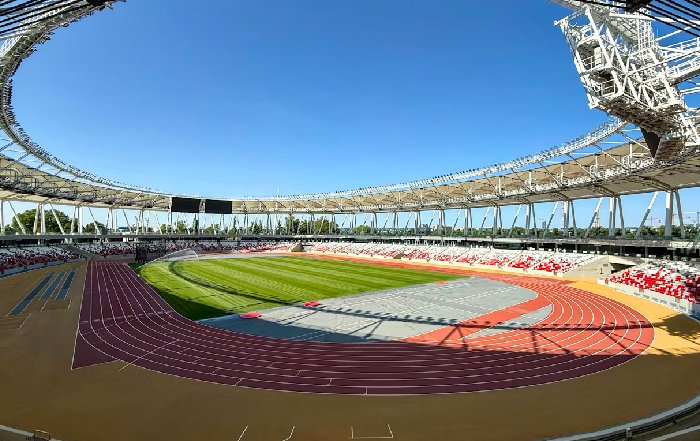
Infrastructure spending remains the most visible and contentious component of hosting a global sporting event. Stadiums, transport networks, accommodation capacity, and digital connectivity all demand substantial capital investment, often financed through a mix of public funds, private capital, and hybrid public-private partnership models. Organizations such as the Organisation for Economic Co-operation and Development (OECD) have repeatedly emphasized that the economic viability of such projects depends on their long-term utility rather than their short-term alignment with event requirements. Learn more about sustainable infrastructure investment frameworks on the OECD portal.
For established urban centers such as London, Los Angeles, Paris, or Tokyo, the emphasis has shifted toward repurposing existing venues, temporary structures, and modular stadiums, thereby reducing the risk of "white elephants" and aligning with environmental expectations. Conversely, in rapidly developing cities in Asia, the Middle East, or South America, the event can serve as a catalyst for accelerated modernization, prompting upgrades to airports, metro lines, and broadband networks that might otherwise be delayed. However, the opportunity cost of such spending is increasingly scrutinized by citizens and civil society organizations, who question whether funds might be more effectively deployed in health, education, or social housing, particularly in countries where basic public services remain under strain. This debate echoes across Sportsyncr's coverage in areas such as environment and sustainability, underlining the need for credible, data-driven legacy planning.
Tourism, Hospitality, and the Global Visitor Economy
Tourism and hospitality are often presented as the most immediate and tangible economic benefits of hosting a global sporting event. Short-term inflows of international visitors generate demand for hotels, restaurants, transport, retail, and cultural experiences, creating a temporary surge in employment and local spending. Organizations like the World Travel & Tourism Council provide extensive analysis on how major events contribute to national tourism receipts and brand visibility; readers can explore these insights on the WTTC website. Yet, the net impact is more nuanced than headline figures suggest.
In some host cities, regular business travel and non-event tourism decline during the event period due to higher prices, congestion, or security concerns, a phenomenon sometimes described as "crowding out." Moreover, the distribution of tourism benefits can be highly uneven, with central districts and major hotel chains capturing the majority of gains while smaller businesses and peripheral communities see limited uplift. Countries with strong existing tourism brands, such as Spain, Italy, France, and Thailand, may use global events as brand amplifiers, integrating them into broader campaigns that promote culture, gastronomy, and lifestyle. For newer destinations in Africa, South America, or parts of Asia, the event can function as a first large-scale introduction to global audiences, but only if supported by coherent marketing strategies and visa, transport, and safety policies that encourage repeat visitation. Sportsyncr's sections on world sport and global trends regularly examine how these patterns evolve across continents.
Broadcasting, Media Rights, and the Digital Attention Economy
The transformation of media and broadcasting has fundamentally reshaped the economics of global sporting events. Media rights now constitute the single largest revenue stream for many governing bodies, with broadcasters, streaming platforms, and digital ecosystems competing fiercely for exclusive content that attracts mass audiences and premium advertisers. Organizations such as Nielsen and Deloitte have documented how rights valuations have grown in tandem with the proliferation of platforms and the rise of data-driven advertising; further insights can be explored through the Deloitte Sports Business Group.
The shift from linear television to over-the-top (OTT) platforms and hybrid models has introduced both opportunities and challenges. On one hand, digital distribution enables more personalized, interactive, and global coverage, allowing fans in markets such as South Korea, Japan, Singapore, or the Nordic countries to access niche content and multiple camera angles, often accompanied by real-time statistics and social media integration. On the other hand, fragmentation of rights can complicate access, with consumers facing subscription fatigue and regulators scrutinizing market concentration and competition. For event organizers, the imperative is to strike a balance between maximizing revenue and maintaining broad reach, especially in emerging markets where free-to-air access may be essential for building long-term fan bases. Sportsyncr's technology and innovation coverage explores how advancements in cloud broadcasting, 5G, and augmented reality are redefining the fan experience and, by extension, the commercial logic underpinning mega-events.
Sponsorship, Brands, and the Global Marketing Platform
For global brands, major sporting events offer unparalleled visibility and association with narratives of excellence, unity, and national pride. Sponsorship portfolios linked to the Olympics, FIFA World Cup, and similar tournaments have long been dominated by multinational corporations in sectors such as financial services, automotive, technology, and consumer goods. Industry bodies like World Federation of Advertisers and insights from agencies such as WPP and Omnicom demonstrate how sponsorship strategies have evolved toward integrated, long-term partnerships that span digital content, experiential marketing, and corporate social responsibility initiatives. Learn more about how global brands align with sports properties on the WFA website.
However, the sponsorship landscape has become more complex and contested. Brands face growing pressure to demonstrate authenticity, inclusivity, and environmental responsibility in their activations, particularly among younger audiences in North America, Europe, and Asia-Pacific who are skeptical of purely transactional branding. Furthermore, the reputational risks associated with geopolitical controversies, human rights concerns, and environmental critiques of mega-events require more sophisticated risk management and stakeholder engagement. For sports properties and host nations, the challenge is to create sponsorship frameworks that protect the integrity of the event while enabling innovation in digital engagement, e-commerce, and data-driven personalization. Sportsyncr's dedicated section on brands and sponsorship examines how these relationships are reshaping both sports marketing and broader corporate strategy.
Employment, Skills, and the Future of Work in Event Economies
Large-scale sporting events generate significant employment, ranging from construction and logistics to hospitality, security, media production, and event management. While much of this work is temporary, it can provide important opportunities for skill development, career transitions, and local enterprise growth. International organizations such as the International Labour Organization (ILO) have highlighted both the potential and the pitfalls of event-related employment, including concerns about labor standards, migrant workers, and the sustainability of job creation. To explore how global events intersect with labor markets and decent work frameworks, readers can refer to the ILO website.
In advanced economies like Canada, Germany, and the Netherlands, event-related employment increasingly intersects with high-skill domains such as data analytics, cybersecurity, digital content production, and sports science, reflecting broader shifts in the future of work. For younger professionals and students, mega-events can act as gateways into the sports and entertainment industries, especially when local organizing committees collaborate with universities, vocational institutions, and industry associations. At Sportsyncr, this dimension is deeply relevant to readers following jobs and career opportunities in sport and related sectors, where the focus extends beyond the event itself to long-term workforce development, entrepreneurship, and innovation ecosystems.
Health, Wellbeing, and Population-Level Impacts
One of the most frequently cited justifications for hosting a global sporting event is its potential to inspire increased physical activity and healthier lifestyles among the population. Governments and organizing committees often frame events as catalysts for national fitness campaigns, school sports programs, and community participation initiatives. Organizations such as the World Health Organization (WHO) and Public Health England (now part of the UK Health Security Agency) have examined the relationship between major events and public health outcomes, emphasizing that inspiration alone is insufficient without sustained policy and investment. Learn more about global physical activity guidelines on the WHO website.
While short-term spikes in interest are common, the evidence for long-term behavioral change is mixed, suggesting that legacy health benefits depend heavily on the availability of accessible facilities, inclusive programming, and targeted interventions for underrepresented groups. In countries such as New Zealand, Norway, and Denmark, where community sport participation is already high, mega-events can reinforce existing cultures of activity. In contrast, in regions where inequalities in access to sport are pronounced, the risk is that the benefits remain concentrated among already active and affluent segments of the population. Sportsyncr's editorial focus on health and fitness allows readers to track how host nations translate event narratives into concrete, measurable health legacies.
Social Cohesion, Culture, and Soft Power
Beyond direct financial metrics, global sporting events function as powerful instruments of soft power, cultural diplomacy, and social cohesion. Countries from South Korea and Japan to Brazil, South Africa, and Qatar have used mega-events to project images of modernity, openness, and national confidence, often integrating cultural festivals, creative industries, and heritage narratives into event programming. The Soft Power 30 and similar indices produced by think tanks and academic institutions illustrate how sport contributes to national branding and diplomatic influence; further analysis of soft power in international relations can be found through resources such as the British Council.
However, the social impacts of hosting are not uniformly positive. Concerns about displacement, gentrification, security measures, and civil liberties can trigger domestic opposition, particularly in democratic societies where public consultation and media scrutiny are robust. The challenge for host governments is to ensure that the event enhances social cohesion rather than exacerbating divisions, and that cultural programming reflects diversity and inclusion rather than a narrow, curated narrative. Sportsyncr engages with these themes across its culture and social impact coverage, recognizing that the legitimacy of mega-events increasingly depends on their ability to align with contemporary expectations of fairness, representation, and community benefit.
Environmental Sustainability and Climate Accountability
In an era of heightened climate awareness, the environmental footprint of global sporting events has become a central concern for policymakers, sponsors, and fans. Large-scale construction, international travel, energy consumption, and waste generation all contribute to greenhouse gas emissions and local environmental pressures. Institutions such as the United Nations Environment Programme (UNEP) and the UN Framework Convention on Climate Change (UNFCCC) have collaborated with sports organizations to develop frameworks for carbon accounting, sustainable procurement, and circular economy practices. Learn more about sport and climate initiatives on the UNFCCC Sports for Climate Action page.
Recent host cities have experimented with renewable energy integration, low-carbon transport options, green building standards, and biodiversity protection measures, yet independent assessments frequently highlight gaps between ambition and execution. The credibility of "carbon neutral" claims is under increased scrutiny, particularly when reliant on offsets rather than absolute emission reductions. For host nations in climate-vulnerable regions, the paradox is especially acute: while the event may provide resources to improve resilience, it also intensifies short-term environmental pressures. At Sportsyncr, environmental analysis is not treated as a peripheral issue but as a core dimension of the economics of sport, reflected in ongoing coverage of environmental innovation and climate accountability in sport.
Technology, Data, and the Innovation Legacy
Global sporting events have emerged as testbeds for cutting-edge technologies, from smart stadiums and biometric security to advanced performance analytics, virtual reality fan experiences, and AI-driven operations. Technology companies, startups, and research institutions collaborate with organizing committees to deploy solutions that can later be scaled to other sectors, including smart cities, public safety, and digital health. Organizations such as the World Economic Forum (WEF) regularly explore how sport and mega-events intersect with the Fourth Industrial Revolution; readers can explore these themes on the WEF sports and society pages.
The innovation legacy of an event depends on the extent to which local ecosystems-universities, incubators, investors, and municipal authorities-are integrated into planning and delivery. In technology hubs such as Singapore, Seoul, and Silicon Valley-adjacent Los Angeles, mega-events can accelerate existing innovation clusters, while in emerging markets they can catalyze new capacities in areas such as cybersecurity, digital payments, and broadcast technology. Sportsyncr's technology and science sections document how these developments influence not only elite sport but also everyday experiences of fans and citizens.
Risk, Governance, and the Changing Calculus of Hosting
As the financial, political, and reputational stakes rise, risk management and governance have become central to the economics of hosting. Cost overruns, corruption scandals, security incidents, and public backlash can erode the perceived benefits of an event and damage the credibility of both host governments and international federations. Transparency advocates and watchdog organizations, including Transparency International, have pushed for more rigorous procurement processes, open data practices, and independent oversight. Learn more about anti-corruption frameworks relevant to large projects on the Transparency International website.
In response, governing bodies and host cities have experimented with new models that emphasize cost sharing, regional hosting, and greater reliance on existing infrastructure. The shift toward multi-city or multi-country formats in Europe, North America, and parts of Asia reflects both economic pragmatism and a desire to distribute benefits and risks more evenly. At the same time, public sentiment has become a decisive factor, with referendums and civic campaigns influencing whether bids proceed or are withdrawn. For a platform like Sportsyncr, which operates at the intersection of news, business, and global sport, these governance debates are integral to explaining why some cities aggressively pursue hosting rights while others step back.
Conclusion: A More Demanding Era for Mega-Events
Now hosting a global sporting event is no longer primarily a quest for prestige; it is a complex strategic decision that demands rigorous economic analysis, sophisticated risk management, and a credible commitment to social and environmental responsibility. The traditional narrative of automatic tourism booms, effortless soft power gains, and unambiguous financial returns has been replaced by a more sober understanding that outcomes vary widely and depend on context, planning, and execution. For host nations across North America, Europe, Asia, Africa, and South America, the central question is not simply whether they can stage a successful event, but whether they can convert that event into a durable legacy of improved infrastructure, healthier populations, stronger communities, and dynamic innovation ecosystems.
Within this evolving landscape, Sportsyncr serves as a specialized lens, connecting the dots between sport, business, culture, technology, environment, and society, and offering readers a holistic perspective on the true economics of global sporting events. From examining sponsorship dynamics and job creation to unpacking governance models and environmental strategies, the platform's integrated coverage across sports, business, health, technology, and global affairs reflects the reality that mega-events are no longer isolated spectacles but deeply embedded in the economic and social fabric of the 21st century. As future hosts contemplate their bids and stakeholders from brands to citizens evaluate the trade-offs, the economics of hosting will remain a central, contested, and continually evolving topic-one that demands the kind of cross-disciplinary insight and critical analysis that defines the mission of Sportsyncr.