

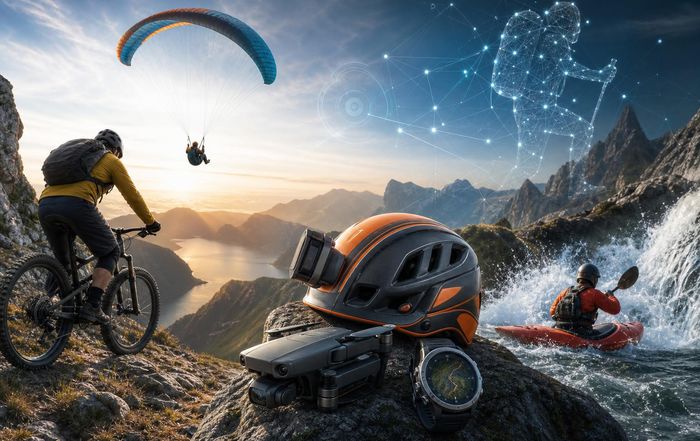
How Innovation Is Changing Outdoor Adventure Sports
The New Frontier of Outdoor Adventure
Outdoor adventure sports have evolved from a niche pursuit for elite athletes and rugged purists into a sophisticated global ecosystem shaped by technology, data, and new business models, and nowhere is this transformation more visible than in the way innovation is redefining performance, safety, fan engagement, and the commercial landscape that surrounds everything from ultrarunning and climbing to surfing, mountain biking, and backcountry skiing. For a premium website that is updated every single day like Sportsyncr-which sits at the intersection of sports, fitness, health, brands, and business-this shift is not simply a trend to observe; it is the foundation of a new, data-rich narrative about how people worldwide train, compete, recover, consume content, and connect through outdoor experiences.
What was once defined by remote locations, analog equipment, and limited visibility is now increasingly governed by connected devices, advanced materials, immersive digital platforms, and sophisticated analytics. From the United States and Canada to Germany, the United Kingdom, Australia, Japan, and across Asia, Europe, Africa, and South America, adventure sports participants and stakeholders are embracing a future in which innovation is not an add-on but a core part of the experience, and this evolution is reshaping expectations of authenticity, performance, sustainability, and community in ways that would have been difficult to imagine even a decade ago.
Smart Gear and the Data-Driven Athlete
One of the most visible shifts in outdoor adventure sports is the emergence of smart gear, which has turned equipment that used to be purely mechanical into a network of intelligent devices feeding continuous streams of performance and safety data. Wearables from companies such as Garmin, Suunto, and Apple now integrate multi-band GPS, barometric altimeters, and advanced heart-rate and HRV tracking, enabling athletes to monitor altitude adaptation, fatigue, and recovery in real time during trail runs, alpine expeditions, and long-distance cycling. Platforms like Strava have normalized the sharing and analysis of this data, creating a global training laboratory in which every climb, descent, and segment can be benchmarked against millions of others, and where athletes from Norway to New Zealand can compare their efforts on the same virtual routes.
This datafication of performance is also reshaping training methodologies, as coaches and high-performance centers increasingly rely on sports science frameworks similar to those outlined by organizations such as the American College of Sports Medicine, and endurance athletes use concepts like polarized training and critical power that were once confined to academic journals and Olympic programs. Those frameworks are now being translated into accessible tools embedded in devices and apps, giving recreational adventurers in Spain, South Africa, or Singapore the ability to train with a level of precision previously reserved for professionals. Readers looking to understand how this data-driven approach intersects with broader wellness trends can explore the evolving relationship between adventure sports and health-focused lifestyles, where recovery, sleep, and mental resilience are treated as performance variables rather than afterthoughts.
At the same time, the proliferation of sensors embedded in equipment such as smart climbing carabiners, avalanche airbags with telematics, and connected surfboards is expanding the scope of data collection beyond the human body to the environment and gear itself. This creates new opportunities for risk management and product development, as manufacturers analyze aggregated usage patterns to refine designs, and as mountain guides, race organizers, and rescue services use real-time information to make more informed decisions in dynamic situations.
Safety, Risk, and the Rise of Predictive Technologies
Innovation is not eliminating risk from outdoor adventure sports, but it is changing the way risk is perceived, assessed, and managed. Advances in predictive analytics, remote sensing, and communication technology are enabling athletes and organizers to move from reactive to proactive safety strategies. Avalanche forecasting, for example, has been transformed by high-resolution satellite data and machine learning models that synthesize snowpack measurements, weather patterns, and historical incidents. Institutions such as Météo-France, Avalanche Canada, and the Swiss Institute for Snow and Avalanche Research have been integrating these tools into their public bulletins, while private platforms and apps provide localized alerts to backcountry skiers and snowboarders in real time.
This predictive capability is increasingly supported by satellite communication devices from companies like Garmin, Iridium, and Globalstar, which have made two-way messaging, SOS beacons, and basic mapping accessible far beyond traditional mobile coverage. In remote regions of the United States, Canada, South America, and the Himalayas, these devices have become standard equipment for expedition leaders, ultrarunners, and bikepackers, reshaping expectations about what constitutes responsible preparation. The broader implications for adventure tourism, insurance, and event regulation are significant, as regulators and underwriters now have more granular data to evaluate risk profiles and set standards.
Parallel developments in materials science are also contributing to safety without compromising performance. Organizations such as Gore-Tex and research hubs highlighted by the European Commission have pushed forward innovations in breathable waterproof membranes, impact-absorbing foams, and lightweight composites that protect athletes from hypothermia, blunt-force trauma, and extreme weather while enabling faster movement and longer exposure. Readers or feed fans interested in the intersection of innovation and outdoor risk culture can explore how these changes are reflected in sportsyncr's news coverage, where accident reports, regulatory updates, and equipment recalls increasingly reference data-driven and material-science solutions.
Immersive Media, Storytelling, and the Hybrid Fan Experience
Adventure sports have always relied on compelling storytelling to engage audiences, but digital innovation has radically expanded the ways in which those stories are captured, distributed, and monetized. High-resolution action cameras pioneered by GoPro and refined by competitors, combined with drones and lightweight gimbals, have made cinematic-quality footage from remote locations commonplace, while editing tools and platforms such as Adobe Premiere Pro and DaVinci Resolve have lowered the barriers to professional-level content production. As a result, the line between athlete, creator, and media outlet continues to blur, with climbers, surfers, and mountain bikers in France, Italy, Thailand, and Japan building global followings that rival traditional sports figures.
Streaming platforms and social media channels have embraced this content, and broadcasters such as Red Bull Media House, Discovery, and Eurosport have invested heavily in live coverage and documentary formats that showcase events like the UTMB Mont-Blanc, Enduro World Series, and big-wave surf competitions. These productions are increasingly augmented by data overlays, biometric feeds, and interactive maps that allow viewers to track athletes in real time, transforming passive spectators into highly engaged participants. The shift toward hybrid experiences, where fans use mobile apps and connected devices to follow races, vote on route features, or unlock behind-the-scenes content, reflects broader trends in digital entertainment documented by organizations like Deloitte and PwC, which have highlighted the growing commercial value of immersive, multi-platform sports experiences.
For Sportsyncr, this evolution underscores the importance of contextual, cross-disciplinary coverage that situates adventure sports within broader cultural and social narratives, examining how regional identity, environmental activism, and digital community-building shape the way fans and participants experience outdoor performance. The platform's role is not only to report on events but also to interpret how streaming, AR-enhanced broadcasts, and creator economies are redefining the global adventure sports audience.
Performance Science, Recovery, and Holistic Health
Innovation in outdoor adventure sports is not limited to equipment and media; it is increasingly embedded in the science of training, recovery, and long-term health. Organizations such as the World Health Organization and U.S. Centers for Disease Control and Prevention have repeatedly underscored the physical and mental health benefits of regular exercise, including outdoor activity, while also warning about the risks of overtraining, heat stress, and inadequate recovery. Adventure athletes, who often operate at the edge of human endurance, have become early adopters of evidence-based recovery protocols, integrating tools such as heart-rate variability monitoring, sleep tracking, and metabolic testing into their routines.
The influence of sports science institutes and performance labs, including those associated with Australian Institute of Sport, UK Sport, and universities in Germany, the Netherlands, and Scandinavia, can be seen in the mainstreaming of concepts like periodization, load management, and individualized nutrition strategies. These frameworks are now embedded in consumer-facing apps and services that guide trail runners, climbers, and cyclists through structured programs grounded in research rather than folklore. Interested readers can explore how these developments intersect with broader well-being trends on Sportsyncr's fitness vertical, where training philosophies, recovery tools, and mental resilience practices are examined through both scientific and experiential lenses.
Nutrition innovation is another critical dimension, as sports dietitians and brands respond to the unique demands of long-duration efforts in extreme environments. Advances in carbohydrate delivery systems, hydration science, and gut health research have led to more sophisticated fueling strategies, while the rising interest in plant-based and sustainable diets has pushed companies to develop performance products that align with environmental and ethical values. Research shared by institutions such as Harvard T.H. Chan School of Public Health and European Food Safety Authority continues to influence how athletes and brands think about macronutrients, micronutrients, and long-term health outcomes, reinforcing the idea that adventure performance is inseparable from holistic health.
Brand Innovation, Sponsorship, and the Business of Adventure
The commercial landscape of outdoor adventure sports has undergone a profound transformation as brands recognize the sector's capacity to reach highly engaged, values-driven consumers across North America, Europe, Asia, and beyond. Traditional equipment and apparel companies such as The North Face, Patagonia, Salomon, and Arc'teryx have expanded their roles from product suppliers to lifestyle and media platforms, investing in athlete teams, film production, and community events that reinforce their positioning as cultural as well as performance leaders. At the same time, non-endemic brands in technology, finance, and automotive-such as Red Bull, GoPro, Toyota, and various fintech startups-have embraced adventure sports as a vehicle for storytelling and innovation branding.
Sponsorship models are evolving in line with this shift, moving beyond logo placement to encompass co-created content, product development collaborations, and long-term athlete partnerships that emphasize authenticity and shared values. Analysts at organizations like McKinsey & Company and Boston Consulting Group have noted that younger consumers, particularly in markets such as the United States, Germany, Sweden, and South Korea, increasingly expect brands to demonstrate credible commitments to sustainability, diversity, and community impact. This expectation has accelerated the integration of environmental and social initiatives into adventure sports sponsorship, from carbon-offset programs for international events to diversity-focused talent pipelines.
For stakeholders tracking these developments, Sportsyncr's business coverage and dedicated brands section provide an evolving map of how companies position themselves within the adventure ecosystem, including case studies on new sponsorship models, startup activity, and the economics of events, gear, and digital content. The platform's vantage point allows it to connect the dots between boardroom strategies, athlete experiences, and fan expectations, offering a nuanced perspective on how innovation is monetized and governed.
Sustainability, Climate Risk, and Responsible Innovation
No discussion of innovation in outdoor adventure sports in 2026 can ignore the profound influence of climate change and environmental degradation on both the physical playgrounds and moral framework of the industry. Organizations such as the Intergovernmental Panel on Climate Change (IPCC), UN Environment Programme, and World Meteorological Organization have documented the accelerating impact of rising temperatures, changing precipitation patterns, and extreme weather on mountain snowpack, coastal ecosystems, and forests-environments that are foundational to skiing, surfing, trail running, and many other disciplines. This reality has forced athletes, brands, event organizers, and media platforms to rethink their responsibilities and operating models.
Innovation in this context is increasingly measured not only by performance gains but also by environmental footprint. Material scientists and product designers are experimenting with recycled and bio-based fabrics, circular business models, and low-impact manufacturing processes, while organizations such as Bluesign Technologies and Fair Wear Foundation are working to standardize and audit sustainability claims. Brands that built their reputations on technical performance, including Patagonia and Helly Hansen, are now competing on the credibility and transparency of their climate strategies as much as on their product lines. Those interested in the broader environmental implications can learn more about sustainable business practices in the context of global climate goals and see how these themes intersect with Sportsyncr's environment reporting.
Adventure events are also being redesigned with sustainability in mind, as race directors in countries such as the United Kingdom, Switzerland, Japan, and Brazil seek to reduce travel emissions, waste, and ecosystem disruption. This includes implementing mandatory public transport or carpooling, limiting participant numbers to protect fragile trails, and using digital tools to replace single-use materials. Platforms like Race to Zero and initiatives promoted by the International Olympic Committee provide frameworks that adventure organizers can adapt, signaling a broader convergence between mainstream sports governance and the adventure sector's grassroots ethos.
Technology, Community, and the Social Fabric of Adventure
Beyond performance and sustainability, innovation is reshaping the social architecture of outdoor adventure sports, influencing who participates, how communities are formed, and how inclusive the culture becomes. Digital platforms and apps have lowered entry barriers by providing route information, skill tutorials, and safety guidance that were once accessible only through local clubs or guidebooks. Services such as Komoot, AllTrails, and Trailforks allow users from Malaysia to Finland or South Africa to discover and share routes with detailed mapping and user-generated reviews, while online forums and social networks connect newcomers with mentors and partners.
This digital layer has also amplified conversations about representation, access, and equity, as athletes and organizations from underrepresented groups use social media, podcasts, and independent media to highlight barriers related to race, gender, disability, and socio-economic status. Initiatives like Outdoors for All, Black Girls Do Bike, and similar movements in Europe and Asia have pushed brands and event organizers to address the structural issues that limit participation, from gear affordability and cultural stereotypes to land access and safety concerns. Coverage on Sportsyncr's social vertical explores how these debates are reshaping the values and norms of adventure culture, and how innovation can be leveraged to support more inclusive pathways into sports that have historically skewed toward certain demographics.
At the same time, there is growing recognition of the psychological dimensions of adventure participation, including the benefits for mental health and the risks associated with social media-driven comparison and performance pressure. Research from institutions such as National Institutes of Health, Mental Health Foundation, and universities in the Netherlands and Denmark has highlighted both the therapeutic potential of time in nature and the ways in which digital amplification can distort risk perception and self-worth. Responsible innovation in this space therefore includes not only new tools and platforms but also ethical frameworks that guide how data, storytelling, and community features are designed and deployed.
Work, Careers, and the Professionalization of Adventure
The professionalization of outdoor adventure sports has accelerated in parallel with these technological and cultural shifts, creating new career pathways and business models for athletes, guides, content creators, product designers, and event professionals across North America, Europe, Asia, and beyond. Whereas the traditional route to a sustainable career in adventure might have involved a small number of sponsorships and guiding certifications, today's landscape includes digital entrepreneurship, brand consulting, coaching, and roles within rapidly growing outdoor and technology companies. The rise of remote work, documented by organizations such as the World Economic Forum and OECD, has allowed some professionals to structure their lives around proximity to mountains, coasts, and trails, blending knowledge work with high-level athletic pursuits.
However, this professionalization also brings challenges, including income volatility, burnout, and the need for business and digital skills that are not always intuitive to athletes whose primary focus is performance. As a result, there is increasing demand for education, mentorship, and career support tailored to the adventure sector, including programs offered by universities, incubators, and industry associations. For those considering or already pursuing such paths, Sportsyncr's jobs and careers hub offers insights into emerging roles, required skill sets, and the evolving expectations of employers and sponsors in this hybrid world of sport, media, and technology.
Our Position in a Rapidly Evolving Ecosystem
In this complex, fast-moving environment, Sportsyncr positions itself as a specialized lens through which the global fitness and health minded audience can understand how innovation is reshaping outdoor adventure sports across performance, culture, business, technology, and sustainability. By integrating coverage across sports, fitness, health, brands, technology, world events, and more, the platform offers a holistic perspective that reflects the interconnected reality of modern adventure, where a single innovation can ripple from a lab in Switzerland to a trail in Chile and a streaming platform in South Korea within months.
The editorial approach emphasizes experience, expertise, authoritativeness, and trustworthiness, drawing on insights from athletes, scientists, entrepreneurs, and policymakers to present nuanced analyses rather than hype-driven narratives. In doing so, Sportsyncr aims to serve not only as a original and independent news source but as a strategic resource for decision-makers in brands, federations, startups, and investment firms who need to understand where the sector is heading, what risks and opportunities are emerging, and how consumer expectations are evolving.
As the outdoor adventure world moves deeper into an era defined by intelligent equipment, predictive safety tools, immersive media, sustainable innovation, and evolving social norms, one constant remains: the human desire to test limits, explore new terrain, and connect with others through shared experiences in nature. Innovation is changing how that desire is expressed and supported, but it is not replacing the underlying motivations; rather, it is providing new ways to pursue them more safely, inclusively, and sustainably. From this vantage point, the next decade of adventure sports will likely be remembered not only for faster times and bolder lines, but for the way technology, culture, and business converged to redefine what it means to play, work, and live in the great outdoors-stories that Sportsyncr will continue to follow, interpret, and connect for its active and engaged audience.