

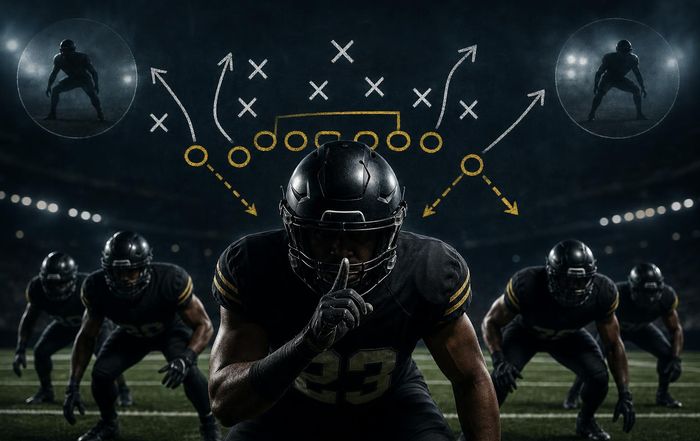
How American Football Defenses Really Disguise Their Coverage
Defensive coordinators in American football spend as much time trying to confuse quarterbacks as they do trying to beat offensive linemen. Modern passing attacks are built on timing, pre-snap reads, and pattern recognition, so if a defense can make the quarterback believe one thing before the snap and then show something different after, it can tilt the entire game. From the NFL to top college programs, disguising coverage has become one of the defining strategic battles on every passing down. This article looks at how defenses actually disguise their coverages: the principles behind it, the specific techniques used by safeties, corners, and linebackers, how quarterbacks counter, and why the cat-and-mouse game keeps evolving. Whether you watch every Sunday or break down film for a living, understanding these disguises makes the game look very different.
Why disguising coverage matters in modern football
Passing efficiency has climbed steadily at the professional and elite college levels over the past two decades. Rule changes that protect quarterbacks and receivers, analytics-driven play calling, and the rise of spread concepts have made it easier to throw the ball. According to long-term data from sources like Pro Football Reference and ESPN, league-wide completion percentages and yards per attempt have generally trended upward, forcing defenses to get more creative just to keep pace.
At the same time, quarterbacks are trained from high school onward to identify basic coverages pre-snap: single-high safety usually means Cover 1 or Cover 3; two-high safeties often means Cover 2, Cover 4, or Cover 6; corners with outside leverage might suggest man; soft off coverage can hint at zone. Offensive coordinators script route concepts to attack those looks, and many quick-game plays are designed so the quarterback makes a simple binary decision based on a single defender's alignment or movement.
Disguising coverage is the defense's way of attacking that process. The goal is not only to generate interceptions but to disrupt timing, force hesitation, and create just enough uncertainty that the pass rush can get home. On long-yardage downs, a quarterback holding the ball for an extra half-second can be the difference between a completion and a drive-killing sack. For fans, this is where the strategy becomes as important as raw athleticism, and where film study and pattern recognition matter as much as speed and strength.
For readers interested in the broader tactical side of the game, disguises sit alongside blitz packages, front alignments, and match coverages as core elements of modern defensive football strategy.
The basic coverages defenses are trying to hide
To understand how defenses disguise, it helps to know what they're disguising. While playbooks can be complex, most coverages at the NFL and top college level are variations on a few core families, defined by how many defenders play deep and how they relate to eligible receivers.
Single-high structures feature one deep safety in the middle of the field. Common examples are Cover 1 (man coverage underneath with one deep safety) and Cover 3 (three deep zones, usually with four underneath). These looks are popular on early downs because they help fit the run and still protect the deep middle. Two-high structures use two deep safeties and include Cover 2 (two deep halves, five underneath zones) and Cover 4 or "quarters" (four deep defenders sharing the deep areas). Two-high shells are effective at limiting explosive plays but can be more vulnerable to the run unless the safeties are heavily involved.
Modern defenses also rely heavily on pattern-matching concepts, which blend man and zone rules. Systems influenced by coaches like Nick Saban, Bill Belichick, and Vic Fangio teach defenders to read routes and "match" them like man coverage once receivers reach certain landmarks. Organizations such as USA Football and NFL Operations have published educational material explaining these families to coaches and fans. From the quarterback's perspective, however, the first question is usually simple: is the post-snap look single-high or two-high, and is it primarily man or zone?
Disguise is about muddying those answers. A defense might present a two-high look that turns into single-high after the snap, or show man and rotate into zone. The structure of the call-Cover 3, quarters, or a pressure package-doesn't change, but the presentation does.
Pre-snap disguise: what offenses see before the ball is snapped
Pre-snap disguise starts with alignment. Defensive coordinators want the picture the quarterback sees with five seconds on the play clock to be different from the one he sees a second after the ball is snapped. Safeties, corners, and linebackers all participate in this illusion, and they have to coordinate their movements to avoid blown assignments.
Safeties are usually the most obvious tells, so they are the primary tools for disguise. In many systems, both safeties line up at the same depth-often around 10-12 yards-and roughly symmetrical before rotating into their real responsibilities at the snap. A defense that plans to play Cover 3 might still put both safeties deep pre-snap, then have one "spin" down into the box while the other moves to the deep middle. Conversely, a quarters coverage might start with a single-high look, with the other safety walked down over the slot before bailing out at the snap to form a two-high shell.
Cornerbacks also help sell the illusion. They can show press alignment and bail into off coverage, or align with outside leverage as if playing man before dropping into zone. Nickel corners and slot defenders complicate the picture further: a nickel who appears to be playing tight man on the slot might actually be a flat defender in Cover 2, with the safety rotating over the top. For fans who want to study these nuances, coaching clinics and breakdowns from outlets like Coaching Clinics and film-focused platforms such as PFF and The Athletic frequently dissect these alignments.
Linebackers contribute through their depth and posture. Dropping a linebacker slightly deeper and squarer can hint at a zone drop, while a more forward, tilted stance can suggest blitz. Disguise often requires them to show pressure in one gap and then bail out at the snap, or to hold a neutral, "two-way" stance that doesn't give away whether they're coming or dropping. All of this must be coordinated with the front to maintain gap integrity in the run game, especially on early downs.
From the offensive side, quarterbacks and coordinators know they're being lied to, so they use motion, hard counts, and formation shifts to force the defense to reveal its true structure. This back-and-forth is part of what makes high-level football so intricate and is one reason why defensive communication and chemistry are as important as raw talent.
Post-snap rotation: how the shell changes after the snap
If pre-snap disguise is the setup, post-snap rotation is the punchline. The moment the ball moves, defenders execute their real assignments, often moving rapidly from "false" alignments into the coverage structure the coordinator actually called. The speed, timing, and angles of these rotations determine whether the disguise works or results in a blown coverage.
A common example is a defense showing a two-high shell that spins to Cover 3. Both safeties align deep before the snap; at the snap, one safety drives down toward the box or curl/flat area, while the other rotates to the deep middle. A cornerback on the opposite side may bail to a deep third, while the nickel or outside linebacker widens to the flat. To the quarterback, what looked like a quarters or Cover 2 structure pre-snap is now a single-high zone.
The inverse is also common: a defense might show a single-high look with one safety in the middle and the other apparently in the box. At the snap, the "box" safety bails out to form a two-high shell, while the middle-field safety rotates to a deep half. Underneath defenders adjust their drops accordingly. This kind of late two-high rotation is a hallmark of several modern systems, particularly those associated with Fangio's coaching tree, and is designed to discourage deep shots and in-breaking routes that attack the middle.
Rotations can also change the man/zone picture. A defense might show man coverage with corners aligned tight and safeties slightly shaded, then drop into a zone or match coverage where defenders pass off routes instead of chasing them across the field. Conversely, some pattern-match systems show a zone shell but effectively become man coverage once routes declare. Organizations like USA Football and NFL's official coaching resources have emphasized how critical post-snap reads are for quarterbacks facing this kind of match coverage.
For viewers, the key is to watch the safeties and the nickel defender a split-second after the snap rather than only at the snap. Their first two or three steps often reveal the true structure of the coverage, and film analysts routinely highlight this in breakdowns on broadcast and digital platforms.
Specific disguise techniques used by safeties
Safeties are the quarterbacks of the defense, and they carry the heaviest load when it comes to disguising coverage. Their positioning and movement define whether a structure is single-high, two-high, or occasionally zero (no deep safety), and a well-timed rotation can bait even experienced quarterbacks into bad decisions.
One core technique is the "late roll." Both safeties align at equal depth, giving the offense a two-high picture. On the snap, one safety rolls down quickly into the box, a curl/flat zone, or man coverage on a tight end, while the other widens or centers to handle deep middle responsibility. The key is that the roll happens late enough that the quarterback cannot adjust his pre-snap read in time, especially on quick-game concepts designed to hit in under two seconds.
Another technique is "hold and bail." A safety who will ultimately be a deep half or quarter player might initially hold in the middle of the field, slightly deeper than linebacker depth, to suggest a single-high or robber coverage. At the snap, he bails rapidly to his true deep landmark. This can be particularly effective against quarterbacks who key off the middle safety to decide whether to throw seam or post routes, and it requires high-level range and discipline.
Safeties also disguise man coverage by aligning in zone-like positions and then driving on specific matchups. For example, a safety who appears to be responsible for a deep half might actually be keying the slot receiver's release, ready to bracket or "double" a star target on key downs. Defensive coordinators frequently design these disguises for third downs or red-zone situations, where the offense's route combinations are more predictable. For those interested in player development, resources from USA Football and coaching communities highlight how much mental processing and communication is required to execute these techniques without coverage busts.
At the elite level, disguising coverage is part of why versatile safeties have become so valuable in both the NFL and college football. Players who can credibly line up in the box, cover slots, and play deep middle or deep half give coordinators far more options for rotating and bluffing without tipping their hand.
Cornerbacks and nickels: baiting throws and hiding leverage
Cornerbacks and nickel defenders provide the second layer of deception. Their leverage, depth, and body language can hint at man or zone, press or off, even when the underlying coverage is something else entirely. Because quarterbacks and receivers often make route adjustments based on corner alignment, any misread can lead directly to incompletions or turnovers.
One common technique is "press-bail." A corner aligns close to the line of scrimmage as if playing tight man, forcing the receiver to expect a physical release. At the snap, the corner quickly turns and bails to a deeper zone landmark, often a deep third in Cover 3. This can discourage quick throws like hitches or slants that beat off coverage, while still allowing the defense to play zone behind the disguise. Broadcast analysts on networks like CBS Sports and NBC Sports frequently highlight press-bail when explaining how corners like to disguise.
The opposite also happens: a corner may show soft off coverage at seven or eight yards, suggesting a zone drop, then drive aggressively into tight man or "trap" coverage on a short route. In Cover 2 or "cloud" concepts, corners may align off and outside, then jump an out route or hitch, relying on safety help over the top. This is often used to bait quarterbacks into throws that look open pre-snap but close quickly once the corner triggers downhill.
Nickel defenders, who cover the slot, add another layer. Because they are closer to the box, they can bluff pressure, show man on the slot, or align in space as if in a flat zone. On many disguised pressures, the nickel will walk toward the line as if blitzing, then peel off into coverage at the snap, or vice versa. Coordinators use this to confuse protection schemes as well as passing concepts, tying coverage disguise to blitz looks.
For fans interested in how these roles intersect with broader positional trends, nickel and sub-package defenders are increasingly central to both defensive culture and personnel decisions, as teams value versatility and disguise over traditional base alignments.
Linebackers and fronts: tying disguise to pressure
Coverage disguise is not just a back-end exercise; it is tightly connected to the defensive front and pressure packages. Linebackers and edge defenders help sell certain coverages by where they line up and how they move, and coordinators often pair disguised coverage with simulated pressures or creepers-rush schemes that look like heavy blitz but only bring four rushers.
A classic example is the double-A gap mug look. Both inside linebackers walk up into the A gaps on either side of the center, suggesting an all-out blitz and often forcing the offense into specific protection calls. At the snap, the defense might rush only one linebacker and drop the other into a short zone, or drop both and bring pressure from the edge. On the back end, the defense can play man-free, Cover 3, or a match zone, but because the front suggested something else, the offense may have dialed up a quick throw that now runs into a well-placed underneath defender.
Linebackers also disguise coverage by their alignment relative to backs and tight ends. A linebacker shaded tightly over a running back can suggest man coverage, especially on third down, while a more stacked alignment might hint at zone. Defenses exploit this expectation by "green-dogging" (adding a linebacker to the rush if his man stays in to block) or by exchanging responsibilities with safeties and nickels post-snap. Coaching resources from platforms like Glazier Clinics and professional organizations such as the American Football Coaches Association regularly emphasize how front mechanics and coverage disguise must be married to avoid leaving gaps in run fits or coverage.
Front alignment also plays a role. Odd fronts (three down linemen) and even fronts (four down linemen) can both be used to disguise where pressure is coming from and what coverage sits behind it. A defense might show a light box with two high safeties to invite a run, then spin a safety down and slant the front to close interior gaps, all while rotating into a different coverage than the quarterback anticipated. For readers tracking tactical trends across the sport, these integrated fronts and disguises are central to how defenses are responding to spread and RPO-heavy offenses worldwide.
How quarterbacks and offenses try to beat disguised coverages
Offenses are not passive victims in this chess match. Quarterbacks, coordinators, and offensive line coaches build tools into their systems to identify and punish disguised coverages. The battle often comes down to who can process information faster between the moment the quarterback breaks the huddle and the instant he releases the ball.
One of the primary tools is motion. By sending a receiver or tight end in motion across the formation, offenses can force defenders to adjust, revealing man or zone tendencies. If a corner travels with the motioning receiver, it may hint at man coverage; if defenders bump and pass off responsibilities, it suggests zone. Defenses know this and sometimes "travel" in zone or pre-plan how to mask their adjustments, but motion still provides valuable clues. Many modern offenses, including some of the most creative units in the NFL, lean heavily on motion for this reason, a trend tracked closely by outlets like NFL Next Gen Stats.
Another tool is the use of post-snap reads built into route concepts. Rather than relying solely on pre-snap identification, some plays give the quarterback a primary defender to read after the snap-often a safety or underneath zone player. If that defender moves one way, the quarterback throws to the route breaking away from him; if he moves the other way, the ball goes elsewhere. This RPO and option-route logic is as common in the pros now as it has long been in college, and it reduces the value of pure pre-snap disguise.
Quick game and hot routes are also weapons. When an offense expects pressure or complex disguise, it may call plays that get the ball out in under two seconds, before the defense can fully rotate. Running backs and tight ends are coached on "sight adjustments," changing their routes on the fly based on blitzers or vacated zones. This is why communication and chemistry between quarterbacks and receivers are so critical, especially for teams that rely on timing-based passing attacks.
Ultimately, the best offenses accept that the defense will sometimes win the pre-snap battle and focus on sound post-snap decision-making. Quarterbacks are taught to confirm, not assume: use the pre-snap picture as a hypothesis, then verify it with the first two or three post-snap steps of the safeties and key defenders. This mental discipline is one of the traits that separates elite quarterbacks from merely talented ones.
Risks and limitations of disguising coverage
Disguising coverage is not free. Every late rotation and bluff carries risk, and coordinators must balance deception against execution. The more a defense moves at the snap, the greater the chance that someone will be out of position, miscommunicate a check, or simply fail to get where they need to be in time.
One obvious risk is getting caught by tempo. Fast-paced offenses that rush to the line and snap the ball quickly can prevent defenses from setting up elaborate disguises. Without time to align symmetrically or communicate rotations, the defense may have to line up in "check" calls-simpler structures with fewer moving parts. This is one reason many spread offenses at the college level use tempo as a core strategic weapon, a development that has reshaped both offensive and defensive philosophies over the last decade.
Another risk is the run game. If safeties are rotating late and linebackers are bluffing pressure, they may be slower to fit their run gaps. Offenses can exploit this with draws, RPOs, and quick-hitting runs that attack the space vacated by rotating defenders. Coordinators must decide on a down-by-down basis how much they can afford to disguise without sacrificing run integrity, especially against balanced offenses that are comfortable handing the ball off when defenses spread out to handle the pass.
Communication breakdowns are perhaps the biggest danger. In noisy stadiums or against formations that stress traditional rules, defenders can mishear checks or fail to pass off routes correctly. This is how blown coverages-completely uncovered receivers downfield-often happen. Coaching organizations like the AFCA emphasize that disguise should never come at the cost of assignment soundness; at lower levels of play, many coaches prefer simpler, more honest coverages executed well over complex disguises that players cannot consistently handle.
Finally, there is a physical cost. Constantly rotating safeties and bluffing linebackers requires stamina and discipline over four quarters and across a long season. Teams with less depth or with younger players in key communication roles may dial back their disguises as games wear on, especially if the offense is controlling time of possession.
How disguise is taught and evolves across levels of the game
At the professional level, disguise is baked into almost every coverage call. NFL defenses and top college programs devote significant meeting time and practice reps to teaching not just what the coverage is, but how it should look before the snap. Safeties and linebackers often hold separate "disguise meetings" where they walk through rotation timing, landmarks, and how to respond when offenses use motion or shifts to challenge their plans.
Coaching education resources, including those from USA Football, the AFCA, and other national federations, stress that at youth and early high school levels, disguise should be introduced gradually. Younger players are still learning basic coverage rules and tackling fundamentals, so heavy disguise can create confusion and erode confidence. As athletes progress, coaches layer in more pre-snap looks, late rotations, and pressure disguises, often starting with simple "show two, play three" or "show one, play two" concepts.
The evolution of offensive trends constantly reshapes how defenses disguise. The spread revolution, RPOs, and the rise of mobile quarterbacks have pushed many defensive systems toward two-high shells that rotate late, aiming to handle both vertical shots and the run. Meanwhile, analytics-driven offenses increasingly prioritize explosive plays and fourth-down aggression, putting additional pressure on defenses to hide their intentions on key downs. For readers who follow the sport not just as entertainment but as a living laboratory of tactics and data, these shifts connect directly to broader themes in sports analytics and technology.
Internationally, as American football grows in popularity in Europe, Asia, and elsewhere, more federations and clubs are importing these disguise concepts from the NFL and NCAA. Coaching clinics, online film platforms, and translated playbooks are spreading modern defensive thinking far beyond the traditional power centers, adding another layer of tactical sophistication to global competitions.
Watching the game differently: what to look for on Sundays
Once you understand how defenses disguise their coverages, broadcasts start to look very different. Instead of only following the ball, it becomes natural to watch the safeties before the snap, note whether the shell is single-high or two-high, and then see how it changes a split-second after the ball is snapped. You notice corners pressed at the line before bailing, nickels walking toward the box and then dropping out, and linebackers who threaten blitz only to fall into underneath zones that take away hot routes.
For fans who want to deepen their understanding of the sport, combining live viewing with film breakdowns, coaching resources, and advanced stats can be particularly rewarding. Sites such as Pro Football Focus, ESPN, CBS Sports, NBC Sports, and the NFL's own Next Gen Stats offer different windows into how teams deploy disguise and how quarterbacks respond. Within the broader context of sports strategy and culture, disguised coverage is one of the clearest examples of how American football is as much a mental contest as a physical one.
For those playing or coaching at any level, understanding the principles behind disguise-rather than memorizing a few specific rotations-can help build flexible, resilient defenses. It also sharpens offensive game planning, forcing coordinators to think beyond simple pre-snap tells and to design concepts that remain sound even when the defense refuses to show its hand.
As passing games continue to evolve and analytics push teams toward more aggressive aerial strategies, the art of disguising coverage will only grow in importance. The best defenses will be those that can lie convincingly before the snap, tell the truth where it counts after the snap, and get all eleven players to see the same picture in real time. For anyone trying to get truly synchronized with the modern game, that is a storyline well worth watching.