

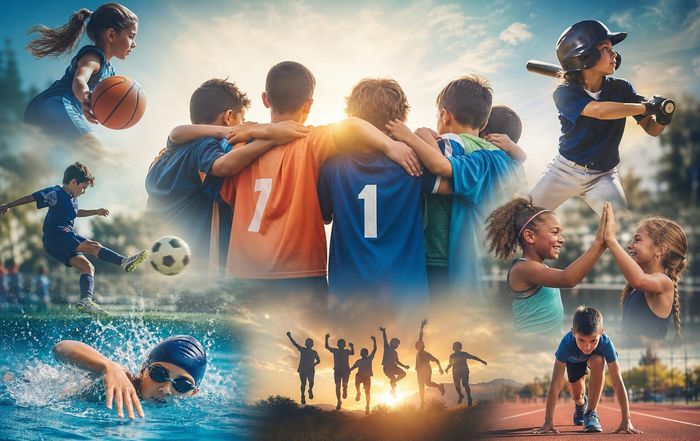
Why Youth Sports Participation Matters Beyond Competition
Youth sports are often framed in terms of scores, standings, and scholarship dreams. Yet when coaches, psychologists, and public-health researchers talk about why sport really matters for children and teenagers, they rarely start with winning. They talk about confidence, friendships, mental health, and the habits that can shape an entire life. For families deciding how much time and money to invest, and for communities debating facilities and funding, understanding those broader impacts is more important than any single season's results. Today let's look at what the evidence actually says about youth sports participation beyond the scoreboard: how it affects physical and mental health, academic outcomes, social development, and long-term life chances-along with the risks and inequities that can't be ignored.
Building lifelong movement, not just short-term fitness
One of the clearest benefits of youth sport is that it gets young people moving in a world where sedentary time is rising. The World Health Organization estimates that more than 80% of adolescents globally do not meet recommended daily physical-activity levels, which is linked to higher risks of obesity, type 2 diabetes, and cardiovascular disease later in life. Organized sport is not the only solution, but it is one of the most common ways children reach or exceed those guidelines.
When youth programs are well designed, they do more than burn calories. They help children develop fundamental movement skills-running, jumping, throwing, catching, changing direction-that underpin almost every physical activity. Research supported by organizations such as Sport England and Sport Australia has shown that children who feel competent in these basic skills are more likely to stay active into adolescence and adulthood. That sense of competence often starts in community leagues, school teams, and informal clubs rather than in high-performance environments.
From a health perspective, regular sport participation in childhood is associated with improved cardiorespiratory fitness, stronger bones, healthier body composition, and lower blood pressure. Public-health bodies like the U.S. Centers for Disease Control and Prevention and Public Health England highlight youth sport as a key lever for combating childhood obesity and non-communicable disease. For readers interested in the broader health context, our coverage of health and fitness trends frequently returns to this theme: early positive experiences with movement make it easier to stay active later.
The key is that sport should be a gateway to a physically active life, not a narrow pipeline to elite competition. When the focus is exclusively on performance or early specialization, children who are late developers or less skilled can be pushed out, losing both the physical and social benefits. That tension-between performance and participation-runs through almost every discussion of youth sport policy worldwide.
Mental health, resilience, and the psychology of belonging
A growing body of evidence links youth sport with better mental-health outcomes, though the relationship is complex. Studies summarized by the American Psychological Association and the American Academy of Pediatrics suggest that regular sport participation is associated with lower rates of anxiety and depression, higher self-esteem, and better overall life satisfaction among adolescents. Team sports in particular appear to offer a protective effect, likely due to social support and a sense of belonging.
That sense of belonging is critical. For many children, their team is one of the first places outside the family where they feel truly known and valued. Shared goals, rituals, and even inside jokes help create an identity that goes beyond individual performance. This social fabric can buffer stress from school, family, or social media, and it can be especially powerful for young people who struggle to find their place elsewhere.
Sport also provides a relatively safe environment to experience setbacks and recover from them. Losing a game, being benched, or making a costly mistake are emotionally real, but the stakes are usually lower than in academic or family crises. With good coaching, these moments can become lessons in coping, reframing, and persistence-skills that psychologists often group under "resilience." The Positive Coaching Alliance and similar organizations around the world have built entire coach-education frameworks around this idea: sport as a laboratory for character and mental skills, not just tactics.
However, the mental-health picture is not uniformly positive. High-pressure environments, overtraining, toxic coaching, and bullying can contribute to stress, burnout, and disordered eating, especially in aesthetic or weight-class sports. Governing bodies such as the International Olympic Committee and national federations in Europe, North America, and Asia increasingly emphasize safeguarding, mental-health literacy, and coach education to reduce these risks. For parents and young athletes, the takeaway is not that sport is automatically good for mental health, but that the climate created by adults-coaches, administrators, and families-often determines whether the experience is protective or harmful.
Social skills, leadership, and learning to work with others
Beyond health, youth sports are one of the most common real-world settings where children learn to navigate group dynamics. Unlike many classroom activities, sport demands constant coordination, communication, and quick decision-making under pressure. Even in individual sports, young athletes must negotiate practice schedules, share equipment, and manage relationships with coaches and peers.
Researchers in social and developmental psychology have found consistent links between sport participation and improved social skills, including cooperation, empathy, and conflict resolution. The UN Educational, Scientific and Cultural Organization (UNESCO) has highlighted sport as a tool for social inclusion and peacebuilding, particularly in communities affected by conflict or inequality. These programs often use games and small-sided formats-rather than formal leagues-to teach respect, non-violence, and gender equality.
Leadership development is another widely cited benefit, though it can be uneven. Captains and star players are often given formal leadership roles, but well-run programs rotate responsibilities so more young people learn to organize, motivate, and support teammates. Simple practices-like having different athletes lead warm-ups, co-design team rules, or speak in timeouts-can help shy or marginalized children find their voice. For coaches and clubs, this is an opportunity to treat sport as a training ground for civic engagement, not just athletic performance.
These social dimensions also intersect with culture and identity, which we regularly explore in our recent culture and often recommended social reporting. In many communities, youth sport is a key site where local traditions, languages, and values are expressed and negotiated, from Indigenous games in Canada and Australia to street football in European cities.
Academic performance and cognitive benefits
Parents often worry that time spent on sport will come at the expense of schoolwork. Yet large-scale studies in the United States, Canada, and several European countries have generally found that students who participate in school or community sports achieve equal or better academic outcomes than non-participants on average. Analyses referenced by organizations like the National Federation of State High School Associations in the U.S. and the OECD suggest that adolescent athletes tend to have higher grades, better attendance, and lower dropout rates, even after controlling for socioeconomic factors.
There are several plausible explanations. Regular physical activity is associated with improved attention, executive function, and memory, as documented in research collated by bodies such as the American College of Sports Medicine. Sport also structures time: young people with practices and games must learn to manage homework and social life within tighter constraints, which can foster planning and discipline. In some school systems, eligibility rules requiring minimum grades add an additional incentive to keep up academically.
However, the relationship is not automatic. When training loads become extreme, travel schedules escalate, or adults prioritize sport over school, academic performance can suffer. This is particularly relevant in talent-pathway systems in football (soccer), basketball, and other global sports where teenagers may be pulled into semi-professional environments. Educational authorities and sports bodies increasingly debate how to balance these demands so that promising athletes are not forced into all-or-nothing choices at 14 or 15.
For families, a pragmatic approach is to view sport not as competition with education, but as one of several structured activities that can support learning, provided that time demands remain reasonable and academic expectations are clear.
Identity, self-worth, and the risks of over-identifying with sport
For many young people, especially in adolescence, sport becomes a core part of identity. Being a swimmer, a footballer, or a gymnast can provide a sense of purpose and a clear narrative about who they are and where they belong. This can be positive, particularly for those who feel marginalized in other settings, and it often supports healthy routines around sleep, nutrition, and time management.
Yet psychologists warn about the risks of over-identifying with a single role. When self-worth is tied almost entirely to performance or selection-making the team, winning a championship, getting recruited-injuries, deselection, or a plateau in development can trigger a crisis of identity. Former youth athletes sometimes describe feeling lost when they stop competing, even if they had modest careers. Organizations like Mind, Beyond Blue, and national Olympic committees have begun offering resources on "dual careers" and transition planning, but these supports are still unevenly distributed.
Coaches and parents can mitigate these risks by emphasizing multiple sources of value: effort, improvement, relationships, and contributions beyond scoring or winning. Encouraging diverse interests-music, academics, volunteering, gaming, or other hobbies-helps young people see themselves as more than athletes. Media coverage also plays a role: when elite pathways are portrayed as the main reason to play, recreational participation and personal growth are implicitly devalued.
This is where balanced sports journalism and analysis, including our own sports and news sections, can help reframe narratives around youth sport away from pure talent-identification stories and toward a broader understanding of participation.
Inequality, access, and the "pay-to-play" problem
The benefits of youth sport are not evenly distributed. In many countries, particularly in North America and parts of Europe and Asia, the growth of privatized "pay-to-play" systems has made high-quality sport increasingly expensive. Club fees, travel costs, equipment, and specialized coaching can quickly add up to thousands of dollars per year per child. Research from organizations like the Aspen Institute in the U.S. and Laureus Sport for Good globally highlights a consistent pattern: children from higher-income families participate more often, in more sports, and at higher competitive levels than their peers from lower-income households.
This inequality is not just about future professional opportunities; it is about differential access to the health, social, and educational benefits discussed earlier. Communities with underfunded schools and limited public spaces often lack safe, affordable programs. Girls, children with disabilities, and those from minority ethnic or migrant backgrounds face additional barriers, from cultural expectations to safety concerns and discrimination.
Some national and local governments have responded by investing in community facilities, subsidizing participation fees, or integrating more physical activity into school curricula. International bodies such as UNICEF and UN Women support sport-for-development programs aimed at reaching marginalized groups, particularly girls and young women. Yet the structural pull of commercialized youth sport-showcase tournaments, private academies, branded travel teams-continues to grow.
For policymakers and sponsors, this raises hard questions about where to direct resources. Supporting inclusive community clubs, school-based programs, and mixed-ability leagues may yield broader social returns than funding a small number of elite youth competitions. Our business and sponsorship coverage frequently examines how brands and governing bodies navigate this trade-off between visibility and impact.
Culture, technology, and the changing shape of youth sport
Youth sport does not exist in a vacuum; it is shaped by broader cultural and technological trends. The rise of esports and digital gaming, for instance, has shifted how many young people spend their leisure time. While some commentators frame gaming and traditional sport as direct competitors, others see opportunities for hybrid models that combine physical activity with digital engagement. Our gaming and technology pages regularly explore these intersections, from VR-based training tools to fitness-gamified apps.
At the same time, social media has transformed how young athletes experience sport. Platforms like Instagram, TikTok, and YouTube can inspire participation through highlight clips and skill-tutorial content, but they can also intensify performance pressure and body-image concerns. Governing bodies and youth-sport organizations increasingly publish digital-safety guidelines, drawing on expertise from groups such as Common Sense Media and national child-protection agencies. Coaches and parents now need to consider not only physical workloads but also the psychological load of constant online comparison.
Culturally, there is a growing recognition that traditional competitive formats do not suit every child. Some programs are experimenting with more flexible, drop-in models, mixed-gender teams, shorter seasons, and modified rules to reduce pressure and emphasize enjoyment. International initiatives promoted by bodies like FIFA, World Rugby, and World Rugby's national unions include small-sided games, tag or touch versions of contact sports, and street-style tournaments designed to be more inclusive and less intimidating.
Climate and environment are also emerging considerations. In regions facing heatwaves, air-quality issues, or limited green space, safe outdoor play cannot be taken for granted. Organizations such as the World Meteorological Organization and national weather services have begun issuing specific guidance on safe sport in extreme conditions. This adds another layer of complexity for clubs and schools trying to deliver consistent, safe programming.
Rethinking success in youth sports
If youth sport is about more than competition, then success must be measured in more than wins and losses. For individual children, a "successful" season might mean making a new friend, learning to cope with nerves, discovering a love of movement, or simply feeling safe and accepted. For families, it might involve better communication, shared experiences, and a healthier routine. For communities, success can look like higher participation across genders and income levels, lower dropout rates in adolescence, and stronger connections between schools, clubs, and local organizations.
This broader view does not require abandoning competition. Games, tournaments, and even championships can still be meaningful milestones. The challenge is to ensure that competitive structures serve development rather than the other way around. That might mean limiting travel at younger ages, rotating positions so children experience different roles, de-emphasizing standings in pre-teen leagues, or offering parallel recreational and performance pathways.
Ultimately, youth sports participation matters because it is one of the few social institutions that can simultaneously touch health, education, social cohesion, and culture. When done well, it helps young people build bodies that move, minds that cope, and relationships that last-regardless of whether they ever stand on a podium. For policymakers, coaches, brands, and families, the task is to design systems that preserve the joy and inclusivity of play while still embracing the challenge and meaning that competition can bring.
In that sense, the most important outcomes of youth sport are often the ones that never appear on a scoreboard.