

Australian Cricket's Defining Moments: Legacy, Leadership and the Business of a National Obsession
Australian cricket in 2026 is far more than a sequence of scorecards and trophies; it is a living case study in how sport can shape a nation's identity, project soft power across continents, and evolve into a sophisticated global business ecosystem. For audiences of Sportsyncr-with interests that span sport, health, fitness, culture, business, technology, jobs, brands, environment, science, gaming, social impact and sponsorship-Australian cricket offers a uniquely rich narrative, stretching from the first Test in Melbourne to a data-driven, commercially complex, and increasingly inclusive present. It is a story that resonates not only in Australia but also across North America, Europe, Asia, Africa and South America, where cricket's footprint and commercial relevance continue to grow.
This article revisits Australian cricket's most influential moments and turning points, but does so through the lens that matters to decision-makers and professionals: how a sport builds trust, authority and cultural capital; how it commercialises success without eroding integrity; and how it adapts to structural shifts in media, technology and global consumer behaviour. By situating historic milestones within contemporary themes such as governance, sustainability, athlete welfare and digital transformation, Sportsyncr connects the dots between the past and the strategic future of the game.
Foundations of a National Game: From Melbourne 1877 to the Ashes Myth
The officially recognised birth of Test cricket in March 1877 at the Melbourne Cricket Ground (MCG) was not just an inaugural fixture; it was the beginning of an enduring commercial and cultural asset for Australia. The 45-run victory over England, underpinned by Charles Bannerman's unbeaten 165, established a narrative of Australian competitiveness and ingenuity that still informs sporting discourse in the country today. Modern business leaders often look back at such foundational events to understand how early symbols and stories crystallise into brand identities that last generations, and in Australian cricket's case, that identity was forged in resistance to colonial hierarchy and in the pursuit of parity with the mother country.
The creation of The Ashes in 1882, triggered by Australia's famous win at The Oval and the subsequent mock obituary lamenting the "death" of English cricket, elevated this rivalry into something uniquely marketable and emotionally charged. Over the decades, the Ashes has become one of global sport's most durable properties, comparable in narrative power to events like the Super Bowl or Wimbledon, and has driven broadcast deals, tourism flows and merchandise revenue across the United Kingdom, Australia, and increasingly, digital audiences worldwide. Those seeking to understand how mythology and storytelling underpin sports brands can explore related perspectives on cultural narratives in sport at Sportsyncr Culture or delve into broader discussions of sporting heritage via platforms like World Rugby's heritage pages.
Sir Donald Bradman and the Economics of Excellence
The influence of Sir Donald Bradman transcends his astonishing Test average of 99.94. From a business and leadership perspective, Bradman represents a benchmark of performance that has been leveraged for decades in marketing, sponsorship and national identity campaigns. His rise during the Great Depression provided a psychological anchor for Australians facing economic hardship, demonstrating how elite performance in sport can generate intangible social capital and collective resilience during periods of crisis.
Bradman's meticulous preparation, analytical approach to batting and insistence on high standards have later been studied in management literature and high-performance environments. Organisations from professional clubs to corporate leadership programs have used his example to illustrate how disciplined repetition, data-driven self-assessment and mental fortitude can produce outlier results. Analysts interested in high performance and leadership can find complementary research at institutions such as Harvard Business Review and McKinsey & Company, which frequently examine how sporting frameworks translate into corporate strategy.
The Tied Test, Richie Benaud and the Art of Sporting Theatre
The 1960 tied Test at the Brisbane Cricket Ground (The Gabba) against the West Indies remains one of the most compelling examples of how cricket can blend drama, strategy and emotional intensity to captivate audiences. Under the captaincy of Richie Benaud, Australia embraced positive, risk-taking cricket that prioritised entertainment as well as results. Benaud's decisions, both as captain and later as a globally respected broadcaster, helped define an ethos in which cricket was not merely a contest but a form of theatre with the power to attract new demographics and markets.
This match, and the era it heralded, foreshadowed the later commercialisation of cricket as a media product. The ability to produce gripping narratives over five days laid the groundwork for modern broadcast packaging and digital highlights strategies, which now underpin rights deals across India, the United States, the United Kingdom and beyond. Readers seeking to understand the evolution of sports broadcasting and technology can explore related themes on Sportsyncr Technology or review broader sports media analysis from organisations like Nielsen Sports.
Kerry Packer, World Series Cricket and the Birth of the Modern Sports Business
The advent of World Series Cricket (WSC) under media magnate Kerry Packer between 1977 and 1979 was arguably the single most transformative commercial moment in the sport's history. What began as a dispute over television rights with the Australian Cricket Board evolved into a radical reimagining of how cricket could be packaged, monetised and consumed. Night matches under floodlights, coloured clothing, white balls, enhanced player remuneration and sophisticated television production values all emerged from this disruptive period.
From a business standpoint, WSC demonstrated how a rights holder with a clear vision and capital backing could challenge entrenched governance structures and reshape an entire industry. It anticipated the modern sports rights economy, where broadcasters and streaming platforms compete for premium live content, and where athletes increasingly view themselves as independent assets within a global marketplace. Those analysing the economics of sports disruption can learn more about media rights and league structures via resources like Deloitte's Annual Review of Football Finance or examine how similar dynamics play out in other leagues through Sports Business Journal.
For a sports-business-specific lens on how Packer's revolution continues to influence franchise leagues and sponsorship models worldwide, readers can also explore analysis at Sportsyncr Business.
The Golden Era: Waugh, Ponting and a Global Juggernaut
The period from the mid-1990s to the late 2000s, dominated by captains Steve Waugh and Ricky Ponting, saw Australia become a benchmark for sustained excellence in team sport. With icons such as Shane Warne, Glenn McGrath, Adam Gilchrist, Matthew Hayden, and Justin Langer, Australia captured three consecutive ICC Cricket World Cups in 1999, 2003 and 2007, while also exerting formidable control over Test cricket rankings.
From an organisational perspective, this era highlighted the benefits of long-term planning, robust talent pathways and a high-performance culture that combined analytical rigour with uncompromising standards. The team's success created a virtuous cycle: winning drove broadcast value, sponsorship appeal and grassroots participation, which in turn funded further investment in coaching, sports science and infrastructure. For readers seeking a broader understanding of elite performance systems, UK Sport offers insights into high-performance frameworks, while the International Cricket Council provides historical data and analytics that illustrate how dominance translates into commercial leverage.
Within Sportsyncr's own coverage at Sportsyncr Sports, this golden era is frequently referenced as a case study in how sporting success can be aligned with strategic brand building, from merchandise and hospitality packages to international tours that deepen engagement across Asia, Europe and North America.
Humility, Risk and Repositioning: Lessons from the 2005 Ashes
The 2005 Ashes series in England, which ended Australia's 16-year hold on the urn, marked a critical inflection point. Despite fielding many of the era's greats, Australia were outplayed 2-1 in a gripping contest that revitalised Test cricket's global appeal. For Australian cricket, the defeat was both a tactical wake-up call and a brand moment, revealing that even the most dominant entities must continually evolve or risk being overtaken.
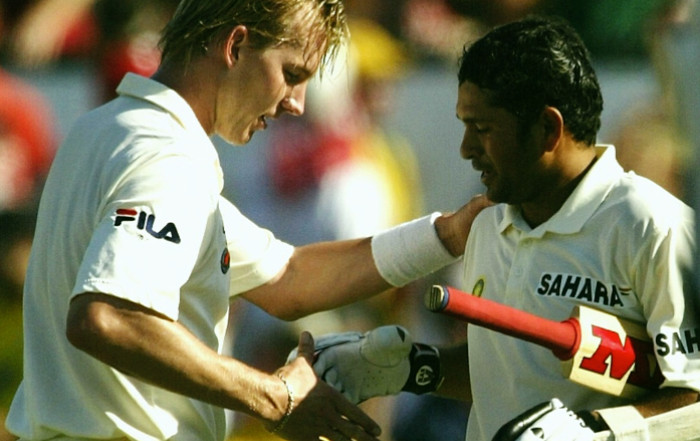
The series also embodied the emotional power of elite sport: the image of Andrew Flintoff consoling Brett Lee at Edgbaston became a global symbol of sportsmanship, widely shared across media and later social platforms. It reminded stakeholders that, in a crowded entertainment market, authenticity and respect can be as valuable as victory in building long-term trust. Detailed retrospectives, such as those available through BBC Sport, have since been used in leadership programs and ethics courses to explore the balance between competitiveness and integrity.
Crisis and Culture Reset: The Cape Town Ball-Tampering Scandal
The 2018 ball-tampering scandal in Cape Town, involving Steve Smith, David Warner and Cameron Bancroft, represented a profound reputational crisis for Australian cricket. The incident, captured on global television, triggered intense scrutiny of team culture, leadership and the pressures created by a "win at all costs" mentality. Cricket Australia's subsequent investigation and the sanctions imposed were not only disciplinary measures but also a signal to sponsors, broadcasters and fans that ethical boundaries would be enforced.
For organisations worldwide, the episode provided a real-time case study in crisis management, governance and cultural transformation. It illustrated how quickly trust can erode when conduct falls short of stated values, and how rebuilding requires transparency, humility and structural change. Comprehensive timelines and analysis can be found at outlets such as ESPNcricinfo and through governance commentary on platforms like The Guardian's sport section.
The appointment of Tim Paine as captain and the recalibration of behavioural standards, including the much-discussed "players' pact", were early steps in restoring credibility. These developments aligned closely with themes explored on Sportsyncr Culture, where the intersection of ethics, national identity and fan expectations remains a recurring focus.
Redemption, Resilience and the 2019 Ashes
The 2019 Ashes in England, in which Steve Smith returned from suspension to deliver a series for the ages, underscored sport's capacity for narrative redemption. Smith's 774 runs at an average exceeding 110 did more than retain the urn; they reframed his public image and demonstrated the power of performance, accountability and psychological resilience in reshaping reputations.
Alongside Smith, the emergence of Pat Cummins, Marnus Labuschagne and Josh Hazlewood signalled a generational transition built upon robust talent development systems. Sports psychologists and leadership consultants have since used Smith's journey to examine how individuals and organisations can recover from reputational damage through consistent behaviour change and transparent communication. Analytical commentary on resilience and high-pressure performance can be found at platforms like The Conversation and through research published by the Australian Institute of Sport.
For readers interested in the health and mental-wellbeing dimensions of elite cricket, including workload management and concussion protocols, related topics are explored in depth at Sportsyncr Health.
The World Test Championship and the Strategic Value of the Long Format
Australia's victory over India in the 2023 ICC World Test Championship final at The Oval was significant not only as a trophy but as a validation of Test cricket's continued relevance in an era dominated by T20 and franchise leagues. The performance of players such as Travis Head, Scott Boland, Nathan Lyon and Pat Cummins reinforced the notion that strategic patience, technical excellence and adaptability remain highly valued attributes in the global cricket marketplace.
For administrators and broadcasters, the WTC structure created a more coherent narrative around bilateral series, adding a layer of competitive meaning that has helped safeguard Test cricket's commercial viability. Rights negotiations now routinely consider the WTC as part of a holistic product offering, particularly in key markets such as India, the United Kingdom and Australia. Industry observers can explore the broader future of Test cricket and its place in the media ecosystem through outlets like The Times of India's sports section and strategic commentary on Sportsyncr News.
The Rise and Professionalisation of Australia's Women's Team
Over the past decade, Australia's women's cricket team has emerged as one of the most successful and professionally run national sides in world sport. Multiple ICC Women's World Cup and Women's T20 World Cup titles, under leaders such as Meg Lanning, Ellyse Perry and Alyssa Healy, have positioned the team as both a performance benchmark and a catalyst for gender equity in sport. The 2020 Women's T20 World Cup final at the MCG, played in front of more than 86,000 spectators, demonstrated the commercial potential of women's cricket and challenged outdated assumptions about audience appetite and sponsorship value.
From a business and social perspective, the women's program has become a template for integrated high-performance systems, equal access to facilities, and progressive pay structures. This has implications far beyond Australia, as federations in England, India, South Africa and New Zealand recalibrate their own women's pathways. Detailed information on the women's game is available via Cricket Australia and its women's hub at cricket.com.au, while broader discussions on training, conditioning and injury prevention in women's sport are regularly featured on Sportsyncr Fitness.
Infrastructure, Sustainability and the Stadium as Smart Asset
Australian cricket's physical infrastructure-iconic venues such as the MCG, SCG, Adelaide Oval and Perth Stadium-has become central not just to the fan experience but also to urban planning, tourism and environmental strategy. The redevelopment of Adelaide Oval, which integrated heritage architecture with modern amenities, solar energy and smart-lighting systems, is frequently cited as a best-practice case study in sustainable stadium design. International resources like StadiumDB and World Green Building Council highlight how such venues can sit at the intersection of sport, culture and environmental responsibility.
In parallel, Cricket Australia's Community Cricket Facilities Strategy has prioritised upgrades to suburban and regional grounds, inclusive changerooms, and all-weather training facilities that support year-round participation across genders and age groups. These investments align with global trends in sports infrastructure, where community access, environmental performance and digital connectivity are increasingly important metrics for public and private investors. Readers interested in how sport intersects with environmental innovation and urban resilience can explore further at Sportsyncr Environment.
Indigenous Contributions and Inclusive Growth
The contributions of Indigenous Australians to cricket date back to the 1868 Aboriginal tour of England, led on the field by players such as Johnny Mullagh, long before federation or formal national representation. In recent decades, figures like Jason Gillespie and Ashleigh Gardner have brought Indigenous excellence into the mainstream of Australian cricket, inspiring targeted programs and pathways designed to increase First Nations participation and visibility at all levels of the game.
The National Indigenous Cricket Championships, supported by Cricket Australia, and community-based initiatives across New South Wales, Queensland, Western Australia and the Northern Territory reflect a broader recognition that cricket's legitimacy as a "national" sport depends on its inclusivity. Cultural organisations such as AIATSIS provide historical context and educational resources on Indigenous sporting heritage, while Sportsyncr continues to examine how sport and culture intersect in shaping identity on Sportsyncr Culture.
T20, the Big Bash and the Global Franchise Economy
The rise of T20 cricket has fundamentally altered the economic and strategic landscape of the sport. The Big Bash League (BBL) has grown into a major entertainment product, competing for attention with domestic leagues like the Indian Premier League (IPL), The Hundred in England and the Caribbean Premier League (CPL). Australian players, including David Warner, Glenn Maxwell and Marcus Stoinis, are now key assets in a global franchise ecosystem that spans India, the United States, the United Arab Emirates, South Africa and beyond.
From a commercial standpoint, T20 leagues have driven innovation in fan engagement, from in-stadium activations and family-friendly scheduling to integrated social media strategies and fantasy gaming platforms. This has created new revenue streams in sponsorship, digital rights and data licensing, and has opened up career opportunities in areas such as performance analytics, content production and esports crossovers. To understand how T20 is reshaping the global sports economy, analysts can consult business coverage at Forbes SportsMoney and complement this with ongoing technology-focused insights on Sportsyncr Technology.
Health, Science and the High-Performance Ecosystem
In 2026, Australian cricket operates within a sophisticated high-performance ecosystem that integrates sports science, medical research, biomechanics and data analytics. Workload monitoring, GPS tracking, sleep analysis and nutrition programs are now standard across elite and pathway teams, reflecting a broader shift toward evidence-based athlete management. Institutions such as the Australian Sports Commission and the CSIRO contribute research on topics ranging from injury prevention and climate adaptation to fan behaviour and technology adoption.
The focus on long-term athlete health has also elevated issues such as mental wellbeing, concussion protocols and career transition planning, aligning with global best practice across sports like American football, rugby and ice hockey. These themes resonate strongly with Sportsyncr's audience, who can explore related content on Sportsyncr Health and Sportsyncr Science, where the interplay between physiology, psychology and performance is examined in depth.
Jobs, Brands and the Future of Cricket as an Industry
As cricket has professionalised, the industry around it has expanded to include roles in data science, digital content, sponsorship sales, sustainability, fan experience design and international development. In markets like the United States, Germany, Singapore and Japan, where cricket is still emerging, there is growing demand for administrators and consultants who understand both the sport and the commercial frameworks that support it. Those exploring career pathways in this evolving ecosystem can find relevant guidance and opportunities at Sportsyncr Jobs.
Brand partnerships have also become more sophisticated, moving beyond simple logo placement into integrated storytelling, purpose-driven campaigns and technology collaboration. Global companies in sectors such as finance, telecommunications and renewable energy now use cricket properties to reach diverse audiences across Asia, Africa, Europe and North America, often aligning with themes like sustainability, inclusion and digital innovation. For ongoing coverage of how brands leverage cricket's reach and emotional resonance, readers can visit Sportsyncr Brands and Sportsyncr Sponsorship.
Conclusion: Why Australian Cricket Still Matters in 2026
In 2026, Australian cricket stands as a powerful example of how a sport can evolve from colonial pastime to global industry, while still functioning as a mirror of national values and a driver of social cohesion. Its defining moments-from the first Test at the MCG and the birth of the Ashes, through the Packer revolution, the golden era of Waugh and Ponting, the Cape Town crisis and subsequent cultural reset, to the rise of the women's team and the T20 franchise economy-offer lessons in leadership, governance, innovation and resilience that resonate far beyond the boundary rope.
For Sportsyncr's global audience across the United States, United Kingdom, Germany, Canada, Australia, France, Italy, Spain, the Netherlands, Switzerland, China, Sweden, Norway, Singapore, Denmark, South Korea, Japan, Thailand, Finland, South Africa, Brazil, Malaysia and New Zealand, Australian cricket's journey provides a template for how sport can be simultaneously a cultural touchstone, a sophisticated business, a platform for social progress and a testbed for technological and scientific innovation.
As new formats emerge, climate pressures intensify, digital platforms fragment audiences and athlete expectations evolve, the organisations and individuals who shape Australian cricket will continue to face complex strategic choices. Their decisions will influence not only results on the field but also jobs, investments, environmental outcomes and cultural narratives around the world. For ongoing analysis of these dynamics-across sport, health, fitness, culture, business, technology, world affairs, brands, environment, science, gaming, social impact and sponsorship-readers can continue to engage with the evolving coverage at Sportsyncr, where Australian cricket is not just a subject of reporting, but a lens through which the future of global sport is understood.