

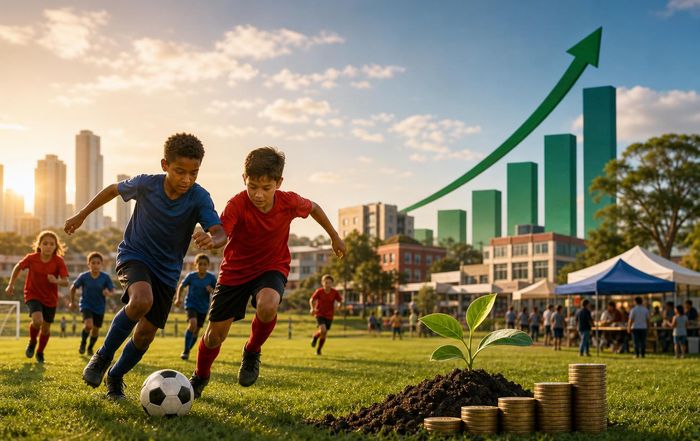
Why Grassroots Sports Matter for Economic Development
The New Economics of the Playing Field :)
Economists, policymakers, and brand leaders are reassessing the foundations of growth, productivity, and social stability, and increasingly they are looking not only to stock exchanges, technology hubs, or trade flows, but to the football pitches, basketball courts, running tracks, and community gyms that underpin grassroots sport. For the sports audience here, the intersection of sport, business, and society has never been more strategically important, as community-level participation in sport is emerging as a powerful and often undervalued engine of economic development, human capital formation, and brand innovation.
Grassroots sports, typically defined as community-based, amateur, and youth-driven participation outside elite professional structures, have historically been framed in terms of recreation, social cohesion, and health. Yet, as governments in the United States, United Kingdom, Australia, and across Europe, Asia, Africa, and South America grapple with sluggish productivity growth, rising healthcare costs, youth unemployment, and social fragmentation, the economic rationale for investing in local sports ecosystems is becoming clearer. Research from organizations such as the World Health Organization and the Organisation for Economic Co-operation and Development indicates that physically active populations are healthier, more productive, and more engaged in the labor market; readers can examine how physical inactivity affects global GDP and public finances by exploring the WHO's work on physical activity and health. This evolving evidence base is reshaping how cities, brands, and investors evaluate the returns generated by community pitches and playgrounds, which are increasingly viewed as strategic assets rather than discretionary amenities.
As our daily coverage spans sports, fitness, health, business, and culture, the story of grassroots sports is not a feel-good narrative on the margins of the industry; it is central to understanding where long-term value will be created in the global sports economy and how communities, brands, and policymakers can collaborate to unlock that value in a sustainable and inclusive way.
Human Capital, Productivity, and Long-Term Growth
Modern economic development is driven less by physical capital and more by human capital: the skills, health, resilience, and creativity of people. Grassroots sports are uniquely positioned to influence all of these dimensions simultaneously, particularly in younger populations who will shape labour markets in North America, Europe, and high-growth regions across Asia and Africa over the next several decades. Longitudinal studies from institutions like Harvard T.H. Chan School of Public Health show that regular physical activity in childhood and adolescence is associated with better cognitive performance, improved mental health, and higher educational attainment, and readers can explore the relationship between exercise and academic outcomes through Harvard's resources on physical activity and brain health.
From an employer's perspective, these benefits translate into a workforce with lower absenteeism, higher concentration, and stronger teamwork skills. When cities and regions invest in accessible grassroots sports programs, they are effectively investing in the future productivity of their labour force. This is as relevant in Singapore and Japan, where aging populations heighten the need to extend healthy working lives, as it is in Brazil, South Africa, and India, where large youth cohorts require pathways to skills and employment. The macroeconomic implications are considerable; according to analyses by The Lancet and other research bodies, the global economic burden of physical inactivity runs into hundreds of billions of dollars annually, a figure that could be significantly reduced through structured, community-level sports initiatives that encourage sustained participation rather than sporadic engagement.
The broader health dividend is equally important. By reducing the incidence of non-communicable diseases such as cardiovascular conditions, type 2 diabetes, and certain cancers, grassroots sports help ease pressure on public health systems from the National Health Service in the UK to Medicare in the US and social insurance schemes in Germany, France, and Scandinavia. For those seeking a deeper understanding of how sport and physical activity intersect with public health policy, the OECD provides useful comparative data on health spending and outcomes. Over time, healthier populations free up public and private resources that can be redeployed into education, infrastructure, and innovation, reinforcing a virtuous cycle of development that begins with a simple decision to make grassroots sport accessible and attractive.
Grassroots Sports as Local Economic Engines
Beyond the long-term human capital effects, grassroots sports generate direct and immediate economic activity at the local level. Community clubs, amateur leagues, and youth academies employ coaches, administrators, groundskeepers, referees, and support staff, creating jobs that are often embedded in neighbourhoods where employment opportunities are limited. Small and medium enterprises in the surrounding ecosystem-sports retailers, physiotherapists, local media outlets, transport providers, and hospitality venues-benefit from increased footfall and spending linked to training sessions, weekend fixtures, and tournaments.
In cities such as Manchester, Seattle, Munich, Toronto, Sydney, and Cape Town, municipal authorities have begun to integrate grassroots sports into broader urban development strategies, recognizing that modern sports facilities, safe playing surfaces, and multi-use community hubs can catalyse regeneration in underinvested districts. The World Bank has highlighted how well-designed community infrastructure contributes to inclusive growth, and readers can examine its work on urban development and social inclusion. When such infrastructure is anchored by vibrant grassroots sports programs, the result is a more dynamic local economy in which residents are both producers and consumers of sporting experiences.
For Sportsyncr, whose readers follow global news and industry trends, the business opportunities around these local ecosystems are increasingly visible. Brands ranging from local startups to global giants like Nike, Adidas, and Decathlon are experimenting with micro-sponsorships, community partnerships, and service offerings tailored to amateur athletes. Digital platforms that connect players with facilities, coaches, and leagues are creating new data-driven business models, while insurance providers and health-tech firms are exploring products that reward regular participation in verified grassroots activities. The cumulative effect is the emergence of a distributed sports economy in which value is created not only in elite stadiums but also in school gyms and public parks across Italy, Spain, the Netherlands, Sweden, Norway, and beyond.
Health, Wellbeing, and the Economics of Prevention
The global discussion on healthcare in 2026 is dominated by the rising costs of chronic disease, mental health challenges, and post-pandemic system resilience. Grassroots sports occupy a central place in what health economists describe as the "economics of prevention," in which relatively modest investments in community-based activity can avert far larger expenditures on treatment, medication, and long-term care. The Centers for Disease Control and Prevention in the US has repeatedly emphasized the role of physical activity in preventing chronic diseases, and readers can explore these perspectives through the CDC's guidance on the benefits of physical activity.
From Sportsyncr's vantage point at the intersection of health and sports, the value proposition is straightforward: an active community is a healthier community, and a healthier community is a more economically resilient one. Grassroots sports provide structured, socially reinforcing environments that help individuals maintain active lifestyles over time, which is crucial given the well-documented tendency for gym memberships and individual fitness resolutions to lapse. In Canada, New Zealand, and Finland, where outdoor culture is strong, policymakers are leveraging this behavioural insight by integrating grassroots sports into public health campaigns, school curricula, and workplace wellness programs.
The mental health dimension is particularly salient for younger generations in South Korea, Japan, Thailand, and Singapore, where academic and professional pressures are intense, and in many urban centres worldwide where social isolation has been exacerbated by digital lifestyles. Team sports and community leagues foster belonging, identity, and mutual support, which can mitigate anxiety, depression, and loneliness. The National Alliance on Mental Illness and similar organizations have highlighted the role of structured group activities in mental health interventions, and interested readers can review evidence on exercise and mental wellbeing from institutions like the Mayo Clinic. From an economic standpoint, improved mental health translates into higher workforce participation, reduced disability claims, and lower productivity losses, all of which contribute to more robust and inclusive growth.
Social Capital, Cohesion, and Safer Communities
Economic development is not solely a function of capital accumulation and technological progress; it also depends on the quality of social capital, trust, and civic engagement within a society. Grassroots sports are among the most effective and scalable mechanisms for building these intangible assets, particularly in diverse, multi-ethnic cities across the United States, United Kingdom, France, Netherlands, South Africa, and Brazil, where social fragmentation and inequality can undermine stability and investment.
Community clubs and leagues bring together participants from different socioeconomic backgrounds, cultures, and age groups, creating shared experiences and norms that transcend traditional divides. This is especially important in areas where youth are at risk of disengagement, crime, or extremism. Studies from organizations like UNESCO and UNICEF show that sport-based programs can reduce antisocial behaviour, improve school attendance, and foster gender equality, and readers can explore these insights through UNESCO's resources on sport for development and peace. For municipal authorities and national governments, these outcomes have direct economic implications, including lower policing and criminal justice costs, more stable neighbourhoods, and a more attractive environment for business investment.
For Sportsyncr, which also covers social dynamics and world affairs, the role of grassroots sports in building social cohesion aligns with the platform's broader interest in how culture and community shape economic trajectories. The local football club in a London borough, the basketball league in a Chicago neighbourhood, or the volleyball program in a township near Johannesburg are not merely recreational outlets; they are micro-institutions that foster trust, mentorship, and informal networks that can later support entrepreneurship, job referrals, and civic participation.
Pathways to Employment, Skills, and Future Jobs
The global labour market in 2026 is undergoing profound transformation as automation, artificial intelligence, and green transitions reshape demand for skills. Grassroots sports, though often overlooked in labour market analysis, play a meaningful role in equipping individuals with transferable skills and connecting them to employment pathways. Coaches, volunteers, and players develop competencies in leadership, communication, time management, conflict resolution, and resilience-attributes that employers across sectors consistently rank as critical in surveys by organizations such as the World Economic Forum, whose insights on future skills and jobs are shaping policy in Germany, Denmark, Singapore, and beyond.
Moreover, grassroots sports ecosystems generate direct employment opportunities in coaching, event management, facility operations, sports medicine, media production, and digital services. As sports technology evolves, new roles are emerging in data analytics, performance tracking, content creation, and community management, providing entry points for young people interested in combining their passion for sport with careers in technology, marketing, or health. For readers exploring career angles, Sportsyncr's pages of jobs and technology offers regular insights into how these trends are playing out across markets.
In countries like Australia, Netherlands, and Sweden, structured certification pathways for grassroots coaches and administrators have been integrated into national qualifications frameworks, giving participants recognized credentials that can support broader employment prospects. Partnerships between community clubs, vocational institutions, and employers are emerging as effective models for aligning grassroots sports participation with formal skills development. For policymakers in Malaysia, Thailand, and South Africa, where youth unemployment remains a pressing concern, such models provide a scalable, low-cost complement to traditional training programs, leveraging existing community infrastructure and social networks.
Brands, Sponsorship, and the Business Case for Community Investment
For brands operating in the global sports, fitness, and lifestyle sectors, grassroots sports represent both a commercial opportunity and a strategic avenue for building long-term equity and trust. Consumers in 2026, particularly younger demographics in North America, Europe, and Asia-Pacific, increasingly expect brands to demonstrate authentic social impact rather than simply attach their logos to elite events. Investment in grassroots sports allows companies to meet this expectation while also cultivating future customers, ambassadors, and employees.
Major companies like Nike, Adidas, Puma, Under Armour, and Lululemon have expanded their community programs over the past decade, supporting local leagues, providing equipment, and co-creating initiatives with NGOs and city governments. For example, initiatives that refurbish basketball courts in underserved neighbourhoods or sponsor girls' football leagues in rural regions not only enhance brand visibility but also contribute directly to local economic and social outcomes. Readers can learn more about how purpose-driven strategies are reshaping corporate behaviour through resources such as Deloitte's insights on purpose-led brands and growth.
From Sportsyncr's perspective, where brands and sponsorship are critical editorial pillars, the evolution of grassroots sponsorship is one of the most important trends in the wider sports business. Instead of focusing solely on visibility metrics, leading sponsors are designing programs with measurable outcomes in participation rates, health indicators, educational attainment, and local enterprise development. This approach aligns with the broader movement toward environmental, social, and governance (ESG) investing, as institutional investors scrutinize how companies' sports-related spending contributes to sustainable development goals. Platforms like the UN Global Compact and the Global Reporting Initiative provide frameworks for integrating such initiatives into corporate reporting, and readers can explore ESG reporting guidance via the GRI standards.
Technology, Data, and the Next Wave of Grassroots Innovation
Technological innovation is reshaping grassroots sports as profoundly as it is transforming elite competition. Affordable wearables, smartphone apps, and cloud-based management tools are enabling community clubs to track participation, monitor performance, manage fixtures, and communicate with stakeholders more efficiently than ever before. In markets from the United States and Canada to China, Japan, and South Korea, technology firms are building platforms that connect players with nearby games, allow parents to follow youth competitions in real time, and enable coaches to access training resources previously reserved for professional environments.
For Sportsyncr, which covers the convergence of sports and technology, the most significant development lies in the data generated by grassroots activities. Aggregated and anonymized, this data offers unprecedented insight into participation trends, facility utilization, health behaviours, and community engagement. City planners can use these insights to optimize investment in facilities; health authorities can refine preventive strategies; brands can tailor products and services to real-world usage patterns. Organizations like McKinsey & Company have examined how data and analytics are transforming sports, and readers can explore their perspectives on sports and data-driven growth.
Digital innovation also democratizes access to high-quality coaching and training content. Platforms offering video tutorials, remote coaching, and AI-driven performance analysis are lowering barriers for aspiring athletes in India, Nigeria, Brazil, and Indonesia, who may lack access to elite academies. While this raises important questions around data privacy, digital inclusion, and commercialization, it also opens new avenues for economic development, as local entrepreneurs create services around community sports tech, from content production to equipment rental and maintenance.
Sustainability, Environment, and the Future of Community Facilities
The climate crisis and the global push for sustainability are reshaping infrastructure investment, and grassroots sports facilities are no exception. Pitches, courts, and clubhouses consume energy, water, and materials, and their construction and maintenance have environmental footprints that must be managed responsibly. At the same time, well-designed sports infrastructure can contribute positively to urban resilience by providing green spaces, supporting active transport, and serving as emergency community hubs during extreme weather events.
Forward-looking municipalities and sports organizations are embracing sustainable design principles, integrating renewable energy, efficient lighting, water recycling, and low-impact materials into new and refurbished facilities. The International Olympic Committee and organizations like Green Sports Alliance have promoted best practices in sustainable sport, and readers can learn more about sustainable venue design through resources such as the IOC's guidance on sustainability in sport. For Sportsyncr, whose stories extends to the environment and science, the intersection of grassroots sports and sustainability is a critical frontier, as communities seek to balance the benefits of expanded participation with the imperative to reduce environmental impact.
Economic development strategies that incorporate grassroots sports must therefore be aligned with broader climate and sustainability goals. This alignment creates opportunities for innovative financing models, such as green bonds for community sports facilities, public-private partnerships that tie sponsorship to environmental performance, and local enterprises specializing in eco-friendly turf, equipment, and construction. In regions highly exposed to climate risks, including parts of Africa, South Asia, and low-lying coastal areas worldwide, resilient sports infrastructure can support social stability and community identity in the face of disruption, reinforcing the role of grassroots sports as both an economic and societal anchor.
What's up for Policymakers, Businesses, and Communities
The case for viewing grassroots sports as a strategic lever for economic development is compelling across dimensions of human capital, health, local enterprise, social cohesion, employment, brand value, technological innovation, and environmental resilience. For governments, integrating grassroots sports into development planning is no longer a matter of cultural policy alone; it is a question of competitiveness, fiscal sustainability, and social stability. For businesses and brands, especially those active in the sports, health, and lifestyle sectors, investment in community-level sport offers a route to authentic engagement, differentiated positioning, and long-term value creation. For communities themselves, vibrant grassroots sports ecosystems provide not only enjoyment and identity but also pathways to opportunity, wellbeing, and shared prosperity.
Sportsyncr, with its cross-cutting 100% unique articles of sports, fitness, business, culture, and global news, is uniquely positioned to chronicle how these dynamics are unfolding from local pitches in London, New York, Berlin, and Toronto to emerging hubs in Lagos, Bangkok, São Paulo, and Johannesburg. As policymakers, investors, and brand leaders seek models that align economic growth with health, inclusion, and sustainability, the stories emerging from grassroots sports will increasingly shape strategic decisions in boardrooms and city halls alike.
The next decade will likely see intensified competition among cities and regions to attract talent, investment, and tourism, and those that recognize the full economic value of grassroots sports-investing not only in elite venues but in everyday access for residents-will hold a distinct advantage. In that context, the community field, the neighbourhood court, and the local running trail are not peripheral amenities; they are foundational assets in the global race for sustainable, inclusive, and resilient development.