

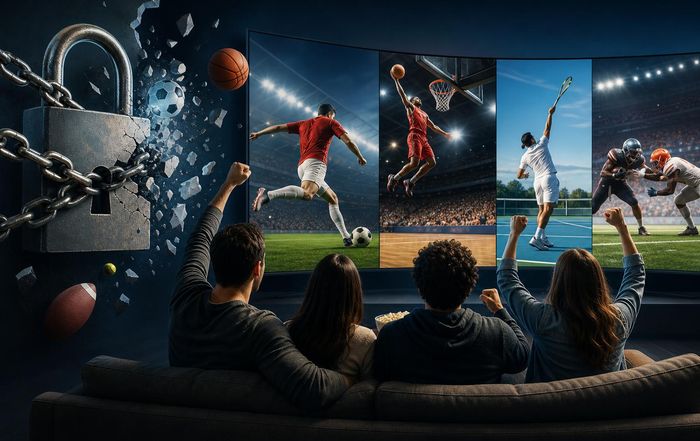
What Sports Broadcasting Rights Really Mean for Fans
When a league signs a new TV deal or a streaming platform wins "exclusive rights" to a competition, the headlines usually focus on record-breaking sums and corporate winners. For fans, though, sports broadcasting rights translate into something far more practical: how easy it is to watch their team, how much it costs, where they can see it, and even how the sport itself is scheduled and marketed. Understanding how these rights work-and why they're changing so fast-helps explain everything from kickoff times to blackouts to why some games suddenly disappear behind a paywall.
This article unpacks what broadcasting rights actually are, how money flows through the system, and the real-world consequences for fans in different parts of the world, with a particular focus on the shift toward streaming and the fragmentation of viewing options.
What are sports broadcasting rights?
At the simplest level, broadcasting rights are legal permissions that allow a media company to show live or recorded coverage of sports events to an audience in a specific territory and for a specific period. A league, tournament organizer, or rights-holder (such as FIFA, the NFL, or the Premier League) sells these rights to broadcasters and platforms-traditional TV networks, pay-TV operators, or streaming services.
These rights are usually:
Time-limited (for example, a three-, five-, or ten-year cycle).
Territory-based (a broadcaster may have rights only in one country or region).
Platform-specific (TV, streaming, radio, mobile, highlights, or social media clips can all be packaged separately).
Tiered (live rights, delayed coverage, highlights, archives, and betting feeds can be sold in different bundles).
Major governing bodies such as the International Olympic Committee and FIFA have long relied on media rights as their primary revenue source. The IOC, for example, reports that broadcasting accounts for the majority of Olympic revenues, which are then redistributed to national federations and development programs via the Olympic Movement. Similarly, organizations such as the NFL, UEFA, and NBA structure their finances around multi-billion-dollar media deals.
For fans, the important takeaway is that every time a rights cycle is renegotiated, the viewing experience is potentially reshaped: who shows the games, how they're packaged, what they cost, and whether they're easily accessible or locked into a niche platform.
Why rights deals matter so much to leagues and teams
Modern elite sport is built on media money. Broadcast and streaming deals often dwarf ticket sales and sponsorship in top leagues. In many competitions, central media rights are pooled and then distributed to clubs, which affects competitive balance, transfer spending, and even the survival of smaller teams.
In European football, for instance, domestic and international media rights for the English Premier League, La Liga, Serie A, and others are negotiated centrally and form a huge share of club income. UEFA's Champions League deals are similarly pivotal to how much big clubs can spend. In North American leagues like the NFL, NBA, MLB, and NHL, national TV contracts with networks such as ESPN and Fox Sports-and increasingly with digital players like Amazon-are the financial backbone of the system.
This money can be positive for fans when it funds better facilities, youth development, women's competitions, and production quality (for example, more camera angles, advanced statistics, and in-depth analysis). It can also push leagues to adopt more fan-friendly innovations, from goal-line technology and VAR to improved data graphics. But the pursuit of ever-larger rights fees also introduces trade-offs that fans feel directly: more games at odd times to suit global audiences, more competitions and expanded formats to create extra inventory, and a greater willingness to move marquee events behind paywalls.
For readers interested in how this intersects with the business side of sport, our business coverage regularly explores media-rights economics and league finances.
Accessibility: who can actually watch?
The most immediate impact of broadcasting rights on fans is accessibility. A match might be technically "broadcast" but still be effectively out of reach if it sits on a premium pay-TV tier or a niche streaming platform. Accessibility has several dimensions:
Geography matters. Rights are sold country by country or region by region. A tournament that is free-to-air in one market might be pay-walled in another. Fans in Asia may have different broadcasters and kickoff times than fans in Europe or North America, even for the same competition. International fans often discover that a league's official streaming service is geo-blocked in their country because a local broadcaster holds exclusive rights.
Platform fragmentation is another key factor. Where once a fan might have needed a single cable subscription, many now juggle multiple services-traditional pay-TV, league-specific streaming apps, and general entertainment platforms that also carry sports. This trend is particularly visible in football, US major leagues, and global properties like Formula 1, where different rights packages sit across multiple providers.
Regulators in some countries try to protect access to major national events. In the UK, for example, "listed events" rules overseen by Ofcom ensure that certain competitions of national importance, such as the FIFA World Cup finals and the Olympics, must be available on free-to-air TV. Similar frameworks exist in other European markets and are periodically debated as streaming platforms grow. Fans who want to follow how policy affects access can look at regulators like Ofcom or the European Commission's competition authorities at europa.eu.
From a fan's perspective, broadcasting rights essentially determine whether "I can watch my team easily and legally" or whether following a season means navigating a patchwork of subscriptions, blackouts, and workarounds.
The cost question: who pays for those billion-dollar deals?
Record-breaking rights fees are often celebrated as proof of a sport's popularity, but they raise a straightforward question: who ultimately pays? The answer, in one way or another, is usually fans and advertisers.
Media companies that spend heavily on rights must recoup that outlay. They do so through:
Subscription fees (monthly or annual packages).
Pay-per-view events (common in boxing and mixed martial arts).
Advertising and sponsorship during broadcasts.
Bundling sports into broader TV or streaming packages to reduce churn.
When rights escalate faster than subscriber growth or ad revenue, platforms face a choice: accept lower margins, seek cost savings elsewhere, or increase prices. Over the past decade, many fans in major markets have seen rising subscription costs or the splitting of rights across more services. Cord-cutters who left expensive cable bundles for cheaper streaming are now finding that replicating full sports coverage via multiple apps can be just as costly.
At the same time, some free-to-air broadcasters struggle to match the bidding power of pay-TV operators and global tech companies. As a result, high-profile events that were once widely available without a subscription may migrate to pay platforms in some countries, prompting debates about the social value of national teams and the role of public-service broadcasters like the BBC or ARD. Public broadcasters and regulators often argue that certain events have cultural significance that justifies broader access, while leagues emphasize the revenue needed to remain competitive globally.
Fans caught in the middle see the practical outcome: higher bills, more complex choices, and sometimes the feeling that loyalty to a team or sport is being priced ever higher.
Streaming, tech giants, and the new era of sports rights
The last decade has seen a profound shift as digital-native platforms and global tech companies move into live sports. Services such as Amazon Prime Video, Apple TV+, Peacock, DAZN, and others have acquired significant rights in football, American football, baseball, tennis, and combat sports, among others. Some leagues have also launched their own direct-to-consumer platforms-like NBA League Pass, NFL+, or F1 TV-to complement or, in some markets, substitute for traditional broadcasters.
From a fan's perspective, the streaming era brings both benefits and frustrations.
On the plus side, streaming makes it easier to watch on multiple devices, from smart TVs to phones and tablets, and often offers richer features such as multi-game viewing, on-demand replays, tailored highlights, and advanced stats. Younger audiences who are more comfortable with digital platforms may find this a natural fit. Global platforms can also serve international fans more directly, especially for niche sports that struggled for linear TV slots.
On the downside, streaming quality and reliability are not always consistent, particularly during high-traffic events. Latency-delays of 30 seconds or more compared with traditional broadcasts-can spoil the experience for fans following live scores or social media in parallel. Broadband infrastructure differences between countries and between urban and rural areas also affect how equitable this shift is. Organizations such as the International Telecommunication Union at itu.int and national regulators track and encourage broadband development, but disparities remain significant.
There is also a strategic tension: leagues want to tap into the global reach and deep pockets of tech companies, yet they know that too much fragmentation or too many platform changes can alienate long-time fans. For now, many rights packages mix traditional broadcasters with digital partners, reflecting a transitional period in which no single distribution model dominates.
Readers wanting to explore how technology is reshaping viewing habits more broadly can find related analysis in our technology section and our coverage of gaming and interactive experiences, where virtual watch-parties and second-screen apps increasingly intersect with live sport.
Blackouts, geo-blocking, and why some games are off-limits
One of the most confusing aspects of sports broadcasting rights for fans is the concept of blackouts and geo-blocking. These restrictions are usually contractual and are designed to protect the value of certain rights packages.
Blackouts occur when a game is not shown in a particular region, even though it is available elsewhere. In North American sports, for example, local blackout rules have historically aimed to protect live attendance and local broadcasters: a game might be available on a league's national streaming service but blacked out in the home team's local market because a regional sports network owns those rights. In some football markets, Saturday afternoon blackouts exist to protect lower-league attendances, limiting live TV coverage during specific windows.
Geo-blocking is the digital equivalent: an online stream or app may be technically accessible but will refuse to play content in territories where another broadcaster holds exclusive rights. A fan traveling abroad might find that their usual subscription no longer works, or that different matches are available than at home. Virtual private networks (VPNs) are sometimes used to circumvent these restrictions, but doing so can breach the terms of service of platforms and, in some cases, national law.
Regulators and competition authorities, such as the European Commission at europa.eu or national competition agencies, occasionally intervene when they believe territorial restrictions or exclusive deals harm consumers or violate antitrust rules. However, the basic principle that rights can be sold territory by territory remains central to how global sports are financed.
For fans, the practical advice is to check blackout maps and rights details before committing to a subscription, especially for league-run services. Our world sports coverage frequently highlights where access differs significantly between regions.
Competitive balance, grassroots investment, and the fan experience
Broadcasting money does not just influence who shows the games; it shapes the competitive landscape and the health of the wider ecosystem. In some leagues, media revenues are shared relatively evenly, helping maintain competitive balance and supporting smaller clubs. In others, especially when individual clubs can negotiate their own deals or when international rights heavily favor globally popular teams, gaps can widen dramatically.
This has several implications for fans:
In top-heavy systems, domestic leagues can become predictable, with the same clubs dominating year after year. International "super clubs" may attract global followings but can also strain local rivalries and competitive intrigue. Disparities can fuel debates over salary caps, luxury taxes, and financial fair play regulations, such as those overseen by bodies like UEFA.
Where revenue sharing is broader, fans may enjoy more unpredictability and healthier competition, but some star players may leave for leagues or clubs with higher media-driven salaries. Fans of smaller-market teams in North America, for example, often rely on league-wide revenue sharing from national TV deals to remain competitive with big-market franchises.
Media money can also support women's sport, youth academies, and community programs when rights-holders choose to reinvest strategically. Governing bodies such as World Rugby, FIFA, and the International Cricket Council have all pointed to media-rights growth as a driver of investment in new competitions and development pathways. Yet fans sometimes question whether enough of the windfall trickles down to grassroots levels, especially when ticket prices and merchandise costs also rise.
Our sports section and culture coverage frequently explore how media-driven growth reshapes traditions, rivalries, and local identities within sport.
Free-to-air vs pay-TV vs hybrid models
Different markets have evolved different balances between free-to-air coverage and pay-TV or streaming. For fans, the model chosen in their country profoundly shapes how inclusive or exclusive a sport feels.
Free-to-air coverage on public or commercial broadcasters maximizes reach. Major events like the Olympics, FIFA World Cup, and some national team matches still draw enormous audiences when available without subscription, reinforcing a sense of shared national experience. Public-service broadcasters such as the BBC, France Télévisions, or ABC in Australia often argue that this universal access is central to their mission.
Pay-TV and subscription streaming, by contrast, prioritize revenue and, often, depth of coverage. A pay platform may show every game of a league with extensive shoulder programming, but to a smaller, paying audience. This can be ideal for dedicated fans who want more content but problematic for casual or younger viewers who cannot afford multiple subscriptions.
Hybrid models try to strike a balance. A league might keep a small package of marquee matches or national team games on free-to-air channels while selling the bulk of regular-season content to pay platforms. Some rights-holders also require that finals or certain rounds be simulcast free-to-air in specific markets. These arrangements are often shaped by negotiations between leagues, broadcasters, and regulators, and they are periodically revisited as technology and viewing habits change.
From a fan's perspective, the key questions are: which matches are truly accessible without additional cost, which require subscriptions, and how stable these arrangements are across seasons. Our news section regularly covers major rights renewals and what they mean for viewers in key markets.
How fans can navigate an increasingly fragmented landscape
While individual fans cannot control how leagues sell their rights, there are practical ways to navigate the current environment more effectively and to make informed choices.
First, it helps to map out which competitions matter most personally-domestic league, continental tournaments, national teams, niche sports-and then identify the minimum set of services needed to follow them. Many broadcasters publish rights overviews on their websites, and leagues often list official partners. Official league and governing body sites such as FIFA, UEFA, or NBA are reliable starting points for understanding who holds rights in each territory.
Second, pay attention to contract cycles. Major rights deals are typically announced several years at a time, and renewals are widely reported by outlets such as ESPN, Sky Sports, or The Guardian. These announcements often signal upcoming changes in where and how competitions will be shown. Fans who know when a cycle ends can anticipate whether a sport might move platforms and can avoid locking into long contracts that become less useful.
Third, consider legal, lower-cost options such as highlights packages, radio coverage, or delayed broadcasts if live rights are prohibitively expensive. Many leagues and broadcasters offer free or low-cost highlight shows, and some public broadcasters still provide radio commentary or online audio streams. Following live text updates and analysis can also supplement limited video access, especially for international fans of niche sports.
Finally, fans do have collective influence. Feedback to leagues, clubs, broadcasters, and regulators-through supporters' groups, public consultations, or organized campaigns-has occasionally shaped blackout policies, pricing structures, and the inclusion of key events on free-to-air TV. When fans articulate clearly why access matters not just as consumers but as part of sporting culture, decision-makers sometimes adjust course.
For broader context on how media, business, and fan culture intersect, readers can explore our social and fan-culture coverage and our reporting on health and wellbeing in sport, where access to live games can play a role in community connection and mental health.
Why understanding rights helps fans make sense of modern sport
Broadcasting rights may sound like a dry legal concept, but they sit at the heart of modern sport. They help explain why kickoff times shift to suit overseas audiences, why your club suddenly tours a new market, why one competition gets wall-to-wall coverage while another struggles for visibility, and why your monthly bill keeps creeping up.
For fans, understanding the basics-who sells the rights, who buys them, how they are packaged, and how regulators sometimes intervene-turns a confusing patchwork of platforms and blackouts into something more decipherable. It makes it easier to decide which subscriptions are genuinely worthwhile, to anticipate changes when deals expire, and to participate in debates about how accessible sport should be in a digital, globalized era.
As leagues, broadcasters, and tech platforms continue to experiment with new models, the central tension will remain the same: balancing revenue growth with broad access and a sense of shared experience. How that balance is struck will shape not only how we watch sport, but also what kind of sporting culture emerges in the years ahead.