

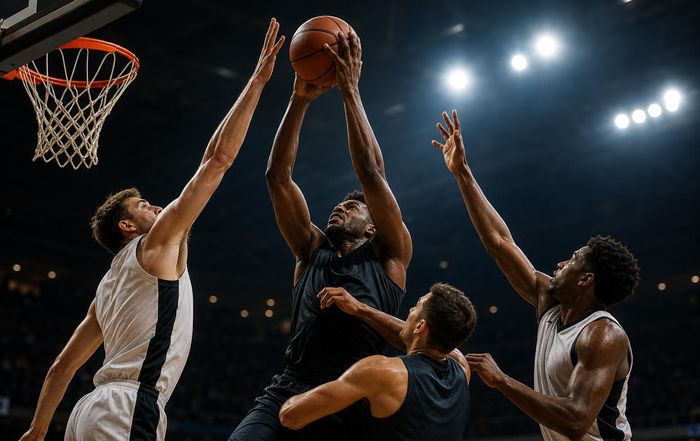
Why Basketball Rebounding Is About Much More Than Height
In every gym from the NBA to youth leagues, the tallest players are usually steered toward the paint with an unspoken assumption: height equals rebounds. Yet anyone who has watched undersized guards dominate the glass knows that rebounding is more complex than a tape measure. Modern analytics, player tracking, and the evolution of playing styles have all reinforced a simple truth: height helps, but it is far from the whole story. Timing, positioning, strength, anticipation, effort, and even team tactics can matter just as much, and sometimes more.
This matters not only for professional coaches and scouts but also for players and fans trying to understand why some athletes consistently end up with the ball despite physical disadvantages. As pace increases and three-point shooting reshapes the geometry of the court, the skills that drive elite rebounding are changing-and opening the door for more varied body types to excel on the boards.
What Rebounding Actually Measures
Rebounding is often treated as a pure hustle stat, but at its core it is about possession. Every missed shot is a 50-50 ball that can swing momentum, efficiency, and ultimately wins. Analytics sites like Basketball-Reference and NBA.com track not just raw rebounds but also rebound percentage, which estimates the share of available missed shots a player or team secures while on the floor. This measure helps adjust for pace and minutes, revealing who truly impacts the glass rather than who just plays more.
Advanced player-tracking systems from providers like Second Spectrum and Stats Perform go even deeper, breaking down contested versus uncontested rebounds, box-out effectiveness, and rebound chances-how often a player actually comes up with the ball when in the vicinity. These metrics show that rebounding is a blend of physical tools and decision-making. A taller player might be near more potential rebounds simply by standing close to the rim, but a smaller player who moves early, reads the flight of the ball, and carves out space can outperform size expectations.
For readers who track performance across sports, that distinction is similar to how expected goals in football or expected batting average in baseball separate process from outcome. Rebounding stats increasingly tell us not only how many boards a player grabs, but how and why they get them, which is crucial for talent evaluation, game planning, and even contract negotiations in the modern sports business landscape.
The Physics Behind the Board: Positioning and Angles
Height gives a player a higher reach, but rebounding is about being in the right place at the right time. Missed shots follow predictable patterns, and good rebounders internalize those patterns almost subconsciously. Long three-pointers often generate longer rebounds, typically bouncing to the free-throw line area or beyond. Mid-range misses are more likely to fall around the elbows or short corners. Inside misses can drop straight down or ricochet hard off the rim depending on spin and force.
Players who study these tendencies-whether through film, coaching, or instinct-gain a major advantage. They start moving into likely landing spots before the ball even hits the rim. That early move is crucial: it allows them to establish inside position, seal opponents with their hips and shoulders, and jump unimpeded. A shorter player who moves first can easily beat a taller player who reacts late and has to jump from behind.
This is where coaching and player development matter. Teams that emphasize rebounding technique in practice-footwork into the paint, reading shooter tendencies, and understanding shot charts-tend to outperform their size profile. For example, organizations that heavily use analytics, such as those covered by outlets like The Athletic or ESPN, often tailor rebounding schemes to their shooters' habits and opponents' shot profiles. That tactical layer shows how rebounding has evolved from a simple "jump higher" skill to a spatial and strategic battle that rewards anticipation and court mapping.
For players and coaches interested in translating this to training, positioning and angle awareness sit at the intersection of sport and movement science, an area that overlaps naturally with broader sports and science coverage.
Timing, Anticipation, and the Art of the Second Jump
Vertical leap is celebrated at combines and on social media, but in live games timing beats raw jump height more often than many realize. Elite rebounders do three things exceptionally well: they time their first jump to meet the ball at its lowest contestable point, they recover quickly to make a second jump if they miss, and they anticipate where the ball will go after contact with the rim or other players.
The "second jump" has become a key concept in scouting and player development. Bigs and wings who can land and re-jump quickly often steal rebounds from taller, slower opponents who are still descending from their first leap. This is especially visible in high-intensity games like the NBA playoffs or international tournaments run by FIBA, where every possession is magnified and players are fighting through heavy contact. Guards with explosive second jumps can slip into gaps, grab tip-outs, and keep plays alive even when they never had inside position.
Anticipation also separates good rebounders from great ones. Players like Dennis Rodman in the 1990s became famous for studying shooters' spin and arc, reportedly spending hours watching film and experimenting with how different types of misses bounced off the rim. While not every player will go to that extreme, modern film tools and tracking data make it easier to understand patterns-how your own team's shots tend to miss, where specific opponents are likely to come up short, and how ball trajectory varies by distance and angle. Teams with strong analytics and video departments, including many in the NBA and top European leagues, now routinely integrate this information into scouting reports and player education.
For athletes and trainers, this focus on timing and anticipation overlaps with broader fitness and neuromuscular training: plyometrics for quick jumps, reaction drills, and small-sided games that reward reading the ball early rather than simply jumping highest.
Strength, Leverage, and the Hidden Battle of Box-Outs
While highlight reels showcase soaring put-back dunks, most rebounds are won on the ground. The box-out-turning, making contact, and sealing space with the hips and lower body-is still the foundation of effective rebounding at every level. Here, strength and leverage often trump height. A shorter but stronger player with a low center of gravity can root a taller opponent out of prime rebounding territory, forcing them to reach over or around and risk a foul.
Coaches from youth basketball to elite programs like those under USA Basketball consistently teach that the first contact usually wins. When the shot goes up, players who immediately seek out their matchup, deliver controlled contact, and spread their stance to claim space create a wall that opponents must navigate. This is true not only for bigs but also for guards, who are increasingly expected to "gang rebound" and finish defensive possessions by hitting the nearest opponent before chasing the ball.
Strength and conditioning programs have adapted accordingly. Modern performance coaches, including those highlighted by organizations such as NSCA or Exos, prioritize core and hip strength, balance, and single-leg stability, all of which feed directly into more effective box-outs and battles in traffic. A player who can absorb contact, maintain balance, and keep their hands free has a far better chance of securing the ball than a taller but weaker opponent who gets easily displaced.
This physical aspect of rebounding also intersects with health and injury prevention. Poor technique or overreliance on reaching can lead to awkward landings and increased risk of ankle or knee issues, a concern that fits naturally into broader health coverage. Teaching young players to use their body safely and efficiently in rebounding situations is as much about longevity as it is about winning today's game.
Effort, Mentality, and the Psychology of Wanting the Ball
Coaches often say that rebounding is "mostly effort," and while that oversimplifies the role of skill and tactics, mentality undeniably plays a major role. Elite rebounders tend to share certain psychological traits: relentless motor, willingness to absorb contact, comfort in chaotic spaces, and a kind of obsession with ending every play with the ball in their hands. They chase long rebounds, fight through fatigue, and treat every loose ball as their responsibility.
Sports psychologists and performance specialists, including those featured by organizations like APA Division 47 (society for sport, exercise, and performance psychology), note that this mindset can be cultivated. Emphasizing controllable metrics-box-outs, contests, and rebound chances-rather than just raw totals helps players focus on effort and process. Film sessions that highlight "effort plays" and celebrate guards who crash the boards can gradually shift team culture so that rebounding is everyone's job, not just the bigs'.
This mentality has cultural dimensions too. In some basketball environments, especially where undersized players are common, rebounding becomes a badge of toughness and identity. Guards who rebound well are often praised as "doing the dirty work," a theme that fits naturally with how fans and media discuss culture and team identity. Conversely, teams that neglect rebounding sometimes reflect a broader softness or overreliance on finesse, which can become a narrative in tight playoff series or international competitions.
For developing players, embracing rebounding as a pathway to more playing time can be transformative. Coaches at all levels often reward those who defend and rebound with longer minutes, even if they are not the top scorers. Understanding that rebounding effort is visible, measurable, and valued can change how young athletes approach practices and games.
Modern Spacing, Three-Point Volume, and How Rebounding Has Evolved
The modern game has stretched the floor. With teams from the NBA to EuroLeague and top Asian leagues increasing three-point volume, the distribution of rebound locations has shifted. More shots from distance mean more long rebounds, which in turn pull guards and wings into the rebounding picture. Traditional size-based rebounding hierarchies have blurred: smaller players now collect a higher share of boards, especially on the perimeter.
Analytics-focused teams, including those frequently analyzed by outlets such as FiveThirtyEight and The Ringer, have tracked how these trends affect lineup construction. Some coaches are comfortable playing smaller lineups because they know that collective rebounding-five players boxing out and crashing the glass-can offset the lack of a towering center. Others prioritize versatile forwards who can defend multiple positions and rebound outside their area, sacrificing traditional post scoring for mobility and switchability.
Offensive rebounding has also undergone a philosophical shift. For years, many teams prioritized transition defense over crashing the boards, sending only one or two players after misses while the rest sprinted back. More recently, some organizations have re-emphasized offensive rebounding as analytics show the value of extra possessions and high-efficiency put-backs. This has created opportunities for energetic role players-regardless of height-to carve out niches as offensive glass specialists.
These strategic changes highlight how rebounding now sits at the intersection of on-court tactics, business decisions, and even broader news about how the sport is evolving globally. Leagues and teams that adapt to the new geometry of the game are better positioned competitively, while players who can rebound effectively in space increase their value in the international basketball marketplace.
Guards on the Glass: When Smaller Players Dominate Rebounding
Some of the clearest evidence that rebounding is more than height comes from guards and undersized forwards who consistently post strong numbers. Players like Russell Westbrook and Jason Kidd in the NBA, or smaller guards in top European and Asian leagues, have demonstrated that court sense, aggression, and positioning can allow backcourt players to average near double-digit rebounds over a season.
Several factors explain how smaller players can thrive on the glass. First, they often start further from the rim, which puts them in prime position for long rebounds off three-point attempts. Second, they typically have better lateral quickness than bigs, allowing them to adjust to unpredictable bounces. Third, guards who secure defensive rebounds can immediately initiate fast breaks, creating a strong incentive for coaches to encourage them to crash the boards.
Film analysis from platforms like Synergy Sports shows that many elite rebounding guards are masters of "rebounding lanes." Instead of fighting directly under the rim, they attack from the wings or top of the key, slipping between bigger bodies at the last second. They also excel at tipping the ball to themselves or to teammates, recognizing that the first touch does not have to be the final control as long as their team ends up with possession.
For younger or smaller players reading this, the takeaway is clear: rebounding is a skill they can develop to stand out, even if they will never be the tallest on the floor. Working on timing, anticipation, and physical toughness can turn a perceived physical disadvantage into a competitive edge, and it connects naturally with broader conversations around sports performance and role specialization across positions.
Training to Rebound Better, Regardless of Height
Developing as a rebounder does not require elite genetics; it requires intentional training across technical, physical, and mental dimensions. On the technical side, coaches can design drills that emphasize boxing out, reading the ball off the rim, and securing the rebound with two hands in traffic. Common practice setups include "triangle rebounding," where three players fight for a ball thrown off the backboard, or "hit and go get," where players must first find a body to box out before pursuing the ball. These drills teach players to prioritize position and contact over simply chasing the ball.
Physically, strength and conditioning programs should target lower-body power, core stability, and landing mechanics. Incorporating plyometric exercises, resisted jumps, and single-leg strength work helps athletes improve their vertical and, perhaps more importantly, their ability to explode repeatedly in short bursts. Performance organizations like P3 and Exos have shown through motion analysis that efficient jump and landing patterns not only enhance rebounding but also reduce injury risk.
Mentally, players can reframe rebounding as an area where they can exert control regardless of shooting slumps or offensive role. Setting personal goals for box-outs, contested rebounds, or "rebound chances" per game helps maintain focus. Video review that highlights successful rebounding plays-both makes and near-misses-reinforces good habits and shows that effort is noticed and valued.
For those following broader performance trends across sports, this integrated approach to rebounding-combining biomechanics, psychology, and tactical understanding-mirrors how elite teams address conditioning, recovery, and skill development more generally. It also dovetails with coverage of training methods, technology, and performance culture that span multiple sports and are increasingly shared across disciplines.
Why Understanding Rebounding Matters for How We Watch and Play
Seeing rebounding as more than height changes how games are coached, played, and even watched. For coaches, it opens up tactical flexibility: they can build lineups and schemes that rely on collective effort and smart positioning rather than simply searching for the tallest available center. For players, especially those who are not physically dominant, it offers a clear pathway to impact games through skill, preparation, and mentality.
For fans and analysts, a deeper understanding of rebounding brings new appreciation to the sport. Instead of only noticing the spectacular put-back dunk, viewers can watch the subtle box-out that cleared the lane, the guard who sprinted in from the perimeter at the perfect angle, or the forward who timed a second jump to snatch the ball over a taller opponent. These details enrich the experience of following basketball, just as advanced understanding of tactics and analytics has deepened how supporters engage with other sports.
In a broader sense, rebounding reflects a theme common across athletic performance: physical tools matter, but they are only part of the equation. Technique, intelligence, effort, and culture can elevate or diminish raw advantages. As the game continues to evolve-shaped by analytics, global influences, and changing styles-rebounding will remain a crucial battleground, and one where players of all sizes have a genuine chance to excel.
Thank you for making space for a longer read. Depth often reveals connections that quick summaries simply cannot capture. Email newsletter subscribers or online visitors interested in how rebounding connects to training, performance, and the wider sports ecosystem can explore related media across sports, fitness, health, science, and business to see how this single skill sits at the crossroads of on-court performance and the broader world of modern sport.