

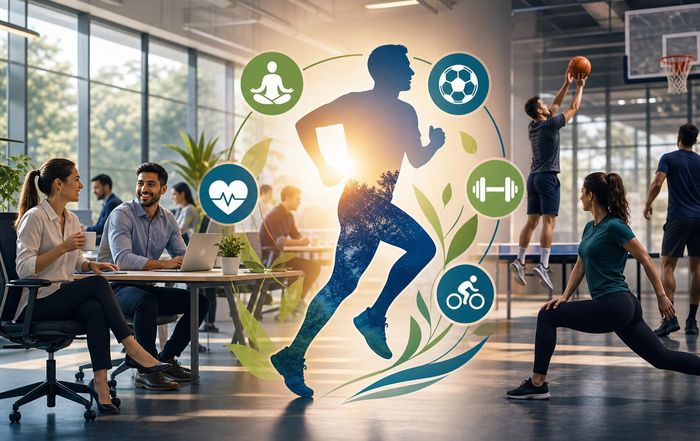
The Growing Role of Sports in Workplace Wellness
Quick Introduction: Why Sports Now Sit at the Heart of Workplace Strategy?
The relationship between employee wellbeing and organizational performance has shifted from a soft, aspirational narrative to a hard business reality, and within this evolution, sports have moved from the margins of corporate perks to the center of workplace wellness strategy. Around the world, employers in the United States, United Kingdom, Germany, Canada, Australia, France, Japan, Singapore, and beyond are rethinking how movement, competition, and team-based physical activity can drive measurable gains in productivity, engagement, retention, and brand equity, while also addressing rising health costs and the growing expectations of a younger, purpose-driven workforce. For the website research team, which sits at the intersection of sports, fitness, health, and business, this shift is not simply a trend to be observed; it is a structural change that is reshaping how organizations think about people, performance, and culture in every major market.
Global employers have watched the data accumulate over the past decade from institutions such as the World Health Organization, which has consistently highlighted the economic burden of inactivity and chronic disease, and from policy bodies like the OECD, which have underlined the macroeconomic costs of poor workforce health. At the same time, the expansion of hybrid and remote work has forced companies to rethink how they build cohesion and trust in distributed teams, and sports-based initiatives have emerged as one of the most powerful tools to bridge physical distance with shared experiences. As stakeholders increasingly scrutinize environmental, social, and governance practices, sports-led wellness programs are now discussed in the same boardroom conversations as talent strategy, brand differentiation, and long-term value creation.
From Perk to Performance Lever: The New Business Case for Sports
The modern business case for sports in workplace wellness is grounded in a more sophisticated understanding of human performance, drawing on research from organizations such as McKinsey & Company and the World Economic Forum, which link wellbeing to resilience, creativity, and sustained productivity. Executives have come to see that team sports, individual fitness challenges, and structured movement programs are not only about reducing absenteeism or cutting insurance claims, but also about enhancing cognitive performance, strengthening social capital inside the enterprise, and signaling a credible commitment to employee-centric leadership.
In markets such as the United States and Europe, where healthcare costs and demographic pressures are particularly acute, employers are integrating sports participation into broader health strategies that include mental health support, flexible work arrangements, and preventive care initiatives. Leaders who once viewed sports sponsorships as external marketing now increasingly connect these investments to internal culture by aligning external brand activations with internal participation, for example, by linking a marathon sponsorship to company running clubs or hybrid step-count challenges. Those seeking to understand the broader context of corporate wellbeing can explore how global organizations frame these issues through platforms such as the World Economic Forum's insights on workplace wellbeing, where sports and movement are now recurring themes in discussions about the future of work.
The Health Imperative: Physical Activity as a Strategic Defense
The medical and public health case for embedding sports into the workplace has never been clearer, and by 2026, many executives are familiar with the core principles articulated by bodies such as the World Health Organization, which recommends regular moderate to vigorous activity as a foundation for preventing noncommunicable diseases. Rising rates of obesity, cardiovascular disease, and metabolic disorders in regions from North America to Asia have reinforced the notion that inactivity is not only a personal risk factor but also a systemic business risk, affecting everything from insurance premiums to disability claims and early retirement.
Progressive employers are using sports as an accessible, socially engaging gateway into healthier lifestyles, integrating corporate football leagues, cycling groups, yoga sessions, and walking meetings into daily routines rather than treating wellness as an after-hours obligation. In markets such as Germany, Sweden, and Japan, where ergonomic and occupational health standards are already advanced, sports-based programs are increasingly aligned with national health guidelines and work-time regulations, making them a natural extension of existing safety cultures. Those interested in the underlying health data often refer to resources like the World Health Organization's physical activity recommendations, which provide the scientific foundation for many corporate wellness frameworks adopted by multinational employers.
Mental Health, Social Connection, and the Psychology of Team Sport
If the physical benefits of sports are well documented, it is the mental and social dimensions that have most captured the attention of HR leaders and CEOs in 2026, particularly in a world still processing the psychological aftershocks of the pandemic era. Research from organizations such as the American Psychological Association has highlighted how physical activity can mitigate anxiety, depression, and stress, while also improving sleep quality and cognitive function, and these findings have been reinforced by real-world corporate experience as organizations pilot and scale sports-driven wellness programs.
Team sports and group fitness initiatives offer a uniquely powerful combination of structured challenge, shared goals, and informal social interaction, helping to rebuild the sense of belonging and camaraderie that many employees lost in prolonged remote settings. In countries like Canada, Australia, and Singapore, internal sports leagues and cross-departmental tournaments have become tools for cultural integration, breaking down silos between business units and generations, and creating new social networks that cut across hierarchy and geography. For organizations seeking to deepen their understanding of the mental health dimension, resources such as the American Psychological Association's coverage of exercise and mental health provide a useful scientific backdrop to the anecdotal evidence now emerging from corporate case studies.
Technology, Data, and the Quantified Workplace Athlete
The integration of sports into workplace wellness in 2026 is inseparable from the rapid evolution of digital health technologies, wearables, and data analytics, which together have enabled companies to design, measure, and personalize sports-based interventions at scale. From global technology leaders like Apple and Google to specialized health platforms, the ecosystem of tools that track steps, heart rate, sleep, and training load has created a new layer of insight into how employees move, rest, and recover, while also raising questions about privacy, consent, and data governance.
Forward-looking organizations are leveraging these tools to create inclusive and flexible sports programs that accommodate different fitness levels, locations, and schedules, for example, by organizing global virtual challenges where employees in South Korea, Brazil, Italy, and South Africa can all contribute to a collective goal measured in kilometers walked or minutes of activity. At the same time, HR and wellbeing leaders are increasingly turning to research from institutions like Harvard T.H. Chan School of Public Health, which explores the intersection of work, health, and technology, to ensure that their use of data remains ethical and evidence-based. Those interested in the broader digital health context can explore Harvard's perspectives on workplace health and technology, which often inform the design principles that responsible employers now apply.
For the editorial team which covers technology in sport and wellness, this convergence of sports, data, and workplace design is a defining storyline, as companies experiment with AI-enabled coaching, gamified wellbeing platforms, and integrated dashboards that tie physical activity metrics to broader wellbeing and engagement indicators.
Culture, Inclusion, and the Global Diversity of Sporting Traditions
One of the most significant shifts in the corporate approach to sports since 2020 has been the move from narrow, traditional formats to a more inclusive, culturally sensitive portfolio of activities that reflect the diversity of global workforces. In multinational organizations with employees across Europe, Asia, Africa, and South America, sports programs are now being designed to respect local traditions and preferences, whether that means incorporating cricket in India, futsal in Brazil, winter sports in Finland and Norway, or martial arts in Thailand and Japan.
Inclusion is not only about geography; it is also about gender, age, ability, and neurodiversity, and employers are increasingly aware that a narrow focus on competitive, endurance-oriented sports can unintentionally alienate large segments of the workforce. As a result, many organizations are broadening their definition of sports to include walking clubs, dance-based fitness, adaptive sports, and low-impact activities that are accessible to employees with different physical capacities or chronic conditions. Cultural institutions such as UNESCO have contributed to this shift by emphasizing the role of sport in promoting inclusion and social cohesion, and organizations designing global programs often draw on frameworks such as the UNESCO Charter on Physical Education, Physical Activity and Sport to guide their thinking.
Within this landscape, Sportsyncr has positioned its culture coverage to highlight how sports-based wellness initiatives intersect with identity, belonging, and social values, showcasing examples from companies in the United States, United Kingdom, Netherlands, Singapore, and New Zealand that have successfully used sport to strengthen inclusive cultures without imposing a single sporting narrative.
Brand, Sponsorship, and the External Face of Internal Wellness
The growing role of sports in workplace wellness is also reshaping how companies think about brand building and sponsorship, as external partnerships increasingly need to align with internal values and practices to be credible. Global brands that invest heavily in elite sports properties, such as Nike, Adidas, or major sponsors of events like the Olympic Games, are under greater pressure from employees and consumers alike to demonstrate that their support for sport extends beyond marketing and into the lived experience of their own people.
This alignment is especially visible in markets like the United Kingdom, France, and Spain, where sports sponsorship is a prominent part of corporate communication, and where employees now expect to see tangible opportunities to participate in sports activities linked to the events their employers support. Independent research from organizations like Nielsen and Deloitte on sports sponsorship effectiveness has highlighted that internal engagement is becoming a key performance indicator for sponsorship ROI, and that companies which integrate employee participation into their sponsorship strategies often see stronger brand advocacy and reputational benefits. Those seeking a broader view of this evolution can explore Deloitte's insights on sports business trends, which frequently note the convergence between external sports partnerships and internal wellness agendas.
Often our readers follow brands and sponsorship as closely as they follow athletic performance, the emerging best practice is clear: the most respected organizations are those that treat sports not simply as a billboard but as a lived, participatory experience for their employees, customers, and communities.
Regional Perspectives: How Markets Around the World Are Adapting
Although the strategic logic for integrating sports into workplace wellness is broadly consistent worldwide, the way it is implemented varies significantly by region, reflecting differences in labor law, health systems, cultural norms, and economic structure. In the United States and Canada, where employer-sponsored health insurance plays a central role, sports-based wellness programs are often tightly linked to insurance incentives, health savings accounts, and partnerships with healthcare providers, with leading employers collaborating with organizations such as Mayo Clinic to design evidence-based programs. Those interested in the clinical underpinnings of exercise prescriptions often refer to sources like the Mayo Clinic's guidance on exercise and health, which many corporate medical directors use as a reference.
In Europe, where national health systems and stronger regulatory frameworks shape employer responsibilities, sports initiatives are frequently integrated into broader occupational health and safety strategies, with governments in countries such as Germany, Denmark, and Netherlands providing tax incentives or guidance for workplace activity programs. In Asia-Pacific, rapid urbanization and long working hours in countries like China, South Korea, and Thailand have pushed employers to address sedentary lifestyles and stress through structured sports programs, often blending traditional local activities with global fitness trends. Meanwhile, in Africa and South America, where formal corporate wellness programs are still emerging, multinational companies are increasingly using sports as a tool for both employee wellbeing and community engagement, supporting grassroots initiatives that benefit employees' families and local neighborhoods.
Across all these regions, Sportsyncr tracks how employers adapt to local conditions while maintaining coherent global strategies, helping readers connect regional practices with global trends through its world coverage and cross-market analysis.
Risk, Governance, and the Professionalization of Wellness Programs
As sports become more embedded in workplace wellness, organizations are also confronting a more complex set of governance, legal, and ethical questions, which in turn is driving a professionalization of how these programs are designed and managed. Issues such as injury risk, liability, inclusivity, and data privacy require structured policies and expert oversight, particularly in heavily regulated sectors like financial services, healthcare, and energy, and in jurisdictions with strong labor protections such as the European Union.
Leading companies are responding by building multidisciplinary teams that bring together HR professionals, occupational health physicians, legal counsel, data protection officers, and external partners, ensuring that sports initiatives are not only engaging but also compliant and equitable. Many draw on guidance from organizations like the Chartered Institute of Personnel and Development (CIPD) in the United Kingdom, which offers detailed perspectives on employee wellbeing, as well as from health and safety regulators in their own markets. Those seeking structured frameworks for wellbeing governance can review CIPD's resources on workplace wellbeing, which increasingly mention physical activity and sport as core components of a holistic approach.
Within this context, Sportsyncr emphasizes that credible sports-based wellness strategies must be grounded in robust governance and transparent communication, not only to manage risk but also to build the trust that underpins long-term employee engagement.
Careers, Talent, and the Emerging Market for Wellness Expertise
The growing centrality of sports in workplace wellness has also created new career paths and talent demands, as organizations seek professionals who can bridge the worlds of sport science, psychology, technology, and corporate strategy. Roles such as corporate wellbeing director, head of employee experience, and digital health program manager are now common in large employers across North America, Europe, and Asia, and many of these positions require familiarity with sports programming, behavior change methodologies, and data-driven evaluation.
Universities and business schools, from INSEAD to London Business School and Wharton, have responded by integrating wellbeing and performance topics into leadership programs, while sports science departments increasingly collaborate with corporate partners to test and refine interventions in real-world settings. For professionals and students exploring this emerging field, platforms like LinkedIn and specialized job boards show a growing number of roles that explicitly reference sports-based wellness, evidence of a structural rather than cyclical change in corporate priorities. Readers interested in the intersection of careers, wellness, and sport can follow opportunities and trends through our dedicated jobs section, which highlights how skills in sports management, coaching, and performance analytics are becoming valuable assets in mainstream corporate roles.
Looking Ahead: Sports as a Strategic Pillar of the Future Workplace
As organizations look toward the late 2020s, the trajectory for sports in workplace wellness appears firmly upward, fueled by demographic shifts, technological advancement, and the persistent pressure to create workplaces that are both high-performing and humane. Younger employees in markets from Germany and Switzerland to Malaysia and New Zealand increasingly expect their employers to support holistic wellbeing, and they judge corporate commitments not by slogans but by lived experiences, including the availability of meaningful, inclusive sports and movement opportunities integrated into their working lives.
At the same time, investors and regulators are sharpening their focus on the "S" in ESG, evaluating how companies treat their people and communities, which in turn reinforces the strategic importance of visible, measurable wellness programs tied to sports, fitness, and health outcomes. For many organizations, the next frontier will involve deeper integration of sports-based wellness into core business processes, from leadership development and team formation to innovation sprints and customer engagement, supported by advanced analytics and cross-functional partnerships.
For Sportsyncr, which connects new and old audiences every day across sports, health, fitness, business, culture, and social impact, the growing role of sports in workplace wellness is more than a content theme; it is a lens through which to understand how organizations are redefining success in a world where human performance, resilience, and trust have become central strategic assets. The companies that treat sports not as an optional extra but as a core component of their people strategy will be the ones most likely to attract top talent, build enduring brands, and navigate the complexities of a rapidly changing global economy.