

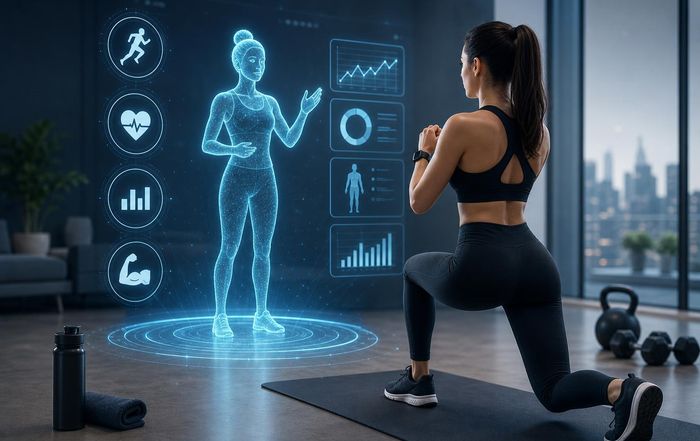
The Future of AI-Powered Personal Fitness Coaching?
A New Era for Performance, Health and Everyday Athletes
Gosh, artificial intelligence has moved from being a novelty in consumer wearables to becoming a core engine behind a new generation of personal fitness coaching, reshaping how individuals train, recover and stay healthy across the world. What began as simple step counters and heart-rate graphs has evolved into continuous, adaptive guidance that responds to physiology, behavior and context in real time, and this transition is redefining expectations in the sports, health and wellness sectors that Sportsyncr covers every day across its dedicated hubs for sports, fitness and health.
AI-powered coaching is no longer confined to elite athletes in the United States, Europe or Japan; it is reaching recreational runners in Brazil, gym newcomers in Germany, cyclists in South Africa and yoga enthusiasts in Singapore, supported by cloud platforms, increasingly affordable sensors and a maturing ecosystem of sports technology companies. As the industry matures, the central question is no longer whether AI can support personal fitness, but how it can do so in a way that demonstrates genuine expertise, measurable performance outcomes and long-term trustworthiness for users and stakeholders across the global sports economy.
From Generic Plans to Hyper-Personalized Coaching
The most visible shift in AI-driven fitness coaching is the move from static, one-size-fits-all training plans to hyper-personalized programs that adapt dynamically to each individual's profile, preferences and constraints. Instead of following a fixed 12-week plan downloaded from a website, users now experience coaching systems that ingest data from wearables, smart gym equipment, sleep trackers and even environmental sensors to adjust workout intensity, volume and focus on a day-to-day basis. Platforms inspired by the early work of WHOOP, Garmin, Apple, Oura and Fitbit have helped normalize continuous physiological monitoring, and the latest AI layers build on these foundations to provide recommendations that resemble those of an attentive human coach.
The personalization goes beyond simple heart-rate zones or step goals. Modern AI systems integrate metrics such as heart rate variability, resting heart rate trends, training load, subjective fatigue scores and even menstrual cycle data to anticipate how an individual might respond to a given session. Organizations like the American College of Sports Medicine provide evidence-based guidelines on exercise prescription, and AI models are increasingly trained to align with such standards while still tailoring the execution to each user's lifestyle, travel schedule and stress levels. For readers seeking a deeper understanding of exercise science principles, resources from the ACSM and the National Strength and Conditioning Association offer useful context on how professional coaches structure programs, which AI systems now emulate at scale.
For Sportsyncr, whose audience spans elite competitors, dedicated amateurs and health-conscious professionals, this shift toward individualization is central to how the platform covers emerging training methodologies and digital coaching tools, connecting developments in data science with performance outcomes on the track, in the gym and in everyday life.
The Data Infrastructure Behind AI Coaching
Behind the polished interfaces of AI fitness apps lies a complex data and computing infrastructure that has matured significantly by 2026. The integration of wearable devices, smartwatches, connected bikes, treadmills and strength machines has created a continuous stream of time-series data that can be analyzed for patterns in performance and recovery. Companies such as Apple, Samsung, Garmin and Polar have invested heavily in sensor accuracy and battery efficiency, while cloud providers like Amazon Web Services, Microsoft Azure and Google Cloud offer scalable environments for training and deploying AI models.
The result is a feedback loop in which every workout, sleep cycle and recovery day contributes to a richer understanding of how different bodies respond to different stimuli. Organizations like the World Health Organization and Centers for Disease Control and Prevention publish population-level guidelines on physical activity, and AI systems can contextualize individual behavior against these baselines, flagging risks associated with inactivity or overtraining. Learn more about global activity recommendations from the WHO physical activity guidelines.
For a platform like Sportsyncr Technology, the evolution of this infrastructure is not just a technical story; it is a business and innovation narrative, where sports brands, health systems and technology providers collaborate to transform raw sensor data into actionable, personalized coaching that spans continents, cultures and sporting disciplines.
Coaching Intelligence: From Rules to Generative Models
The intelligence driving AI-powered coaching has undergone a profound transformation, moving from simple rule-based systems and linear algorithms to sophisticated machine learning and generative models. In the early 2020s, many fitness apps relied on basic heuristics such as "reduce volume by 20 percent if sleep is below seven hours," but by 2026, large-scale models trained on millions of anonymized training logs, biometric profiles and performance outcomes can infer nuanced relationships between training stimuli and adaptation.
Research from institutions such as Stanford University, MIT and Imperial College London has accelerated the application of deep learning to human performance, including predictive models for injury risk, overtraining and performance peaks. Interested readers can explore how AI is being used in health and sport by reviewing resources from Stanford HAI or the MIT Computer Science and Artificial Intelligence Laboratory, where interdisciplinary teams examine how algorithms interpret physiological data. Generative models, similar in architecture to those powering conversational AI, are now being adapted to generate training plans, nutritional suggestions and recovery protocols that are then refined through user feedback and outcome tracking.
For Sportsyncr, which emphasizes rigorous coverage of sports science and innovation through its science and business sections, the emergence of these models raises critical questions about explainability, validation and accountability. Stakeholders from coaches to regulators are demanding that AI systems not only perform well in aggregate but also provide understandable rationales for their recommendations, especially when they influence health, safety and long-term athletic development.
Integrating Health, Fitness and Medical Oversight
The boundary between fitness coaching and healthcare has become increasingly porous, and AI-powered systems sit directly at this intersection. Many users now expect their digital coach to understand not only their performance goals, such as running a marathon or improving strength, but also their health conditions, medications and risk factors. Organizations like the National Health Service in the United Kingdom and Mayo Clinic in the United States offer extensive guidance on safe exercise for individuals with cardiovascular disease, diabetes or musculoskeletal issues, and AI platforms must incorporate similar guardrails to avoid unsafe prescriptions. Learn more about exercise and chronic conditions through the Mayo Clinic exercise guidelines.
By 2026, several regions, including the European Union, Canada and parts of Asia, have begun to refine regulatory frameworks for digital health tools that blur the line between wellness and medical advice. The European Medicines Agency and the U.S. Food and Drug Administration are increasingly scrutinizing AI-driven applications that claim to reduce injury risk or manage chronic conditions through exercise. For Sportsyncr, this regulatory evolution is central to coverage in its world and news verticals, where readers monitor how policymakers in Europe, North America and Asia balance innovation with patient safety.
The most advanced AI coaching platforms now collaborate with healthcare providers, sports physicians and physiotherapists to create integrated care pathways. For example, an individual recovering from knee surgery in Canada might receive a rehabilitation plan from a physiotherapist that is then translated into an AI-guided home exercise program, with the system monitoring adherence, pain levels and movement quality through computer vision. Organizations such as Cleveland Clinic and Hospital for Special Surgery have published frameworks on return-to-sport protocols, and AI systems are increasingly aligned with these evidence-based approaches.
Cultural and Regional Nuances in AI Coaching Adoption
While AI-powered fitness coaching is a global phenomenon, its adoption and expression are deeply influenced by cultural norms, infrastructure and sporting traditions in different regions. In the United States and Canada, early adoption of wearables and boutique fitness culture created fertile ground for subscription-based AI coaching services, often integrated with connected equipment from companies like Peloton, Tonal and NordicTrack. In Europe, particularly in Germany, the Netherlands and the Nordic countries, there has been strong interest in endurance sports and outdoor activities, leading to a focus on AI tools that optimize running, cycling and cross-country skiing performance, often with an emphasis on sustainable training loads and long-term health.
In Asia, markets such as China, South Korea, Japan and Singapore have seen rapid uptake of mobile-first AI coaching platforms that integrate social features, gamification and local language support. Government initiatives in countries like Singapore, which promotes active lifestyles through programs highlighted by the Health Promotion Board, have encouraged the use of digital tools to meet national health objectives. Learn more about such initiatives via the HealthHub Singapore portal. Meanwhile, in emerging markets across Africa and South America, including South Africa and Brazil, smartphone penetration and affordable wearables are enabling new user segments to access structured training guidance for the first time, often tailored to football, running and community-based fitness.
For Sportsyncr, whose readership spans North America, Europe, Asia and beyond, these regional nuances underscore the importance of localized storytelling in the culture and social sections, highlighting how AI coaching intersects with local sports traditions, gender norms, urban design and access to safe training environments.
The Business Landscape and Brand Strategies
The commercialization of AI-powered personal fitness coaching has unleashed intense competition among technology firms, sports brands, gyms, insurers and media platforms. Global companies like Nike, Adidas, Under Armour and Lululemon have moved beyond basic activity tracking to embed AI coaching into their apps, connected footwear and smart apparel, using data to deepen engagement and foster brand loyalty. Learn more about how major sports brands are rethinking digital engagement by exploring industry analyses from McKinsey & Company.
Traditional fitness chains and boutique studios are also adapting, integrating AI-driven assessments and personalized programming into their membership offerings. Some are deploying computer-vision-enabled mirrors and kiosks that analyze movement patterns, while others use AI to match members with optimal classes and instructors based on preferences, availability and training history. Insurers in the United States, Germany and Australia are experimenting with incentive programs that reward policyholders for meeting AI-determined activity goals, drawing on research from organizations like the World Economic Forum on the economic value of preventive health.
On Sportsyncr, the brands and business sections document how sponsorship models, media rights and athlete endorsement strategies are shifting as AI coaching becomes a key touchpoint between consumers and sports ecosystems. Instead of merely placing logos on jerseys or events, brands are embedding themselves into the daily coaching experience, offering exclusive workouts, recovery content and performance analytics that create persistent, data-rich relationships with users.
Trust, Privacy and Ethical Governance
As AI-powered fitness coaching becomes more intimate and pervasive, questions of trust, privacy and ethical governance move to the foreground. Users are increasingly aware that their biometric data, movement patterns and behavioral signals represent highly sensitive information that could be misused if not adequately protected. Regulatory frameworks such as the General Data Protection Regulation in Europe and evolving privacy laws in the United States, Canada and Brazil impose obligations on how companies collect, store and process such data. For a deeper understanding of these protections, readers can review the European Commission's GDPR overview.
Trustworthiness in AI coaching is not only about legal compliance but also about transparency and user control. Leading organizations and consortia, including the OECD and IEEE, have published guidelines on trustworthy AI that emphasize explainability, fairness, robustness and human oversight. Learn more about international principles for responsible AI through the OECD AI Principles. For AI fitness platforms, this translates into clear explanations of why certain training adjustments are recommended, options to opt out of specific data uses, and assurances that data will not be sold to third parties without consent.
Sportsyncr places particular emphasis on this dimension in its environment and social coverage, recognizing that the ethics of AI in sport and health extend beyond individual privacy to include algorithmic bias, equitable access and the environmental footprint of large-scale data centers that power these systems.
Impact on Coaches, Jobs and the Sports Workforce
The rise of AI-powered coaching inevitably raises concerns and opportunities related to employment and professional identity in the sports and fitness industry. Personal trainers, strength and conditioning coaches, sports scientists and physiotherapists across the United States, United Kingdom, Australia and other markets are asking how their roles will evolve when algorithms can generate detailed training plans and monitor adherence at scale.
Rather than replacing human expertise, the most forward-looking organizations view AI as an augmentation tool that can free coaches from routine tasks and allow them to focus on higher-value activities such as motivation, technique refinement, psychological support and long-term planning. Professional associations like the National Academy of Sports Medicine and UK Coaching are already offering education on how to interpret data dashboards, integrate AI recommendations into practice and maintain a human-centered coaching relationship. Those interested in the evolving skills required in this field can explore labor market insights and future-of-work analyses from sources such as the International Labour Organization.
For Sportsyncr, which tracks evolving roles and competencies in the global sports economy through its jobs section, AI coaching represents a case study in how technology reshapes professions. New roles are emerging at the intersection of sports science, data engineering and product design, while traditional coaching careers are increasingly requiring literacy in analytics, ethics and digital communication.
The Role of Gamification, Community and Social Influence
AI-powered coaching does not operate in isolation; it is deeply intertwined with social dynamics, online communities and gaming elements that sustain motivation over months and years. Features such as adaptive challenges, progression systems, streaks and virtual rewards have been influenced by the broader gaming industry, where companies like Nintendo, Sony and Microsoft have long understood how to keep users engaged. Learn more about the psychology of engagement and gamification through insights shared by organizations like the American Psychological Association.
In markets as diverse as the Netherlands, South Korea and New Zealand, AI coaching platforms are integrating social leaderboards, group challenges and local club integrations, allowing users to train with friends, colleagues or fellow fans of specific sports teams. The AI layer personalizes these experiences by adjusting difficulty levels, recommending appropriate groups and suggesting events or races that match each individual's readiness. For Sportsyncr, which explores fan and participant communities in its gaming and sports coverage, this convergence of coaching and social interaction is a key storyline, illustrating how digital tools can strengthen, rather than replace, human connection in sport and fitness.
Sustainability, Environment and the Hidden Footprint of AI Fitness
As AI systems become more sophisticated and data-hungry, their environmental footprint has become an increasingly important consideration for responsible innovation. Training large models and operating global data centers consumes significant energy, and while many technology companies have made commitments to renewable power and carbon neutrality, the sustainability of AI-driven fitness ecosystems is not guaranteed. Organizations such as Greenpeace and the International Energy Agency have highlighted both the progress and the challenges in greening the digital economy. Learn more about energy use in data centers from the IEA's data center analysis.
In the context of personal fitness coaching, this raises questions for brands, platforms and users about how to balance the benefits of highly personalized AI guidance with the environmental costs of constant data transmission and computation. Some companies are exploring on-device AI processing to reduce cloud dependence, while others are investing in carbon-offset projects or renewable energy procurement. Sportsyncr addresses these issues in its environment and technology sections, encouraging readers to consider not only the performance outcomes of AI training, but also its broader ecological implications.
Speeding Ahead: A Hopefully Managable Human-Centered AI Coaching Ecosystem
AI-powered personal fitness coaching is at an inflection point. The foundational technologies-sensors, connectivity, cloud computing and machine learning-are mature enough to deliver real value to everyday athletes, while the marketplace is crowded with offerings from global brands, start-ups and hybrid healthcare providers. The next phase of development will be defined less by novelty and more by depth of expertise, demonstrable outcomes and trustworthiness in the eyes of users, regulators and professionals.
For this ecosystem to thrive, stakeholders will need to prioritize rigorous validation of AI recommendations against established sports science, transparent communication about data use and model limitations, and inclusive design that accounts for diverse bodies, cultures and access levels across North America, Europe, Asia, Africa and South America. Human coaches, clinicians and mentors will remain central, using AI not as a replacement but as an intelligent assistant that amplifies their ability to support athletes and clients over the long term.
As Sportsyncr continues to chronicle this evolution across its interconnected completely independent and 100% original coverage of fitness, health, business and world trends, the platform's perspective is clear: the future of AI-powered personal fitness coaching will be judged not only by how quickly it can optimize a training cycle, but by how convincingly it can demonstrate experience, expertise, authoritativeness and trustworthiness in the service of human performance, wellbeing and a more active, resilient global society.