

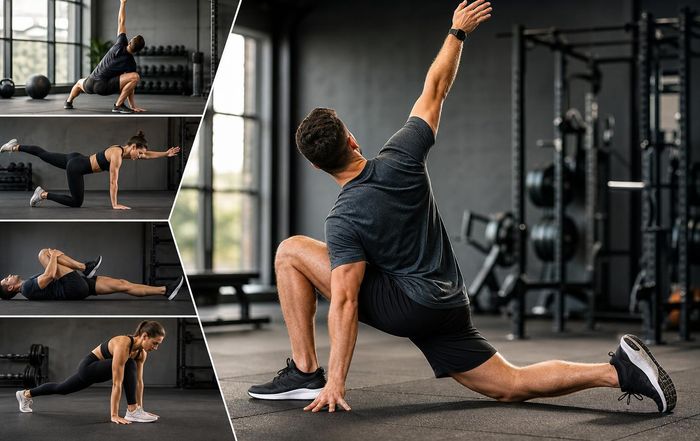
Mobility Exercises That Actually Complement Your Strength Workouts
Strength training builds muscle, power, and resilience-but without good mobility, progress stalls quickly. Tight hips limit squat depth, stiff shoulders cap bench press gains, and an immobile thoracic spine makes overhead work feel like a constant fight. Rather than treating stretching as an optional cool-down, many coaches now program mobility work as a core part of strength training. This page looks at mobility from a strength-first perspective: which joints matter most for lifting, how mobility work differs from passive stretching, and specific drills that plug directly into common barbell and gym routines. Along the way, you'll see how to structure mobility around your sessions, how much you really need, and what's backed by current evidence versus gym folklore.
Mobility vs Flexibility: What Lifters Actually Need
For strength athletes and recreational lifters, the key concept is not just flexibility, but usable range of motion under control. Flexibility is the ability of a muscle to lengthen; mobility adds strength, stability, and coordination through that range.
Organizations such as the American College of Sports Medicine highlight that resistance training performance and injury risk are influenced by joint range of motion and movement quality, not just raw strength. Research summarized by bodies like the National Strength and Conditioning Association suggests that well-designed dynamic mobility work can improve lifting technique and even enhance performance when it's integrated properly.
For lifters, that means prioritizing:
Dynamic, active movements over long, passive holds before heavy lifting
Drills that mimic or support the positions you need in squats, deadlifts, presses, and pulls
Joint-specific work for ankles, hips, thoracic spine, and shoulders
Fit people who want to go deeper into training science may also find more coverage in our exciting fitness and health sections, where mobility, recovery, and performance are frequent themes.
How Mobility Work Fits Around Strength Training
Mobility doesn't need to be a separate 45-minute session. For most people, it works best in short, focused doses built around lifting.
A practical framework used by many strength coaches and supported by organizations like USA Weightlifting and UK Coaching looks like this:
Before lifting: 5-15 minutes of dynamic mobility and activation focused on the joints and patterns you're about to train. Think leg swings, hip openers, thoracic rotations, and shoulder prep before squats or presses. This raises temperature, rehearses positions, and improves motor control without dampening power the way long static stretching can.
Between sets: Light mobility or "filler" drills that don't fatigue the prime movers. For example, thoracic spine rotations between bench sets, or ankle mobility between squat sets. This keeps you warm and gradually reinforces better positions.
After lifting or on off-days: Longer-duration stretches and more detailed mobility work when fatigue and time allow. Here, static stretching, breathing drills, and slower control work can help restore range of motion and down-regulate the nervous system.
If you train multiple sports or have demanding schedules, our sports and world pages often feature how elite athletes and teams integrate mobility into congested calendars, which can be useful models for busy professionals.
Lower Body: Mobility That Improves Squats and Deadlifts
Lower-body mobility should target the ankles, hips, and thoracic spine, all of which affect how safely and efficiently you can squat, lunge, and hinge.
1. Ankle Dorsiflexion Lunge (Wall Ankle Mobilization)
Limited ankle dorsiflexion (the ability to bring your knee forward over your toes) is a common reason squats feel like they "tip you forward." Improving this range can help you stay more upright and reduce strain on the lower back.
How to use it:
Stand facing a wall with one foot about a fist-length away.
Keeping the heel flat, drive your knee toward the wall, letting it track over your toes.
Tap the wall lightly, then return; move the knee slightly in and out to explore different angles.
Perform 10-15 reps per side, 1-2 sets, in your warm-up before squats, lunges, or Olympic lifts.
This drill is widely recommended by physical therapists and strength coaches, and aligns with ankle mobility guidance from groups like the American Academy of Orthopaedic Surgeons, which emphasizes gradual, controlled range restoration after stiffness or injury.
2. 90/90 Hip Rotations
Hip internal and external rotation are crucial for squat depth, comfortable foot angles, and stable deadlift setups. The 90/90 position builds active control rather than just passive flexibility.
How to use it:
Sit on the floor with one leg in front, knee bent at 90 degrees, shin parallel to your torso.
Place the other leg to the side behind you, also at 90 degrees at the knee.
Sit tall; rotate your torso slightly toward the front shin.
Gently lean forward until you feel a stretch in the outside of the front hip, then return.
Rotate to the other side without using your hands if possible, switching which leg is in front.
Perform 5-8 slow transitions each way, focusing on control rather than depth.
This exercise is especially helpful before squats and split squats, and on off-days for those with desk-bound jobs. For broader context on how hip mobility ties into running and field sports, our sports coverage often explores how footballers, basketball players, and runners address similar demands.
3. Dynamic Hamstring Hinge (Leg Swings with Control)
Traditional static hamstring stretching before heavy pulls can sometimes reduce force output. Dynamic hinge work is a better fit for deadlift days.
How to use it:
Stand tall holding a rack or wall for balance.
Swing one leg forward and back like a pendulum, keeping your torso stable and movement smooth.
Start with small swings and gradually increase the range as the hamstring warms up.
Perform 15-20 swings per leg, 1-2 sets.
This kind of dynamic stretching is consistent with recommendations from bodies such as the International Olympic Committee, which emphasize dynamic warm-ups for power sports. For more on the science behind warm-up design, sites like PubMed via the U.S. National Library of Medicine and organizations such as World Athletics regularly highlight research on performance and injury prevention.
Hips and Core: Building Positions for Heavy Loads
Strong lifts require not just flexible hips but also a core that can control those positions under load. These drills help you "own" the bottom of squats and the hinge of deadlifts.
4. Deep Squat Sit with Support
Spending time in a deep, unloaded squat builds familiarity with the position and helps many lifters find a more natural stance width and toe angle.
How to use it:
Hold onto a rack or sturdy object at chest height.
Sink into a deep squat, letting your knees track in line with your toes.
Keep your heels down and chest as upright as possible.
Use your elbows to gently push your knees out, exploring hip and ankle range.
Breathe slowly and stay for 30-60 seconds, 1-2 rounds, before squat sessions or on off-days.
This position is common in weightlifting warm-ups and is often used in athlete development programs highlighted by federations such as USA Weightlifting and World Aquatics, which both emphasize squat mobility for power production and injury resilience.
5. Controlled Cat-Cow with Braced Core
While cat-cow is usually seen as a yoga movement, done with intent it becomes a valuable tool for learning spinal control-essential for bracing in squats and deadlifts.
How to use it:
Start on all fours, hands under shoulders, knees under hips.
Inhale and gently arch your back, lifting your chest and tailbone (extension).
Exhale and round your spine, tucking your pelvis and dropping your head (flexion).
Move slowly, segment by segment, rather than rushing.
Perform 8-12 controlled reps, focusing on awareness and control.
This drill helps you feel the difference between flexion, extension, and neutral, making it easier to find and maintain a strong position under the bar. For readers interested in how spinal mechanics relate to pain and performance, organizations like the National Institute of Neurological Disorders and Stroke and NHS provide accessible overviews of back health.
Thoracic Spine: Unlocking Bench and Overhead Lifts
The thoracic spine (mid-back) often becomes stiff from sitting and device use. For lifters, that stiffness shows up as poor overhead position, a flat or uncomfortable bench press arch, and compensations in the lower back.
6. Thoracic Extensions over a Foam Roller
This classic drill can be highly effective when done with precision rather than quick, uncontrolled flopping over the roller.
How to use it:
Lie on your back with a foam roller placed horizontally under your mid-back.
Support your head and neck with your hands, elbows pointing up.
Gently extend your upper back over the roller, keeping your ribs from flaring excessively.
Pause for a breath or two, then return to neutral.
Move the roller slightly up or down to target different segments.
Perform 6-10 slow reps.
By improving thoracic extension, you can better stack the rib cage under the bar in overhead work and create a more comfortable arch in the bench press without excessive lumbar strain. For insight into how posture and spinal mobility affect everyday function, resources from organizations like the American Physical Therapy Association and Mayo Clinic are useful references.
7. Open-Book Thoracic Rotations
Rotational mobility in the thoracic spine supports pressing, rowing, and even running mechanics.
How to use it:
Lie on your side with hips and knees bent to 90 degrees, arms straight in front of you, palms together.
Keep your knees stacked and pressed gently into the floor.
Slowly rotate your top arm and torso open toward the other side, letting your eyes follow your hand.
Stop when you feel a firm but comfortable stretch across the chest and mid-back.
Return to the start under control.
Perform 8-10 reps per side.
This drill is often used in warm-ups for throwing athletes and swimmers; those interested in sport-specific applications can find more context through organizations like World Rugby and FIFA, which both publish guidance on warm-ups and mobility for rotational sports.
Shoulders: Mobility for Presses, Pull-Ups, and Olympic Lifts
Healthy shoulders need both mobility and stability. The aim is to create strong, centered shoulder positions for benching, overhead pressing, and pulling, rather than chasing extreme range of motion.
8. Banded Shoulder Dislocates (Controlled Overhead Circles)
When done gently with a light band or PVC pipe, this movement encourages coordinated motion at the shoulder and thoracic spine.
How to use it:
Hold a light band or dowel with a very wide grip in front of your hips.
With straight arms, raise it overhead and, if comfortable, continue behind you until it reaches your lower back.
Reverse the motion to return to the front.
Adjust your grip wider if you feel pinching; it should feel like a stretch, not pain.
Perform 8-12 smooth reps, staying relaxed through the shoulders.
This drill is popular in Olympic weightlifting and gymnastics warm-ups. For guidance on shoulder health more broadly, authoritative information is available from the American Academy of Orthopaedic Surgeons and NHS.
9. Scapular Wall Slides
Many shoulder issues in lifters are less about the ball-and-socket joint and more about how the shoulder blade moves. Scapular wall slides train upward rotation and control needed for strong overhead positions.
How to use it:
Stand with your back, head, and hips against a wall, feet slightly forward.
Raise your arms to a "goalpost" position: elbows bent 90 degrees, upper arms at shoulder height, backs of hands toward the wall.
Gently press your lower ribs down so your lower back is neutral, not overly arched.
Slide your arms upward as far as you can while keeping contact with the wall, then return.
Perform 8-12 reps, moving slowly and maintaining control.
Adding this drill before overhead pressing or pull-ups can improve shoulder comfort and technique. For readers tracking shoulder performance across sports, our educational sports and science pages often cover how swimmers, volleyball players, and throwers manage similar demands.
Wrists, Elbows, and Grip: The Overlooked Mobility Trio
Heavy barbell work, calisthenics, and grappling all place stress on the smaller joints of the upper body. While they don't usually require as much dedicated mobility as hips or shoulders, a few focused drills can prevent nagging issues.
10. Wrist Rocks in Quadruped
Front squats, cleans, handstands, and push-ups all demand wrist extension. Wrist rocks help you gradually build tolerance.
How to use it:
Start on all fours with hands under shoulders, fingers spread.
Rotate your hands so fingers point forward; lock the elbows gently but avoid hyperextension.
Shift your body weight forward until you feel a stretch in the wrists, then rock back.
Perform 10-15 small rocks, then repeat with fingers turned slightly out and slightly in.
This simple exercise is widely used in gymnastics and calisthenics communities, and aligns with general joint-care advice from organizations like Gymnastics Australia and USA Gymnastics.
11. Banded Elbow Extensions
For lifters who experience tightness in the front of the elbow from frequent curls, rows, and pulling, light band work can restore comfortable extension.
How to use it:
Attach a light band to a rack at about shoulder height.
Loop the band around your wrist and step back so there is gentle tension pulling your arm forward.
Keeping your upper arm still, bend and straighten your elbow, letting the band assist the motion.
Perform 12-15 smooth reps each side.
If you have persistent elbow pain, it's important to consult a qualified professional; organizations like Cleveland Clinic and Mayo Clinic provide general overviews but cannot replace individual assessment.
Structuring a Mobility "Minimum" Around Your Lifts
The biggest mistake lifters make with mobility is trying to overhaul everything at once, then abandoning it after a week. Instead, aim for a small, repeatable routine that directly supports your main lifts.
A sample structure could look like this:
Squat day (5-10 minutes pre-lift)
Ankle dorsiflexion lunges
90/90 hip rotations
Deep squat sit with support
Deadlift/hinge day
Dynamic hamstring hinges (leg swings)
Cat-cow with focus on finding neutral spine
Open-book thoracic rotations
Bench/upper push day
Thoracic extensions over a roller
Banded shoulder dislocates
Scapular wall slides
Overhead/upper pull day
Scapular wall slides
Banded shoulder dislocates
Wrist rocks
On rest or lighter days, you might add a 10-15 minute block of slower, more exploratory work, combining any of the above with longer holds and relaxed breathing. For broader lifestyle context-how mobility interacts with recovery, sleep, and general wellbeing-our often cited health and social pages often explore trends like active recovery, workplace ergonomics, and movement culture.
How Much Mobility Work Do You Really Need?
There is no universal prescription, but several principles emerge consistently from research and from practice across strength and conditioning:
Consistency beats intensity. A few minutes most days usually outperforms a long, sporadic session.
Target the bottlenecks. If ankle stiffness is limiting your squat depth, focus there instead of doing every drill you've ever seen.
Tie it to your training. Mobility is more effective when it's directly linked to the positions you're about to use under load.
Respect pain signals. Mild discomfort and stretching sensations are normal; sharp, pinching, or radiating pain is not. In those cases, professional assessment is warranted.
Authoritative bodies like the World Health Organization and Centers for Disease Control and Prevention emphasize the value of regular physical activity and functional movement capacity for long-term health. For strength athletes and dedicated gym-goers, mobility work is one of the most direct ways to keep training hard while staying within safe movement patterns.
Readers interested in the business and technology side of mobility and performance-such as wearables that track range of motion or apps that prescribe individualized routines-can explore more in our super technology, business, and gaming sections, where sport tech and training tools are regular topics.
Bringing It All Together
Mobility training doesn't need to replace your strength workouts or become a separate discipline. When approached strategically, it's a support system: a small, focused set of movements that make your squats deeper, your deadlifts safer, your presses smoother, and your body more resilient to the demands of sport and life.
By selecting a handful of exercises-ankle dorsiflexion work, 90/90 hips, thoracic extensions, scapular wall slides, and wrist rocks-and anchoring them to specific training days, you can build a sustainable habit that complements, rather than competes with, your lifting.
Over time, you should notice not just easier warm-ups and better positions, but also less joint irritation, more consistent technique, and the capacity to keep progressing in the gym. For ongoing coverage of how athletes, teams, and everyday lifters integrate mobility into high-performance routines, keep an eye on our updated fitness, sports, and science pages.