

How Technology Is Redefining Sports Safety Standards
The New Safety Imperative in Global Sport
The business of sport has become inseparable from the business of safety. From packed stadiums in the United States and Europe to rapidly expanding leagues across Asia, Africa and South America, governing bodies, brands, broadcasters and technology companies have converged around a single, non-negotiable premise: sustainable growth in sport is only possible if athletes, fans and staff can trust that every game, event and facility is as safe as modern science and engineering can reasonably make it. For this sporty website, and it's increasingly active local global members, which spans elite competition, community participation and the broader intersections of sports and society, the question is not really whether technology can improve safety standards, but how fast organizations can integrate these innovations without compromising integrity, accessibility or the spirit of competition.
Regulators in leading markets, from World Rugby to the National Football League (NFL) and International Olympic Committee (IOC), have tightened protocols in response to mounting medical evidence, legal pressure and heightened public expectations. At the same time, advances in sensors, data analytics, artificial intelligence, biomaterials and digital platforms have created a new ecosystem in which safety is measured in real time, not merely audited after the fact. As stakeholders look to learn more about evolving sports business dynamics, they increasingly recognize that robust safety frameworks are a strategic asset, influencing brand value, sponsorship appeal, regulatory risk, workforce resilience and fan trust.
From Reactive Rules to Proactive, Data-Driven Protection
Historically, sports safety was largely reactive, with rule changes and equipment upgrades typically following high-profile injuries or fatalities. In the 2020s, this paradigm has shifted decisively toward proactive risk management, driven by a combination of wearables, computer vision, predictive analytics and standardized reporting frameworks that give decision-makers near real-time visibility into the physical demands and hazards of training and competition. Organizations now benchmark their practices against global guidance from bodies such as the World Health Organization (WHO) and the Centers for Disease Control and Prevention (CDC), where stakeholders can review concussion and injury prevention resources and translate them into sport-specific protocols.
Professional teams in North America, Europe and Asia increasingly deploy integrated athlete management systems that combine GPS tracking, inertial measurement units, heart-rate variability and biochemical markers to create individualized risk profiles. These systems, supported by research from institutions like Harvard Medical School and Mayo Clinic, inform training loads, recovery windows and return-to-play decisions in ways that were unimaginable a decade ago. For readers exploring the intersection of health and performance, the critical point is that safety has evolved from a set of static rules into a dynamic, data-rich discipline that adapts to each athlete's unique physiology, history and context.
In youth and amateur sport, where resources are more constrained, low-cost wearables and smartphone-based monitoring tools have begun to democratize access to safety insights. Platforms built on open standards from organizations like IEEE and ISO help ensure that data collected from different devices can be aggregated and interpreted consistently, which is particularly important for federations overseeing large, geographically dispersed participation bases. As more national governing bodies in countries such as Germany, Canada, Australia and Japan integrate these technologies into coaching education and club licensing, the baseline expectation for safe practice is rising across the entire pyramid of participation.
Wearable Technology and the Quantification of Impact
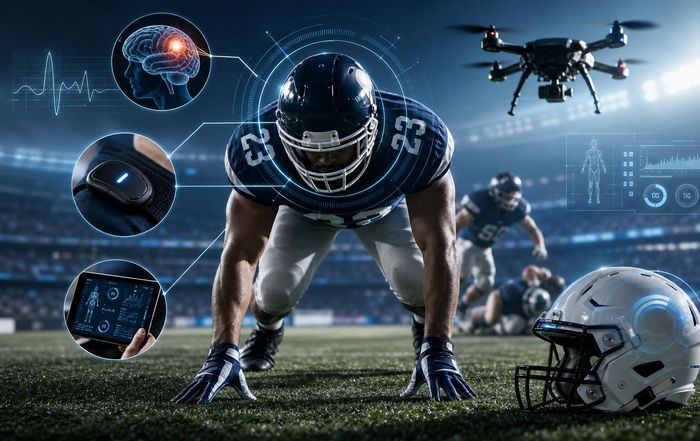
One of the most visible transformations in sports safety is the widespread adoption of wearable technology that quantifies impact, workload and physiological stress in real time. In collision and contact sports, instrumented mouthguards, shoulder pads and headbands now measure linear and rotational acceleration, providing objective data on every hit sustained by an athlete. Research funded by organizations such as World Rugby and documented by institutions like Stanford University has shown that these measurements are crucial for understanding sub-concussive impacts that may not trigger immediate symptoms but can contribute to long-term neurological risk.
Elite teams and leagues increasingly rely on these devices to trigger sideline evaluations or temporary removal protocols when an impact exceeds predetermined thresholds. This approach complements, rather than replaces, traditional clinical assessments, but it significantly reduces the reliance on self-reporting by athletes who may be motivated to hide symptoms. For those following sports performance and training trends, it is important to recognize that the same wearables that optimize conditioning and tactics are now central to protecting brain health and musculoskeletal integrity.
In endurance and outdoor sports, wearable devices that monitor heart rate, core temperature and hydration status have become essential tools for preventing exertional heat illness and cardiac events, particularly as climate change drives more extreme weather conditions across continents. Guidance from organizations like the American College of Sports Medicine (ACSM), where stakeholders can learn more about exercise-related health risks, is increasingly embedded into device algorithms, generating personalized alerts that can prompt athletes and coaches to modify intensity, seek shade or rehydrate before danger escalates. For mass participation events such as marathons, cycling tours and triathlons in cities from London and Berlin to Singapore and Cape Town, race organizers now integrate anonymized wearable data streams into their command centers, allowing medical teams to anticipate hotspots of distress along the course.
Smart Equipment and the Evolution of Protective Gear
Parallel to the rise of wearables, advances in materials science and embedded electronics have transformed traditional protective equipment into intelligent systems that not only absorb force more effectively but also capture and communicate critical safety information. Helmet manufacturers in American football, ice hockey, cycling and motorsport now use multi-density foams, fluid-filled cells and 3D-printed lattice structures engineered with support from research at organizations like MIT and ETH Zurich to better manage impact energy across a range of velocities and angles. Governing bodies increasingly reference independent testing conducted by entities such as the Virginia Tech Helmet Lab, where stakeholders can review comparative safety ratings, when approving equipment for professional and amateur use.
Smart helmets and pads equipped with embedded sensors and Bluetooth connectivity feed data to sideline tablets or cloud-based dashboards, enabling medical staff to correlate impact profiles with observable symptoms and recovery trajectories. In motorsport, collaborations between FIA, Formula 1 teams and technology partners have produced cockpit systems that integrate crash data recorders, biometric sensors and advanced restraint systems to dramatically reduce the risk of catastrophic injury. Similar principles are now being applied in downhill skiing, snowboarding and mountain biking, where recreational participants increasingly benefit from innovations originally developed for elite competition.
Footwear and playing surfaces have also emerged as critical frontiers in the safety landscape. Shoe manufacturers use motion-capture and force-plate analysis, often in partnership with biomechanical laboratories at institutions such as Loughborough University, to design midsoles and traction patterns that reduce the risk of non-contact knee and ankle injuries. In parallel, stadium operators and municipalities in the United States, Europe and Asia invest in hybrid grass systems, shock-absorbing underlays and advanced maintenance regimes informed by agronomic research from organizations like FIFA's Quality Programme, where decision-makers can explore standards for playing surfaces. For Sportsyncr readers interested in the convergence of sports, technology and infrastructure, these developments illustrate how safety now extends far beyond personal equipment to encompass the entire built environment of sport.
Artificial Intelligence, Video Analytics and the New Era of Officiating
Artificial intelligence and computer vision have emerged as powerful tools for enhancing safety through more consistent officiating, improved rule enforcement and early detection of dangerous patterns of play. High-resolution, multi-angle camera systems combined with machine learning models can now detect high tackles, late hits, dangerous body positions and off-the-ball incidents in real time, assisting referees in sports ranging from rugby and football to basketball and mixed martial arts. Organizations such as Hawk-Eye Innovations, working closely with leagues and federations, have extended their technologies beyond goal-line and line-calling applications into safety-critical decision support, reducing the likelihood that serious infringements go unnoticed.
In contact sports, automated flagging of high-risk collisions allows match officials and independent medical spotters to intervene more quickly, either by issuing sanctions that deter repeat offenses or by initiating head injury assessments. This approach aligns with evolving protocols from governing bodies and is informed by longitudinal injury surveillance data maintained by entities such as the NCAA and World Rugby, where practitioners can review trends in sports injury epidemiology. For athletes, particularly in high-stakes competitions across North America, Europe and Asia, the knowledge that dangerous play is more likely to be detected and punished contributes to a safer culture without fundamentally altering the competitive nature of the sport.
Beyond officiating, AI-driven video analytics are increasingly used in coaching and performance departments to identify movement patterns associated with elevated injury risk, such as asymmetrical loading, poor landing mechanics or excessive joint angles during cutting and pivoting. When combined with wearable and medical data, these insights enable tailored interventions that address biomechanical weaknesses before they manifest as acute or chronic injuries. For those exploring the broader science of performance and recovery, this integration of AI, video and clinical expertise exemplifies how technology can augment, rather than replace, human judgment.
Medical Technology, Diagnostics and Return-to-Play Decisions
Improvements in diagnostic imaging, portable testing and telemedicine have reshaped how teams and federations manage injuries and illnesses, particularly in geographically dispersed competitions and multi-sport events. High-resolution MRI and ultrasound systems, guided by enhanced imaging protocols from organizations like the Radiological Society of North America (RSNA), provide more precise assessments of soft-tissue damage, enabling clinicians to tailor rehabilitation plans and estimate return-to-play timelines with greater accuracy. Portable ultrasound devices, increasingly used on sidelines and in training facilities, allow for rapid evaluation of muscle strains, ligament sprains and internal bleeding, reducing delays in critical decision-making.
Concussion management has benefited from advances in objective assessment tools, including eye-tracking technology, balance platforms and cognitive testing applications grounded in research from institutions such as University College London and University of Pittsburgh Medical Center (UPMC), where professionals can explore clinical guidelines for sports concussion. These tools, combined with standardized protocols and graduated return-to-play frameworks, help mitigate the risk of premature return and cumulative brain injury, which has long-term implications for athlete health and legal liability.
Telemedicine platforms, accelerated by the broader digital health transformation of the early 2020s, now enable specialist consultations across borders, allowing athletes in emerging markets or remote locations to access expertise from leading sports medicine centers in the United States, Europe and Asia. For Sportsyncr readers engaged in the global sports and health ecosystem, this development underscores the importance of digital infrastructure and regulatory harmonization in ensuring equitable access to safety-enhancing medical services.
Fan, Venue and Event Safety in a Connected Era
While athlete protection often dominates headlines, the safety of fans, staff and local communities around sporting events has become an equally significant focus for rights holders, venue operators and public authorities. Modern stadiums and arenas in cities such as London, New York, Munich, Tokyo and Doha now integrate advanced crowd-management systems, biometric access control, real-time occupancy monitoring and intelligent surveillance to prevent overcrowding, violence and other safety incidents. Guidance from organizations like FIFA, UEFA and the UK Sports Grounds Safety Authority, where stakeholders can review the Green Guide to stadium safety, has been translated into rigorous design and operational standards that are increasingly adopted worldwide.
Digital ticketing and mobile identity solutions, often supported by partnerships between clubs, leagues and technology providers, allow operators to track entry flows, enforce capacity limits and communicate directly with attendees about security procedures, weather alerts or public transport disruptions. In parallel, cybersecurity has emerged as a critical dimension of event safety, with organizations collaborating with agencies such as ENISA in Europe and CISA in the United States to strengthen cyber resilience in major events. For fans, the result is a more seamless yet more secure experience, in which convenience and protection are not mutually exclusive.
Environmental factors, including air quality, heat, humidity and extreme weather events, are now monitored through integrated sensor networks and satellite data, often drawing on forecasting services from national meteorological agencies and platforms like Copernicus in Europe, where users can access climate and atmosphere data. Event organizers use this information to adjust scheduling, hydration policies, medical staffing and even contingency plans for postponement or relocation, reflecting a broader recognition that climate resilience is an integral component of sports safety and sustainability. For those following Sportsyncr's coverage of environmental considerations in sport, the convergence of safety, climate science and event management is likely to remain a defining theme of the coming decade.
The Business Case: Brands, Leagues and the Economics of Safety
In 2026, investment in safety technology is no longer framed solely as a regulatory obligation or ethical imperative; it is widely recognized as a core component of brand strategy, risk management and long-term asset protection. Major sponsors, broadcasters and investors scrutinize the safety records and governance frameworks of leagues, clubs and event organizers as part of their due diligence, mindful of the reputational and financial damage associated with high-profile incidents. Reports from organizations such as Deloitte, PwC and KPMG, where executives can explore global sports industry outlooks, consistently highlight safety, integrity and sustainability as key drivers of valuation and fan engagement.
Brands that align themselves with robust safety initiatives, whether through funding research, supporting grassroots education or co-developing protective technologies, can differentiate themselves in a crowded sponsorship landscape. For example, partnerships between equipment manufacturers, insurance providers and elite teams have produced innovative risk-sharing models in which the adoption of certified safety technologies leads to reduced premiums and enhanced coverage, creating financial incentives that cascade down to academies, schools and community clubs. For readers interested in sports sponsorship and brand strategy, the message is clear: safety has become a powerful narrative platform that resonates with athletes, parents, regulators and socially conscious consumers alike.
From an operational perspective, leagues and federations that invest in technology-enabled safety frameworks often realize long-term cost savings through reduced injury-related absences, lower medical expenses, fewer legal disputes and more stable insurance arrangements. Data-driven insights also support more efficient scheduling, travel planning and workload management, which can extend career longevity and preserve the quality of competition. In global markets where talent pipelines are critical to sustaining growth, such as women's sports and emerging professional leagues in Africa, Asia and South America, these benefits have strategic significance that extends well beyond individual seasons.
Cultural Change, Education and the Human Factor
Despite rapid technological progress, the effectiveness of any safety initiative ultimately depends on human behavior, culture and governance. Athletes, coaches, medical staff, referees, administrators and fans must all buy into the premise that safety is integral to performance and enjoyment, not an external constraint imposed by regulators or sponsors. This requires sustained education, transparent communication and visible leadership from influential figures across the sports ecosystem. Organizations such as UNESCO and UN Women, where stakeholders can explore resources on safe and inclusive sport, emphasize that safety also encompasses protection from abuse, harassment and discrimination, further broadening the scope of responsibility.
Digital platforms and social media have become powerful channels for disseminating best practices, sharing personal stories and normalizing conversations about injury, mental health and long-term wellbeing. Athletes in high-profile leagues across North America, Europe and Asia increasingly use their platforms to advocate for stronger protections, better medical support and more transparent decision-making, influencing policy debates and collective bargaining negotiations. For Sportsyncr, whose coverage spans sports, culture and social impact, these narratives underscore the importance of framing technology not as a detached solution, but as a tool that must be embedded in empathetic, athlete-centered cultures.
Education initiatives supported by national federations, clubs and NGOs now frequently incorporate modules on digital literacy, data privacy and ethical use of monitoring technologies, recognizing that athletes must understand not only how devices can protect them, but also how their data is collected, stored and shared. Regulatory frameworks such as GDPR in Europe and evolving privacy laws in North America and Asia impose clear obligations on organizations, and resources from entities like the OECD, where policy makers can explore guidelines on data governance, help shape responsible practices. Trust, in this context, is as much about respecting autonomy and confidentiality as it is about deploying cutting-edge hardware.
The Tracks Running Ahead: Integrating Innovation With Integrity
Thinking onwards, the trajectory of sports safety technology points toward greater integration, personalization and predictive capability. Advances in genomics, microbiome analysis and individualized medicine may eventually allow practitioners to identify athletes with heightened susceptibility to certain injuries or illnesses, informing tailored training and competition strategies. Robotics and exoskeleton technologies, already used in rehabilitation and industrial settings, could play a role in both injury prevention and assisted training, particularly for athletes returning from major surgery. Quantum computing and next-generation AI may further enhance the ability to model complex interactions between biomechanics, workload, environment and psychology, providing unprecedented insight into risk factors.
Yet as the technological frontier expands, so too does the responsibility of organizations to ensure that innovation serves the broader values of fairness, inclusion and human dignity. Governing bodies, ethics committees and independent regulators will need to navigate challenging questions about the boundaries between legitimate safety enhancement and performance augmentation, particularly as assistive devices and bio-monitoring tools become more sophisticated. International collaboration through entities such as WADA, where stakeholders can review the World Anti-Doping Code, will remain essential to maintaining a level playing field while embracing beneficial technologies.
For Sportsyncr and its gratefully growing enthusiastic and active readers across sports, fitness, business and beyond, the evolution of safety standards represents both a reporting priority and a shared responsibility. By spotlighting evidence-based innovation, scrutinizing governance, amplifying athlete and fan perspectives, and connecting developments across regions from North America and Europe to Asia, Africa and South America, the platform contributes to a more informed and accountable sports ecosystem. In an era where trust is a decisive competitive advantage, organizations that treat safety as a strategic pillar rather than a compliance checkbox will be best positioned to thrive.
Ultimately, technology can only fulfill its promise if it is deployed thoughtfully, evaluated rigorously and aligned with the lived realities of those it is meant to protect. As sports seasons unfold, the most successful sports organizations will be those that harness data and devices not as ends in themselves, but as instruments in a broader commitment to human wellbeing, competitive excellence and the enduring social value of sport. Thanks for joining us on this topic. Follow the links to explore further, then return soon for more fresh, original stories from our editorial team.