

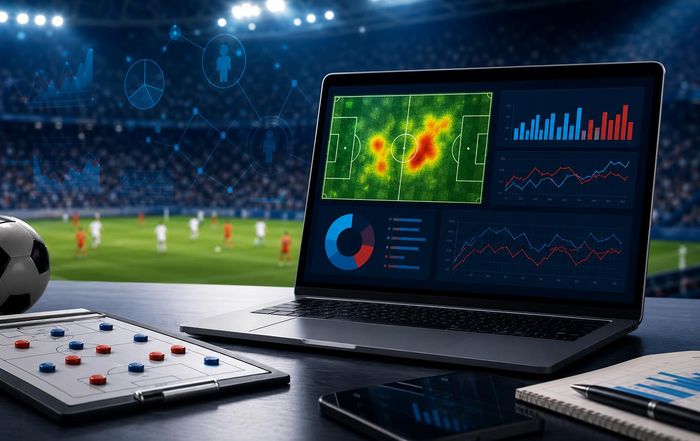
How Sports Analytics Improve Team Decision Making
The Data-Driven Transformation of Modern Sport!
You all have noticed that elite sport has become one of the most advanced data laboratories in the world, where every movement, decision, and outcome is recorded, analyzed, and translated into competitive advantage. What began as rudimentary box scores and simple efficiency metrics has evolved into a complex ecosystem of real-time tracking, predictive modeling, and integrated performance intelligence that shapes how teams recruit, train, strategize, and even communicate with fans. For sports loving community, here across sports, fitness, health, business, and technology, the story of sports analytics is no longer a niche technical narrative; it is a central pillar of how winning organizations think and act.
The acceleration of sports analytics has been powered by advances in computer vision, cloud computing, and wearable technology, as well as by the growing sophistication of front office executives and performance staff who now treat data as a strategic asset rather than a support tool. From Premier League clubs using tracking data to optimize pressing schemes, to NBA franchises leveraging player load metrics to prevent injuries, to Formula 1 teams analyzing millions of telemetry data points per race, the common thread is clear: those who build robust, trustworthy analytics capabilities are better equipped to make faster, more accurate, and more consistent decisions under pressure. In this landscape, this site positions itself as a positive and inspirational bridge between cutting-edge analytics practice and the broader culture, business, and fan experience that surrounds modern sport.
From Intuition to Evidence: The New Decision-Making Paradigm
Historically, team decisions in North America, Europe, and across Asia and Africa were driven largely by the intuition of coaches, scouts, and executives who relied on personal experience, visual observation, and traditional statistics. While that human expertise remains indispensable, the competitive margins in leagues such as the NFL, La Liga, and the Bundesliga have become so narrow that relying solely on instinct is increasingly seen as a risk rather than a strength. Organizations that combine seasoned judgment with robust analytical frameworks are now setting the standard for sustainable success.
This shift can be understood as a move from anecdotal reasoning to evidence-based decision making, a transition similar to what has occurred in sectors like healthcare and finance. Resources such as Harvard Business Review and MIT Sloan Management Review have chronicled how data-driven cultures outperform peers in other industries, and the same principles now underpin high-performing sports organizations. In practice, this means that questions once answered informally-such as which lineups work best under pressure, how to allocate training load across congested schedules, or when to extend or trade a player-are now supported by structured analyses, scenario modeling, and probabilistic forecasting.
For the sports fans, this evolution is not purely theoretical. It affects how teams are covered in sports news, how brands activate partnerships in sponsorship, how athletes manage their own fitness and health, and how fans across the United States, the United Kingdom, Germany, Canada, Australia, and emerging markets in Asia and Africa understand the strategy behind what they see on the field.
Player Recruitment and Roster Construction
Perhaps the most visible impact of sports analytics on decision making lies in recruitment and roster construction. Inspired in part by the "Moneyball" era popularized by Billy Beane and the Oakland Athletics, clubs across football, basketball, baseball, cricket, and rugby now treat player acquisition as an optimization problem that balances performance metrics, age curves, injury risk, salary constraints, and tactical fit. While the original Moneyball innovations were grounded in relatively simple efficiency statistics, modern recruitment models operate with far richer data and more advanced methods.
Clubs in Europe's top football leagues draw on event data from providers such as Opta and Stats Perform, alongside tracking data that captures every off-the-ball movement. Resources like The Analyst and FBref illustrate how metrics such as expected goals (xG), expected assists (xA), and progressive carries have become mainstream tools for evaluating attacking and possession contribution. Front offices now build multi-dimensional player profiles that combine these on-ball metrics with physical data, psychological assessments, and contextual factors like league strength and playing style. This allows recruitment teams to identify undervalued talent in secondary leagues, youth systems, or overlooked regions, from Scandinavia to South America and Africa.
In North American sports, similar principles are applied in the NBA, NFL, MLB, and NHL through draft models and free agency analysis. Teams use historical performance data and college or junior league statistics to build probability distributions for player development, seeking to understand not only the average projection but also the range of possible outcomes. Platforms like FiveThirtyEight have popularized the idea of probabilistic forecasting in sport, but internal club models are often more granular, incorporating biomechanics, medical history, and even sleep and travel patterns.
The result is that recruitment decisions are increasingly framed as portfolio choices rather than isolated bets. A club in the English Premier League or the German Bundesliga no longer asks simply whether a single transfer is "good value," but how a series of moves together shift the age profile, wage structure, and tactical flexibility of the entire squad over a three- to five-year horizon. This portfolio mindset, long familiar to readers of The Economist and Financial Times, is now at the heart of modern sporting strategy.
Tactical Strategy and In-Game Decision Making
Beyond recruitment, sports analytics have fundamentally changed how teams prepare for matches and make in-game decisions. Coaches and analysts now collaborate closely to translate vast databases of historical and real-time information into actionable tactical insights. In football, for example, tracking data from providers documented by FIFA's innovation programs allows analysts to quantify pressing intensity, defensive compactness, and off-ball movement patterns that were previously understood only qualitatively. Teams can identify which zones of the pitch opponents are most vulnerable in, which pressing triggers are most effective, and how specific lineups behave under different scoreline and time conditions.
In basketball, the adoption of optical tracking systems such as those pioneered by SportVU and later integrated into official NBA infrastructure has enabled a deep rethinking of shot selection, spacing, and defensive schemes. Analysts can measure the expected value of each shot based on location, defender distance, and player shooting profiles, thereby helping coaches design offensive systems that maximize high-value opportunities like corner threes and shots at the rim. The league-wide shift toward three-point heavy offenses is well documented by outlets such as NBA.com and Basketball-Reference, and it reflects a broader trend: strategy is increasingly grounded in expected value calculations rather than tradition or aesthetics alone.
American football has seen similar transformations, particularly in fourth-down decision making and play calling. Research from organizations such as Pro Football Focus and academic work shared via platforms like SSRN have demonstrated that teams historically underestimated the value of aggressive fourth-down attempts and two-point conversions. As models quantifying win probability under different choices became more widely accepted, forward-thinking NFL teams began to adjust their strategies, sometimes facing short-term criticism from media and fans but ultimately influencing league norms.
The integration of real-time analytics is now a defining characteristic of elite competition. In cricket, analysts use live data feeds to adjust field placements and bowling plans based on evolving pitch conditions and batter tendencies. In rugby and field hockey, GPS and heart rate data inform substitution patterns to maintain optimal intensity. For readers of sportsyncr.com/sports, this convergence between data and tactics is central to understanding why certain teams appear consistently better prepared, more adaptable, and more resilient under pressure.
Performance, Fitness, and Injury Prevention
The intersection of analytics, health, and fitness has arguably been the most transformative area for athletes themselves. Wearable technology, from GPS vests and inertial sensors to smart insoles and advanced heart-rate monitors, now tracks external load (such as distance covered, high-speed running, accelerations, and decelerations) and internal load (including heart rate variability, perceived exertion, and recovery markers). Organizations like Catapult Sports and WHOOP have helped normalize the continuous monitoring of athlete workload, sleep, and recovery, while resources such as PubMed and BMJ Open Sport & Exercise Medicine provide a scientific foundation for interpreting these data.
Performance and medical teams collaborate with data scientists to build individualized risk models that estimate the probability of soft-tissue injuries under different combinations of training load, match congestion, travel, and environmental conditions. These models do not offer certainty, but they provide probabilistic guidance that can inform decisions about when to push an athlete, when to taper, and when to rest. For clubs in congested calendars such as top European football, the NBA, or international rugby, this capacity to manage player availability is a decisive competitive advantage.
In countries like Germany, Sweden, and Norway, where sports science has long been integrated into national performance systems, analytics-driven load management is now standard practice. Australian institutes and high-performance centers in New Zealand and South Africa have similarly embraced evidence-based training programs that blend physiological testing with on-field data. Organizations such as the Australian Institute of Sport and UK Sport publish frameworks that illustrate how integrated performance environments operate, combining coaching, sports science, medicine, and analytics into unified decision-making structures.
For the broader health and fitness communities that engage with us, these elite practices increasingly influence consumer wearables, training apps, and corporate wellness programs, as concepts like load management, recovery optimization, and data-informed training plans move from professional locker rooms into gyms, workplaces, and home training environments.
Culture, Trust, and the Human Side of Analytics
Despite its technical sophistication, sports analytics ultimately depends on human trust, communication, and culture. Teams that treat analytics as a siloed function or as a challenge to coaching authority often struggle to convert data into better decisions. In contrast, organizations that embed analysts within coaching staffs, encourage open dialogue, and frame analytics as a tool to enhance rather than replace expertise tend to achieve more sustainable results.
The cultural dimension is particularly visible in how coaches communicate analytics-derived insights to players. In diverse locker rooms across the United States, Europe, Asia, and Africa, language, educational background, and attitudes toward technology vary widely. Effective organizations invest time in translating complex models into intuitive visuals and simple messages that resonate with athletes: clear explanations of why certain tactical adjustments matter, how specific training changes reduce injury risk, or how a role change can maximize a player's strengths. Resources like Coaching Association of Canada and UK Coaching emphasize the importance of communication skills, psychological safety, and collaborative learning, and these principles are increasingly applied to analytics adoption.
For SPORTSYNCR, which also covers culture and social dimensions of sport, the human side of analytics is crucial. Data-driven decisions can influence contract negotiations, playing time, and career trajectories, raising questions about transparency, fairness, and mental health. Organizations that aspire to be leaders in Experience, Expertise, Authoritativeness, and Trustworthiness must therefore prioritize ethical use of data, clear communication with athletes, and support structures that help players understand and engage constructively with performance feedback.
Business Strategy, Brands, and Commercial Decision Making
Analytics-driven decision making in sport is not limited to the playing field; it also permeates the commercial and strategic operations of clubs, leagues, and brands. Ticket pricing, sponsorship valuation, media rights negotiations, and fan engagement strategies increasingly rely on data to optimize outcomes and manage risk. Clubs and leagues now analyze attendance patterns, digital engagement metrics, and demographic data to tailor experiences for fans in the United States, Europe, Asia, Africa, and South America, often drawing on best practices from sectors documented by McKinsey & Company and Deloitte.
Brands seeking to associate with teams and athletes use analytics to evaluate the return on investment of sponsorships, analyzing reach, engagement, sentiment, and conversion. Platforms that measure media exposure and social impact allow marketers to compare the value of different properties across sports and geographies, from the Premier League and NBA to emerging women's leagues and esports competitions. For readers following brands and sponsorship, these tools are reshaping how partnerships are negotiated, activated, and renewed, with data serving as a common language between clubs, agencies, and sponsors.
On the strategic side, ownership groups and executives use analytics to inform decisions about stadium investments, international expansion, and digital product development. Case studies highlighted by organizations such as UEFA and IOC demonstrate how data on fan preferences and behavior guide decisions about competition formats, scheduling, and content distribution. For example, understanding when and where fans in Asia or North America are most likely to engage with live content can influence kickoff times, streaming strategies, and localized content offerings.
In this environment, SPORTSYNCR serves an audience that wants not only to follow results on the field but also to understand the business logic, technological infrastructure, and market dynamics that shape modern sport. Analytics is a unifying thread across these domains, providing the evidence base for more informed corporate and strategic decisions.
Technology, AI, and the Next Frontier of Sports Intelligence
By 2026, artificial intelligence and machine learning have become inseparable from sports analytics, enabling teams to process vast amounts of video, tracking, and contextual data at a scale that would have been unimaginable a decade earlier. Computer vision models can automatically recognize tactical patterns, classify actions, and even infer off-ball intentions from player movement, while generative models assist analysts in summarizing complex findings for coaches and executives.
Technology firms and research institutions, including those highlighted by Stanford HAI and Carnegie Mellon University, are pushing the boundaries of what is possible in real-time decision support, simulation, and augmented reality. Tactical scenarios can be tested in virtual environments, allowing coaches to explore "what-if" situations and visualize how different formations or strategies might play out against specific opponents. In motorsport, machine learning models help optimize race strategy under changing weather and safety car conditions, while in cycling and endurance sports, predictive analytics inform pacing and nutrition strategies over long events.
For a happy readership interested in technology, science, and even gaming, the convergence between sports analytics and broader AI developments is particularly compelling. Esports organizations, for example, have embraced data-driven coaching, using in-game telemetry and behavioral analytics to refine strategies and training methods. This cross-pollination between traditional sports and gaming accelerates innovation on both sides, creating new models of performance optimization and fan engagement.
At the same time, the increasing power of AI raises questions about data governance, privacy, and fairness. Governing bodies and regulators, from FIFA and UEFA to national federations in the United States, Europe, and Asia, are beginning to articulate frameworks for responsible use of player data, while independent organizations and academic researchers advocate for transparency and ethical safeguards. For any platform committed to trustworthiness and authority, including SPORTSYNCR, engaging with these debates is essential to providing a balanced and forward-looking perspective.
Globalization, Competitive Balance, and Access to Expertise
As analytics capabilities expand, questions arise about competitive balance and access to expertise across regions and resource levels. Wealthy clubs in major markets such as the United States, United Kingdom, Germany, and Spain can invest heavily in dedicated analytics departments, proprietary data feeds, and custom-built software platforms. Smaller clubs in emerging leagues across Africa, Asia, and South America may struggle to match these investments, potentially widening performance gaps.
However, the democratization of knowledge and tools offers countervailing forces. Open-source software, public data repositories, and educational resources from platforms like Kaggle and Coursera enable analysts and coaches around the world to develop skills and build models with limited budgets. Community-driven analysis, visible on forums and independent blogs, has in some cases influenced mainstream thinking, as innovative ideas spread quickly through digital networks. National federations and leagues in countries such as Denmark, Finland, and the Netherlands have recognized the potential of centralized support, providing shared analytics resources and training for clubs that cannot build large internal teams.
For SPORTSYNCR, whose active audience spans world, business, and jobs, this global dynamic has practical implications. The growth of sports analytics has created new career pathways for data scientists, engineers, and performance specialists, not only in major markets but also in developing sports ecosystems across Africa, South America, and Southeast Asia. Universities and institutes worldwide now offer specialized programs in sports analytics and performance science, while clubs and leagues increasingly advertise analytics roles that blend technical expertise with domain knowledge in sport.
Can We Help More in a Data-Intensive Sports World?
In a landscape where data informs decisions from the training ground to the boardroom, there is a growing need for platforms that can translate complex analytics developments into accessible, trustworthy insights for a broad audience. SPORTSYNCR occupies this space by connecting the dots between performance science, tactical innovation, commercial strategy, and cultural impact, ensuring that readers interested in sports, fitness, health, brands, culture, business, technology, and global trends can see how analytics shapes each of these domains.
By drawing on high-quality external resources, engaging with thought leaders and organizations across continents, and integrating they updated features across sports, health, fitness, culture, business, technology, and world affairs, the platform positions itself as a trusted interpreter of how analytics-driven decision making is redefining what it means to compete and succeed in sport.
As teams, leagues, and brands continue to refine their use of analytics through 2026 and beyond, the core challenge will not be simply collecting more data, but using it wisely, ethically, and collaboratively. Organizations that combine rigorous analytical methods with deep human expertise, clear communication, and a commitment to athlete welfare and fan experience will be best placed to thrive. In telling their stories and unpacking their strategies, SPORTSYNCR reflects the evolving reality of global sport: a domain where numbers and narratives intersect, and where better decisions, grounded in evidence and trust, can shape not only results on the scoreboard but the broader culture and business of sport worldwide.