

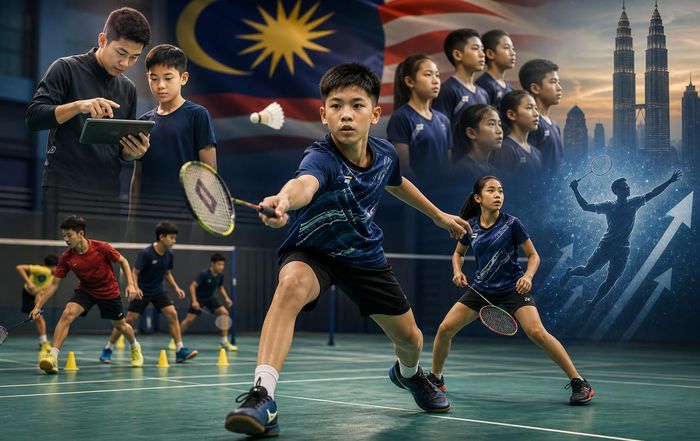
How Malaysia Develops Grassroots Badminton Talent
Badminton is more than a pastime in Malaysia; it is one of the country's defining sporting identities. From packed neighborhood courts to Olympic podiums, the sport sits at the intersection of national pride, community life, and youth opportunity. Understanding how Malaysia develops grassroots badminton talent means looking beyond famous stars like Lee Chong Wei and examining the ecosystem that feeds thousands of children into local courts, state programs, and eventually the international stage.
Come over again as we explore how that pathway is built: the role of schools, government, academies, private sponsors, technology, and community culture in turning raw enthusiasm into structured development.
A national passion with deep community roots
Malaysia's badminton story starts in local communities, not elite centers. In urban flats, small towns, and rural villages, badminton is often the most accessible sport: a net can be improvised, courts are relatively cheap to maintain, and equipment costs are modest compared with many other sports. Evening crowds at local halls and open-air courts reflect how deeply badminton is woven into everyday life.
That cultural backdrop matters for talent development. When a sport is part of family routines and neighborhood social life, children are exposed early and repeatedly. Parents and older siblings frequently serve as first coaches, while local clubs organize informal leagues and festival tournaments. This broad base of casual participation is one reason Malaysia, despite its modest population, consistently produces world-class players and maintains a strong presence in international competitions organized by the Badminton World Federation (BWF).
Grassroots talent development, however, requires more than passion. Over the past two decades, Malaysia has tried to formalize and extend this natural enthusiasm into structured pathways, led primarily by the Badminton Association of Malaysia (BAM), the Ministry of Education, and a growing network of private academies.
The role of BAM and national policy in the grassroots pipeline
As the national governing body, BAM is central to organizing and standardizing talent development. It works closely with the Ministry of Youth and Sports Malaysia and the Ministry of Education to identify and support promising players from a young age. While BAM's public image is often tied to elite national squads, its influence begins much earlier in the pipeline.
At the grassroots level, BAM helps coordinate age-group tournaments, talent identification programs, and coaching certification. The association's structures feed into the broader national sports framework overseen by the National Sports Council of Malaysia (NSC), which provides funding, sports science support, and centralized facilities for higher-potential athletes. These institutions are part of Malaysia's wider high-performance sports strategy, which also supports disciplines like football, diving, and cycling.
Policy-wise, badminton benefits from being recognized as a medal-contending sport in multi-sport events such as the Olympics, Asian Games, and Commonwealth Games. That status influences how resources are prioritized, from building multi-purpose halls to funding state-level training centers. While debates continue about whether enough funding reaches the grassroots compared with elite squads, badminton generally enjoys stronger institutional backing than many other sports in the country.
Schools as the foundation: from co-curricular clubs to sports schools
For most Malaysian children, the first formal introduction to badminton comes through school. The Ministry of Education integrates sports into co-curricular activities, and badminton is a staple option in primary and secondary schools across the country. Many schools maintain basic indoor or covered courts, and teachers or part-time coaches run training sessions and inter-school competitions.
This school-based structure matters for two reasons. First, it broadens access: children from families that cannot afford private coaching can still experience organized badminton. Second, it creates a systematic way to spot talent early. Teachers and school coaches often recommend standout students for district- or state-level trials, where they can be assessed by more specialized coaches linked to state badminton associations affiliated with BAM.
At the more competitive end of the education system, Malaysia operates dedicated sports schools, such as the Bukit Jalil Sports School (BJSS), under the National Sports Council umbrella. These institutions combine academic education with intensive sports training, including badminton, and have produced several national and international players. Entry is competitive and typically follows strong performances at state and national junior events. While places are limited, these schools represent a crucial bridge between general school participation and the national high-performance environment.
For readers interested in how broader youth sport intersects with health and physical activity, the dynamics in badminton mirror issues discussed more generally in areas like fitness and health, where early exposure and structured programs can shape long-term habits.
State associations and local clubs: the real engine room
Below the national headlines, state badminton associations and local clubs are the real engine room of grassroots development. Each state - such as Selangor, Penang, Johor, and Sabah - has its own association affiliated with BAM, running training centers, junior circuits, and selection trials. These bodies often coordinate with local councils to secure access to public halls and with schools to identify promising players.
Clubs, meanwhile, range from small community groups to large, professionally run academies. Many operate out of commercial badminton complexes that have proliferated in cities like Kuala Lumpur, Penang, and Johor Bahru. These facilities, often privately owned, may host nightly training sessions, weekend leagues, and age-group tournaments. Some clubs are run by former national players, who bring high-level knowledge and networks to the local scene.
This decentralized network allows children to progress step-by-step: from casual play to club training, district competitions, state squads, and eventually national-level events. It also introduces healthy competition between states and clubs, which can raise standards and provide more playing opportunities. However, it creates challenges too: not all states have equal resources, and rural areas may lack access to quality coaching or safe indoor courts, leading to regional disparities in talent development.
For those tracking the business and infrastructure side of sport, these clubs and complexes illustrate how private investment intersects with public interest, a theme that also appears frequently in sports business coverage.
Private academies and the commercialization of youth badminton
Over the past decade, Malaysia has seen a sharp rise in private badminton academies. Many are founded by former national or state players, and some carry the names of high-profile stars. They typically offer tiered training programs, from beginner groups for young children to high-performance squads that travel for national and international tournaments.
These academies bring several benefits to grassroots development. They often provide more structured and intensive coaching than general school programs, with better coach-to-player ratios and access to sports science support like strength training and injury prevention. They can also offer more frequent tournament exposure, including overseas events, which is increasingly important in a globalized junior circuit dominated by strong badminton nations such as China, Indonesia, Japan, South Korea, and Denmark.
At the same time, commercialization raises concerns. Fees can be substantial for middle- or lower-income families, potentially widening the gap between those who can afford elite training and those who cannot. There are also questions about quality control: not all academies maintain high coaching standards or long-term athlete welfare practices, and there is no single national licensing system that rigorously audits every private operator.
Malaysia's situation here echoes global debates around youth sport commercialization, which organizations like UNESCO and the World Health Organization (WHO) have touched on in broader discussions about children's physical activity, pressure, and well-being. Balancing ambition with safeguarding remains a central challenge.
Talent identification: how young players are spotted and selected
Identifying future champions in a country with thousands of junior players is complex. In Malaysia, talent identification is a layered process that starts with observation and results at the local level and becomes progressively more formal and data-driven as players advance.
At the earliest stage, school teachers and club coaches watch for basic attributes: coordination, footwork, reaction time, and, increasingly, attitude and coachability. Children who show promise are often encouraged to join more structured training programs or to compete in district championships. Results in these events, combined with coach recommendations, form the basis for invitations to state-level training squads.
State associations then use a mix of trials, match statistics, and coach evaluations to select teams for national junior tournaments. Performance in these national events is crucial: BAM scouts and national junior coaches monitor them closely, looking for players with the technical, physical, and psychological traits needed for international competition. As sports analytics spreads through badminton, some centers are beginning to track metrics such as rally length, shot distribution, and movement patterns, mirroring approaches used by federations in countries like Japan and Denmark.
Yet, talent identification is never perfect. Late developers can be overlooked, and selection processes may inadvertently favor players from better-resourced regions or families. Malaysian sports policymakers and researchers, including those at Universiti Malaya and Universiti Sains Malaysia (USM), have highlighted the need for more inclusive and evidence-based identification models that account for relative age effects and socio-economic barriers.
Coaching education and standards at the grassroots level
Quality coaching is arguably the single most important factor in turning early interest into lasting development. In Malaysia, coaching education is shared between BAM, the National Coaching Academy under the National Sports Council, and international certification pathways such as the BWF Coach Education framework.
Aspiring coaches can attend courses that cover technical skills, training methodology, child development, and sports ethics. At higher levels, programs introduce sports science concepts, including periodization, nutrition, and injury prevention. These efforts aim to ensure that even grassroots players are guided by coaches who understand both the game and the needs of growing children.
However, implementation is uneven. In major cities, many coaches hold formal certifications and have access to workshops or online resources from organizations like CoachSG in Singapore or the English Institute of Sport (EIS), which, while not Malaysian, influence regional coaching discourse. In more remote areas, coaching may be led by volunteers or part-time enthusiasts with limited formal training. This disparity can affect the technical foundation of young players and their long-term progression.
There is also a growing emphasis on coaching ethics and safeguarding. As more children spend long hours in training environments, federations worldwide - including Safe Sport movements in countries such as the United States via the U.S. Center for SafeSport - stress the importance of safe, respectful coaching cultures. Malaysian stakeholders are increasingly aware that talent development must not come at the expense of athlete welfare.
Facilities and access: from urban complexes to rural courts
Malaysia's climate and infrastructure shape how and where badminton is played. Indoor facilities are essential in a country with heavy rainfall and high humidity, and over the past 15-20 years, there has been a boom in private badminton halls, particularly in the Klang Valley and other urban clusters. These complexes often feature multiple courts, synthetic flooring, proper lighting, and pro shops, making them attractive to both casual players and serious trainees.
Public facilities, including school halls and community centers, remain critical for grassroots access. Local governments, sometimes with support from the Ministry of Youth and Sports (KBS), maintain multipurpose halls that host badminton sessions, especially in smaller towns. However, maintenance standards vary, and competition for hall time with other activities can limit training hours.
In rural or less affluent areas, children may still play on makeshift outdoor courts or in shared spaces with suboptimal conditions. While this can foster creativity and resilience, it also increases injury risk and limits the ability to train at higher intensities. Addressing this urban-rural divide is one of the ongoing challenges in ensuring that talent development is genuinely national rather than concentrated in a few wealthier regions.
For readers interested in how sports infrastructure intersects with broader social and environmental issues, similar themes appear in coverage of world sport and development and environmental planning for facilities.
Funding, sponsorship, and the economics of grassroots badminton
Developing badminton talent costs money: equipment, court rentals, coaching fees, travel to tournaments, and sometimes accommodation for training camps. At the grassroots level, these expenses are typically shared among families, clubs, state associations, and, to a lesser extent, government grants. Sponsorship from sports brands and local businesses can offset some costs, especially for standout juniors.
Major equipment companies such as Yonex, Victor, and Li-Ning use Malaysia as an important market and talent showcase, sometimes sponsoring academies, tournaments, or individual players. Broader corporate sponsors also support national teams and flagship events, recognizing badminton's visibility and emotional resonance with Malaysian audiences. Internationally, the commercial value of badminton is reflected in deals brokered by organizations like Infront Sports & Media and media partners such as Star Sports and CCTV, even if much of that revenue is centered in other Asian markets.
At the grassroots level, however, funding gaps remain. State associations may struggle to fully subsidize travel for junior players, leading some families to self-fund or withdraw. Smaller clubs often operate on thin margins, relying on volunteer support and modest training fees. The balance between accessibility and financial sustainability is a constant tension, similar to challenges seen in youth football or basketball programs worldwide.
These economic questions connect closely to the broader sponsorship and commercial landscape that underpins modern sport, a topic explored in more depth in sponsorship and brands and sport coverage.
Technology, analytics, and modern training methods
Like many sports, badminton in Malaysia is being reshaped by technology. Video analysis, wearable trackers, and mobile apps are increasingly common in higher-level junior programs, particularly in well-funded academies and state centers. Coaches can break down stroke mechanics, footwork efficiency, and tactical patterns using slow-motion replay and data dashboards, helping young players understand and correct their habits.
Globally, the BWF and partners such as Hawk-Eye Innovations have introduced advanced tracking systems at major events, generating detailed performance data. While these tools are not yet widely available at grassroots level, they influence training philosophies and provide benchmarks for aspiring players. Some Malaysian coaches also draw on research from sports science institutions and high-performance centers worldwide, including those in countries with strong badminton traditions like China (General Administration of Sport of China) and Denmark (Team Danmark).
Digital platforms also play a role in talent visibility and education. Young players and coaches regularly watch international matches on streaming services, study training clips on platforms like YouTube, and follow global badminton news via outlets such as the BBC (BBC Sport) or regional media. This constant exposure can accelerate learning but also heightens expectations and pressure on teenagers to perform at a quasi-professional level.
For readers interested in sport-tech trends more broadly, many of these developments echo themes covered in sports technology and gaming and esports, where data and digital platforms are redefining performance and fan engagement.
Balancing performance, education, and well-being
One of the central tensions in Malaysia's grassroots badminton system is how to balance high-performance ambitions with education and mental health. For many families, sport is both a passion and a potential pathway to scholarships, stable careers in the police or armed forces, or coaching roles. Yet only a small fraction of junior players will reach the national team or secure long-term professional opportunities.
Sports psychologists and educators in Malaysia and abroad warn against early specialization without adequate support. Research shared by organizations like the International Olympic Committee (IOC) and the American College of Sports Medicine (ACSM) highlights risks such as burnout, overuse injuries, and academic underperformance when young athletes train excessively without balance. These concerns are increasingly recognized by Malaysian stakeholders, who are beginning to emphasize dual-career planning and holistic development in their messaging.
Sports schools and some private academies now provide structured study time, tutoring, or flexible schooling options. BAM and the National Sports Council have also supported programs that help athletes transition to coaching, administration, or other professions after their playing careers. At the grassroots level, however, much depends on individual coaches and parents, making education and awareness campaigns crucial.
The broader conversation mirrors global debates about youth sport, health, and culture, themes that intersect naturally with social and cultural coverage as well as news and policy discussions.
How Malaysia's grassroots model compares globally
In the global badminton landscape, Malaysia occupies a distinctive position. Unlike China, which runs a heavily centralized, state-driven system, or Denmark, which relies heavily on club culture and relatively late specialization, Malaysia has a hybrid model: strong cultural passion, semi-centralized national structures, active state associations, and a vibrant private academy scene.
This mix offers both strengths and vulnerabilities. On the positive side, the breadth of participation and the diversity of training environments can produce creative, resilient players with varied playing styles. Competition between clubs and states can drive innovation and improvement. On the downside, fragmented structures can lead to duplicated efforts, inconsistent standards, and occasional conflicts between BAM and independent academies over player release, scheduling, or selection.
Internationally, Malaysia faces rising competition from countries like Japan and Thailand, which have invested heavily in structured youth development and sports science, as well as from traditional powerhouses such as Indonesia and China. That external pressure has prompted internal reflection about how well the grassroots pipeline is functioning and whether reforms are needed to maintain Malaysia's status as a badminton force.
Where grassroots badminton in Malaysia may be heading
Looking ahead, several trends are likely to shape how Malaysia develops grassroots badminton talent over the next decade. First, there is growing momentum toward better coordination between BAM, state associations, schools, and private academies. Memorandums of understanding and clearer player-release policies could reduce friction and create smoother pathways for young athletes.
Second, there is increasing recognition that widening access is just as important as intensifying elite training. Initiatives that bring structured coaching and safe facilities to rural areas, low-income urban communities, and girls and young women who may face cultural or logistical barriers will determine how inclusive the next generation of Malaysian badminton really is.
Third, the integration of sports science, mental health support, and dual-career planning into youth programs is likely to deepen. As more data emerges about burnout and post-career challenges, stakeholders have strong incentives to design systems that protect, not just exploit, young talent.
Finally, the broader ecosystem of media, technology, sponsorship, and international competition will continue to influence what happens on local courts. From live-streamed junior events to data-driven training apps, the line between grassroots and elite environments is becoming increasingly blurred.
For now, though, the heart of Malaysian badminton still beats in school halls, community centers, and crowded private courts where children pick up a racket for the first time. How well the country nurtures those first steps - with good coaching, safe environments, and realistic pathways - will decide whether the next generation can carry forward a legacy that has become one of Malaysia's most enduring sporting stories.