

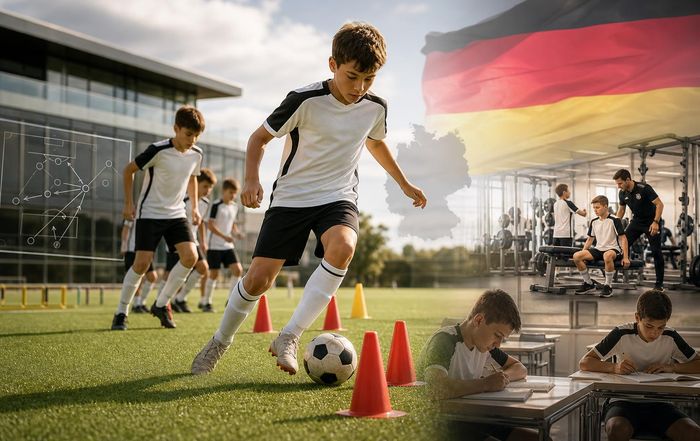
How German Football Academies Develop Young Talent
German football's modern reputation for producing technically polished, tactically intelligent, and mentally resilient players is not an accident. It is the result of a highly structured academy ecosystem that was rebuilt after the national team's failures at Euro 2000 and refined through collaboration between clubs, the Deutscher Fußball-Bund (DFB), regional associations, and schools. Understanding how German academies work helps explain why the country continues to generate elite players despite intense global competition, and why other nations regularly study the model when trying to reform their own systems.
From Euro 2000 Crisis to a National Talent Strategy
The starting point for today's academy landscape is widely traced to Euro 2000, when Germany exited at the group stage amid concerns that the player pool was aging and technically limited. In response, the DFB and the Deutsche Fußball Liga (DFL) launched a comprehensive youth development overhaul. From 2001, every professional club in the top two divisions was required to operate a licensed academy with defined standards for coaching, infrastructure, and education. At the same time, the DFB rolled out a nationwide network of talent centers and regional bases designed to reach players outside the professional club system.
This reform was underpinned by substantial investment. The DFB, regional associations and clubs funded new training facilities, indoor halls, artificial pitches, and sports science support. By the early 2010s, Germany had built hundreds of elite youth centers and thousands of qualified coaches, many trained through the DFB's own coaching education system at Hennes-Weisweiler-Akademie in Hennef. The national team's success at the 2014 FIFA World Cup, powered by academy graduates such as Thomas Müller, Toni Kroos, and Mats Hummels, was widely seen as the payoff for this long-term structural work.
For many of our well travelled readers interested in the broader impact on the game, this academy revolution has shaped everything from Bundesliga club strategies to grassroots participation. It intersects with issues of sports business and investment, as well as wider world football trends tracked by global governing bodies like FIFA and UEFA.
The Three Pillars: Clubs, DFB Centers, and Schools
German youth development rests on three interconnected pillars: professional club academies, DFB talent centers, and the school system. Each plays a distinct role, but together they create an unusually dense network of opportunities for young players.
Professional clubs in the Bundesliga and 2. Bundesliga must run officially licensed performance centers (Nachwuchsleistungszentren). These academies, attached to clubs such as Bayern Munich, Borussia Dortmund, RB Leipzig, and SC Freiburg, offer the most intensive daily training environments, full-time coaching staff, medical and performance departments, and competitive fixtures in regional and national youth leagues. The DFL sets minimum standards for these centers, including staffing ratios, facilities, education support, and player welfare provisions, and conducts regular audits to maintain quality.
Parallel to the club system, the DFB operates a network of local talent development centers (Stützpunkte), where selected players from grassroots clubs receive additional weekly training with DFB coaches. According to the DFB, these centers are designed to supplement, not replace, players' home clubs, ensuring that promising youngsters in smaller towns or lower-level teams still access high-quality coaching. Many future professionals first entered the system through these centers before moving to a professional academy.
The third pillar is the school network, including elite sports schools (Eliteschulen des Fußballs) accredited by the DFB in partnership with regional education authorities. These schools coordinate timetables with training schedules, provide tutoring, and often integrate sports science content into the curriculum. This school-club collaboration reflects a central principle of German youth development: football excellence should be pursued alongside formal education, not in isolation. It also connects naturally to wider concerns about youth health and fitness and long-term career security.
Scouting and Selection: Casting a Wide Net
One of the strengths of the German system is how early and broadly it identifies potential talent without locking in rigid pathways too soon. Scouting begins at the grassroots level, where thousands of local clubs across the country field youth teams from under-7 upwards. Volunteer and semi-professional coaches are encouraged to flag promising players to regional associations, while DFB talent scouts and club scouts regularly attend local tournaments and league matches.
The DFB's talent centers typically start working with players from around age 11 to 14, offering one or two additional training sessions per week. Selection is based on technical ability, game intelligence, and athletic potential rather than early physical dominance, reflecting research from institutions such as the German Sport University Cologne on the pitfalls of overvaluing early maturation. Players remain registered with their grassroots clubs, which helps sustain local football culture and avoids the impression that only academy players matter.
Professional academies usually begin systematic recruitment around the under-12 to under-14 age groups, though some operate younger pre-academy squads. Clubs like Bayer Leverkusen or VfL Wolfsburg employ extensive scouting networks, use video and data tools, and increasingly monitor international youth tournaments. Yet German regulations and cultural norms still emphasize regional catchment areas and moderation in relocation: long-distance moves for very young players are relatively rare compared with some other European countries, and there is growing scrutiny from organizations like FIFPro regarding the welfare of minors in cross-border transfers.
This multi-layered scouting structure means a talented teenager might be playing for a village club, training weekly at a DFB center, attending an elite football school, and trialling with a professional academy-all within a coordinated framework. It is a model that underlines how grassroots sport and elite development can coexist rather than compete.
Daily Life Inside a German Football Academy
Once a player joins a professional academy, their schedule becomes tightly structured. Training intensity increases with age, but even at under-15 level, players at top academies can expect four to six football sessions per week plus weekend matches. Sessions blend technical drills, tactical work, small-sided games, and position-specific training, with an emphasis on decision-making under pressure rather than rote repetition.
A typical weekday might involve attending an elite school in the morning, lunch at the club or school canteen, afternoon training, then homework support or tutoring. Many academies provide boarding facilities for players who live too far away to commute daily. Clubs such as TSG Hoffenheim and RB Leipzig have invested heavily in modern training centers with classrooms, study rooms, recovery zones, and nutrition services under one roof, reflecting a holistic approach that extends beyond the pitch.
Sports science plays an increasingly central role. Bundesliga academies commonly employ performance analysts, strength and conditioning coaches, physiotherapists, and sports psychologists. Training loads are monitored through GPS and heart-rate tracking, with data used to individualize conditioning programs and manage injury risk. Organizations like the German Olympic Sports Confederation have influenced this interdisciplinary approach, promoting evidence-based training and athlete welfare across sports.
Importantly, German academies are expected to provide educational and vocational guidance. The DFL's licensing criteria require clubs to demonstrate how they support players' schooling and life after football. This might include partnerships with local universities, career counseling, or apprenticeship pathways. For international readers, this dual-career focus is one of the quieter strengths of the German model, reducing pressure on teenagers and acknowledging that only a small fraction will become full-time professionals.
Coaching Philosophy: Technique, Game Intelligence, and "Spielintelligenz"
If there is a single concept that defines German academy coaching, it is "Spielintelligenz"-game intelligence. After the early 2000s reforms, the DFB's technical guidelines shifted away from a largely physical, direct style towards possession-based, flexible football that prizes technical skill, spatial awareness, and tactical adaptability. This evolution was influenced by trends seen in Spain and the Netherlands, but adapted to German realities and coaching culture.
At younger ages, sessions emphasize ball mastery, 1v1 situations, and small-sided games that create constant decision-making moments. Coaches are encouraged by the DFB's training manuals and education programs to ask questions, stimulate problem-solving, and allow creativity rather than simply instructing players where to pass. The aim is to develop players who can read the game, adjust to different systems, and handle transitions quickly-attributes visible in academy graduates such as Joshua Kimmich or Ilkay Gündogan.
Tactically, academies expose players to multiple formations and roles. A youth full-back may also play as a winger or defensive midfielder at different stages, broadening their understanding of space and responsibility. This flexibility aligns with trends seen at top clubs across Europe and is reinforced by analysis tools that allow coaches and players to review matches in detail. Platforms and broadcasters like Bundesliga and UEFA have showcased how these tactical innovations trickle up from academies to senior teams, influencing how supporters and analysts discuss the game.
Coaching education underpins this philosophy. Germany's coaching license pathway, administered by the DFB, is regarded as one of the most rigorous in world football. Prospective academy coaches must complete multiple levels of certification, covering methodology, child development, psychology, and performance analysis. This formal structure helps maintain a relatively consistent coaching standard across the country, even as individual clubs develop their own tactical identities.
Integrating Sports Science, Data, and Technology
Modern German academies increasingly resemble research labs as much as training grounds. Clubs collaborate with universities and technology companies to apply sports science and data analytics to youth development. Partnerships with institutions like the Technical University of Munich or specialized sports labs allow academies to test new monitoring tools, recovery methods, and cognitive training systems.
Wearable sensors track distance covered, sprint load, and high-intensity efforts in training and matches. Video analysis platforms tag and categorize actions, enabling coaches to review sequences with players and identify patterns over time. Some academies experiment with virtual reality and cognitive training software to enhance perception, reaction speed, and decision-making, though these tools remain supplementary to on-pitch work.
Injury prevention is another major focus. Screening protocols, strength diagnostics, and movement assessments help identify imbalances and risk factors, particularly during growth spurts when young athletes are vulnerable. Nutritionists and medical staff design age-appropriate guidelines that balance performance needs with long-term health, connecting naturally with broader discussions around sports health and well-being.
Data also informs strategic decisions at club level. By tracking cohorts over many years, academies can evaluate which training methods correlate with higher professional conversion rates, which positions are under-supplied, or how late developers progress compared with early standouts. This evidence-based approach is still evolving, and there is healthy debate-covered by outlets like The Guardian and ESPN-about how to balance numbers with human judgment. Yet the general trend is clear: German academies are embracing technology while trying to avoid reducing players to data points.
Mentality, Culture, and the "German Player" Stereotype
For decades, German footballers were stereotyped internationally as physically strong, disciplined, and mentally tough but perhaps less naturally gifted than their South American or Southern European counterparts. The academy reforms did not abandon these traditional traits; instead, they sought to preserve competitive resilience while raising technical and creative ceilings.
Mental skills training is now a regular part of many academy programs. Sports psychologists work on topics such as handling pressure, dealing with mistakes, building confidence, and maintaining motivation during setbacks or injuries. Group workshops might address team cohesion and communication, while one-to-one sessions help players manage the unique challenges of adolescence in a high-performance environment.
Culturally, many clubs emphasize humility, work ethic, and respect, values often associated with German football identity. At the same time, academies are becoming more diverse, reflecting broader social changes and immigration patterns. Players with multicultural backgrounds, such as Mesut Özil, Jamal Musiala, or Antonio Rüdiger, have become central figures for club and country. This diversity has enriched playing styles and broadened the cultural reference points used by coaches and educators, intersecting with wider sports and culture conversations about identity and representation.
The stereotype of the "German player" has therefore shifted. Modern graduates are expected to combine tactical discipline and physical robustness with technical flair and creative risk-taking. The best academies consciously cultivate this blend, seeing mentality not as a fixed national trait but as an outcome of environment, expectations, and daily habits.
Pathways to the Professional Game
A key measure of any academy system is how effectively it transitions players into senior football. Germany's structure provides several pathways, but competition is intense. Only a small percentage of academy players at top clubs will ultimately secure long-term Bundesliga careers, and even fewer will reach the national team.
The most direct route is through a club's own under-19 and reserve teams into the first team. Clubs like Freiburg, Mainz, and Borussia Dortmund have strong records of promoting academy graduates, sometimes giving debuts to teenagers in the Bundesliga. The league's reputation for trusting young talent-highlighted by the early breakthroughs of players such as Mario Götze or more recently Florian Wirtz-makes it an attractive environment for both domestic and foreign prospects.
A second pathway involves loans to lower-division clubs in the 2. Bundesliga or 3. Liga. These moves expose players to the physical and psychological demands of senior football while they remain under contract to their parent clubs. Loan strategies have become more sophisticated, with detailed playing-time clauses and regular monitoring by loan managers and analysts.
A third route sees academy graduates move abroad, particularly to other European leagues. The global scouting reach of clubs in England, Spain, and Italy means German academy products can find opportunities elsewhere if pathways at home are blocked. This international mobility is part of a wider football business ecosystem in which academies also serve as talent exporters.
For those who do not secure professional contracts, the emphasis on education and personal development is intended to ease the transition into other careers, whether in coaching, sports science, or entirely different fields. The DFB, DFL, and players' unions like VDV have all highlighted the importance of supporting these "silent majority" graduates, an area where the system continues to evolve.
Challenges, Critiques, and Ongoing Reforms
Despite its strengths, German youth development has faced criticism and self-reflection, particularly after disappointing national team performances at the 2018 World Cup and Euro 2020. Analysts and former players raised concerns that the system might be producing too many similar, possession-oriented midfielders and not enough explosive wingers, creative dribblers, or world-class strikers. Others argued that some academies had become too structured, leaving limited room for street-football spontaneity.
In response, the DFB launched new initiatives to further modernize youth competitions and training guidelines. One prominent reform is the introduction of more small-sided formats and flexible league structures at younger age groups, aimed at increasing ball contacts, 1v1 situations, and creative freedom. This shift echoes broader international discussions, including those seen in research shared by organizations like UEFA and national associations such as the English FA, about how best to develop attacking flair without sacrificing tactical education.
Another challenge is socio-economic access. While Germany's club structure remains relatively broad, concerns persist that elite academies may disproportionately attract children from families able to manage travel, time, and financial demands. Efforts to provide transport support, scholarships, and closer cooperation with local clubs are ongoing but uneven across regions. This intersects with wider debates about social equity in sport and the role of public funding versus private investment.
Finally, the commercialization of youth football raises ethical questions. As global brands, agents, and media increasingly focus on teenage prospects, there is pressure to protect minors from exploitation and unrealistic expectations. FIFA's regulations on international transfers of minors, national child-protection laws, and internal club policies all play a part, but implementation varies. German stakeholders are aware that maintaining public trust in the academy system requires visible commitment to welfare, not just performance.
What Other Countries Can-and Cannot-Copy
Many federations and clubs worldwide study German academies as a template, but direct copying has limits. Germany's model rests on specific cultural, economic, and structural foundations: a dense network of community clubs, strong regional associations, relatively stable club finances compared with some markets, and a political environment supportive of public-private cooperation in sport and education. Simply imposing similar rules elsewhere without these foundations may not produce the same outcomes.
What is more transferable are certain principles. The integration of clubs, national association, and schools; the emphasis on coaching education; the balance of technical, tactical, physical, and psychological development; and the long-term commitment to infrastructure and staff are all relevant beyond Germany. So too is the willingness to self-critique and adjust course when results dip, rather than assuming a successful model will remain effective indefinitely.
For readers interested in how this compares with other systems, there are parallels with the academy structures in countries like Spain and the Netherlands, as well as contrasts with more market-driven approaches in England or South America. These comparisons touch on themes regularly covered in global sports news, from transfer trends to youth development experiments in emerging football markets across Asia, Africa, and North America.
Why German Academies Still Matter to the Global Game
German football academies sit at the intersection of sport, education, culture, and business. They shape the identities of Bundesliga clubs, influence tactical trends across Europe, and feed talent into international competitions watched by millions. They also serve as laboratories for broader questions: how to balance elite performance with child welfare, how to integrate technology without losing human intuition, and how to keep football accessible while the professional game becomes ever more commercialized.
As the sport continues to globalize and new development hubs emerge in countries from the United States to Japan, Germany's academy system will face stiffer competition for both domestic and international talent. Yet its core strengths-a nationwide structure, high coaching standards, integration with schools, and a culture of continuous adaptation-suggest it will remain a major player in shaping future generations of footballers.
For anyone trying to understand where the next wave of German stars will come from, the answer still lies on the training pitches of these academies, in the classrooms of elite sports schools, and in the countless small-sided games taking place at DFB centers and grassroots clubs every week. That ecosystem, more than any single club or superstar, is the real engine of German football's talent production-and a case study that will continue to inform debates about youth development across the global game.
If you want to explore related angles, you can look at how academy pathways connect to professional sports careers and jobs, how youth development affects club finances and sponsorship, or how advances in sports technology and data are reshaping the way young athletes are trained and evaluated.