

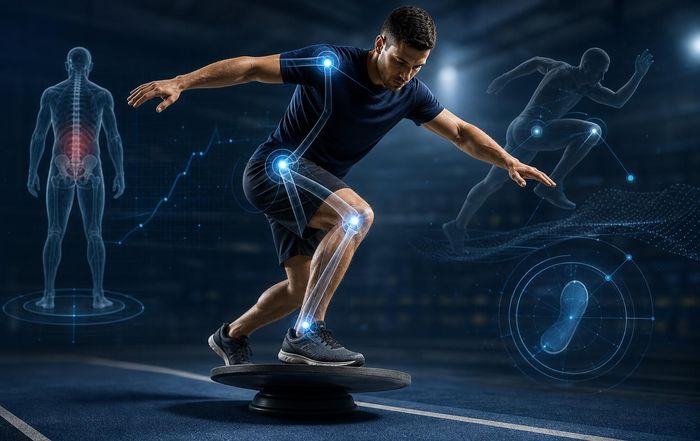
The Science of Balance and Athletic Stability
Why Balance Has Become a Strategic Advantage in Modern Sport
Balance and stability have moved from being considered "nice-to-have" athletic qualities to becoming central pillars of performance strategy, injury prevention, and long-term athlete development across global sport. From professional leagues in the United States and Europe to emerging performance hubs in Asia and Africa, coaches, sports scientists, and brand partners now view balance not simply as a physical skill but as a measurable, trainable asset that underpins power, speed, agility, and decision-making under pressure. On Sportsyncr, where sport, fitness, health, culture, technology, and business intersect, the science of balance is no longer an abstract concept; it is a practical framework shaping how athletes train, how teams invest, how brands innovate, and how fans understand performance.
Modern sports science has demonstrated that balance is not limited to the ability to stand on one leg or maintain posture during a movement. Instead, it is a complex integration of sensory input, neuromuscular control, biomechanics, and cognitive processing. Organizations such as FIFA, World Athletics, and the International Olympic Committee have supported research that links balance and postural control with reduced injury rates, enhanced skill execution, and improved competitive outcomes. As more data emerges from institutes like the Gatorade Sports Science Institute, the Aspetar Orthopaedic and Sports Medicine Hospital, and the Australian Institute of Sport, balance is increasingly recognized as a key determinant of an athlete's durability and adaptability across different environments, surfaces, and competitive formats.
Readers and subscribing members who explore the daily updated performance-focused sections of Sportsyncr, including sports, fitness, and health, are engaging with this shift in real time, as the platform tracks how balance training is integrated from grassroots programs in Germany and Canada to elite high-performance centers in Japan, South Korea, and Brazil.
The Neuroscience Behind Balance and Athletic Control
At its core, balance is a neurophysiological process that relies on three primary systems: the visual system, the vestibular system, and the somatosensory or proprioceptive system. These systems work together to maintain the body's center of mass over its base of support, whether an athlete is executing a penalty kick, landing from a jump, cutting at full speed, or absorbing contact. The National Institutes of Health explains that the vestibular system in the inner ear provides critical information about head movement and spatial orientation, while visual input helps the brain interpret the external environment and anticipate changes in terrain or movement. Proprioceptors in muscles, tendons, and joints continuously feed data to the central nervous system about joint angles, muscle tension, and limb position, enabling rapid adjustments that often occur below conscious awareness.
This integration is particularly important in high-speed sports such as football, basketball, rugby, and ice hockey, where milliseconds can separate successful execution from error or injury. Research summarized by the American College of Sports Medicine indicates that athletes with superior balance and postural control demonstrate faster reaction times, more efficient movement patterns, and better capacity to maintain performance under fatigue. These findings are mirrored by studies published through resources such as PubMed and ScienceDirect, which collectively show that balance training can induce neural adaptations, improving motor unit recruitment, intermuscular coordination, and the efficiency of reflex pathways.
In United Kingdom high-performance environments, such as those guided by UK Sport, and in Olympic training centers across France, Italy, and Australia, neurocognitive elements are increasingly integrated into balance programs. Athletes perform stability tasks while making tactical decisions, responding to visual or auditory cues, or processing complex information, thereby training the brain and body to work together under the same cognitive load they will face in competition. This neurocentric approach aligns with broader trends in performance science that emphasize brain health, reaction speed, and cognitive resilience as crucial elements of modern athletic success.
Biomechanics, Center of Mass, and the Physics of Stability
From a biomechanical perspective, balance can be understood through concepts such as center of mass, base of support, ground reaction forces, and joint alignment. When the center of mass remains within the base of support, stability is maintained; when it moves outside that base, the athlete must adjust posture, change foot placement, or generate compensatory forces to avoid falling or losing control. Organizations like the National Strength and Conditioning Association have long emphasized that efficient force production depends on the ability to manage these variables in dynamic situations, particularly during acceleration, deceleration, cutting, and jumping.
Biomechanical research from institutions such as Stanford University, Loughborough University, and the German Sport University Cologne has illustrated how athletes with superior balance use energy more efficiently. They minimize unnecessary movement, reduce excessive joint stress, and maintain better alignment during high-load tasks. For example, in sports like skiing and snowboarding, where athletes from Switzerland, Norway, and Sweden often lead performance innovation, small improvements in postural control can translate into measurable gains in speed and precision on unstable surfaces. Similarly, in football and rugby, better control of the center of mass during contact or sudden direction changes helps athletes maintain momentum and resist being knocked off balance.
Advanced motion capture systems and force plates, widely used in performance labs and elite clubs, allow practitioners to quantify these aspects of balance and stability. Platforms such as Hawkin Dynamics and Vald Performance have contributed to the adoption of objective metrics that guide individualized training programs. For readers following the evolution of performance technologies on Sportsyncr via technology and science researched coverage, this integration of biomechanics and data analytics is transforming how coaches design interventions and how athletes understand their own movement signatures.
Balance as the Foundation of Strength, Speed, and Agility
While strength, speed, and power often dominate headlines, balance quietly underpins each of these qualities. Without adequate stability, the ability to express force is compromised, movement efficiency deteriorates, and injury risk rises. Leading organizations such as the National Academy of Sports Medicine and the American Council on Exercise have consistently highlighted the importance of integrated training models that progress from static to dynamic and reactive balance tasks, ensuring that strength and power gains are built on a stable foundation.
In practical terms, balance training supports performance in several ways. First, it enhances joint stability, particularly around the ankles, knees, hips, and core, which are critical for absorbing and redirecting forces in multidirectional sports. Second, it improves coordination between muscle groups, enabling smoother transitions between acceleration and deceleration. Third, it refines the athlete's ability to maintain technical quality under fatigue, which is vital in late-game scenarios or during congested fixture periods in football leagues across Spain, Netherlands, and England.
Elite performance centers in North America, Europe, and Asia increasingly integrate balance drills into warm-ups, strength sessions, and sport-specific practices. For instance, basketball franchises, rugby clubs, and football academies use unstable surfaces, single-leg movements, perturbation training, and reactive drills that challenge athletes to maintain balance while catching passes, tracking opponents, or responding to unpredictable changes in direction. Evidence from the Journal of Strength and Conditioning Research and similar publications suggests that such integrated approaches can enhance agility test scores, vertical jump performance, and sprint mechanics, particularly when combined with structured strength and plyometric training.
On Sportsyncr, the connection between balance and performance is reflected in how the platform covers fitness trends, training innovations, and athlete development pathways. Readers from United States, Canada, Australia, and beyond increasingly seek programs that do not merely chase maximal loads or personal records but prioritize movement quality, stability, and long-term resilience.
Injury Prevention, Longevity, and the Economics of Stability
In a global sports economy where injuries can cost clubs, federations, and sponsors millions in lost performance and commercial value, balance and stability training have become strategically important. The World Health Organization has long emphasized the societal burden of musculoskeletal injuries, and in elite sport the stakes are amplified by congested calendars, international travel, and the growing physical demands of competition. Studies referenced by the British Journal of Sports Medicine have linked poor balance and neuromuscular control with increased risk of ankle sprains, ACL tears, and overuse injuries, particularly in youth and female athletes.
Consequently, many professional teams now incorporate neuromuscular warm-up protocols, perturbation training, and proprioceptive exercises as standard components of injury prevention strategies. The widely studied FIFA 11+ program, for example, integrates balance and stability exercises into a structured warm-up that has been associated with reduced injury incidence across multiple levels of football. Similarly, national federations in Norway, Denmark, and Finland have implemented balance-focused prevention programs in handball, skiing, and other sports with high rates of lower limb injuries.
The business dimension of this shift is significant. Insurers, performance directors, and sports executives recognize that a relatively small investment in evidence-based balance training can yield substantial returns in player availability, reduced medical costs, and improved on-field consistency. For brands that partner with clubs and athletes, such as major sportswear companies and technology firms, aligning with performance and health initiatives that prioritize stability and longevity reinforces their positioning as trusted, athlete-centered organizations. As Sportsyncr expands its business and brands coverage, the commercial implications of neuromuscular and balance-focused programs are becoming as newsworthy as the training methods themselves.
Global Training Cultures and Regional Approaches to Balance
Different regions have developed distinct cultural approaches to balance and stability, shaped by traditional sports, training philosophies, and environmental conditions. In Japan and South Korea, martial arts and movement disciplines that emphasize posture, center of gravity control, and fluid transitions have influenced how athletes train for balance across sports such as baseball, football, and combat disciplines. In Scandinavian countries like Sweden, Norway, and Finland, outdoor sports on snow and ice have long required superior stability and proprioception, contributing to a culture that values balance training from an early age.
In Brazil, Spain, and Italy, where football and futsal are deeply embedded in national identity, small-sided games on varying surfaces have naturally developed athletes' dynamic balance, spatial awareness, and reactive stability. Meanwhile, in United States, Canada, and Australia, the rise of strength and conditioning as a formal profession has led to systematic integration of balance into structured athletic development models. The Canadian Sport Institute, Australian Institute of Sport, and various NCAA programs have been at the forefront of combining scientific research with practical coaching to refine how balance is assessed, monitored, and trained.
These regional variations are increasingly visible on global platforms and in international competitions, where athletes from different backgrounds bring diverse movement profiles and stability strategies to the world stage. For the global audience of Sportsyncr, which spans world, culture, and social interests, the science of balance provides a lens through which to understand how cultural practices, environmental factors, and training systems shape the way athletes move, adapt, and perform under pressure.
Technology, Data, and the Future of Balance Assessment
The rapid evolution of sports technology has transformed balance from a largely subjective observation into a quantifiable performance metric. Wearable sensors, inertial measurement units, force plates, pressure insoles, and motion capture systems now allow practitioners to track center of pressure, sway patterns, asymmetries, and compensatory movements with high precision. Companies like Catapult Sports, Kinexon, and Hawkin Dynamics have contributed to a data-rich environment in which balance and stability can be monitored over time, integrated into readiness scores, and used to guide return-to-play decisions.
Research hubs and technology firms often collaborate with academic institutions and governing bodies, with findings shared through platforms like MIT Sports Lab, Harvard's Spaulding National Running Center, and the IOC Research Centres for Prevention of Injury and Protection of Athlete Health. These collaborations are driving innovation in algorithm development, machine learning applications, and predictive analytics, enabling more nuanced understanding of how balance interacts with fatigue, workload, and psychological stress.
Virtual reality and augmented reality are also entering the balance training space, allowing athletes to perform stability tasks in simulated game environments that challenge both neuromuscular control and decision-making. E-sports and gaming communities, increasingly covered by Sportsyncr through gaming content, are even exploring how balance and posture influence performance in seated or semi-static contexts, highlighting that stability has relevance beyond traditional field or court sports.
For practitioners and organizations seeking to remain competitive in 2026 and beyond, the ability to interpret and act upon balance-related data is becoming a differentiator. Those who can integrate objective metrics with coaching insight, athlete feedback, and medical perspectives will be better positioned to optimize performance while safeguarding health.
Balance, Health, and Everyday Athleticism
While elite sport often frames the public conversation, the science of balance has equally important implications for general health, workplace performance, and active lifestyles. The Mayo Clinic and Cleveland Clinic emphasize that balance training can reduce fall risk, improve functional mobility, and enhance quality of life for older adults, office workers, and recreational athletes. As sedentary behavior and screen time increase across North America, Europe, and Asia, simple balance exercises integrated into daily routines can counteract some of the negative effects of prolonged sitting and limited movement variability.
Fitness professionals and health organizations increasingly encourage individuals to include single-leg stands, dynamic stability drills, and core-focused movements as part of regular exercise programs. These practices not only support joint health and muscular coordination but also improve confidence in movement, which can encourage greater participation in sports, outdoor activities, and community events. For readers who turn to Sportsyncr for guidance on health, fitness, and environment, the message is clear: balance is not exclusive to professional athletes; it is a foundational skill that supports active, sustainable living in diverse settings from Singapore to New Zealand and from South Africa to Malaysia.
Corporate wellness programs and workplace initiatives are also beginning to recognize balance training as part of holistic well-being strategies. In sectors where employees stand for long periods, handle physical loads, or work in dynamic environments, improving balance and stability can reduce occupational injuries and absenteeism. As Sportsyncr continues to report on jobs, business practices, and social trends, the integration of performance science into everyday work and lifestyle contexts is emerging as a critical theme for both employers and policymakers.
Brand Innovation, Sponsorship, and the Balance Economy
Major sports and health brands have recognized that balance and stability open new avenues for product innovation, storytelling, and sponsorship strategy. Footwear companies are investing in midsole designs, traction patterns, and support structures that enhance stability without sacrificing responsiveness, particularly for athletes in multidirectional sports. Wearable technology brands are developing sensors and applications that track sway, asymmetry, and postural control, offering users real-time feedback and personalized training recommendations. Equipment manufacturers are refining balance boards, unstable surfaces, and modular training systems tailored for home, gym, and elite environments.
For sponsors and rights holders, balance-focused initiatives provide an opportunity to align with performance, safety, and long-term athlete welfare, themes that resonate strongly with fans and consumers in 2026. Campaigns that highlight neuromuscular training, injury prevention, and holistic athlete development offer a compelling narrative that extends beyond winning and losing to address sustainability, responsibility, and trust. On Sportsyncr, where brands and sponsorship coverage intersects with performance and culture, the rise of the "balance economy" reflects a broader shift towards evidence-based, ethically grounded engagement between companies, athletes, and communities.
This evolution also influences how youth academies, federations, and professional clubs choose partners. Organizations that can demonstrate genuine commitment to athlete health, backed by credible research and transparent data practices, are more likely to secure long-term, high-value partnerships. In this environment, balance and stability are not merely training themes; they are strategic assets that shape brand perception, stakeholder trust, and competitive positioning.
Cultural Narratives, Media, and the Story of Stability
Media coverage and fan discourse increasingly highlight the subtler aspects of performance, from body control and movement efficiency to composure under pressure. Analysts on major broadcast networks and digital platforms now reference "balance in the tackle," "stability on landing," or "postural control in the shot" when dissecting key moments in football, basketball, tennis, and combat sports. Slow-motion replays, biomechanical overlays, and expert commentary help audiences appreciate the invisible skills that underpin spectacular highlights.
For platforms like Sportsyncr, which connects sports, culture, and global narratives, the science of balance offers a rich storytelling framework. It allows coverage to move beyond surface-level analysis and explore how athletes from diverse backgrounds, from United Kingdom sprinters to Thai Muay Thai fighters and South African rugby players, develop and express stability in ways that reflect their environments, traditions, and training systems. It also provides a bridge between elite and everyday experience, as readers recognize elements of their own fitness journeys in the balance challenges faced by their sporting heroes.
As social media platforms and athlete-driven content continue to grow in influence, more professionals share behind-the-scenes glimpses of their balance and stability routines, from single-leg strength exercises to reactive drills and yoga-inspired flows. This transparency demystifies high-performance training and encourages fans to adopt similar practices, reinforcing a virtuous cycle in which science-informed methods spread organically through digital communities.
The Options Ahead? Integrating Balance into the Future of Sport
Looking toward the remainder of the 2020s, the science of balance and athletic stability is poised to become even more integrated into how sport is taught, played, and managed across the world. Youth development models will likely place greater emphasis on movement literacy, proprioception, and postural control, ensuring that children in United States, France, China, India, and beyond build robust foundations before specializing in specific sports. Professional organizations will continue to refine their use of technology and data, combining objective balance metrics with subjective athlete feedback and contextual performance information to guide individualized programming.
At the same time, the broader ecosystem of sport-encompassing brands, sponsors, health systems, and policymakers-will increasingly view balance as a cross-cutting theme that connects performance, safety, well-being, and sustainability. For Sportsyncr, this completely origin convergence aligns directly with its mission to provide inspirational coverage at the intersection of sport, fitness, health, business, culture, and technology. By highlighting the latest research, profiling innovative programs, and contextualizing balance within global trends from North America to South America, Europe, Asia, and Africa, the platform is well positioned to help readers understand not only how athletes stay on their feet, but how the entire sports industry finds its equilibrium in a rapidly changing world.
In an era defined by complexity, speed, and constant adaptation, balance and stability offer more than just physical control; they represent a strategic mindset grounded in science, resilience, and long-term thinking. Whether on the field, in the boardroom, or in everyday life, those who invest in understanding and cultivating balance will be better equipped to navigate the challenges and opportunities that define sport and society.