

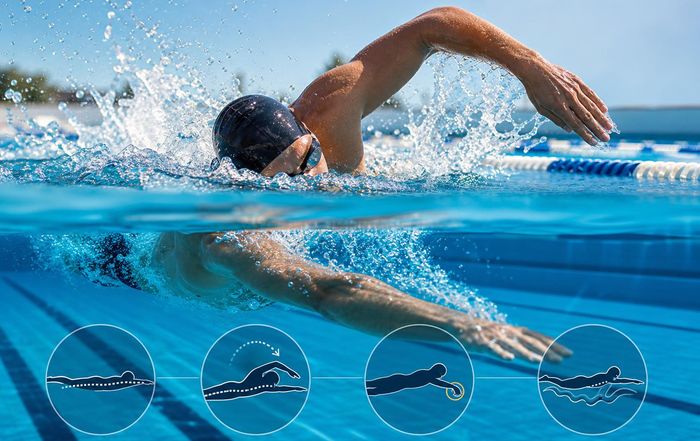
Swimming Stroke Techniques to Improve Efficiency
Efficient swimming is less about brute strength and more about how effectively the body moves through water. Whether someone is training for a first triathlon, trying to drop time in competitive races, or simply aiming to swim longer without exhaustion, stroke efficiency is the common thread. Improving technique can dramatically reduce drag, lower energy cost, and unlock speed without needing a big jump in fitness. Our unique and slightly scientific guide focuses on practical, evidence-informed techniques across the four main competitive strokes-freestyle, backstroke, breaststroke, and butterfly-along with breathing, body position, and training habits that make those technical changes stick.
Why Efficiency Matters More Than Power
In water, drag increases quickly as speed rises, which means small technical flaws can cost a lot of energy. Research from organizations such as World Aquatics (formerly FINA) and sports science institutes like USA Swimming and Swim England has consistently shown that elite swimmers are not just stronger; they waste far less energy per stroke thanks to streamlined body positions, precise timing, and effective propulsion.
For fitness and endurance swimmers, efficiency is just as critical. A more streamlined position reduces heart-rate load at a given pace, allowing longer continuous swims and faster recovery. Triathletes, for example, often gain more from technical work than from extra pool mileage because better form lets them exit the water fresher for the bike and run. Recreational swimmers also benefit: efficient strokes reduce shoulder strain and lower the risk of overuse injuries that can derail broader fitness or health goals.
Across all strokes, efficiency rests on a few shared foundations: stable, horizontal body position; a relaxed but aligned head and neck; a high-elbow, vertical forearm catch (where applicable); coordinated hip and core engagement; and smooth, well-timed breathing that does not disturb alignment. From there, each stroke has specific technical details that can be refined.
Freestyle: Streamline, Catch, and Timing
Freestyle (front crawl) is the most widely used stroke for fitness, open-water, and triathlon swimmers, so even modest improvements here can have outsized benefits. Coaching resources from USA Swimming and Swim Smooth emphasize three pillars: body alignment, an effective catch, and rhythm.
A streamlined body starts with head position. The eyes should look slightly forward and down, not straight ahead, so the waterline hits roughly between the top of the head and the goggles. This reduces drag and helps keep the hips high. The spine should remain neutral, with the core lightly engaged to prevent the lower back from arching. Many swimmers benefit from imagining a straight line from the crown of the head through the heels, gliding on the surface rather than "sitting" in the water. Gentle body rotation around this line-about 40-45 degrees each side-allows the shoulders and hips to work together, reducing pressure on the shoulders and enabling a longer, more powerful stroke.
The underwater pull is where most propulsion is generated. Efficient freestylers establish an early vertical forearm: after the hand enters in line with the shoulder, it extends forward, then the elbow stays high while the forearm and hand "tip" downward to catch the water. From there, the arm pulls back along the body line, with pressure directed backward rather than down. This high-elbow catch maximizes the surface area pushing water toward the feet and is a hallmark of elite technique documented by biomechanical analyses from organizations such as the Australian Institute of Sport and British Swimming. A common error is dropping the elbow, which causes the hand to slip through the water and wastes effort.
Breathing often disrupts efficiency more than any other element. Ideally, the head turns with the body roll, not independently, so one goggle remains in the water and the mouth just clears the surface. Exhaling steadily through the nose and mouth while the face is in the water means inhalation can be quick and relaxed. Many coaches recommend bilateral breathing (alternating sides) at least in training to promote symmetry and reduce over-rotation. For open-water or triathlon swimmers, sighting forward should be brief and integrated into the stroke without lifting the head excessively, which would push the hips down and increase drag.
The freestyle kick should be steady and compact, driven from the hips with relaxed ankles. For distance swimmers, a smaller two-beat or four-beat kick can be more efficient than a constant six-beat sprint kick, conserving energy for the arms and upper body. Cross-training in fitness and sports like running or cycling can support aerobic conditioning, but in-water drills-such as single-arm freestyle, catch-up drill, and side-kicking with rotation-are often the fastest route to technical gains.
Backstroke: Posture, Rotation, and a Clean Catch
Backstroke shares many mechanical principles with freestyle but flips the orientation. Swimmers lie on their backs, which can make breathing easier but body alignment more challenging, especially for newer swimmers who feel unstable. Efficient backstroke begins with posture: the head should rest still, with the waterline around the ears and the eyes looking straight up or slightly back toward the ceiling. Lifting the head to look toward the feet or lane rope tends to sink the hips and knees, increasing drag.
The torso should maintain a gentle, continuous rotation around the long axis, again about 40-45 degrees each side. This rotation allows the recovering arm to clear the water easily and positions the pulling arm for a strong, deep catch. Many swimmers benefit from thinking of the stroke as "rolling" from one shoulder to the other rather than lifting the arms independently. Engaging the core helps keep the hips high and the body straight, similar to maintaining a strong plank position.
The arm action in backstroke features a straight-arm recovery and a bent-arm underwater pull. As the hand enters the water above the shoulder with the little finger first, it extends briefly, then the elbow bends and the hand sweeps down and toward the feet. Efficient swimmers keep the hand and forearm oriented to push water backward, not out to the sides. Analyses from high-performance programs such as USA Swimming and Swim England highlight that a deep, powerful catch combined with precise rotation timing can significantly reduce stroke count per length, a practical indicator of improved efficiency.
The kick in backstroke is a flutter kick similar to freestyle, but because the face is up, many swimmers over-kick to feel stable. A more efficient approach is to keep the kick narrow and fast with relaxed ankles, letting the hips and core provide stability. Drills such as kicking on the back with arms streamlined, or rotating from side to side with one arm extended, can improve both balance and rotation rhythm. For those combining pool work with broader health and fitness training, backstroke can also help balance shoulder loading from freestyle-heavy programs.
Breaststroke: Timing, Glide, and Reducing Resistance
Breaststroke is often the slowest competitive stroke, but it can be deceptively demanding technically. Unlike the continuous propulsion of freestyle and backstroke, breaststroke relies on distinct phases of pull, kick, and glide. Efficiency comes from minimizing resistance in the glide and coordinating timing so that propulsion phases overlap just enough to maintain momentum without churning water.
Body position should remain as horizontal as possible, with the head staying in line with the spine rather than lifting excessively for each breath. When the arms recover forward under the water, the body should be at its most streamlined: arms extended, hands just below the surface, head between the arms, and legs fully extended behind. Many swimmers lose efficiency by spending too little time in this streamlined position, instead rushing into the next pull or kick. Coaches from organizations like Swim England and World Aquatics often cue swimmers to "kick and glide" or "ride the line" to emphasize this crucial phase.
The arm pull should start with an outward sweep slightly wider than the shoulders, followed by an inward sweep that brings the hands together under the chest. The aim is not to pull as wide as possible but to create a brief, powerful propulsive phase while limiting drag. The hands then shoot forward quickly into the streamlined position. Simultaneously, the kick-often described as a whip or frog kick-begins as the heels draw toward the hips, knees slightly apart but not excessively wide. The feet then turn outward and sweep back and together in a powerful motion. Efficiency hinges on keeping the knees relatively narrow and avoiding letting the feet drop too low, which would increase frontal resistance.
Timing links everything together: a common teaching sequence is "pull, breathe, kick, glide." The breath is taken during the pull as the upper body rises, then the head returns to a neutral position before or as the kick finishes. If the head stays up too long, the hips drop and the glide suffers. Video analyses from national federations and coaching platforms like FINIS and Speedo (via their technique resources) illustrate how elite breaststrokers maintain forward momentum with surprisingly few strokes per length because each cycle includes a committed, streamlined glide.
Butterfly: Rhythm, Body Wave, and Sustainable Power
Butterfly has a reputation as the most punishing stroke, but when performed efficiently, it relies on rhythm and body undulation more than raw strength. Many adult swimmers avoid it, yet learning even a relaxed version can improve overall water feel, core strength, and shoulder control that translate back to other strokes.
The key is a smooth, controlled body wave that starts from the chest and hips rather than from excessive knee bending. The head and chest press slightly down as the arms enter the water, which helps lift the hips. As the arms sweep through the powerful underwater pull, the chest rises and the hips drive downward, setting up the kick. Efficient butterfly uses a two-beat dolphin kick per arm cycle: one smaller kick during the arm entry and body press, and a stronger kick as the arms finish the pull and exit. This timing supports the body as it moves over the water for the breath, then returns smoothly to a streamlined position.
Arm mechanics in butterfly share similarities with freestyle's high-elbow catch. After entering shoulder-width apart, the hands press slightly outward and downward to establish a catch, then sweep inward and back in a powerful motion under the body. Elite swimmers, as analyzed by high-performance centers like the Australian Institute of Sport, avoid pulling too deep or too wide, which would waste energy and disrupt the rhythm. The recovery over the water should be relaxed and low, with soft elbows and hands close to the surface, rather than a high, tense swing.
Breathing is often what makes butterfly feel unsustainable. Lifting the head too high or too early can stall the stroke. A more efficient pattern is to keep the chin close to the water, taking a quick forward breath as the arms finish the pull, then returning the face to the water before the hands re-enter. Many coaches recommend breathing every two strokes initially to develop rhythm, then adjusting frequency depending on distance and conditioning. Drills such as single-arm butterfly, body-dolphin with arms at the sides, and three strokes butterfly followed by three strokes freestyle can help swimmers integrate the undulation and breathing without overwhelming fatigue.
Breathing, Relaxation, and Stroke Rhythm
Across all strokes, breathing patterns and relaxation often separate efficient swimmers from those who tire quickly. Holding the breath, even briefly, raises carbon dioxide levels and can trigger a sense of urgency or panic, particularly in open water or during hard sets. Sports science bodies such as USA Swimming and Swim England emphasize continuous exhalation in the water and quick, controlled inhalations as a foundation for efficient technique.
Relaxation does not mean being loose or floppy; it means using only the muscles needed at each phase of the stroke and allowing others to stay soft. Many swimmers unconsciously clench fists, lock shoulders, or stiffen the neck, which increases drag and energy cost. Focusing on smooth, rhythmic movements and a consistent kick tempo can help the whole stroke feel more economical. Incorporating mindfulness techniques-such as counting strokes, synchronizing breaths with arm cycles, or using simple internal cues like "long and light"-can support both performance and broader health benefits.
Rhythm also ties into pacing. For longer swims, especially in triathlon or open water, an efficient stroke rate that avoids spikes in effort is crucial. Resources from World Triathlon and national triathlon federations highlight that many athletes swim too hard early, lose form, and end up slower overall. Practicing steady aerobic sets with a focus on maintaining stroke length and rhythm can help build the ability to hold efficient technique under fatigue.
Drills and Tools That Actually Help
Technical drills, when chosen carefully, are one of the most effective ways to ingrain efficient movement patterns. However, doing drills without understanding their purpose can entrench bad habits. For freestyle and backstroke, side-kicking drills, single-arm swimming, and catch-up variations can reinforce body rotation, balance, and a long stroke. For breaststroke, sculling drills at the front of the stroke and kick-only work with a board or in a streamlined position can refine the feel of the water and the whip-kick. Butterfly benefits from body-dolphin drills, single-arm butterfly, and short sets focusing purely on rhythm rather than speed.
Training aids such as pull buoys, paddles, fins, and snorkels can accelerate learning if used thoughtfully. A center-mounted snorkel, widely used in elite programs and supported by brands like FINIS and Speedo, allows swimmers to focus on body position and catch mechanics without worrying about turning to breathe. Short fins can help develop ankle flexibility and improve kick propulsion, especially for butterfly and freestyle, but over-reliance may mask weak core engagement or poor timing. Hand paddles increase resistance and can build strength, yet should be introduced gradually to avoid shoulder overload; many coaches recommend technique-oriented paddles that emphasize the forearm catch rather than simply enlarging the hand surface.
Swimmers interested in performance metrics can benefit from using simple tools like stroke-count and tempo tracking, concepts popularized by coaching systems such as Swim Smooth and Total Immersion. Counting strokes per length while maintaining a given time can reveal whether efficiency is improving. A tempo trainer (a small metronome worn under the cap) can help dial in stroke rate and pacing for different distances, connecting technique work directly to real-world performance in training or events.
Strength, Mobility, and Injury Prevention
Efficient technique and robust physical preparation go hand in hand. While swimming is often viewed as low-impact, repetitive overhead motion places substantial demands on the shoulders, upper back, and core. Sports medicine organizations such as the American College of Sports Medicine and national Olympic committees recommend complementary dryland training to support performance and reduce injury risk.
For stroke efficiency, core stability is especially important. Exercises that train anti-rotation and spinal alignment-planks, side planks, dead bugs, and controlled medicine-ball work-help swimmers maintain a straight, stable body line in the water. Shoulder health benefits from targeted strengthening of the rotator cuff and scapular stabilizers using light resistance bands and controlled movements. Hip and ankle mobility, often limited in adults who spend long hours sitting, are crucial for an effective flutter or dolphin kick and for the breaststroke whip. Simple daily mobility routines can improve kick range and reduce drag.
Balancing swim training with broader fitness and health habits-adequate sleep, nutrition, and recovery-also supports efficiency. Fatigue tends to show up first as technical breakdown: dropped elbows, sinking hips, rushed breathing. Monitoring for these signs and adjusting volume or intensity can prevent overuse injuries and keep swimming aligned with long-term sports and health goals rather than undermining them.
Turning Technique into Lasting Performance Gains
Improving stroke efficiency is not a one-session fix. It requires focused practice, feedback, and patience. Swimmers often find that progress is non-linear: a new technique may initially feel slower or awkward before it becomes natural and faster. Video analysis from coaches, smartphone recordings from poolside, or even mirrors on the pool bottom (where available) can provide visual confirmation of changes that are hard to sense internally. Many national federations and clubs, accessible via sites like USA Swimming, Swim England, and Swimming Australia, offer technique clinics and online resources that can guide this process.
For those training independently, structuring sessions to include both technique and conditioning is effective. A simple pattern is to start with drills and easy swimming focused on one technical theme-such as body position or the catch-then progress to short, controlled efforts where that theme is consciously maintained at moderate intensity. Over time, integrating technique cues into main sets makes efficient movement automatic even when working hard. Keeping a training log that notes not just times and distances but also stroke count, perceived effort, and technical focus can make improvements more visible and motivating.
Swimming sits at the intersection of sports, health, and broader culture, serving everyone from elite racers to casual lap swimmers and families seeking active leisure. Across that spectrum, stroke efficiency is the common lever that makes time in the water more rewarding. By refining body position, mastering the catch, syncing breathing with movement, and supporting technique with smart training and recovery, swimmers can move faster, feel better, and enjoy the lasting benefits that come when effort and efficiency finally align.