

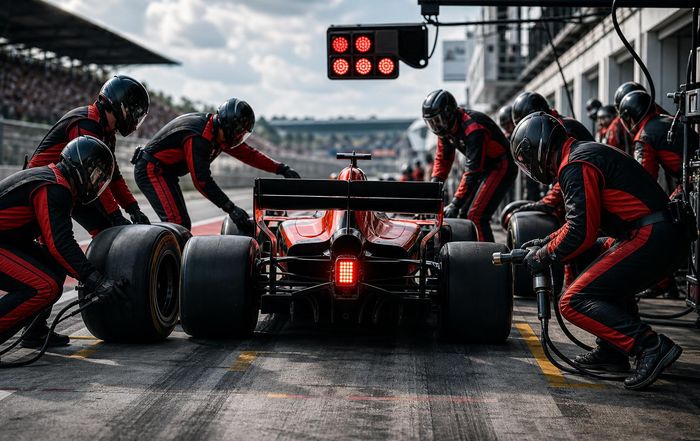
Why Pit Stop Strategy Can Decide Modern Motorsport Races
In contemporary motorsport, raw pace is only half the story. From Formula 1 to IndyCar, WEC endurance racing, and touring cars, the outcome of a race is often determined not by the fastest car on track, but by the smartest plan on the pit wall. Tyre choices, fuel windows, undercuts, overcuts, and perfectly timed Safety Car stops can swing a result more dramatically than a qualifying lap. Understanding why pit stop strategy is so decisive means looking at how modern racing is structured, how teams use data, and how tiny time gains compound over the course of a race.
For speedy readers who follow race highlights more than full-distance coverage, pit stops can look like brief interruptions in the action. In reality, they are the action. They are where teams actively influence the race rather than simply reacting to their driver's pace. In an era when regulations aim to equalise performance and promote close competition, the pit lane has become one of the few places where teams can still find a genuine edge.
The basics: why pit stops exist at all
Pit stops are not just a theatrical element of racing; they are baked into how modern series are designed. In sprint formats, mandatory tyre changes or pit windows are introduced to break up static races and create strategic variety. In endurance racing, pit stops are a necessity: fuel loads, tyre wear, and driver fatigue make non-stop running impossible. But even when rules do not explicitly force multiple stops, teams almost always choose them because of the performance trade-off between fresh tyres and track position.
In Formula 1, for example, regulations from the Fédération Internationale de l'Automobile (FIA) typically require drivers to use at least two different dry tyre compounds in a dry race, which guarantees at least one stop. Tyres supplied by Pirelli (pirelli.com) are designed with different life spans and performance profiles: softer compounds are quicker but degrade faster, while harder compounds are slower but more durable. Teams juggle these options based on factors like track temperature, surface abrasiveness, and expected Safety Car probability.
In series like IndyCar (indycar.com) and the IMSA SportsCar Championship (imsa.com), refuelling is allowed, so fuel strategy becomes a major variable. Teams calculate "stint lengths" - how many laps a car can run on a full tank at a given pace - and use this to determine their pit windows. They might choose to "short fill" fuel to reduce weight and gain speed, banking on future cautions to save time later. These underlying rules and technical constraints are what make pit stops central to race outcomes, not a side show.
Readers who want to dive deeper into the technical and regulatory side of racing can often find useful context on motorsport-focused outlets such as motorsport.com, autosport.com, and the-race.com, which frequently break down how regulations shape strategy.
The time equation: tyres, fuel, and track position
Every pit stop is a trade: time lost in the lane versus time gained on track afterwards. This is where strategy becomes a maths problem played out at 300 km/h. A typical F1 pit stop, from pit entry line to exit line, might cost around 20-25 seconds depending on circuit layout, even if the stationary tyre change itself is under three seconds. In IndyCar or endurance racing, refuelling and longer pit lanes can push that loss even higher.
Teams model this with what engineers call "race sims" or stint models. Using tyre degradation data, they estimate how lap times will evolve on each compound. If a tyre loses, say, 0.1-0.2 seconds per lap as it wears, staying out for 15 extra laps on old tyres might cost more time than a 20-second pit stop would. Conversely, if degradation is low or overtaking is extremely difficult, holding track position might be more valuable than fresher tyres. This is why some races become "one-stop" affairs in which undercut attempts fail, while others see aggressive two- or three-stop strategies rewarded.
Fuel weight adds another layer. In series with refuelling, a lighter car is quicker, so teams may plan more stops to run shorter, faster stints. In Formula 1, where refuelling has been banned for years, cars start heavy and burn fuel off over the race. This means tyre wear tends to be highest early, influencing whether teams pit early to escape traffic or stay out to build a gap. The Formula 1 official site (formula1.com) often publishes post-race strategy analysis that illustrates how these time equations played out.
These trade-offs are not abstract. They are fed by live telemetry and tyre temperature data, processed by powerful simulation tools, and constantly updated as track conditions evolve. What begins as a pre-race plan on a whiteboard is re-optimised lap by lap.
Undercut, overcut, and the art of track position
Two concepts dominate modern pit stop strategy discussion: the undercut and the overcut. Both are about using pit timing to gain track position on a rival despite similar pace.
An undercut occurs when a driver pits earlier than the car ahead, switches to fresher tyres, and uses the grip advantage to set faster laps while the rival is still on worn tyres. When the rival eventually pits, they rejoin behind. This works best when tyres degrade quickly and when the undercutting driver has clear air after their stop. It can be less effective if they rejoin in traffic or behind slower cars, which neutralises the advantage.
The overcut is the opposite: staying out longer than a rival who has pitted, using clean air and lighter fuel to set quick laps, then pitting later and emerging ahead. Overcuts tend to work when tyre degradation is low, when the pit lane loss is large, or when the early-stopping rival gets stuck in traffic. Circuits with high pit lane time loss, like some street tracks, can reward overcuts because the penalty for stopping is so significant.
Series like Formula 1, IndyCar and the World Endurance Championship (fiawec.com) have all seen races decided by these mechanisms. Strategic calls are made by performance engineers and strategists on the pit wall, but they depend on drivers hitting precise lap time targets. Missing an "in-lap" or "out-lap" by a few tenths can be the difference between jumping a rival and remaining stuck behind them for the rest of the stint.
For fans who mostly see the highlight packages, these battles can be invisible. The cars may never be shown side by side on track, yet the order changes after the stops. This is one reason why dedicated race coverage and data visualisations, increasingly used by broadcasters and by series on their own platforms, have become important for helping audiences follow the strategic side of racing.
Safety Cars, VSCs, and yellow flag chaos
If pit stops are the chess moves of racing, Safety Cars (SC) and Virtual Safety Cars (VSC) are the moments when someone tips the board. By compressing the field and reducing speed, they drastically cut the time lost in the pit lane. Pitting under a Safety Car in F1, for instance, might cost 10-12 seconds instead of 20-25 at full racing speed. That difference can completely flip the competitive order.
Strategists therefore constantly monitor the probability of incidents based on historical data and live race context. Street circuits with walls close to the racing line, like Monaco or Singapore, are more likely to produce Safety Cars. In endurance races, night-time stints and mixed-speed classes increase the chance of yellow flags. Teams sometimes delay a planned stop in the hope a caution emerges, or pit just before a likely incident to avoid being trapped in a bad position.
The Virtual Safety Car in F1 adds nuance. Under VSC, drivers slow to a prescribed delta, but the field is not bunched up. This still reduces pit loss, but not as dramatically as a full Safety Car. Teams must quickly calculate whether stopping under VSC is worth the reduced time loss or whether they risk being undercut by rivals who stay out and gain track position when racing resumes. Similar dynamics play out with "Full Course Yellow" procedures in series like the European Le Mans Series.
From a regulatory perspective, bodies like the FIA and IndyCar have refined Safety Car and yellow flag procedures over time to balance safety with sporting fairness. Yet no system can remove the element of luck entirely. Some race wins and losses are simply the product of being on the right or wrong side of a caution, and teams must build strategies that are robust to that uncertainty.
Data, simulation, and the rise of the strategist
The modern strategist is as crucial to a race team as the race engineer or chief mechanic. They sit behind banks of monitors, often both at the track and in remote operations centres, running real-time simulations based on live timing, tyre wear estimates, weather radar, and competitor behaviour. What looks like a simple radio call - "box this lap" - is usually the output of complex modelling.
Teams ingest huge quantities of data from practice sessions to understand how tyres behave over long runs and how fuel consumption changes with different engine modes. This data is fed into tools built on statistical and sometimes machine-learning methods. While full details are closely guarded, teams and series occasionally outline their approach in technical features published via official channels like formula1.com or indycar.com.
Simulation allows strategists to answer questions such as: If we pit now, where do we rejoin? Will we hit traffic? How will our lap times compare to rivals on different compounds? What if a Safety Car comes within the next five laps? They can also run "what if" scenarios pre-race to define primary and backup strategies: for example, Plan A is a one-stop, Plan B a two-stop if degradation is higher than expected, and Plan C for early Safety Car disruptions.
This data-driven approach has changed how teams operate and how fans follow races. Broadcasters now often reference "strategy computers" and show graphics predicting optimal pit windows. For technology-minded readers, this is one of the most compelling intersections between sport and analytics, echoing trends seen in other data-heavy sports covered in our technology and science sections.
Team orders, number twos, and multi-car strategy
In multi-car teams, pit strategy is not just about optimising a single driver; it is about managing the collective outcome. This can include using one car to pressure rivals, forcing them into suboptimal pit windows, or sacrificing one driver's strategy to protect another's lead. These decisions are controversial but integral to how top teams operate.
Team orders can be as direct as instructing a driver to let a teammate pass, or as subtle as giving one car priority on the optimal pit lap. In F1, where teams often have one driver in championship contention and another mathematically out of the title race, the second car may be used more aggressively on alternative strategies to disrupt rivals. In endurance racing, multi-driver line-ups in the same car complicate matters further: the timing of driver changes, mandated rest periods, and driver-specific strengths (night vs day, wet vs dry) all feed into pit planning.
Series and governing bodies have grappled with how to regulate team orders, with varying approaches over the years. The FIA once explicitly banned them in Formula 1 before later accepting that they are almost impossible to police effectively. Official documentation from organisations like the FIA and IMSA (imsa.com) provides the framework, but the sporting ethics and fan reactions often play out in media analysis and social debate, including in the broader sports business coverage found on sites like espn.com and bbc.com.
For fans interested in the human side of strategy - the tension between individual ambition and team objectives - this is one of the most compelling, and sometimes polarising, aspects of pit stop planning.
Endurance vs sprint: why strategy looks different
Pit stop strategy in a two-hour Grand Prix is not the same as in a 24-hour endurance race. In shorter events, decisions are often about optimising pure lap time and track position within a relatively narrow window. In endurance racing, reliability, traffic management, and night/day conditions mean strategy is more about risk management over a long horizon.
In the 24 Hours of Le Mans, for instance, teams might complete dozens of pit stops. They must manage not only tyres and fuel but also brakes, driver fatigue, and changing track temperatures. Slow "service" stops for repairs can be scheduled to coincide with planned tyre and fuel stops to minimise time loss. The fiawec.com and lemans.org sites regularly break down how winning teams structure their pit cycles across day and night, showing how a few seconds saved per stop can add up to minutes over 24 hours.
Traffic is another major factor. In multi-class racing, a faster prototype car may be significantly delayed if it rejoins into heavy GT traffic after a stop. Strategists therefore model not only their own stint times but also the likely distribution of other classes on track. This level of complexity is one reason why endurance racing strategy has become a niche fascination within the broader motorsport community, similar to how some fans obsess over advanced metrics in other sports covered in our sports section.
Sprint series like Formula E (fiaformulae.com) introduce yet another twist, with energy management and sometimes Attack Mode activations influencing when cars can afford to push or must conserve. While pit stops for tyres or fuel are less central there than in F1 or WEC, the same strategic mindset applies: use regulated interventions and timing windows to gain track position or control race pace.
Human execution: mechanics, drivers, and the risk of error
Even the best strategy is worthless if the execution fails. Pit crews train extensively to deliver consistent, rapid stops under intense pressure. In F1, sub-two-second tyre changes have become almost routine for top teams, though the FIA has introduced rules to slow stops slightly for safety reasons. A wheel nut issue or miscommunication can turn a planned undercut into a disaster.
Drivers also play a critical role. They must hit precise braking points for pit entry speed limits, stop exactly on their marks, and execute in-laps and out-laps at the limit without overusing the tyres. A lock-up into the pit lane or a slow out-lap while warming tyres can cost more than the crew gained with a quick change. In traffic, drivers may need to adapt their pace targets to avoid overheating tyres or getting stuck behind slower cars, feeding back information that can prompt strategic adjustments.
Series like F1 and IndyCar have detailed sporting regulations around pit lane safety: speed limits, pit crew equipment rules, and penalties for unsafe releases or equipment left in the lane. These are outlined on official sites such as fia.com and indycar.com. Penalties can be severe - drive-throughs or time additions - and have decided races on their own. So while fans often focus on the glamour of sub-two-second stops, the discipline and risk management behind them are equally important.
From a broader performance perspective, pit crews reflect a wider trend in elite sport: marginal gains through specialist training. Just as strength and conditioning, nutrition, and sports science have transformed athlete preparation across disciplines we cover in fitness and health, pit crews have become highly drilled athletic units in their own right.
Weather, tyre blankets, and changing conditions
Variable weather is one of the biggest wild cards in pit strategy. A sudden shower can turn a race upside down if some teams anticipate the change earlier than others. The decision of when to switch from slicks to intermediates or full wets can gain or lose tens of seconds per lap. Teams rely on weather radar, local spotters, and driver feedback to judge not only if rain is coming, but how heavy it will be and how long it will last.
Regulations around tyre blankets and operating temperature windows add complexity. In F1, recent rule changes have reduced or modified the use of tyre warmers, making out-laps on cold tyres more precarious. Pitting for fresh tyres in marginal conditions can backfire if a driver cannot bring them into the right temperature window quickly. Conversely, staying out too long on slicks in increasing rain can lead to spins or off-track excursions.
The way different compounds behave in changing conditions is a major focus of technical analysis by tyre suppliers like Pirelli and by teams themselves. Official technical briefings on sites such as pirelli.com or series hubs like formula1.com often outline expected crossover points between slicks and wets, but the actual race can diverge from forecasts. Strategists must therefore be comfortable making decisions with incomplete, noisy information - a challenge familiar to analysts in many high-performance environments beyond sport.
Why pit strategy matters to fans, teams, and the business of racing
For teams, mastering pit stop strategy is a competitive necessity. With cost caps in Formula 1 and budget-conscious operations across series, finding performance through smarter decisions is often more efficient than through expensive hardware upgrades. Strategy departments have grown in size and sophistication, and some engineers specialise almost entirely in race simulations and tactical planning.
For fans, understanding pit strategy adds a second layer of enjoyment to watching races. Instead of seeing a static procession, they can follow undercut attempts, anticipate Safety Car gambles, and appreciate the tension of an out-lap that will decide whether a driver emerges ahead or behind a rival. Broadcasters and digital platforms have responded by offering more live data, team radio, and post-race breakdowns, blending sport with analytics in a way that mirrors trends in other areas of sports media covered in our news and business reporting.
From a commercial standpoint, dramatic swings in race order driven by pit calls help keep audiences engaged, which in turn sustains media rights values and sponsorship interest. Organisations like Liberty Media in F1 and promoters in series worldwide have openly discussed the importance of strategic variability to maintaining compelling competition. Independent outlets such as the-race.com and autosport.com frequently analyse how rule changes around tyres, pit windows, and Safety Cars influence show quality and fan engagement.
Ultimately, pit stops are where engineering, human performance, and tactical thinking intersect. They are the visible manifestation of countless hours of preparation, simulation, and practice. In a sport where margins are counted in thousandths of a second, the timing of a single stop - or a single tyre choice - can decide not just races, but championships. For anyone trying to truly understand why one car wins and another loses, the story almost always runs through the pit lane.
For more context on how strategy, technology, and human performance shape outcomes across sport, our updated news in sports, technology, science, health, and business explores these themes well beyond the chequered flag.