

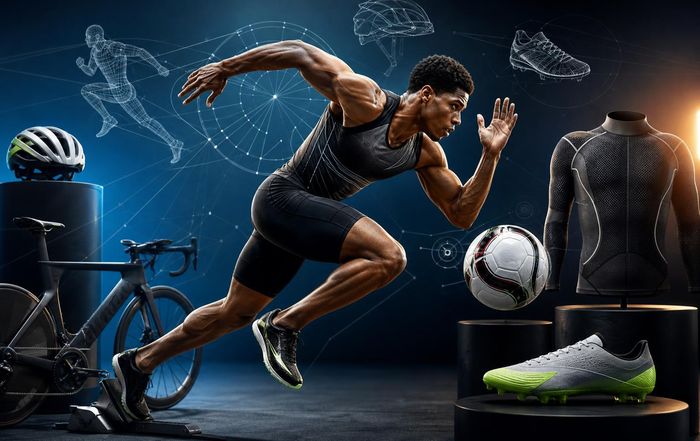
How Sports Equipment Design Really Affects Athletic Performance
From carbon-plated running shoes to aerodynamically sculpted cycling helmets, modern sport is as much a story of design and science labs and wind tunnels as it is of stadiums and scoreboards. For athletes from grassroots to elite, the way equipment is engineered can decide whether a performance is merely good or record-breaking, and in some cases whether it is safe or dangerous.
Join as we go into how sports equipment design influences performance, where the science is clear, where it is still debated, and what it means for athletes, coaches, brands, and governing bodies.
The science behind equipment and performance
At its core, sports equipment design is about manipulating physics and human physiology. Designers aim to reduce energy losses, improve force transfer, and optimize how athletes interact with their environment. Organizations such as the International Olympic Committee and sport-specific federations increasingly rely on research from institutions like the U.S. Olympic & Paralympic Committee and universities such as MIT and Loughborough University to understand how design changes translate into measurable performance gains.
In endurance sports, the main levers are often aerodynamics and weight. Cyclists, triathletes, and speed skaters adopt equipment that reduces drag so that more of their metabolic energy goes into forward motion rather than overcoming air resistance. In power- and skill-based sports, such as sprinting, tennis, or golf, design focuses on stiffness, energy return, and control, helping athletes apply force more efficiently while maintaining precision. Across disciplines, comfort and injury risk are also central: poorly designed shoes, for example, can contribute to stress fractures or tendon problems, while better load distribution and cushioning can help athletes tolerate higher training volumes. Sports science bodies like World Athletics, FIFA, and the International Tennis Federation have commissioned and reviewed research on these effects, shaping the rules that define what is acceptable innovation and what becomes an unfair advantage.
For everyday participants, the same principles apply, just at different scales. Recreational runners may not chase world records, but a shoe that improves running economy by even a few percent can mean less fatigue and a lower risk of overuse injury. Similarly, a well-designed helmet or mouthguard can dramatically change safety outcomes, an area where organizations like the Centers for Disease Control and Prevention (CDC) and the World Health Organization (WHO) have highlighted the importance of standards and proper fit. As performance data becomes more accessible through wearables and connected gear, the link between design and outcome is becoming easier to measure at all levels of sport.
Readers interested in the broader sports landscape can find related coverage in the sports section and news hub on sportsyncr.com.
Footwear: from spikes to super shoes
Few categories illustrate the impact of design on performance as clearly as running and training footwear. For much of the 20th century, improvements were incremental: lighter uppers, different stud patterns, and modest cushioning innovations. That changed rapidly with the advent of highly resilient foams and carbon-fiber plates, culminating in so-called "super shoes." Research published by groups affiliated with institutions such as Nike's Sports Research Lab, Adidas, and independent academics has shown that certain models can improve running economy by roughly 3-4% in some athletes, a huge margin at elite level. Governing body World Athletics responded by introducing regulations around midsole thickness and plate design to preserve fairness and comparability of records.
The performance gains come from several design elements working together. Lightweight, compliant foams reduce the energy lost on impact, while stiff plates help control how the foot flexes and can act as levers to improve push-off mechanics. Rocker geometries in the midsole guide the center of mass forward more smoothly. Similar principles now appear in marathon shoes, track spikes, and even some everyday trainers. However, not every athlete responds the same way: differences in running style, body mass, and foot structure mean that a shoe that is highly effective for one runner may offer smaller gains-or even discomfort-to another. Sports medicine specialists, including those associated with the American College of Sports Medicine, have emphasized individual fitting and gradual adaptation to avoid issues such as calf or Achilles overload that can arise when switching to stiffer, more propulsive models.
In team sports, boot design also shapes performance. Stud configuration in football and rugby boots, for example, balances traction, rotational freedom, and pressure distribution. Poorly designed or ill-fitting boots can increase the risk of ankle sprains or knee injuries on certain surfaces. Governing bodies like FIFA and World Rugby work with manufacturers and independent labs to test stud patterns and outsole stiffness, seeking combinations that allow quick directional changes without excessive torque on joints. For readers exploring how gear choices intersect with injury prevention, our health and fitness sections provide additional context.
Balls, rackets, bats, and sticks: engineering control and power
In ball and racket sports, equipment design fundamentally shapes how the game is played. Tennis offers a clear historical example: the transition from wooden rackets to graphite and composite frames in the late 20th century transformed stroke mechanics, rally speeds, and even court surfaces. Modern rackets, governed by specifications from the International Tennis Federation (ITF), are lighter, stiffer, and larger in head size, creating a bigger sweet spot and enabling players to generate more spin and pace with less effort. This has contributed to more aggressive baseline play and has influenced how coaches teach technique from junior levels upwards.
In golf, the R&A and USGA have spent years managing the impact of equipment on distance. Advances in clubhead materials, perimeter weighting, adjustable hosels, and low-spin balls enabled professionals and elite amateurs to hit significantly longer shots. To preserve course design and competitive balance, the governing bodies introduced limits on clubhead size, spring-like effect (the coefficient of restitution), and ball characteristics. These regulations illustrate a recurring tension: engineers can often design equipment that outpaces the intended dimensions of a sport, forcing regulators to define what constitutes acceptable assistance.
Baseball and cricket show similar dynamics. In Major League Baseball, regulations on bat materials (wood only at the top level) are partly a response to concerns about safety and the integrity of performance records, especially after the power spikes observed with metal bats in amateur play. In cricket, the Marylebone Cricket Club (MCC) and International Cricket Council (ICC) have tightened laws on bat thickness and edge size after years of increasingly powerful bats shifted the balance between bat and ball. Meanwhile, in sports such as ice hockey and field hockey, the move from wooden to composite sticks has allowed for more powerful shots and precise flex profiles but has also required rule adjustments and protective gear upgrades to keep pace with faster projectiles.
For readers interested in how equipment intersects with culture and fan experience, including debates about "too much technology" in traditional sports, our culture and social pages explore these broader narratives.
Aerodynamics and drag reduction: cycling, speed skating, and beyond
In high-speed sports, air resistance is one of the largest external forces athletes must overcome, so equipment design often targets drag reduction. Competitive cycling is perhaps the most visible case. The Union Cycliste Internationale (UCI) regulates frame shapes, rider positions, and clothing in response to an arms race that has seen teams invest in wind tunnels and computational fluid dynamics. Modern time-trial bikes use deep-section wheels, truncated airfoil tube profiles, and integrated cockpits to smooth airflow. Skinsuits, aero helmets, and tightly fitted overshoes can collectively save significant watts, translating into substantial time differences over long distances.
Speed skating, ski jumping, and bobsleigh have seen similar developments. National federations and Olympic programs collaborate with automotive and aerospace engineers to refine suits, helmets, and sleds. During several Winter Olympic cycles, controversies emerged around whether certain suits or sled technologies provided unfair advantages, prompting the International Skating Union (ISU) and International Bobsleigh & Skeleton Federation (IBSF) to clarify equipment rules. Even small changes-such as seam placement or surface texture-can alter boundary layer behavior on the athlete's body and equipment, leading to measurable time gains.
In motorsport-adjacent disciplines like time-trial triathlon and track cycling, the line between athlete and machine blurs further. Teams use 3D scanning to design position-specific handlebars and custom helmets that minimize drag for individual riders. This level of customization underscores how performance is not only about the object itself but about the interaction between human shape, posture, and equipment. As performance analysis tools improve, more recreational athletes are beginning to adopt scaled-down versions of these technologies, though often with diminishing returns compared with basic training improvements.
Readers following how technology reshapes competition can find more on the business and innovation side in our business and technology sections.
Protective equipment: performance through safety and confidence
Performance is not just about going faster or hitting harder; it is also about staying healthy and confident enough to compete. Protective equipment design-helmets, pads, mouthguards, eyewear-plays a crucial role in both injury prevention and psychological readiness. Organizations such as the CDC, WHO, and sport-specific bodies like USA Football and World Rugby have highlighted the importance of helmet and padding standards in reducing the risk and severity of head and musculoskeletal injuries.
In contact sports, modern helmets are designed to dissipate impact energy through multi-density foams, suspended liners, and shell geometries that spread forces over larger areas. Some models incorporate rotational energy management systems intended to reduce brain shear forces associated with certain types of concussions. While no helmet can fully prevent concussion-a point consistently emphasized by neurological and public health organizations-the best designs can lower risk and reduce the severity of many impacts. The National Football League (NFL), in partnership with engineering firms and universities, has run helmet performance rankings to incentivize innovation and phase out underperforming models.
Protective gear can also indirectly enhance performance by improving athlete confidence. A goalkeeper with well-designed gloves and padded gear may be more willing to dive at an opponent's feet, while a cyclist who trusts their helmet and gloves might descend more aggressively. However, there is also a documented phenomenon called risk compensation: in some contexts, athletes behave more recklessly when they feel better protected. This has led governing bodies and health agencies to stress not only equipment standards but also education about technique and rule enforcement.
In action sports such as skateboarding, BMX, and snowboarding, design trends have tried to balance style, comfort, and protection to encourage actual use, especially among younger participants. Lightweight, breathable materials and less bulky silhouettes have made it easier to wear pads and helmets without feeling restricted. For those interested in how safety, health, and sport intersect, our health and environment pages often touch on facility standards, climate conditions, and injury trends that influence equipment choices.
Materials, biomechanics, and the role of sports science
Behind every piece of high-performance equipment lies a complex interplay of materials science and biomechanics. Advances in polymers, carbon composites, and additive manufacturing allow designers to tune stiffness, flexibility, and weight distribution in ways that were not possible a generation ago. Institutions like MIT, ETH Zurich, and Imperial College London have partnered with sports brands and federations to study how different materials respond under real-world loads and how athletes adapt their movement patterns when using them.
Biomechanics labs use motion capture, force plates, and wearable sensors to analyze how equipment affects joint angles, ground reaction forces, and muscle activation. For example, researchers working with World Athletics have examined how different spike plate stiffnesses influence sprinting mechanics, while golf researchers associated with the R&A and equipment companies have studied how shaft flex and clubhead mass distribution affect swing kinematics. These studies often show that the same piece of equipment can lead to different adaptations depending on an athlete's technique, flexibility, and strength, reinforcing the idea that "best" design is often context-specific.
At the same time, sports science is increasingly concerned with long-term health. There is growing scrutiny of whether extremely stiff footwear or equipment that promotes higher training loads might increase certain injury risks over time, even if short-term performance improves. Organizations such as the American College of Sports Medicine and Fédération Internationale de Médecine du Sport (FIMS) encourage collaboration between manufacturers, coaches, and medical teams to evaluate new designs not just in lab tests but in longitudinal field studies.
Fairness, regulation, and the "technology doping" debate
Whenever equipment changes performance, questions of fairness follow. Sporting bodies have long grappled with where to draw the line between acceptable innovation and "technology doping." The term gained prominence during debates over full-body polyurethane swimsuits in the late 2000s, after a wave of world records prompted World Aquatics (formerly FINA) to ban certain suit types and impose restrictions on coverage and material properties. Many records from that era still stand, illustrating how equipment can leave a lasting imprint on the history of a sport.
World Athletics' shoe regulations, golf's distance-limiting rules, cycling's position constraints, and speed skating's suit oversight are all attempts to balance innovation with comparability across eras. The World Anti-Doping Agency (WADA), while primarily focused on pharmacological and physiological manipulation, has also weighed in on technologies that might blur the line between natural performance and artificial enhancement, such as motorized assistance in cycling ("mechanical doping") and certain neurostimulation devices.
These debates are not only technical but also cultural and economic. Wealthier federations and professional teams can afford cutting-edge equipment, biomechanical analysis, and custom manufacturing that are out of reach for many competitors. This raises concerns about widening inequality in performance opportunities. Some sports address this by standardizing equipment at certain levels-for example, one-design sailing classes or regulated ball types in youth leagues-so that outcomes depend more on skill than on budget. Others, like motorsport, accept a high degree of technological disparity as part of the competition's identity.
For readers following the governance and business side of these issues, our world and business sections often cover policy debates, sponsorships, and legal disputes around equipment rules.
Sustainability, brands, and the future of sports gear
As environmental concerns move higher on the global agenda, sports equipment design is also being reshaped by sustainability pressures. Brands such as Adidas, Nike, Puma, and Decathlon have launched initiatives to incorporate recycled materials, reduce waste, and design for circularity. Governing bodies and events, including the International Olympic Committee, the UN Environment Programme, and major leagues, have signaled expectations that partners address climate and waste impacts, influencing everything from shoe foams to stadium surfacing.
Sustainability can intersect with performance in complex ways. Recycled or bio-based materials may behave differently under load or in varying weather conditions, requiring new testing protocols. Some innovations-like modular or repairable products-could extend equipment life but might add weight or complexity. Brands must balance elite performance demands with mass-market durability and environmental goals, all while staying within sport-specific regulations. This tension is particularly visible in fast-moving categories like running shoes and football boots, where product cycles are short and marketing pressure is intense.
At the same time, digital technologies are reshaping how equipment is designed, personalized, and used. 3D scanning and printing allow for custom-fit insoles, saddles, and protective gear, while connected devices feed performance data back to designers and coaches. Companies like Garmin, Apple, and Polar are integrating hardware, software, and analytics, blurring the line between equipment and data platform. This creates new possibilities for tailored performance but also raises questions about data privacy, access, and the role of algorithms in training decisions.
Readers interested in the intersection of brands, business models, and sustainability can explore more in the brands and environment sections.
What athletes and coaches should prioritize
Given the complexity of modern equipment, it can be tempting to chase every new product in search of marginal gains. Yet sports scientists and high-performance directors from organizations like the USOPC, Australian Institute of Sport, and various national federations consistently emphasize a hierarchy: training quality, recovery, nutrition, and mental preparation remain the primary drivers of performance, with equipment as an important but secondary layer.
For most athletes, the key is to focus on fit, comfort, and suitability to their specific sport and body rather than on headline marketing claims. Well-fitted shoes that match running style, a racket or bat with an appropriate weight and balance, and protective gear that meets recognized safety standards are likely to deliver more real-world benefit than chasing the latest marginal aerodynamic tweak. Coaches can play a crucial role by helping athletes test equipment systematically, using simple performance metrics and subjective feedback rather than relying solely on brand narratives.
At the elite level, marginal gains from equipment can indeed decide medals or contracts, which is why teams invest heavily in design and testing. But even there, equipment choices must be integrated with technique, tactics, and health management. A shoe that improves running economy but increases injury risk may not be worth it over a full season; an ultra-stiff bike setup that is fastest in the wind tunnel may be slower in reality if the rider cannot sustain the position comfortably.
For those balancing performance goals with overall wellbeing, our fitness and science sections regularly explore how to interpret sports science and technology in practical terms.
The evolving partnership between athlete and equipment
Across sports and levels of participation, equipment design has become a central part of the performance equation. From the foam and plates under a marathoner's feet to the composite layup of a hockey stick or the airflow over a cyclist's helmet, carefully engineered gear can enable athletes to go faster, last longer, and stay safer. At the same time, it raises ongoing questions about fairness, accessibility, environmental impact, and the essence of what sport should measure.
The direction of travel is clear: advances in materials, biomechanics, and data analytics will continue to make equipment more specialized and more integrated with individual athletes. The challenge for governing bodies, brands, and competitors is to harness these gains in ways that enhance sport without undermining its competitive integrity or excluding those without access to cutting-edge technology. As long as that balance remains under active scrutiny, the relationship between athletes and their equipment will continue to be one of the most fascinating-and consequential-frontiers in modern sport.