

How Biomechanics Improve Movement Efficiency in the Global Sports Economy
Biomechanics as the New Competitive Currency
Biomechanics has moved from laboratory curiosity to strategic asset, reshaping how athletes train, how teams invest, and how brands position themselves in an increasingly data-driven sports economy. For a global audience that spans elite competitors in the United States and Europe, emerging sports markets in Asia, and rapidly evolving performance cultures in Africa and South America, understanding how biomechanics improves movement efficiency is no longer a niche scientific interest; it is a business-critical competency. On Sportsyncr, this conversation becomes particularly personal, because the platform sits at the intersection of performance, culture, technology, and commerce, tracking how the science of movement is redefining not only how athletes move, but how the entire sports ecosystem operates.
Biomechanics, broadly defined as the study of the mechanical laws relating to the movement or structure of living organisms, provides a framework for dissecting the way humans run, jump, throw, change direction, and recover. Organizations such as World Athletics and FIFA increasingly rely on biomechanical analysis to refine rules, surfaces, and equipment, while performance centers in the United States, United Kingdom, Germany, Australia, and Japan integrate advanced motion capture and force measurement into everyday training. For decision makers across sport, fitness, health, and business, the central question is no longer whether biomechanics matters, but how precisely it can convert movement efficiency into competitive advantage, reduced injury risk, and sustainable long-term value.
Active readers seeking a broader context on how movement science intersects with performance can explore the performance-focused stories on Sportsyncr, where sections dedicated to sports and fitness regularly examine how innovation in training and technology is reshaping what athletes and active consumers can achieve.
The Foundations of Biomechanics and Movement Efficiency
Movement efficiency, in the language of biomechanics, is about maximizing useful performance output while minimizing unnecessary energy expenditure and mechanical stress. At its core, this involves understanding kinematics (the description of motion) and kinetics (the forces that cause motion), and then aligning technique, equipment, and environment so that muscles, tendons, and joints operate in optimal synergy. Resources from institutions such as MIT and Stanford University have long outlined the principles of human movement science and how mechanical models help decode complex athletic actions.
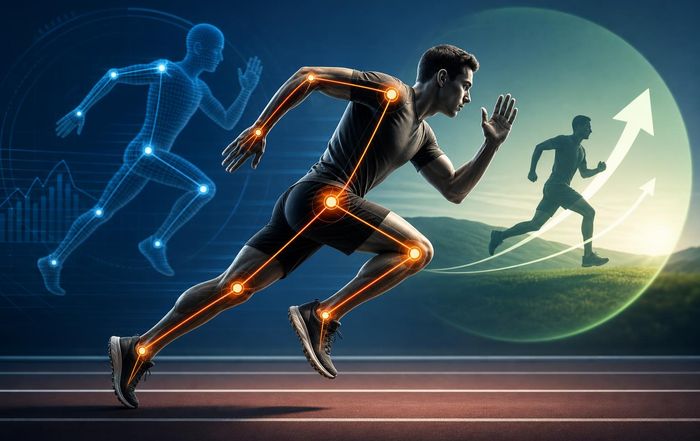
In practical terms, when a sprinter accelerates, biomechanics examines joint angles, ground contact times, stride length, and the distribution of forces through the foot and lower limb. When a basketball player in the NBA or EuroLeague lands from a jump, biomechanics evaluates how flexion at the hip, knee, and ankle attenuates impact forces, and whether asymmetries might predispose the athlete to injury. This analytical lens is equally relevant to recreational runners in Canada or office workers in Singapore who want to move more efficiently in daily life, as the underlying principles of load distribution, alignment, and muscle activation are universal.
On Sportsyncr, the health implications of these principles are explored in greater depth within the health section, where topics such as injury prevention, rehabilitation, and long-term wellness are increasingly informed by evidence-based biomechanical insights.
From Lab to Field: Technology as the Biomechanical Bridge
The evolution of biomechanics from academic domain to applied performance tool has been accelerated by technologies that make high-quality measurement accessible on the field, in the gym, and even at home. Three decades ago, comprehensive biomechanical analysis was largely confined to specialized laboratories equipped with multi-camera motion capture systems and force plates. Today, wearable sensors, inertial measurement units, smart insoles, computer vision, and AI-powered analytics are bringing similar capabilities to training facilities across North America, Europe, and Asia.
Companies like Catapult Sports and Hawk-Eye Innovations have helped normalize the integration of tracking and positional data into elite sport, while research institutions such as Loughborough University and Australian Institute of Sport have demonstrated how applied sports technology can enhance performance and reduce injury risk. Meanwhile, consumer-oriented platforms from Apple, Garmin, and Whoop are embedding biomechanical proxies-such as running dynamics, impact load, and variability metrics-into everyday devices, bringing movement efficiency into the mainstream wellness conversation.
This convergence of biomechanics and digital innovation is reflected in the technology coverage on Sportsyncr, where the technology vertical regularly examines how sensors, data platforms, and AI are transforming the training environments of athletes from the Bundesliga and Premier League to the NBA, NFL, NRL, and J-League.
Running, Jumping, and Lifting: Biomechanics in Core Athletic Movements
The most visible applications of biomechanics lie in the core athletic patterns that underpin nearly every sport: running, jumping, throwing, and lifting. In distance running, for example, studies published through platforms like PubMed and Journal of Biomechanics have shown that subtle changes in cadence, stride length, and foot strike pattern can significantly influence running economy, which is a key determinant of performance in events from the 5K to the marathon. By analyzing ground reaction forces, hip and knee angles, and the stiffness of the leg-spring system, coaches can help athletes in Kenya, Ethiopia, the United States, and Japan refine technique to conserve energy while maintaining speed.
In jumping sports such as basketball, volleyball, and handball, biomechanical analysis focuses on the stretch-shortening cycle, landing mechanics, and the distribution of forces across the lower extremity. Organizations like NBA and FIBA have collaborated with sports science teams to understand how vertical jump strategies, deceleration techniques, and cutting mechanics contribute not only to explosive performance but also to the incidence of ACL injuries and other lower-limb pathologies. Learn more about the role of sports medicine and biomechanics in reducing injury risk in high-impact sports.
Strength training, a foundational component of performance in sports as diverse as rugby, rowing, and alpine skiing, also benefits from biomechanical scrutiny. By examining bar path, joint torques, and muscle activation patterns in lifts such as the squat, deadlift, and Olympic lifts, coaches can tailor exercise selection and loading schemes to the specific demands of athletes in different sports and positions. This has become particularly important in professional leagues in Germany, France, and the United Kingdom, where periodized strength programs are now built around individual biomechanical profiles rather than generic templates.
For readers interested in how these principles translate into everyday training and gym practice, Sportsyncr's fitness coverage frequently explores how recreational athletes can use biomechanical concepts to improve form, reduce injury risk, and get more value from every training session.
Biomechanics, Injury Prevention, and Athlete Longevity
Perhaps the most compelling argument for integrating biomechanics into sports and fitness lies in its impact on injury prevention and athlete longevity. As the financial stakes in professional sport have grown, with clubs and franchises in the NFL, Premier League, Bundesliga, NBA, and IPL investing heavily in player contracts, the cost of injury-related absence has become a board-level concern. Biomechanical analysis provides a structured method for identifying movement patterns associated with elevated risk and for designing interventions that reduce that risk over time.
Research synthesized by organizations such as FIFA Medical Centre of Excellence and IOC has highlighted how factors such as dynamic knee valgus, poor trunk control, and asymmetrical loading can contribute to ACL injuries, hamstring strains, and lower-back issues. By combining 3D motion analysis, force measurement, and neuromuscular testing, performance staff can identify athletes who exhibit "at-risk" profiles and implement targeted corrective programs. Learn more about evidence-based injury prevention frameworks that are shaping policy and practice worldwide.
At the same time, biomechanics plays a critical role in rehabilitation and return-to-play decision making. In leading sports medicine centers in the United States, United Kingdom, Australia, and Scandinavia, clinicians use biomechanical benchmarks-such as symmetry in ground reaction forces, joint loading profiles, and movement quality scores-to determine when an athlete has not only healed structurally but also restored functional capacity. This has led to more objective criteria for return to competition, reducing the likelihood of re-injury and improving long-term career outcomes.
On Sportsyncr, the intersection of performance, health, and career sustainability is a recurring theme, particularly in the business and news sections, where the platform tracks how clubs, leagues, and federations are investing in science-based approaches to protect their most valuable assets: their athletes.
Biomechanics as a Strategic Asset for Sports Organizations and Brands
For clubs, federations, and brands, biomechanics is no longer merely a performance tool; it is an element of strategic differentiation. Elite organizations such as FC Barcelona, Bayern Munich, New York Yankees, and All Blacks have built integrated high-performance ecosystems that combine biomechanics with nutrition, psychology, data science, and load management. These ecosystems not only improve on-field results but also enhance the marketability and longevity of star athletes, which in turn drives sponsorship value, media rights, and global fan engagement.
Brands in the footwear and apparel sector, including Nike, Adidas, Puma, and ASICS, have leveraged biomechanics in product development for decades, but the sophistication of these efforts has accelerated sharply. By using motion capture, pressure mapping, and finite element modeling, these companies now design shoes and apparel that optimize energy return, stability, and comfort for specific use cases and populations. Learn more about how sports product development and biomechanics are converging to create more efficient and sustainable gear.
This focus on movement efficiency is not limited to elite athletes. In markets such as the United States, Canada, Germany, and Japan, consumers increasingly expect performance claims to be backed by science, and they reward brands that can demonstrate measurable benefits in comfort, injury reduction, and energy savings. As a result, marketing teams are working more closely with biomechanists and sports scientists to translate complex findings into clear value propositions that resonate with runners, gym-goers, and team-sport participants.
Sportsyncr's brands and sponsorship coverage regularly highlights how companies are using biomechanical validation and performance partnerships to differentiate themselves in a crowded marketplace, while also examining the ethical and regulatory questions that arise when science becomes a central component of brand storytelling.
Cultural and Global Dimensions of Biomechanics Adoption
The adoption of biomechanics is shaped not only by technology and economics but also by culture, tradition, and regional infrastructure. In North America and parts of Western Europe, where professional leagues are heavily commercialized and supported by robust sports science networks, biomechanical analysis is now embedded in the operating model of most top-tier teams. In contrast, in some emerging markets in Africa, South America, and Southeast Asia, access to high-end technology and specialist expertise may be limited, even as raw athletic talent and passion for sport are abundant.
Nonetheless, there is a clear global trend toward democratization. Educational resources from organizations such as National Strength and Conditioning Association (NSCA) and American College of Sports Medicine (ACSM), alongside open-access courses from platforms like Coursera, are enabling coaches and practitioners in countries such as Brazil, South Africa, Thailand, and Malaysia to integrate basic biomechanical principles into training, even without advanced hardware. At the same time, regional centers of excellence in Singapore, South Korea, and China are investing in cutting-edge facilities and research collaborations, positioning Asia as a major contributor to the next wave of movement science innovation.
The cultural layer is equally important. In some sports cultures, especially in traditional football and rugby environments, there has historically been skepticism toward overly scientific approaches, with a preference for intuition and experiential coaching. Over the past decade, however, as younger coaches with formal sports science backgrounds rise through the ranks, there has been a notable shift toward evidence-based practice. Sportsyncr explores these cultural dynamics extensively within its culture and social coverage, examining how attitudes toward data, science, and innovation differ across regions and how these differences shape the trajectory of performance development.
Biomechanics, Health, and the Active Global Citizen
Beyond the stadiums and training centers, biomechanics has profound implications for public health and the everyday lives of active citizens worldwide. As countries across Europe, North America, and Asia grapple with rising rates of sedentary behavior, musculoskeletal disorders, and lifestyle-related diseases, the ability to move efficiently and pain-free becomes a cornerstone of sustainable health. Organizations such as the World Health Organization and Centers for Disease Control and Prevention (CDC) emphasize that regular physical activity reduces the risk of cardiovascular disease, diabetes, and depression, and biomechanics provides the tools to ensure that this activity is safe, enjoyable, and sustainable. Learn more about global physical activity guidelines and their implications for health policy.
For office workers in London, Berlin, Toronto, Singapore, and Tokyo, ergonomic principles grounded in biomechanics can reduce the incidence of back pain, neck strain, and repetitive stress injuries, improving productivity and quality of life. For older adults in Scandinavia, Japan, and Italy, balance training and gait optimization informed by biomechanical assessment can reduce fall risk and maintain independence. For youth athletes across the United States, France, Spain, and the Netherlands, early education in movement quality can foster healthier long-term relationships with sport and exercise.
Sportsyncr's environment and world sections increasingly explore how urban design, active transport infrastructure, and community sport programs interact with biomechanics to shape movement patterns at the population level, from cycling cultures in the Netherlands and Denmark to running communities in South Africa and Brazil.
The Talent and Jobs Landscape in Biomechanics
As biomechanics becomes more deeply integrated into sport, health, and technology, the demand for skilled professionals has expanded significantly. Universities in the United States, United Kingdom, Australia, Canada, and Germany now offer specialized degrees in biomechanics, sports engineering, and human movement science, and graduates find roles not only in research and academia but also in professional sports organizations, medical centers, wearable technology companies, and performance-focused startups.
Job titles such as performance biomechanist, movement scientist, sports data analyst, and product testing engineer have become common in high-performance environments. These roles require a blend of domain knowledge, statistical literacy, and communication skills, as practitioners must translate complex mechanical insights into actionable recommendations for coaches, athletes, clinicians, and executives. Learn more about career pathways in sports science and biomechanics through professional bodies that support education and accreditation.
For wise people here who are considering careers at the intersection of sport, science, and technology, the platform's jobs section provides a window into emerging roles across clubs, federations, technology firms, and research institutions worldwide. It also highlights how expertise in biomechanics can be leveraged not only in elite sport but also in healthcare, rehabilitation, ergonomics, and the broader wellness industry.
The Future: AI, Personalization, and Ethical Considerations
Looking ahead to the late 2020s, the integration of biomechanics with artificial intelligence, big data, and advanced simulation is poised to further transform how movement efficiency is understood and optimized. AI-driven motion analysis tools, such as those being developed by Google DeepMind, Microsoft Research, and various sports-tech startups, are making it possible to extract biomechanical insights from simple video footage, dramatically lowering the barrier to entry for teams and individuals without access to traditional lab equipment. Learn more about how AI in sports analytics is reshaping decision-making across performance and business functions.
This convergence will enable highly personalized movement coaching, where athletes and active consumers receive real-time feedback on technique, loading, and fatigue, tailored to their unique anatomy, history, and goals. However, it also raises important ethical and regulatory questions. Who owns the biomechanical data generated by an athlete's movement? How should this data be used in contract negotiations, talent identification, or return-to-play decisions? What safeguards are needed to prevent misuse or discrimination based on movement profiles or injury risk scores?
These questions are not merely theoretical; they sit at the heart of how the global sports industry will balance performance optimization, athlete welfare, and commercial interests in the coming decade. Sportsyncr is uniquely positioned to track and interrogate these developments, bringing together perspectives from athletes, coaches, scientists, technologists, legal experts, and fans across continents.
Why Biomechanics Matters to the Sportsyncr Community
For the sporty and active community, biomechanics is more than a technical discipline; it is a lens through which to understand the evolving relationship between human potential, technology, culture, and commerce. Whether the reader is an elite athlete in the United States, a coach in Germany, a health professional in Singapore, a brand strategist in the United Kingdom, or a recreational runner in South Africa, the principles of movement efficiency shape daily decisions about training, equipment, investment, and risk.
Through dedicated 100% unique reporting across sports, health, fitness, business, technology, and world, Sportsyncr aims to make biomechanics both accessible and actionable, translating complex research into insights that inform strategy at every level of the global sports ecosystem. As movement science continues to advance, and as the economic and cultural stakes of performance continue to rise, those who understand and apply biomechanics intelligently will be best positioned to thrive-on the field, in the boardroom, and in the broader marketplace of ideas that defines sport in 2026 and beyond.